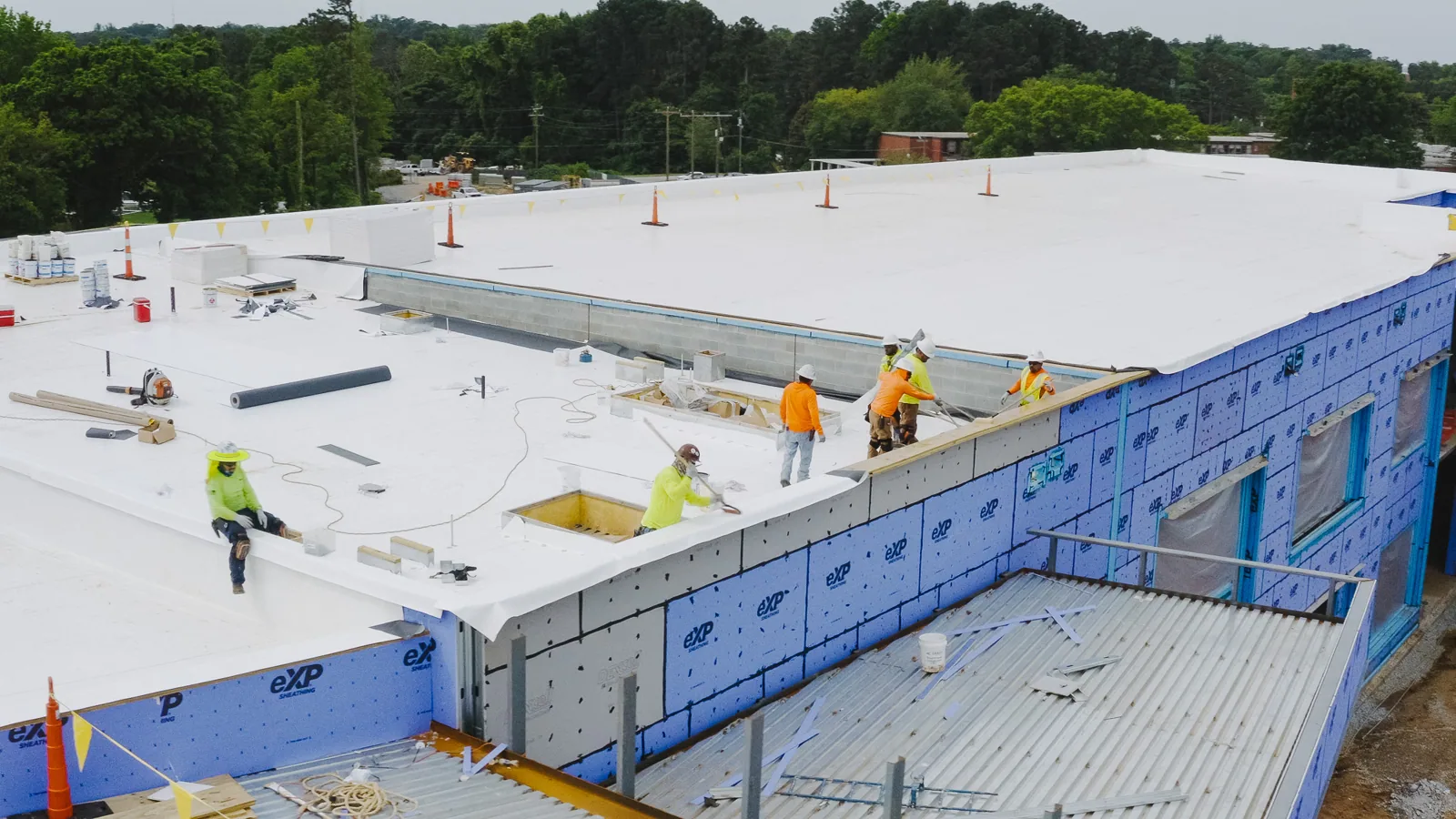
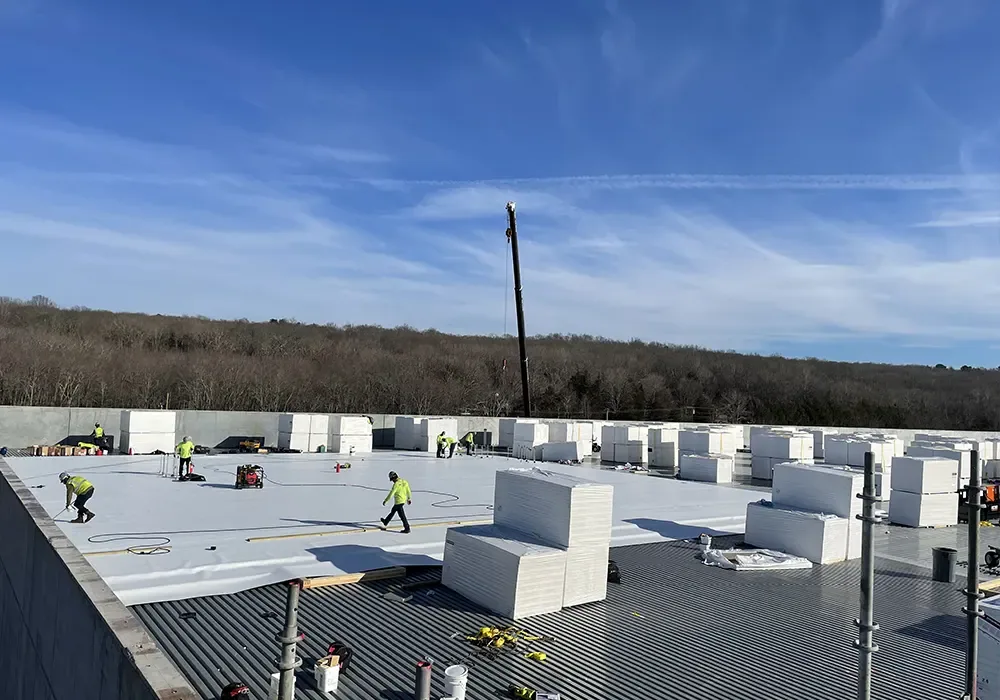
Built-Up Commercial Roofing in Jersey City, NJ
Inspect Jersey City built-up roofing plies, gravel surfacing, drains, flashings, and moisture before repair, recover, or replacement.
Inspect Jersey City built-up roofing plies, gravel surfacing, drains, flashings, and moisture before repair, recover, or replacement.
A built-up roof is a layered assembly of bitumen and reinforcing plies, often protected by gravel or another surfacing. On a Jersey City, NJ building, we identify the layers, roof edge, drains, and repair history before deciding whether to patch, recover, or remove the assembly. Local flooding and stormwater loading make water paths important to inspect, but the roof condition has to be established at the property. A condition inspection maps the field and its transitions before the owner approves a scope.
A BUR failure can develop as an open lap, blister, surface loss, damaged flashing, or water held at a drain. Gravel can hide the membrane condition, so we check areas where surfacing has shifted and inspect the underlying plies where a test opening is warranted. Interior symptoms, roof slope, and drain function help define the likely route. The resulting record distinguishes a spot repair from a broader issue in the assembly.
The number and condition of plies affect whether a local repair can tie into stable material. We look for exposed bitumen, loose gravel, cracked surfacing, blisters, open laps, and patches that bridge more than one layer. A core can confirm the build-up and moisture where visual evidence is limited. The inspection map records what is visible and what the test established. If the layers are poorly bonded or wet, another cover layer may trap the condition instead of resolving it.
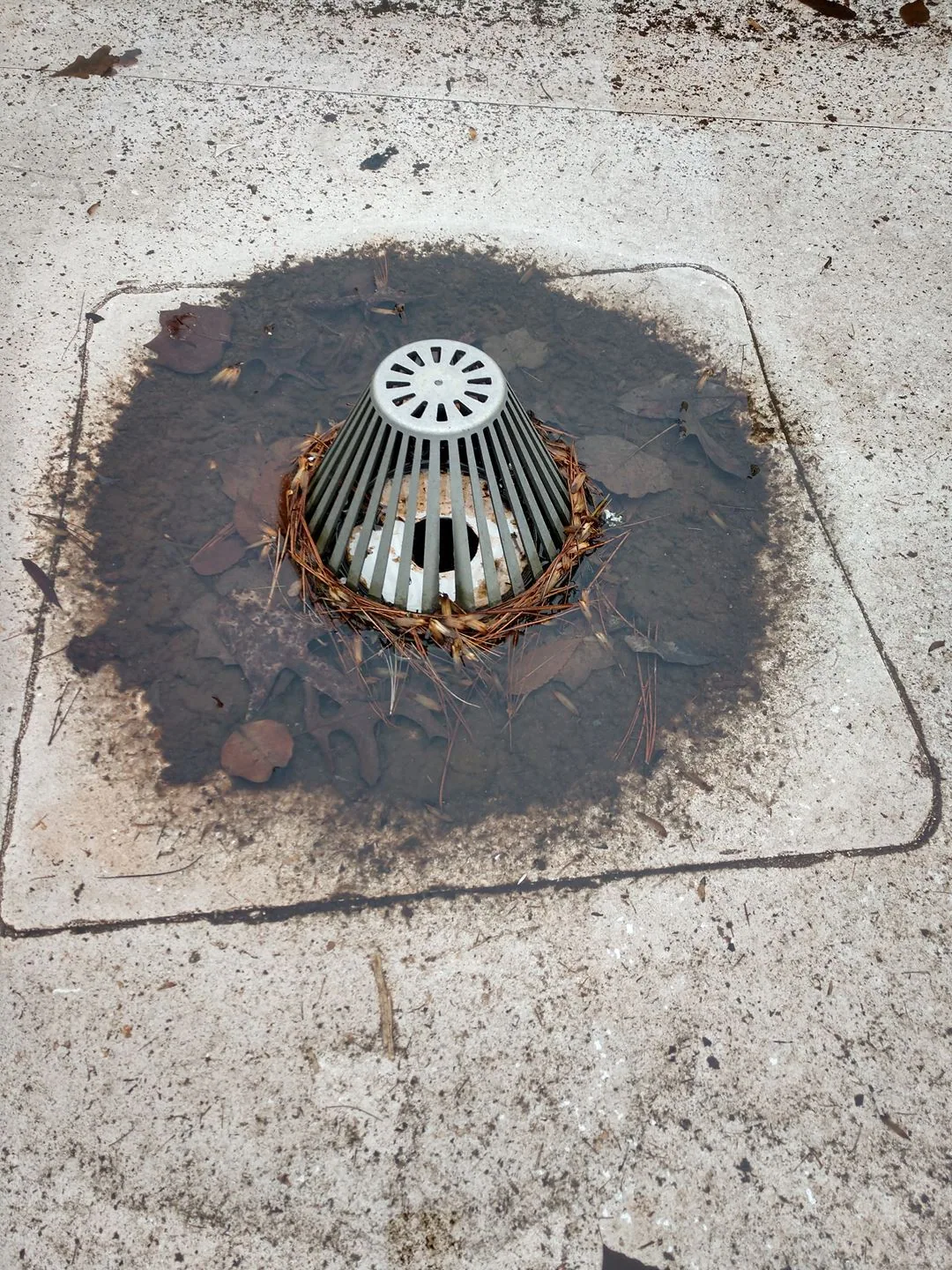
At a curb, parapet, or drain, the surfaced field meets a different flashing detail. We check gravel stop, base flashing, counterflashing, drain clamps, and the edge of each repair. A drain detail inspection may be needed where water collects around a bowl. We document surfacing removal and replacement limits so the owner can see how the repair will close and which adjacent area remains unchanged.
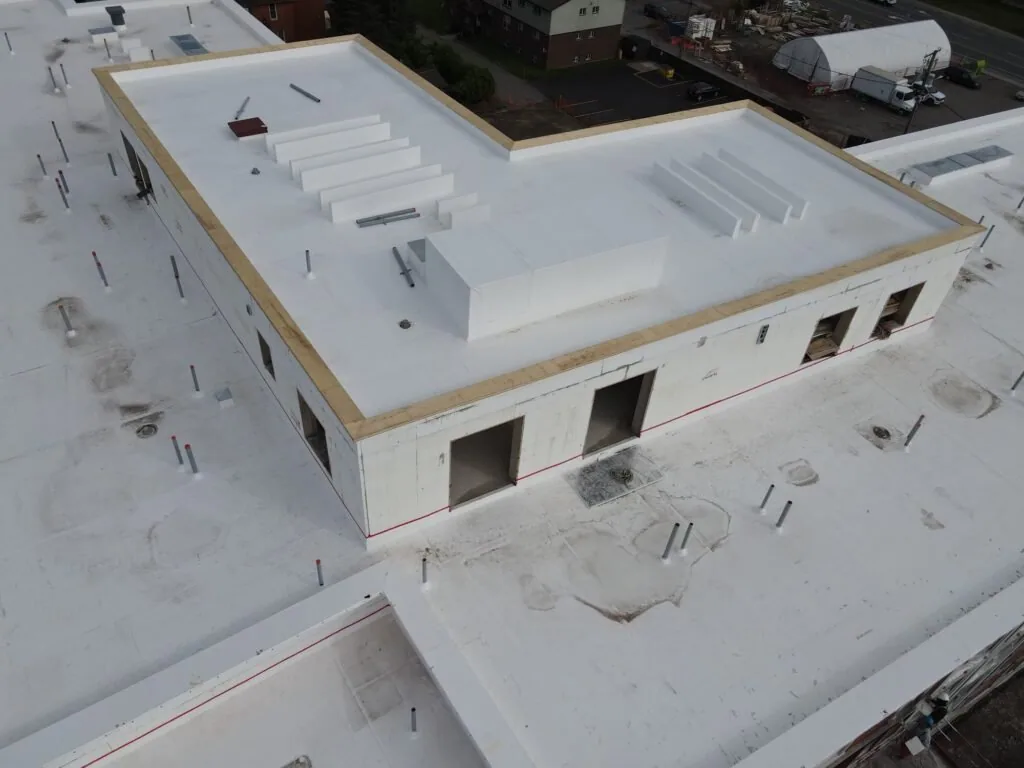
Set a site walk to review surfacing, plies, drains, and test openings. We will provide a repair, recover, or replacement scope tied to the assembly.
A water stain below the deck does not pinpoint the roof opening. We trace the path through laps, drains, walls, and penetrations, then compare it with the interior report. Gravel displacement can make a low spot visible, but it does not prove that insulation or deck is wet. The inspection records standing-water duration when observed, moisture clues, test locations, and any area that was not opened. A targeted opening can confirm the layer condition before a removal quantity is priced.
Jersey City experienced severe flooding and property damage during Irene and Sandy. That context makes drain and overflow checks relevant on local roofs, but it does not assign a cause to a leak. We inspect the actual bowl, slope, scupper, and field seam. If an active opening is isolated, leak repair can close it while a larger BUR decision remains open. The temporary correction and long-term recommendation are recorded separately.
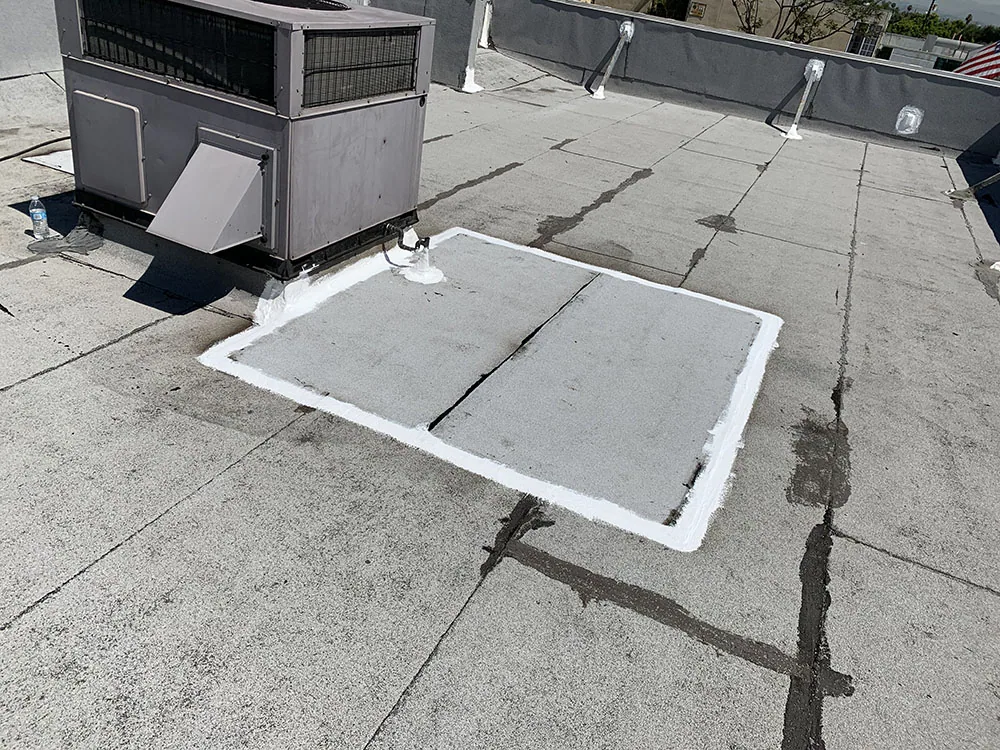
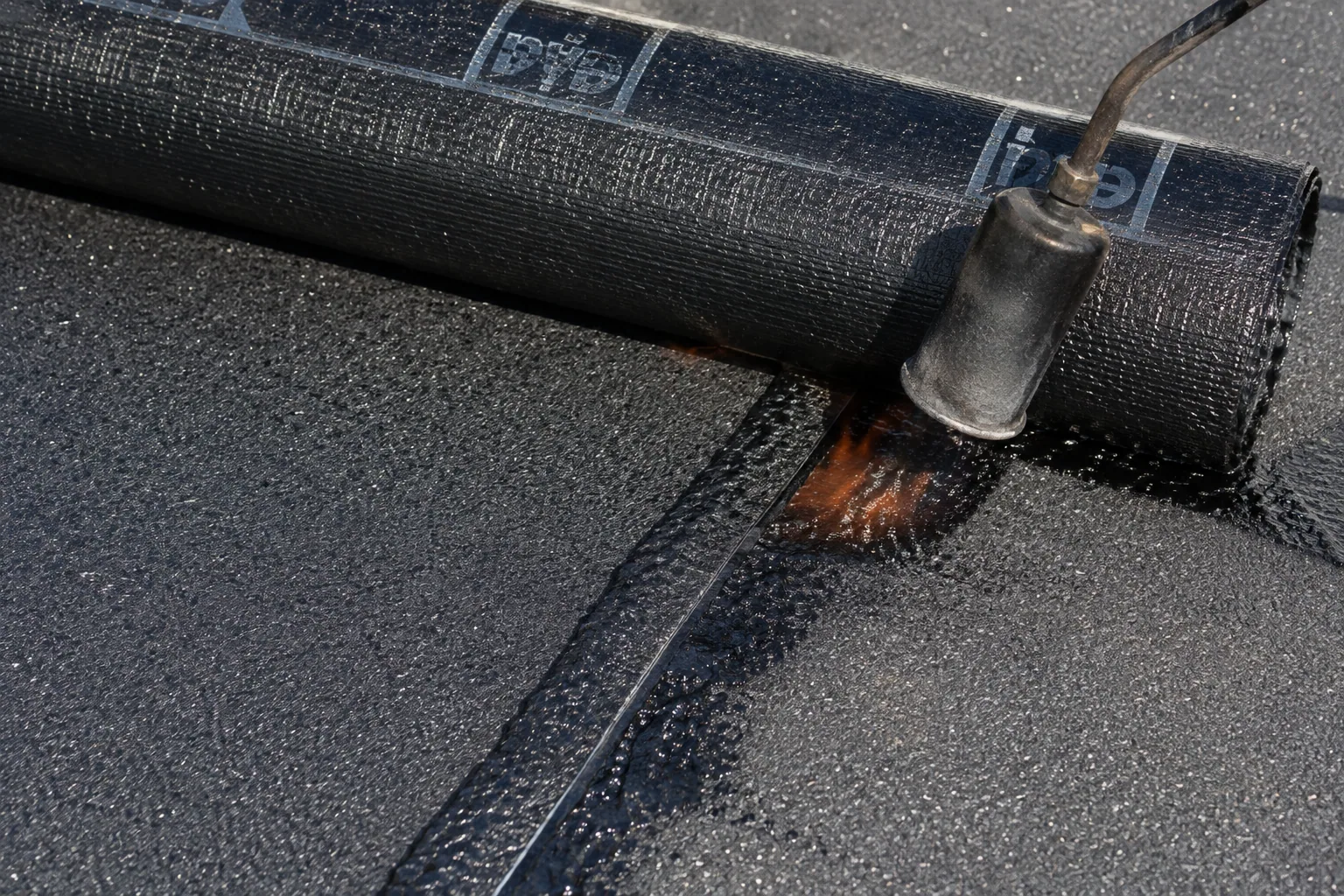
A localized BUR repair can remove loose surfacing, prepare the affected plies, add compatible bitumen and reinforcement, then restore protection. The detail depends on the existing assembly and application method. We do not patch over active moisture or bridge unstable plies. A recover may be possible when the existing roof is dry, attached, within layer limits, and able to support a new assembly. Drain height, edge metal, added weight, and rooftop equipment need review before that option is priced.
Where removal is needed, the proposal identifies the test area, tear-off boundary, insulation replacement, and debris route. Compare this scope with recover feasibility and a full replacement plan. If a new membrane is considered, modified bitumen can be evaluated against TPO or EPDM based on roof use, access, attachment, and maintenance. A TPO system comparison can make differences in seam and flashing details easier to evaluate. Each alternative states how flashings and drains will be rebuilt.
Timing depends on staging, surfacing removal, roof access, weather, lift needs, and how much wet material must leave the building. Gravel handling and disposal can affect the work window. We define an end-of-shift tie-in, protect open zones, and keep drains clear. If test results change the scope, the owner receives the affected area and the cost driver before the crew expands beyond the authorized boundary.
Jersey City’s stormwater concerns include localized flooding and loading on the combined sewer system. BUR still needs a roof-level water-path review: we check slope, gravel accumulation, drain bowls, scuppers, overflow, and edge terminations. Surface debris can slow flow, while a damaged drain detail can allow water below the membrane. The scope can pair roof work with drain and scupper repairs where the field inspection supports that correction. We show the owner which issue the work addresses and which drainage questions remain.
A new layer can raise the roof surface and affect the drain clamping ring or parapet termination. We check those elevations before a recover, then confirm how the new membrane will terminate at curbs, penetrations, and edge metal. A roof that drains poorly may need a separate design correction; coating or gravel replacement alone will not change the slope. The written scope preserves the drainage route and identifies any drain or overflow work outside the roofing contract.
Greenville, Tonnele Avenue, and Chapel Avenue are named industrial planning areas in Jersey City. On a BUR job in any of them, we verify the property's access, equipment, occupied floors, and staging point rather than infer conditions from location. The crew divides the roof into work zones, schedules surfacing removal, protects interior-sensitive areas, and closes each section at the shift boundary. An occupied-building sequence can coordinate notices, debris movement, lift windows, and weather protection.
The owner receives a daily note identifying the active zone, completed tie-ins, drain status, photos, and next handoff. Other trades should not cross freshly repaired areas without a protected route. Temporary material staging is kept away from drain paths. When weather compresses the day, the crew reduces exposed area and documents its closeout point. The record gives the property manager a usable map of what was opened and secured.
A closeout record should state the visible plies, surfacing, repair materials, test locations, drainage observations, and completed boundaries. It should also identify inaccessible sections and any layer that was not opened. Future checks can compare new cracks, blisters, gravel movement, or drain blockage with the baseline photos. The owner can plan a repair, recover, or replacement decision from the actual roof record rather than a general assumption about roof age.
Jersey City contains commercial areas from Journal Square to the Route 440/Culver corridor, but each property has its own assembly and service path. Another site in the portfolio, say in Bayonne, gets its own visit, photos, and scope. Ask us to inspect a BUR roof where gravel has shifted, a lap has opened, or water remains near the drain, then compare the repair boundary with longer-term options.