Roofing for School Districts in Jersey City, NJ
Roof inspection, repair and summer replacement planning for Jersey City school districts, with student safety, calendars and building records in one schedule.
Roof inspection, repair and summer replacement planning for Jersey City school districts, with student safety, calendars and building records in one schedule.
The school calendar is the schedule, and the roof has to fit inside it. A Jersey City district may use summer break for work that cannot be done with students in the building, but the schedule still needs room for material conditions, inspections, and weather holds. We plan backward from the first day of school: how long a tear-off takes, how many zones can be closed per day, and what has to be finished before the buildings reopen. The first decision for the facilities director is which buildings get the summer, and the answer comes from a ranked inspection of each of the district's roofs.
Jersey City has six large districts or wards: Downtown, Bergen-Lafayette, Greenville, Journal Square, The Heights, and West Side/Marion. Each has a distinct identity and architectural and urban form. A district that spans several wards should not assume its roofs match, and the survey treats each building on its own terms.
A district needs one method applied to every roof. We walk each building, photograph the surface and every penetration, check the drains and measure ponding, then grade the roof by zone. The grades go into a single ranking so the facilities director can compare a flat roof on an older building with a newer addition.
The ranking separates three groups. Buildings with active leaks come first, since water in a classroom or gym is a safety issue as well as a budget issue. Buildings with aging details come next, because a failed flashing in October is a leak in January. Buildings in good condition move to a maintenance cycle. The ranking supports a budget request to the board with real evidence, and it gives parents and staff an answer when they ask why one school was repaired first.
A written roof condition report for each building keeps this information available for the long term, which matters when facilities staff change.
Interior signs are part of the survey. Ceiling stains in corridors, buckled floor tile beneath a roof drain line, and damp smells in a stairwell each point to a roof zone. We ask custodial staff where they have seen water, since they know the building better than any drawing, and we match their answers to the photographs we take on the roof.
Send the building list, the summer program dates and the last known leak locations. We will walk the roofs, rank them, and return a plan that fits the calendar.
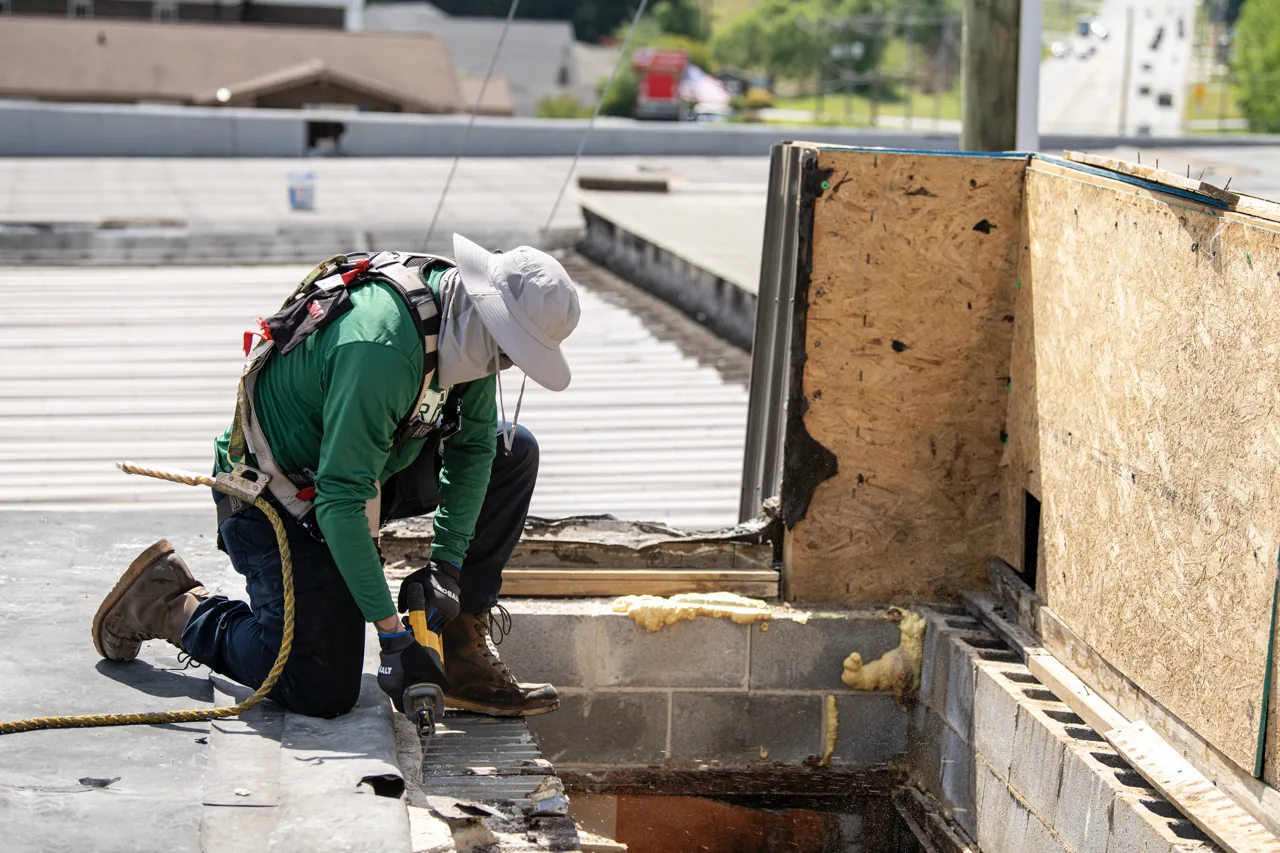
Summer is short and the work is weather-dependent. Adhesives and sealants need dry surfaces, welded seams need the right temperature, and heavy rain halts a tear-off. We divide each school roof into zones and finish each zone watertight before moving on. A daily closeout tells the facilities team exactly what is open and what is protected.
Staging needs space. Trucks, a lift and a dumpster cannot sit where buses load or where summer programs run. We map those areas with the facilities director, mark them on the plan and agree on delivery hours. If a summer program uses part of the building, we set the roof zones so that the occupied wing is worked at the most convenient times.
When a project cannot be finished before opening day, we phase it. The roof stays dry, the interior stays protected, and the rest of the work resumes during a break or on weekends. A phased plan beats an unfinished tear-off every time. For buildings that must stay in use all year, our occupied reroofing approach keeps classrooms open during the work.
Permits and approvals take time. A district that wants summer work should start the survey in the winter, finalize the scope in spring, and have materials ordered before school lets out. Late starts compress the work window and raise the risk of leaving a building half done.
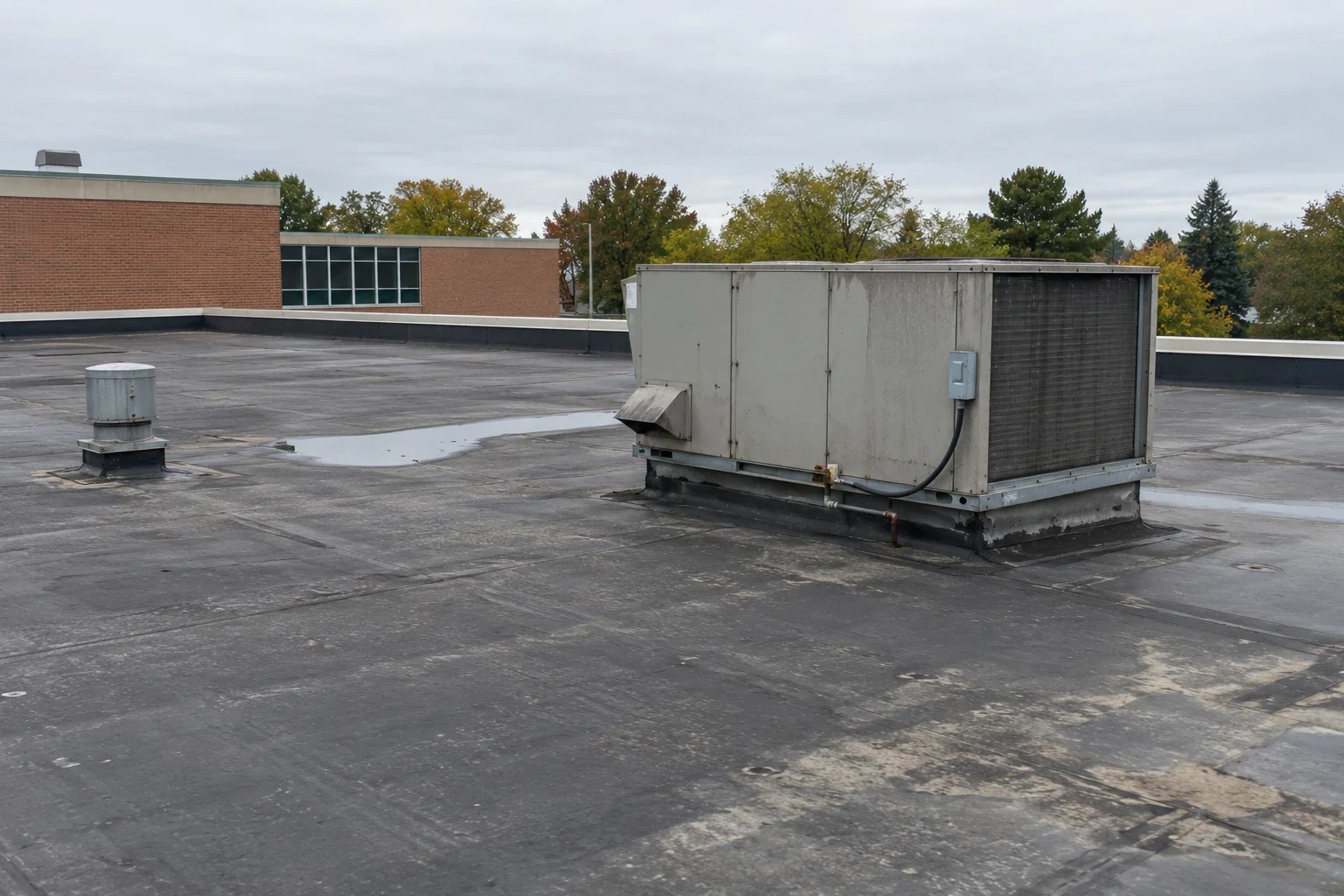
School roofs are often broad, with parapets that trap water and long runs of drain lines. Irene and Sandy flooded streets and damaged property across the city, and stormwater loading on the combined sewer is a standing concern. A district planning roof work should treat drains as a first-order item.
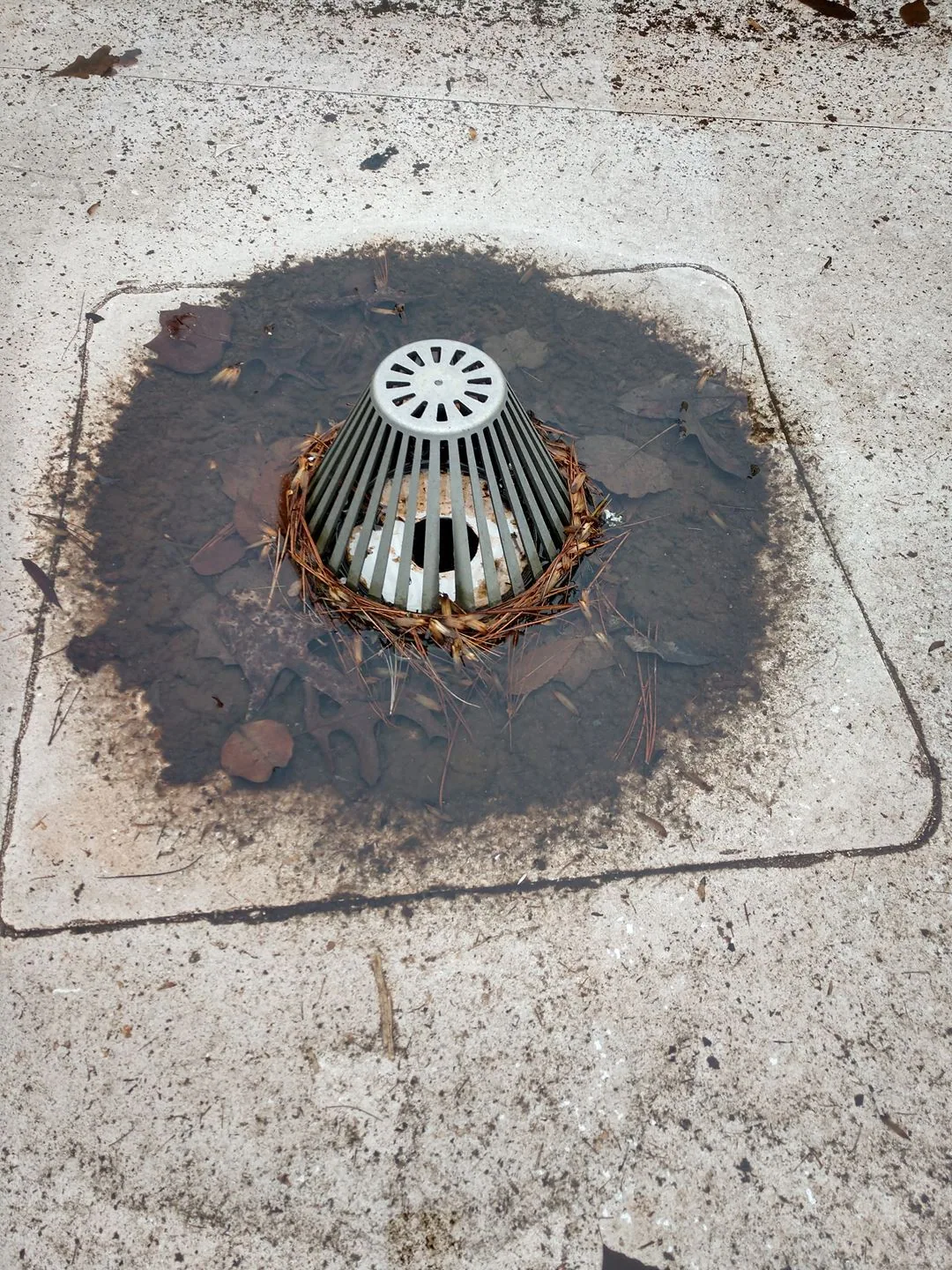
We clear and inspect drains, scuppers and overflows before each wet season. Gym and auditorium roofs deserve special attention, since the spans are large and the interior volume makes leaks more disruptive. Where a roof holds water for days after rain, the membrane ages faster and the structure carries extra weight. Solving the drainage can add years to the roof.
A spring and fall drain and scupper service can check outlets across the portfolio before seasonal work windows, while each building keeps its own repair scope.
Budgets in public districts move slowly, and the roof choice should survive the process. We write options that a board can understand: repair, restore with a coating, recover over the existing roof, or replace. Each option shows what it fixes, how long it should last, and what it does to the school calendar.
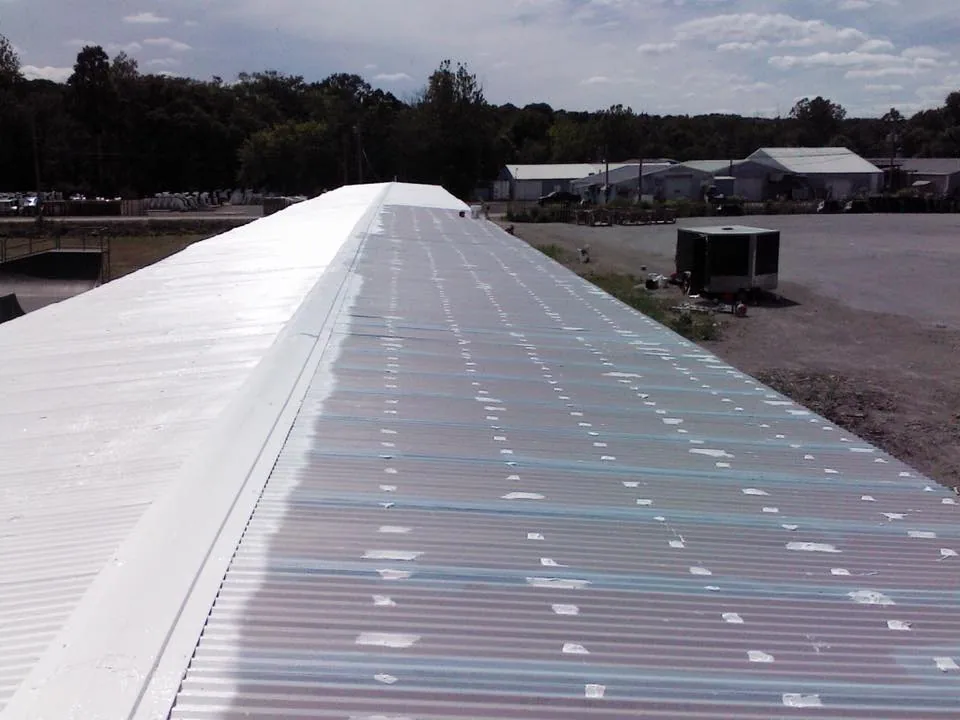
A coating can extend a sound roof with dry insulation. A recover over the old membrane reduces tear-off waste and shortens the work window. Replacement is the right answer where moisture has reached the insulation or the deck. We use moisture surveys to decide which applies, so that the option on paper matches the condition on the roof.
Schools also carry roof penetrations for kitchens, labs and gym ventilation. These need flashing detail that holds up under daily use. We list each penetration and its condition in the report. If a storm damages a school roof, the same file supports the claim, and insurance and restoration work can start from documented conditions.
Public districts answer to boards, auditors and the public. A roof file that includes photographs, grades, repair history and cost drivers makes those conversations easier. We prepare the file in a format that can be attached to a capital request, and we keep the record for each building in the same layout.
A district that shares a building or a project with public agencies can give them the same file. Buildings in Union City or Hoboken follow the same format, so records from nearby schools can be compared. A school roof in any of these places gets the same grading method.