Commercial Roofing in Elizabeth, NJ
Commercial roofing in Elizabeth, NJ: inspections, leak repair, cool roof upgrades, recovers and replacements staged around tenants and weather windows.
Commercial roofing in Elizabeth, NJ: inspections, leak repair, cool roof upgrades, recovers and replacements staged around tenants and weather windows.
Heat and storm exposure both work on an Elizabeth roof, and the order of repairs follows whichever stress has done the damage. Elizabeth is a Union County city with 137,298 residents counted in 2020 across 12.32 square miles. For a commercial owner there, the central question is whether the roof needs a repair or is finished. We answer it on the roof. We probe the seams, read the surface for blistering, splitting or granule loss, and check the drains. Then we give the owner a written condition and a ranked scope. Many calls begin with a commercial roof repair that either settles the question or shows that a larger plan is needed.
New Jersey's climate risks include rising temperatures. For a roof, heat shows up as surface cracking, loss of plasticizer in some single-ply membranes, softening of asphalt layers and sealant that dries and shrinks. UV does its own damage to exposed edges and flashings. We look for these signs in the field and at the details, where membrane is thinnest and movement is greatest.
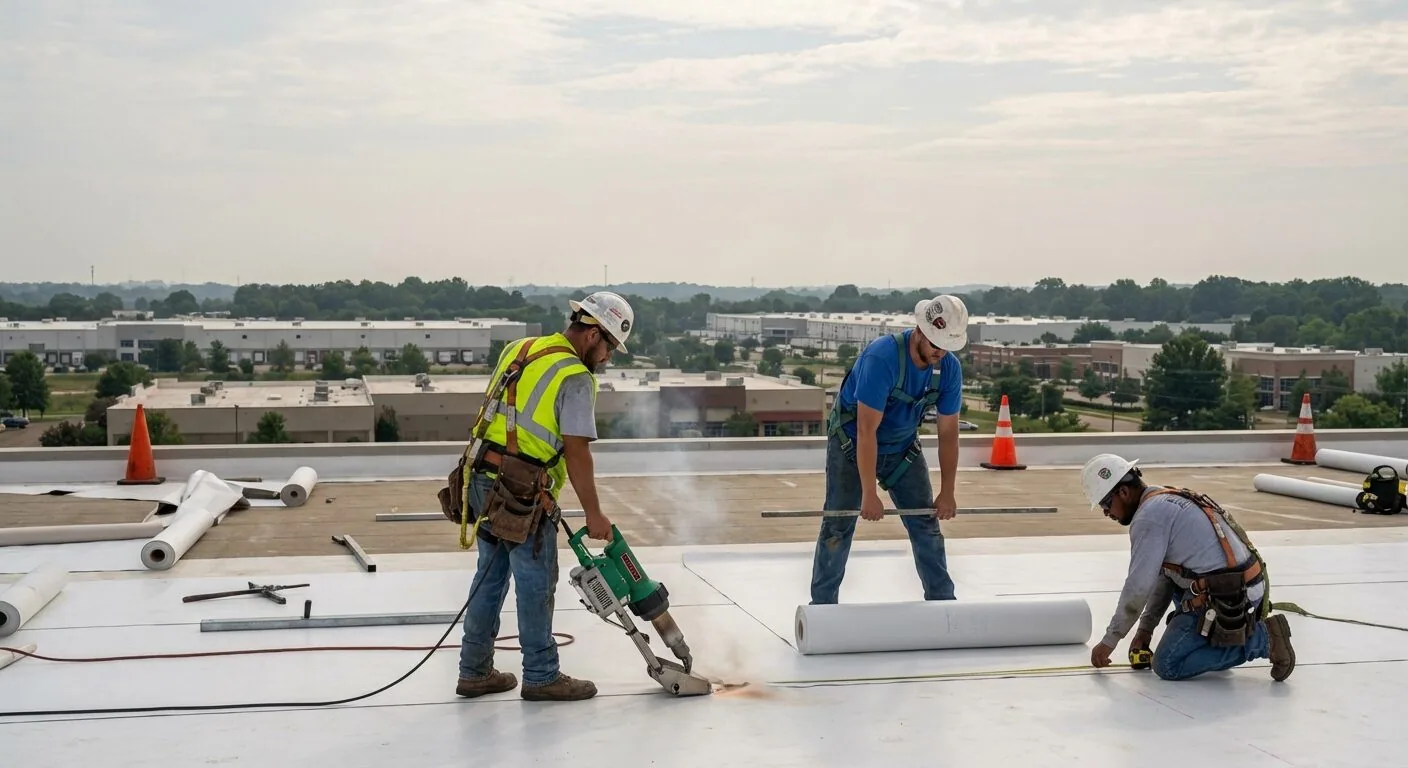
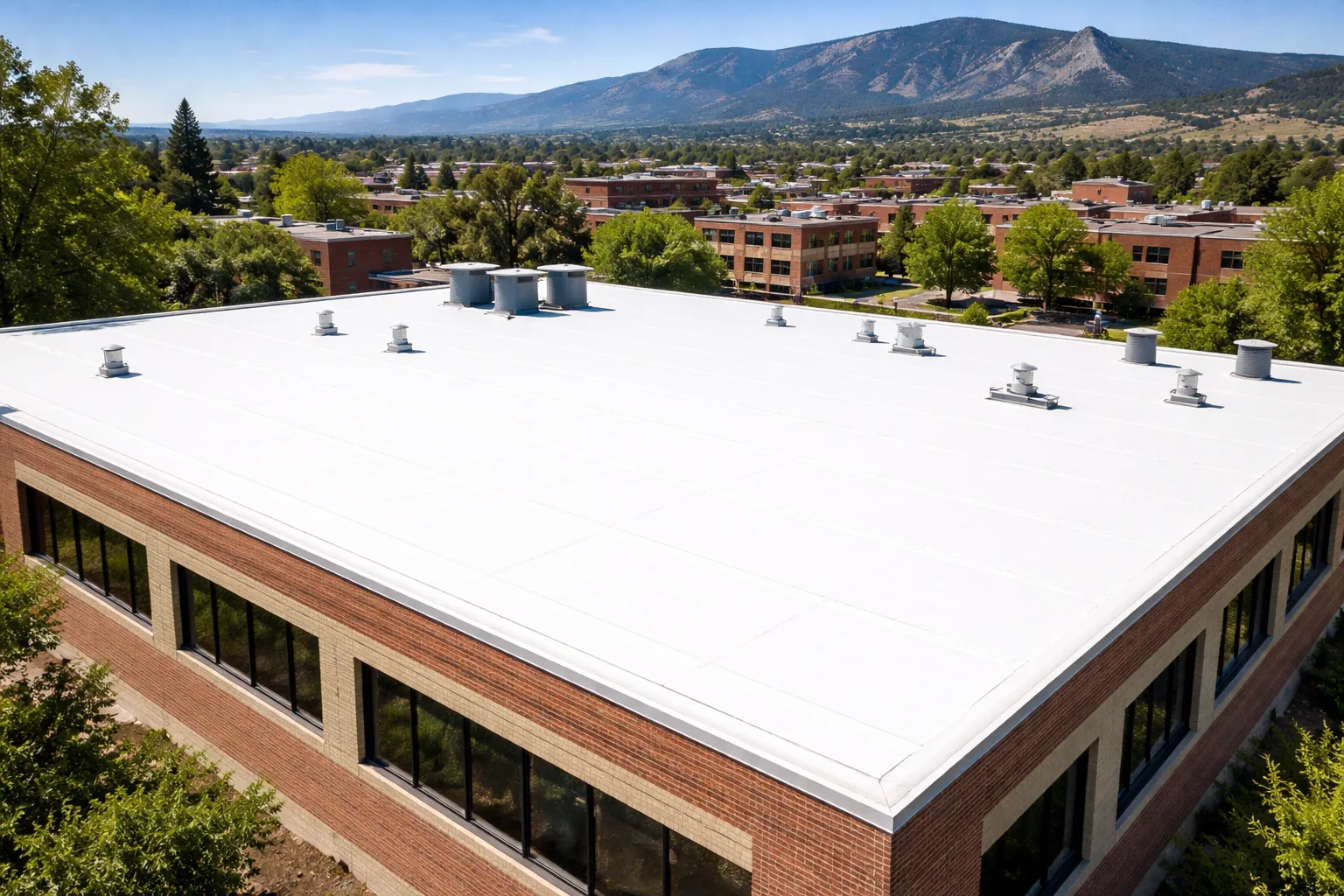
A cool roof installation uses a reflective membrane or coating to lower the roof surface temperature, which reduces thermal stress and can ease cooling loads on the floor below. It is a membrane decision as much as an energy decision. White TPO and PVC sheets are reflective from the start, and acrylic or silicone coatings can bring an older sound roof to a reflective surface.
On older built-up and modified bitumen roofs, aging appears as alligatoring, ridging and lap separation. Those findings steer the owner toward restoration, recover or replacement, depending on how deep the damage goes.
Winter brings its own checks. Water that enters a small opening can freeze, expand and enlarge it, so a hairline split at a seam in autumn can become a leak by midwinter. We repair those openings before the cold season when the schedule allows, and use temporary measures when it does not.

Share the roof access, the tenant hours to protect and any interior stains. We will walk the roof, sort the findings by urgency and send a written scope with the work windows we need.
We walk in a fixed order so nothing is skipped: access point, equipment area, field, drains, perimeter, penetrations, and last the interior ceilings under the suspect zone. Each stop produces a photograph, a note and a priority. The sequence sounds simple, and it prevents the most common error in roof inspections, which is stopping at the first defect and missing the second.
Findings are sorted into three groups. Active leaks come first. Conditions likely to leak within a season come second. Cosmetic or monitoring items come third. The owner sees which items can wait and which cannot, and what each repair would involve in materials and access.
If the property has had repeated service calls, we ask for the old invoices and photographs. A pattern, such as repeated patches at one curb, can tell us more than any single visit.
Interior evidence is part of the walk. Stained tiles, efflorescence on a masonry wall, rusted deck fasteners visible from below and damp insulation at a ceiling penetration all point to a roof zone worth testing. We photograph them with a reference to the roof plan so the interior and exterior findings can be matched.
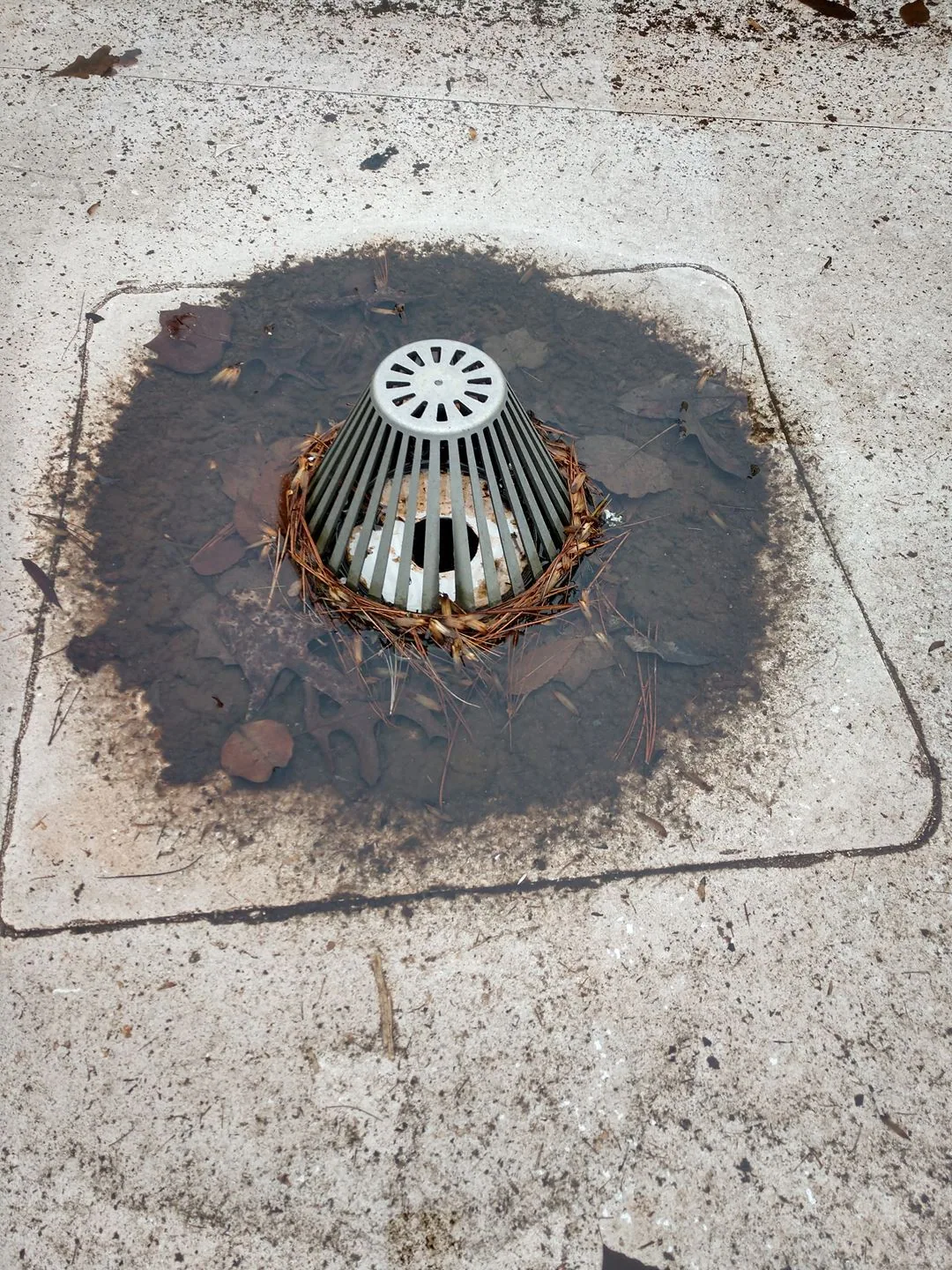
New Jersey's climate risks include chronic flooding, rising temperatures, and intense storm events. At an Elizabeth property, we inspect the actual drainage path: each bowl, leader, scupper, overflow, and discharge point. A clogged bowl and a broken leader below the roof require different scopes.
We look for scuppers, overflow outlets and the slope toward each. Where a roof has only one outlet and no overflow, we flag the risk. Adding an overflow scupper or a secondary drain is a modest project compared with replacing wet insulation after a blockage. Our drain and scupper work includes cleaning, resetting bowls, replacing strainers and building crickets to move water off low spots.
After a hard rain, a quick roof check can catch debris and ponding before they harden into a recurring problem.
Gutters and downspouts on smaller commercial buildings deserve the same review. We check hangers, joints and discharge points, and confirm that water leaves the building edge instead of soaking the wall below. The report records each outlet and the next maintenance or repair decision. The owner can compare it on the next visit.
A roof with several tenants needs a phased plan. We map the roof into zones tied to tenant spaces and equipment, then schedule the zones so each tenant sees minimal disruption. Loud work such as tear-off goes into the hours the manager approves. Hot work, adhesives and coatings follow the building's ventilation rules.
The lift plan covers how tear-off debris goes down and how new material goes up. A chute, a hoist or a crane each need space, permission and a safe route. On a site with limited ground space, we plan deliveries in smaller loads and confirm the staging area with the owner before the work window opens.
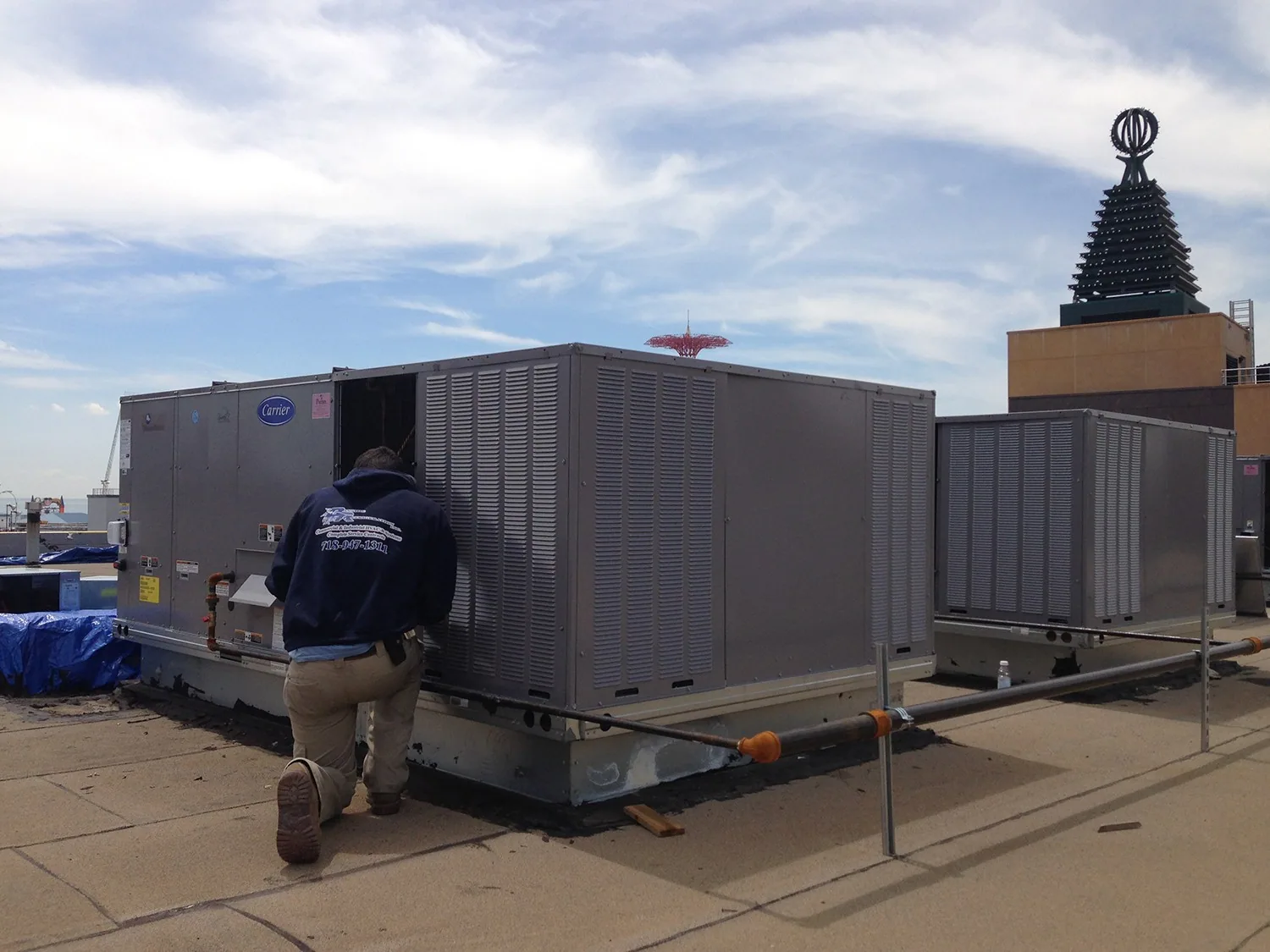
When the roof carries rooftop equipment curbs and supports, we agree with the mechanical contractor on shutdown times, disconnects and curb height. The new flashing has to meet the equipment where it will stand after the job.
At closeout the owner gets a file: roof zones, materials, photographs of each tie-in and a list of watch items. If a building is in a transaction or a lender review, the same file works as a roof condition record. Owners with additional buildings in Union City or Newark receive the same format across all sites.
For owners planning ahead, a roof capital plan converts these findings into a multi-year schedule, with repair years, coating windows and expected replacement points. The plan is revised as conditions change, because a roof that holds up better than expected pushes spending back and one that fails early pulls it forward.