Commercial Roofing in Kearny, NJ
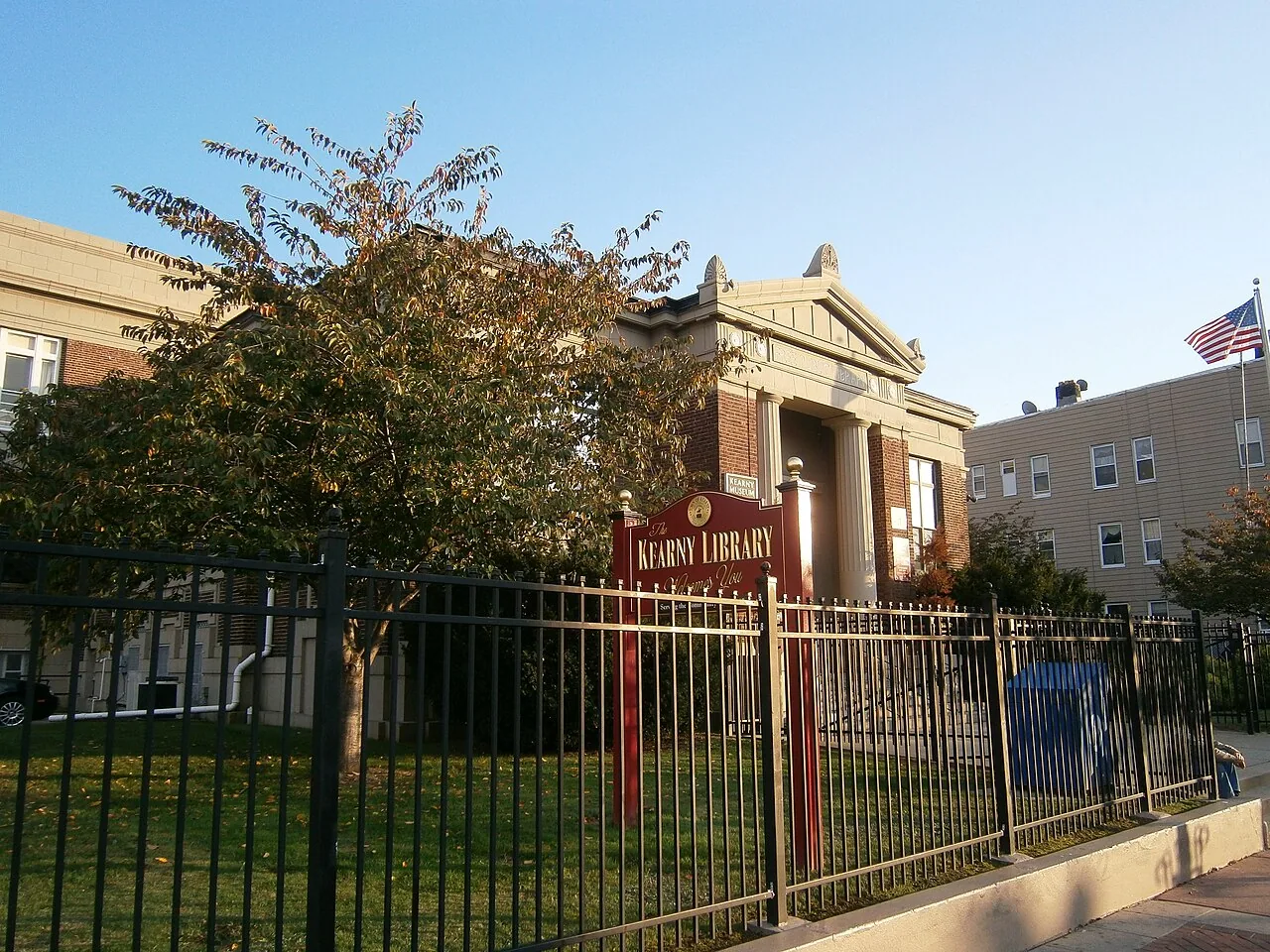
Commercial roof repair, coating, recover and replacement in Kearny, NJ, with moisture surveys, weather-window planning and written closeout records.
Commercial roof repair, coating, recover and replacement in Kearny, NJ, with moisture surveys, weather-window planning and written closeout records.
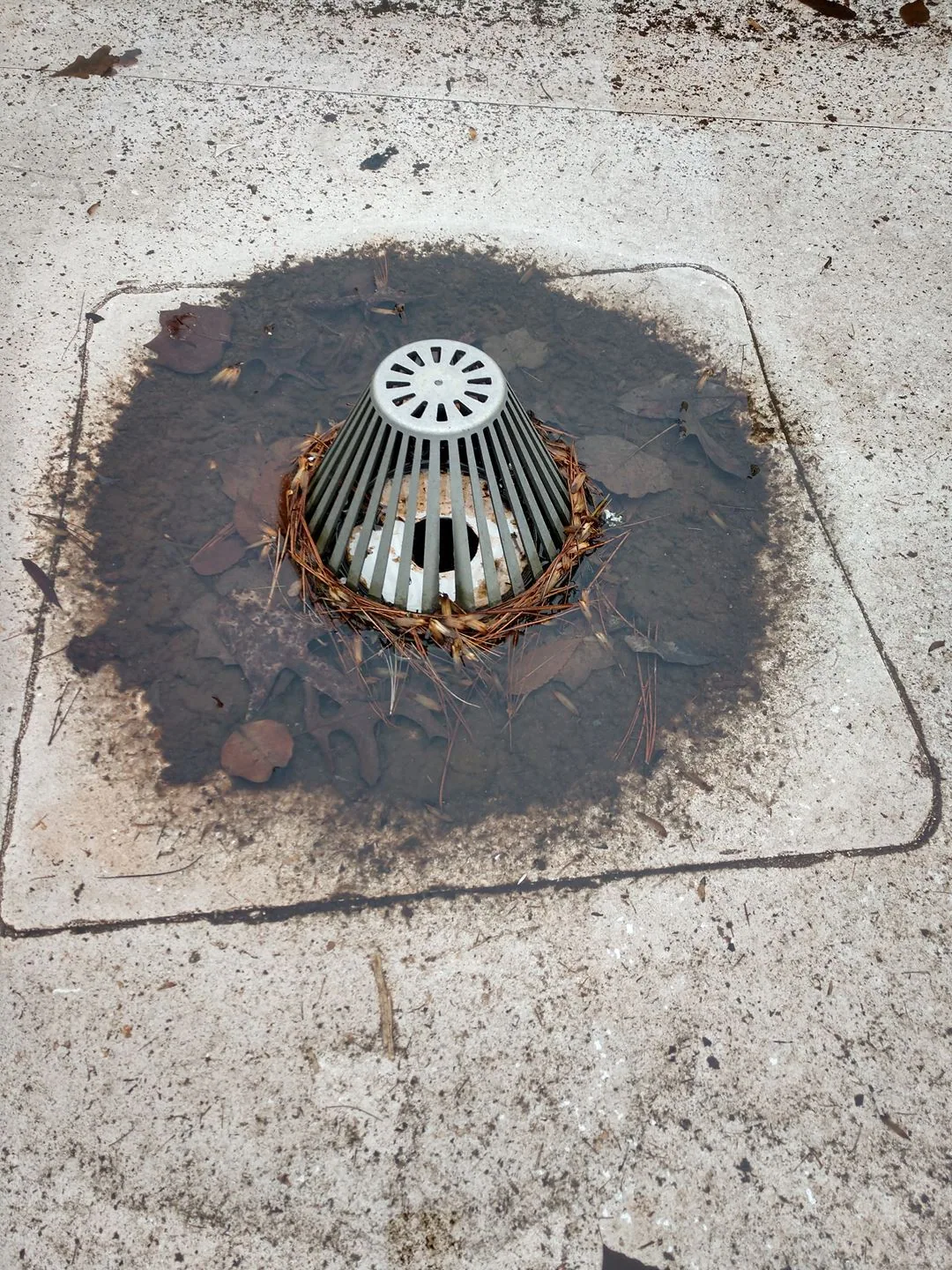
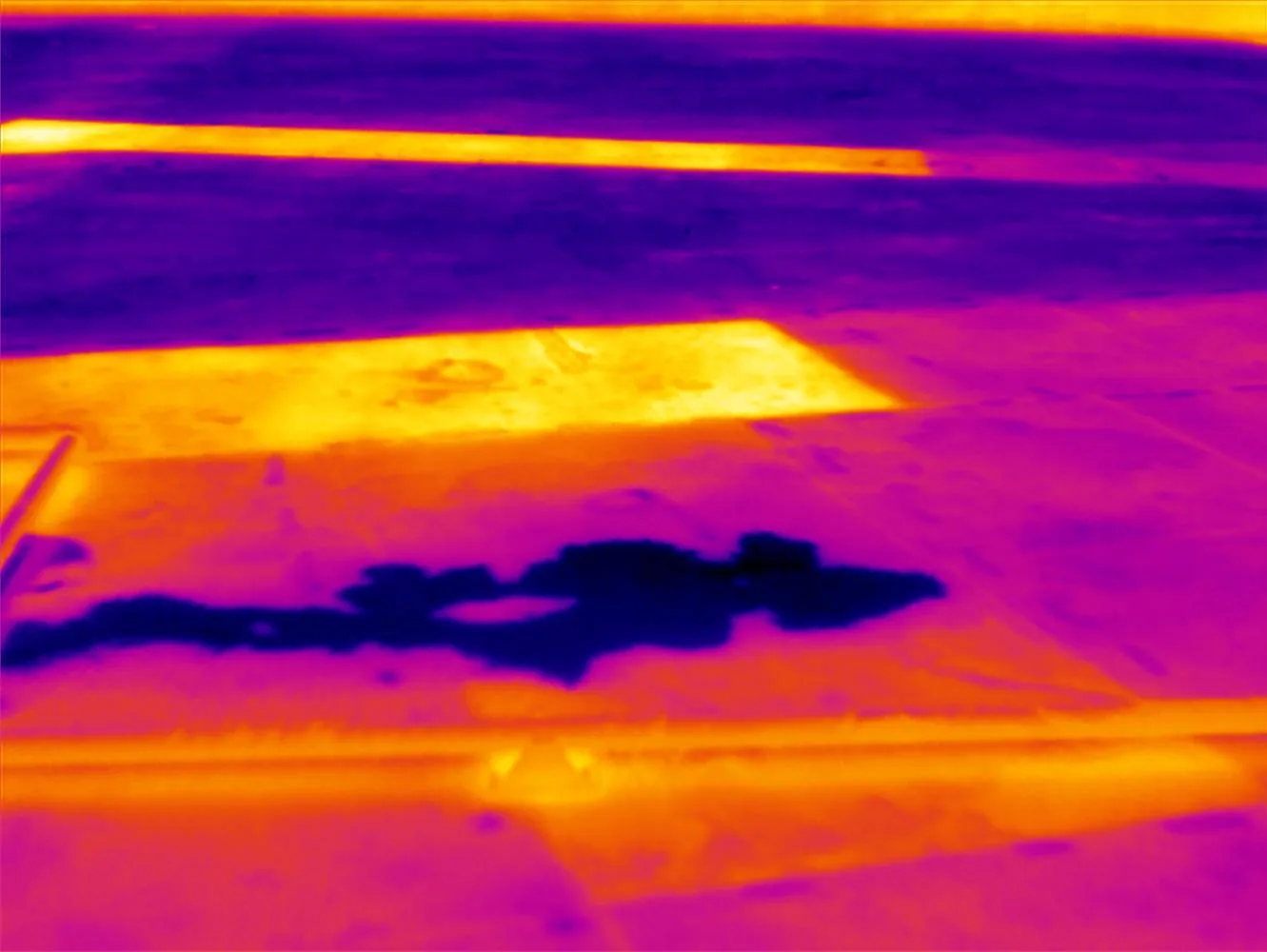
Kearny is a New Jersey town in Hudson County, with 41,999 residents across 8.84 square miles in 2020. For a commercial roof here, we trace the water path from the interior report to the opening, mark the wet zones, and give the owner a scope sized to the damage. A moisture survey with infrared imaging can help locate temperature differences when conditions support the scan; test cuts confirm layers at selected points.
Insulation holds water the way a sponge does. Once a seam opens, the board below takes on moisture, loses its insulating value and carries water sideways beyond the original leak. A visual walk finds the opening. An infrared scan can help target test locations, and an opening confirms the roof layers at that point. We combine both, then confirm with test cuts at the edges of the suspect zone.
The cut boundary matters for cost. Remove too little, and the leak returns. Remove too much, and the owner pays for good material. When surface and weather conditions support infrared imaging, we mark temperature differences for comparison with the roof plan and test openings. The repair scope then lists the square area, the substrate work and the new membrane tie-in.
Where the deck below shows rust or rot, we stop and report it. Replacing a deck section changes the schedule, the lift plan and the budget, and the owner should see that before work continues.
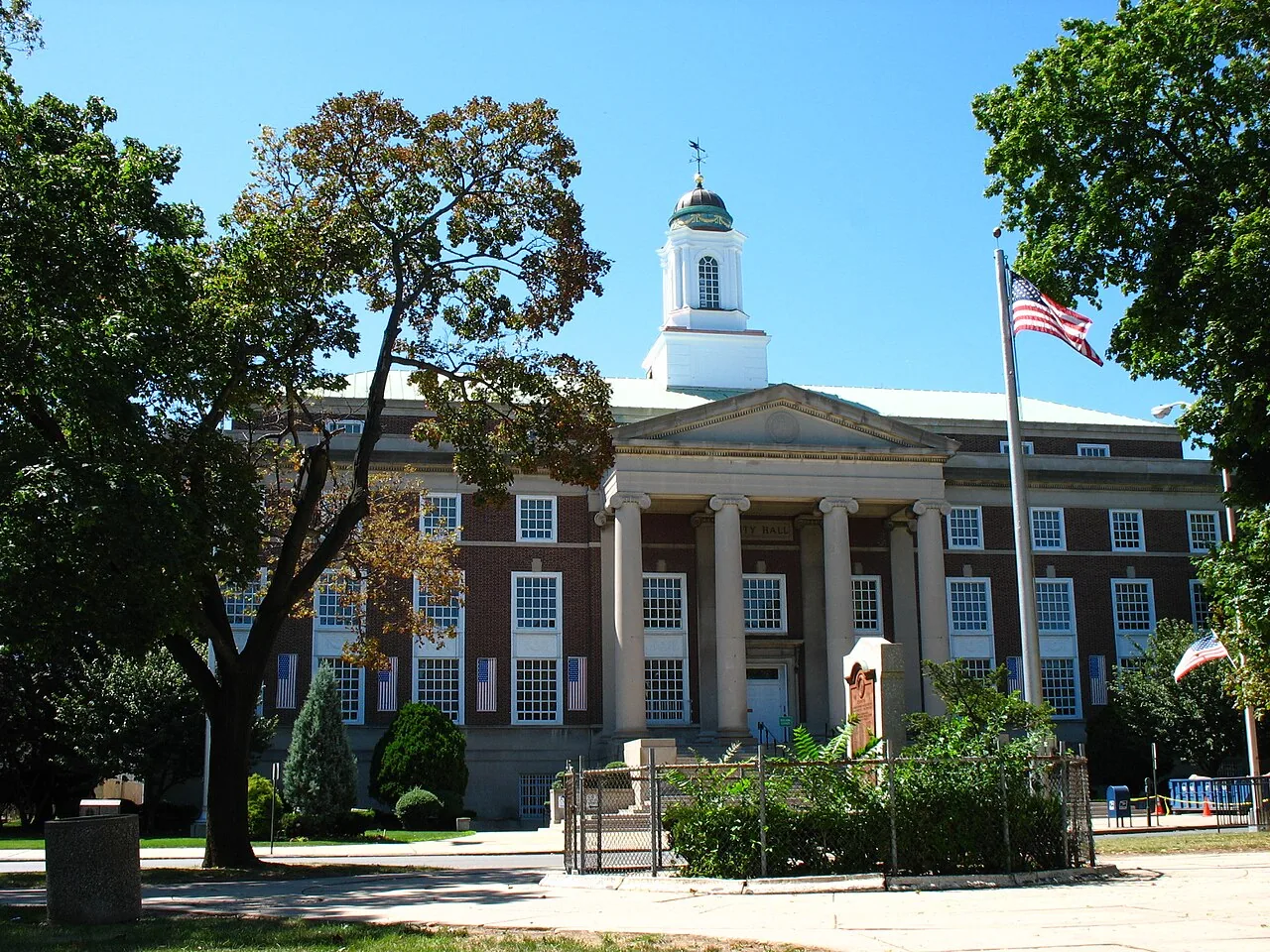
Tell us where the water shows inside, how the roof is reached and which hours need protection. We will survey the roof, mark the wet zones and send a scope with a work window.
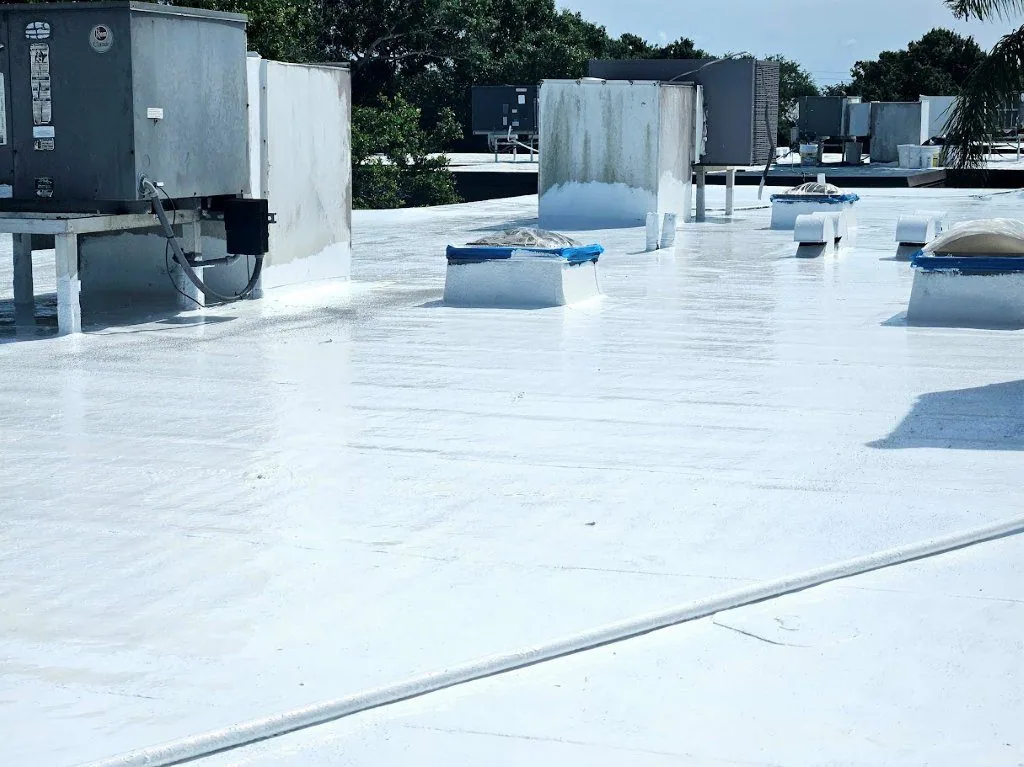
Once the wet area is mapped, the options sort themselves. A dry, well-bonded membrane can take a silicone coating that seals seams and flashings and adds reflectivity. A roof with a modest wet section can be cut out, rebuilt and coated. A roof with widespread moisture or multiple layers of old membrane needs tear-off and replacement.
Each path has a cost driver. Coatings depend on surface prep: cleaning, priming, and the number of details to treat. Recover depends on the old roof's flatness and dryness. Replacement depends on tear-off depth, deck condition, new insulation thickness and the number of curbs and penetrations to rebuild. We state those drivers in the proposal so the owner can compare options on the same basis.
Metal roofs follow a different line. Fastener backout, sealant failure at laps and corroded cut edges are common findings, and a retrofit panel system may be an option when the original panels are past service but the structure is sound.
Edge metal and flashing decisions come last in the sequence but first in importance. New membrane meets old at every wall, curb and penetration, and each of those tie-ins needs a compatible flashing material and a clean, dry substrate. We specify the termination height, the fastening pattern and the sealant, and we photograph the finished detail before it is covered.
New Jersey’s resilience risks include sea-level rise, chronic flooding, rising temperatures, and intense storm events. On a Kearny roof, we inspect the actual drainage route and edge details before setting temporary protection or permanent repair.
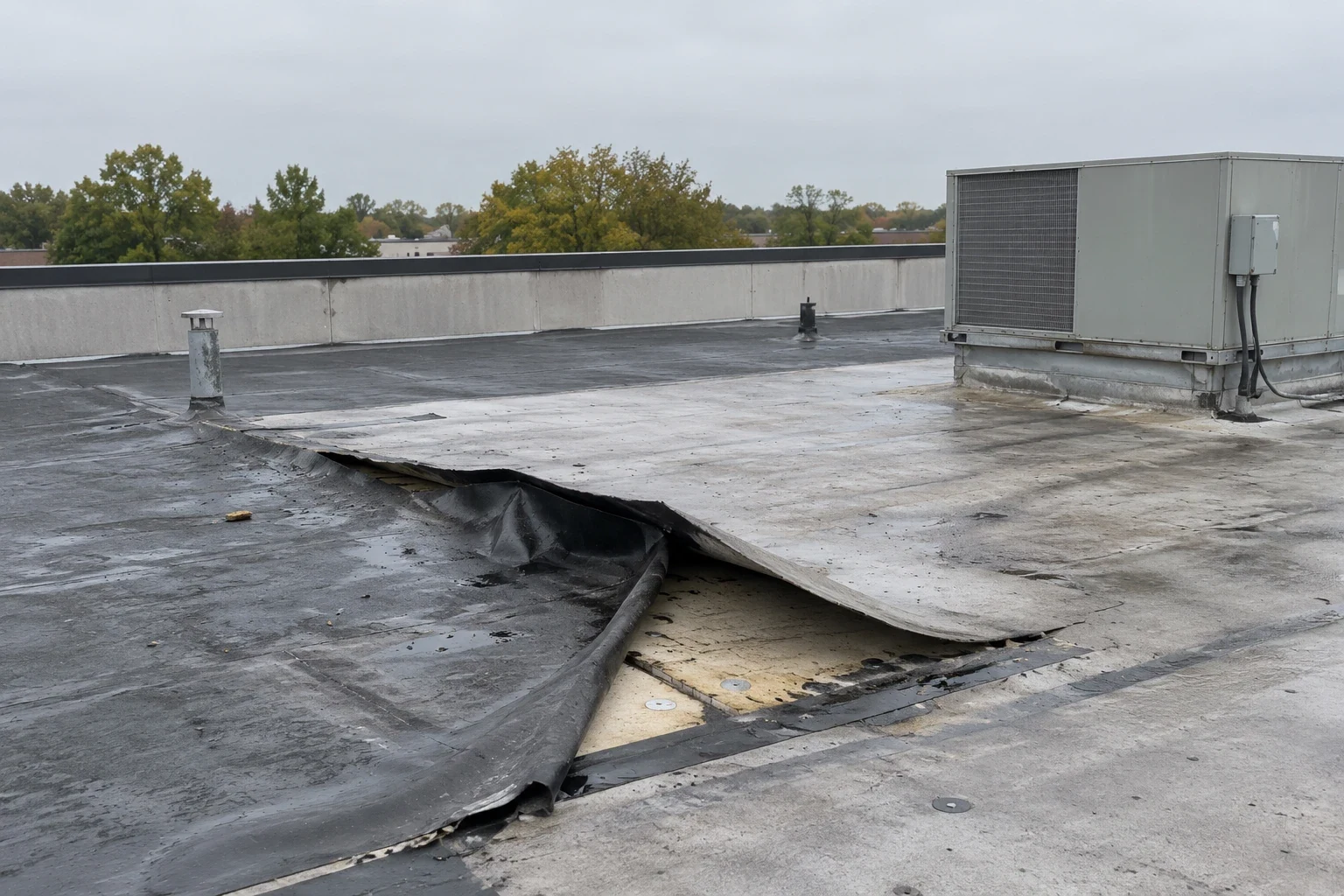
For wind, the edges and corners get the first look. Coping that has lifted, fascia metal that has opened and membrane flashing that has pulled away are entry points for both uplift and water. We reset or replace those parts, secure the field membrane to code-compliant fastening patterns, and record each repair. A wind-damaged roof needs attention to the leading edge before the field.
After heavy rain, we note debris lines and ponded areas, then compare them with roof slope, outlet, and overflow conditions.
The calendar controls roof work as much as the crew does. Coatings and adhesives have temperature and moisture limits. Heat-welded seams need dry membrane. Winter work means tighter material handling and shorter days. We place the heaviest tear-off work in the best weather window available and keep interior-side protection and drain work for the periods when the forecast is less friendly. Before applying a coating or adhesive, we confirm surface dryness and temperature against product requirements. A forecast window also sets the area the crew can open, protect, and close before leaving. If the selected work cannot be completed safely, we shorten the open zone and document the return point.
Every day ends with a closeout. Open edges are sealed, loose material is secured, and the roof is photographed from the tie-in to the nearest drain. If a storm arrives overnight, the owner has a record of what was dry and sealed at the end of the shift. At the return visit, we compare the temporary seal, edge, and drain condition with the prior photographs before beginning permanent scope.
For an occupied building, the interior side is part of the plan. Ceiling tiles may be protected before the work starts, rooftop equipment may be shut down only at agreed hours, and tenants receive a notice of the schedule from the property manager. Material is staged in the order the crew will need it, so a pallet of insulation never sits on the zone that has to be sealed first.
At the Kearny site walk, we record walk-pad condition, curb flashing, drain bowls, and any route used by maintenance staff. The report ties each observation to its roof zone and the access needed for follow-up.
We write that reading into a roof condition report with photographs by zone, a remaining-life estimate and a repair list. Owners with properties in Bayonne or Newark can keep separate building records while using the same condition fields for budget review.
Closeout also covers the next visit. We list the items worth rechecking, such as a repaired seam, a re-flashed curb or a drain bowl that was reset, and propose a date for the check. A maintenance visit that compares those items against the closeout photographs shows whether the repair is holding without a second survey.