Commercial Roof Drain and Scupper Repair in Jersey City, NJ
Service commercial roof drains and scuppers in Jersey City with bowl, flashing, overflow, and low-point checks tied to a documented water path.
Service commercial roof drains and scuppers in Jersey City with bowl, flashing, overflow, and low-point checks tied to a documented water path.
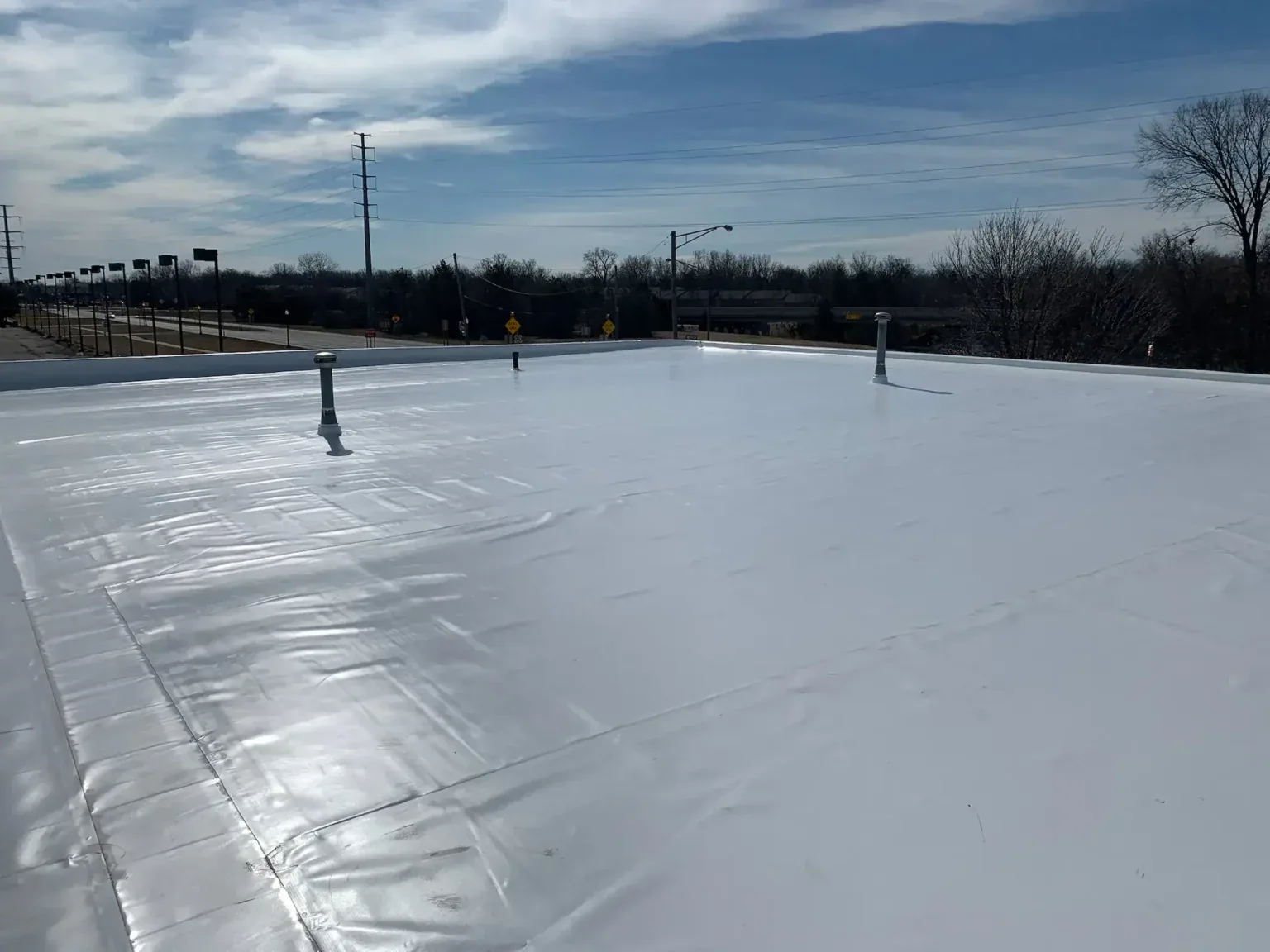
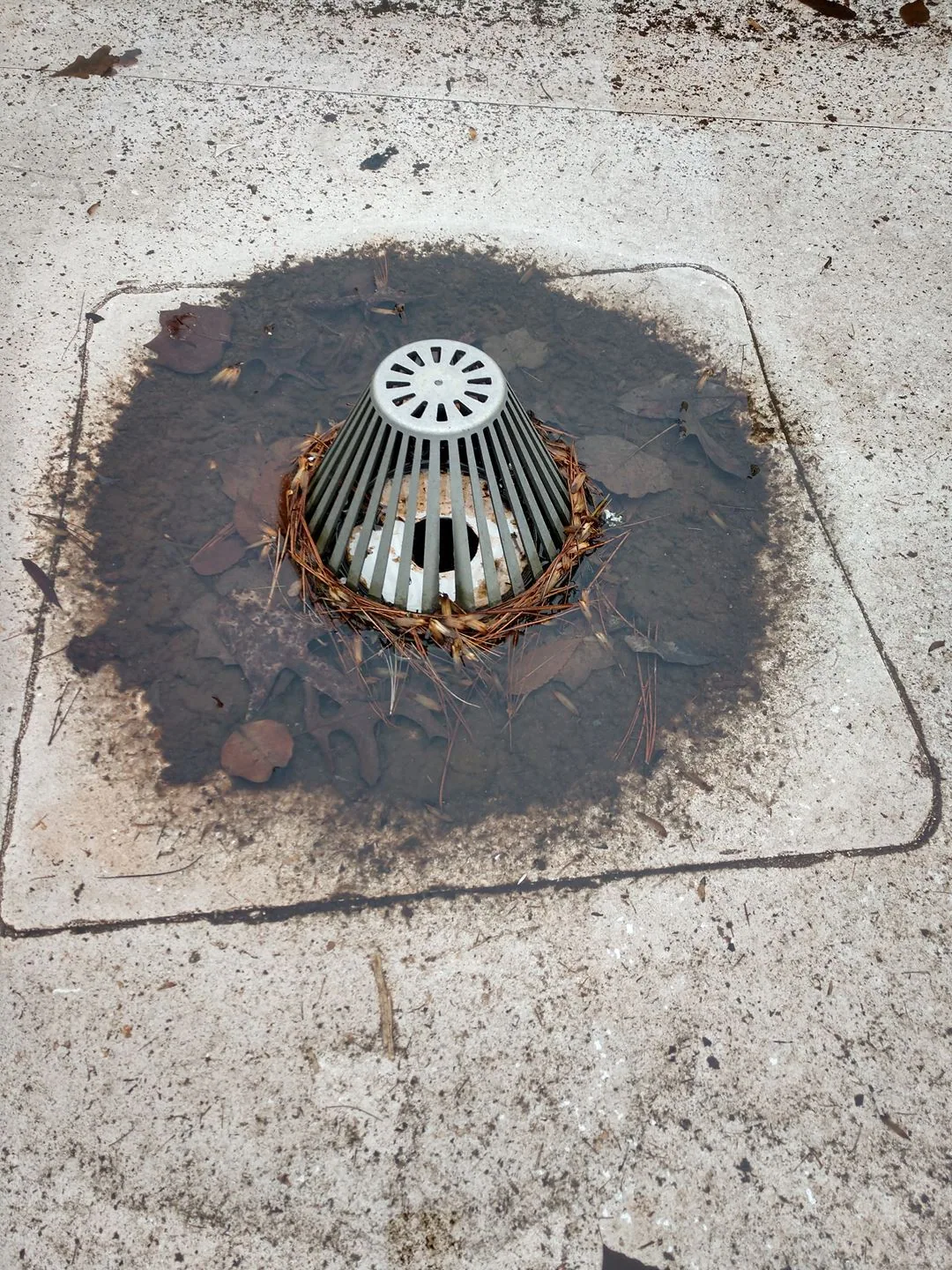
Water that cannot reach its outlet will find a low seam, curb, or wall edge. On a Jersey City commercial roof, we inspect the drain path from the surface to the bowl, overflow, and discharge detail before proposing correction. The scope records debris, standing water, loose flashing, and connection failures separately. A roof inspection maps the roof zones and identifies which detail needs service.
Jersey City has identified local flooding and stormwater burden on combined sewers; roof drainage still needs a clear primary and overflow route. At the roof, we inspect the strainer, clamping ring, drain bowl, overflow route, scupper, and nearby low areas directly. That record distinguishes routine cleaning from a flashing repair or a larger drainage change.
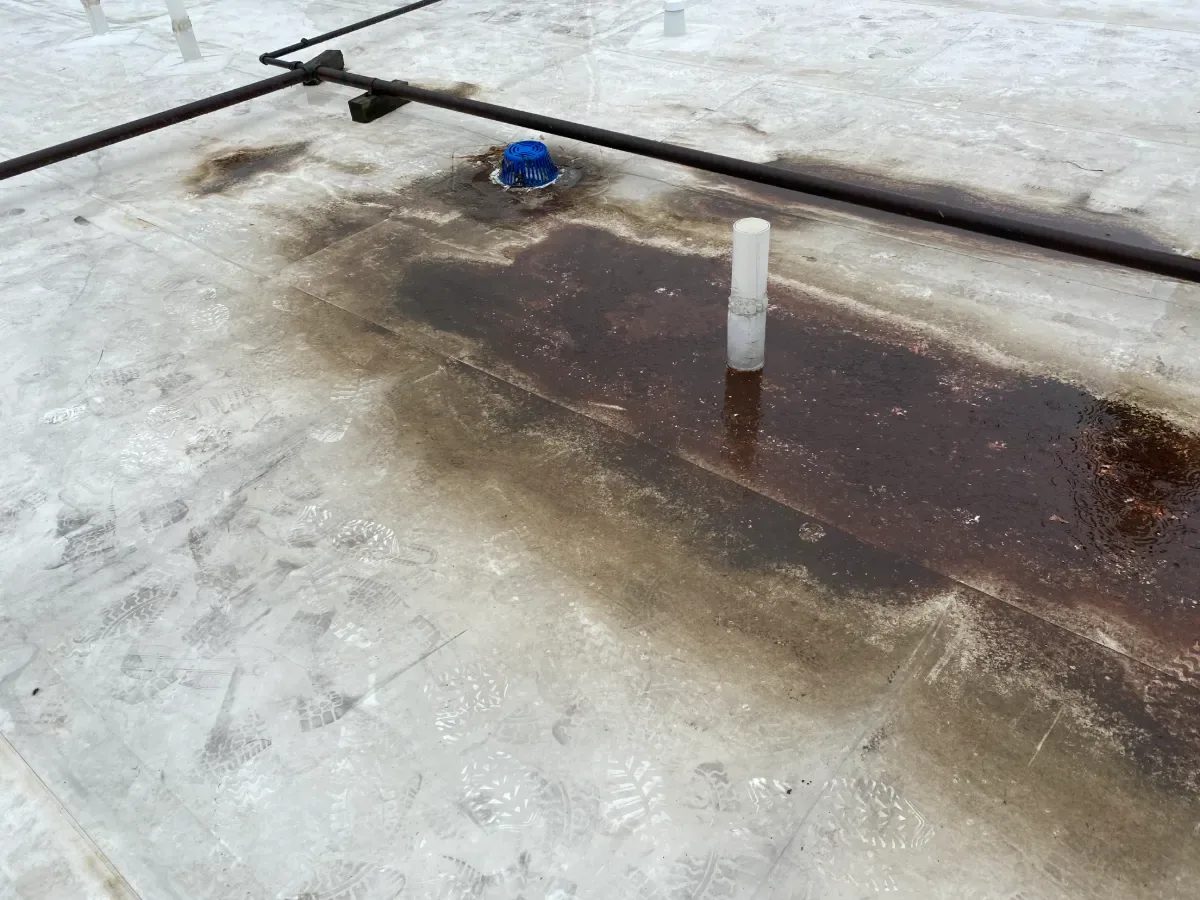
At each drain, we remove accessible debris within the approved scope and inspect the bowl, clamping ring, strainer, and membrane connection. A loose ring or split flashing may allow water below the roof even when the outlet is clear. We photograph the detail before and after work and note whether the drain can be tested safely during the visit.
Multiple drains may serve separate roof zones. We label each location so a maintenance worker can report which outlet slowed or backed up. If water is still standing, we check its path and the condition of adjacent crickets, equipment pads, and seams. A maintenance visit can repeat the check on a planned cycle, while an active opening needs a separate leak repair.
Share the slow outlet, roof access, and recent ponding or leak reports. We will inspect the water path and document cleaning or repair work by roof zone.
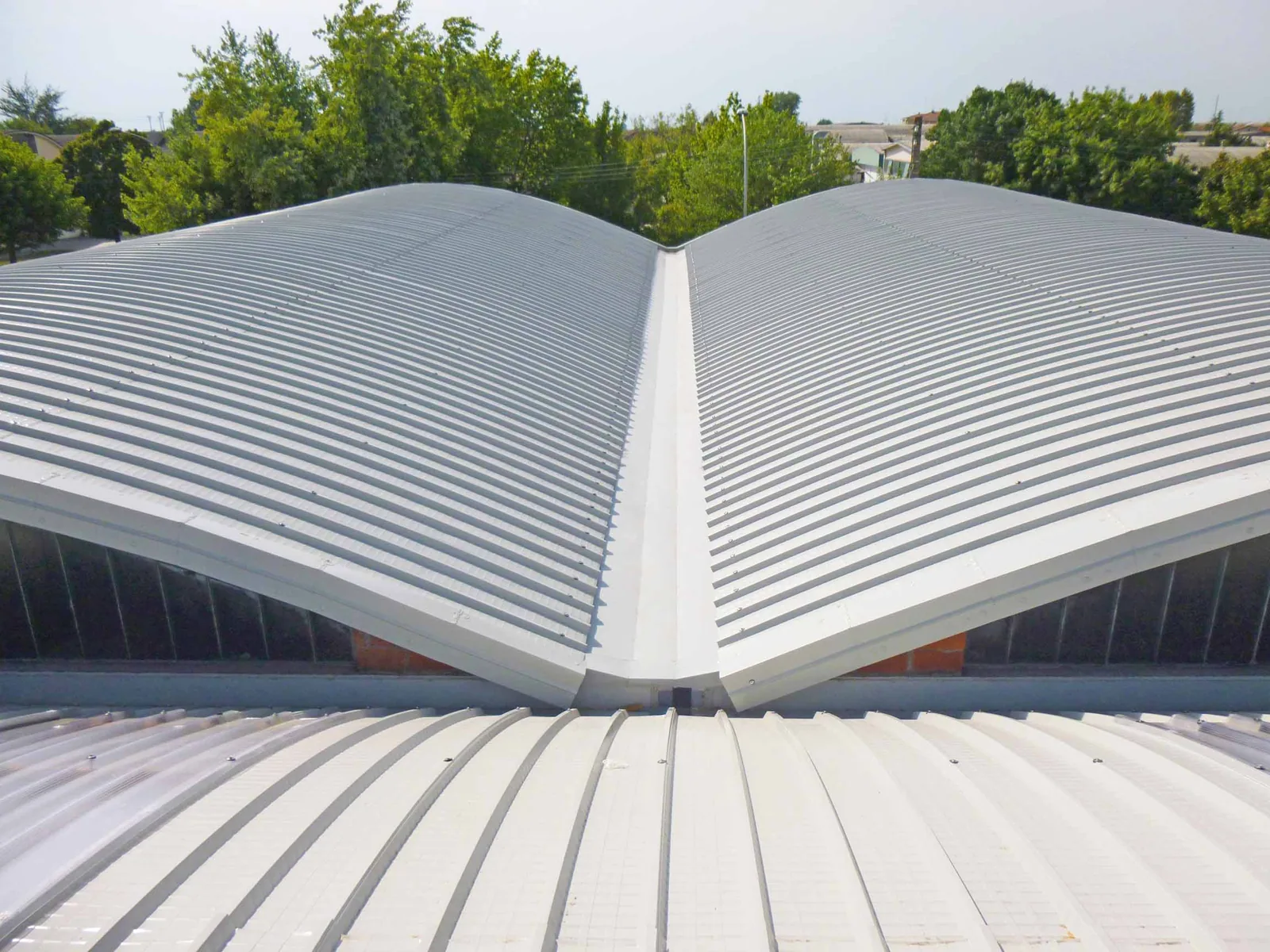
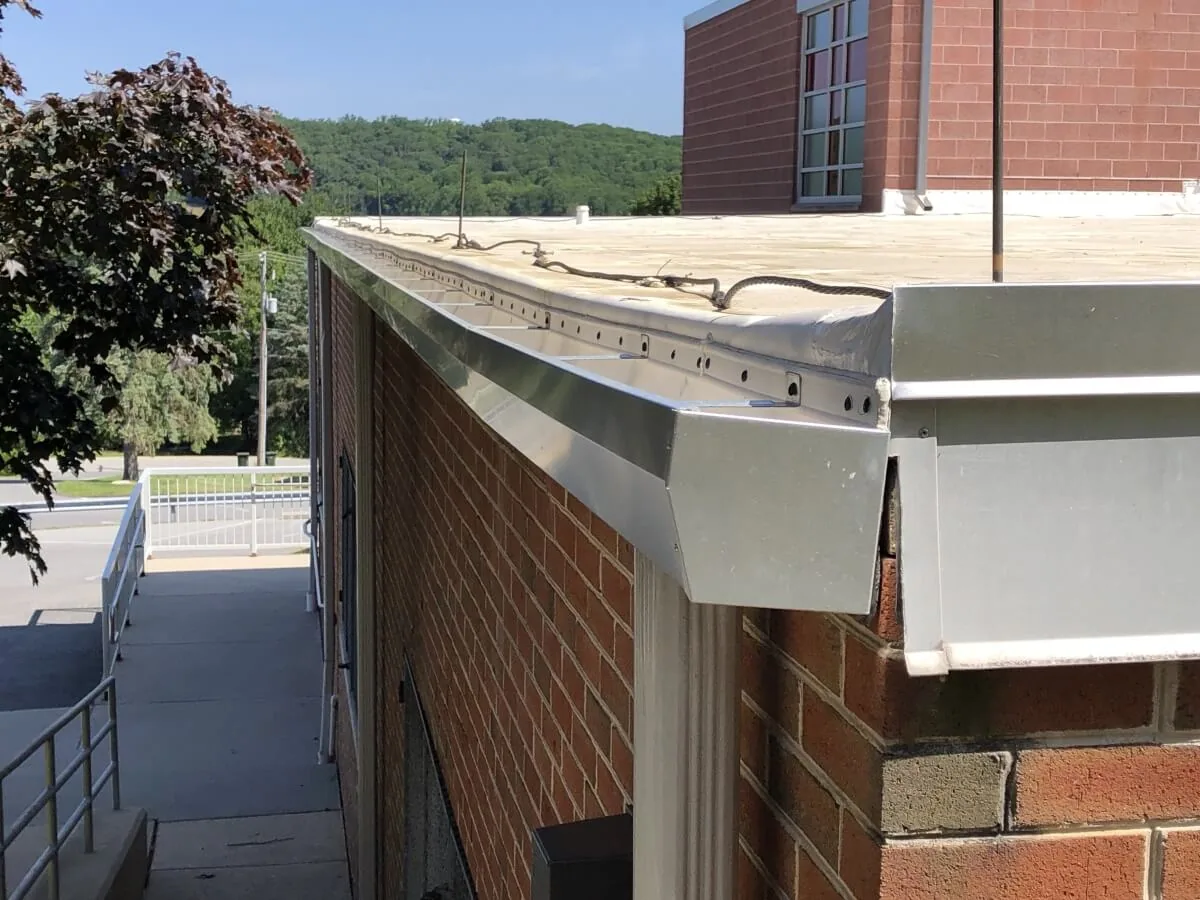
A scupper needs an open throat, sound flashing, and a discharge path that does not return water to the wall. We look for debris, corrosion, membrane separation, and damage where the outlet meets the parapet. An overflow route matters when the primary drain is obstructed. We record whether it is visible and clear, then identify any roof-level condition that could restrict the path. If the discharge side cannot be reached safely, we record that limit and identify the access needed for a complete flow check.
Jersey City identifies Greenville Industrial and Tonnele Avenue Light Industrial as industrial areas, and separately lists Route 440/Culver among its commercial corridors. We inspect each scupper at the building and record its wall finish and edge material. If the membrane termination has opened, a coping and edge repair may need to join the drain scope to control the full water path.
Low areas can collect water because of a blocked outlet, compressed insulation, slope changes, or rooftop equipment. We mark the location, observe whether water is moving, and compare it with the drain path. A roof walk after rain can show a temporary pool; recurring ponding requires a broader review before a remedy is chosen. We do not treat a coating or patch as a slope correction.
We identify whether a slow outlet is a roof-level restriction or building piping issue, then coordinate plumber access when needed. A ponding-water review can map the roof surface, insulation clues, and outlet conditions when water persists across visits.
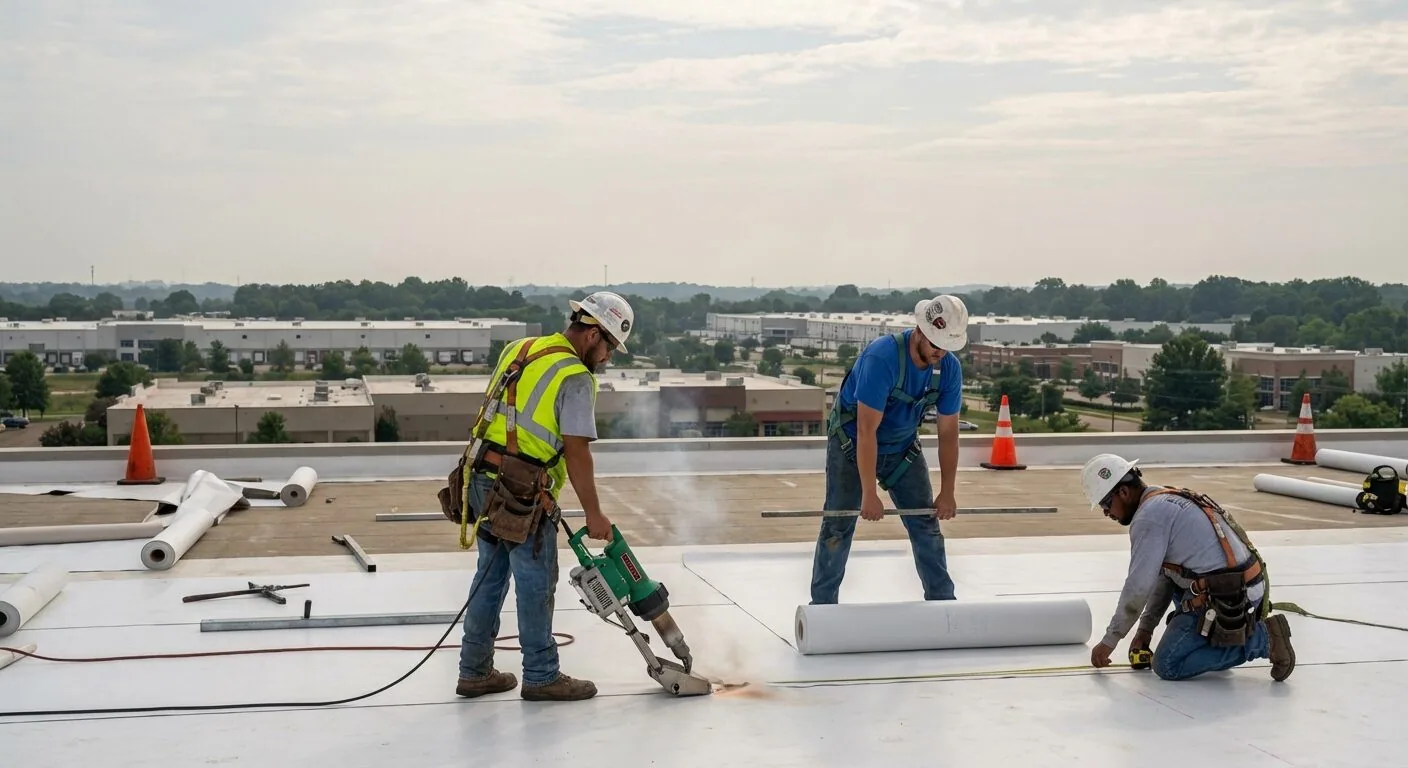
Drain repair includes more than tightening a fitting. We prepare the membrane, restore the flashing connection, set the ring or flange, and verify that the selected materials suit the existing roof. If the assembly is TPO, PVC, EPDM, built-up, or modified bitumen, the tie-in method follows that surface. A drain extension or bowl replacement is listed separately from patch work.
At a split edge or failed lap near an outlet, we mark the repair boundary and inspect the adjacent field. Wet insulation may require an opening before the drain can be rebuilt. The owner receives photos of hidden layers when exposed. A commercial roof repair can address a membrane defect, while the drain scope keeps outlet work visible as a separate item.
Drain work may require removing grates, clearing debris, staging a ladder, and protecting the roof from tools or discarded material. We confirm access with the site contact and keep tenant routes and equipment clear. If water is standing near energized equipment or a roof edge, the crew changes the route before starting. The work plan identifies which drains can be accessed and which need a shutdown or escort.
Debris removal follows the outlet and roof surface. We collect loose material rather than pushing it toward another drain, and we protect the membrane while tools are in use. If the strainer is missing or damaged, we document that before replacing it. The crew checks the bowl and immediate flashing after cleanup so the site contact can see which item was maintenance and which correction required a separate work order.
We confirm a debris collection point and a safe route for tools and materials with the site contact before drain work begins. The daily closeout records which drains were serviced, what was removed, and any flashing defect left for approval. The owner can then prioritize the remaining repairs with a site map instead of a broad note that the roof was cleaned.
The drain record names each outlet, condition, correction, and photograph. It identifies whether flow was observed, whether the bowl or strainer was replaced, and whether a membrane tie-in needs monitoring. If the outlet still slows after service, we can compare the roof-level condition with the next visit and identify when a piping trade should investigate.
Downtown, Greenville, and Bergen-Lafayette are among Jersey City’s six large districts. On a repeat visit, we compare the same drain after rain and after roof work at that property. The property team can keep the outlet number, access route, and last service date together for the next inspection. If a roof replacement raises the membrane surface, the drain record should be reopened to check bowl height and overflow detail before closeout. A condition report preserves the map; a separate Hoboken drain review records another building’s outlet path without mixing locations. The record also lists the outlet nearest each rooftop unit, since service traffic and debris tend to collect there between visits.