Roofing Manufacturers in Jersey City, NJ
Commercial roof manufacturer systems explained for Jersey City, NJ buildings: how each sheet, seam and tie-in is identified, repaired and recorded.
Commercial roof manufacturer systems explained for Jersey City, NJ buildings: how each sheet, seam and tie-in is identified, repaired and recorded.
Water reaches a Jersey City roof from the coast and leaves through a combined sewer that the city itself lists as strained by stormwater loading. That puts every tie-in under test: the weld at a drain bowl, the bond line at a curb, the lap at a parapet. A manufacturer's name tells us which family of materials to expect. It does not tell us whether those details are still sound, so each roof is read from the surface down before a product is chosen.
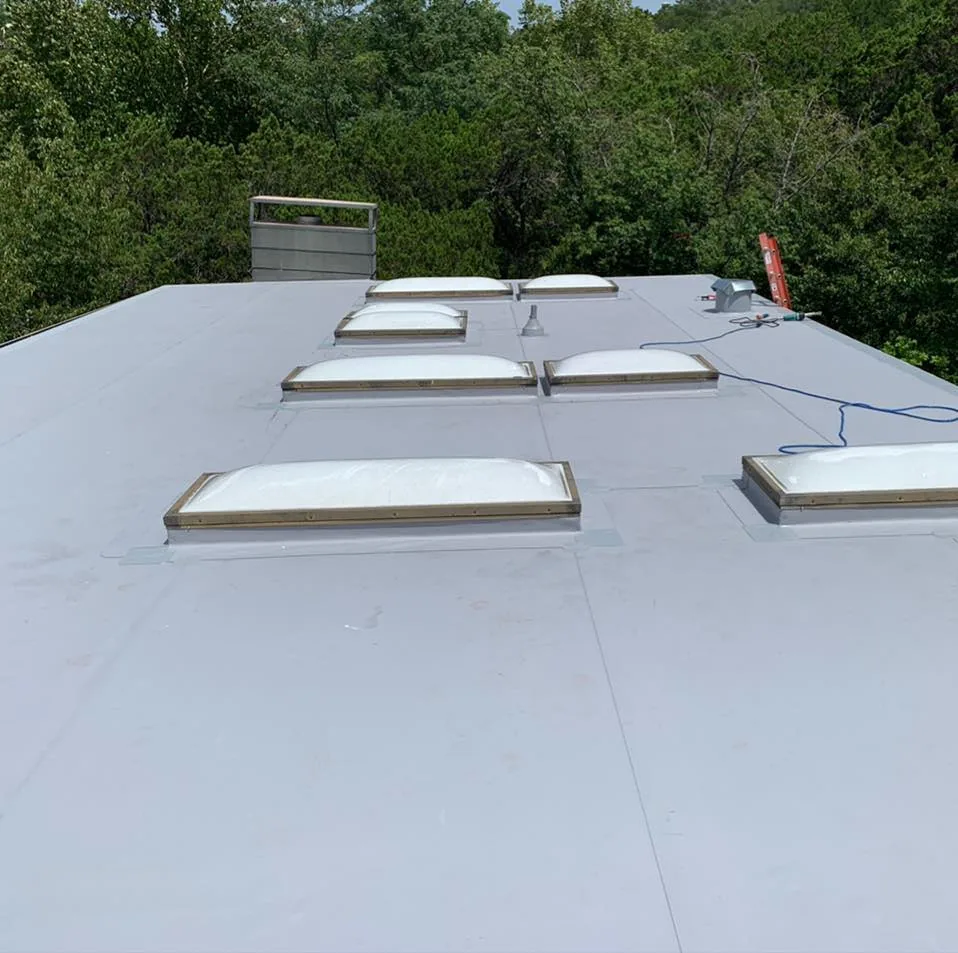
We begin at an exposed edge, a seam end or a repair patch and work backward to the system. Labels, project records and surface texture narrow the list. Where they disagree, a small test cut shows the layers, and the photograph goes into the roof record with its zone. Color alone settles nothing, since a white sheet can be thermoplastic, a coated rubber membrane or a painted bitumen cap.
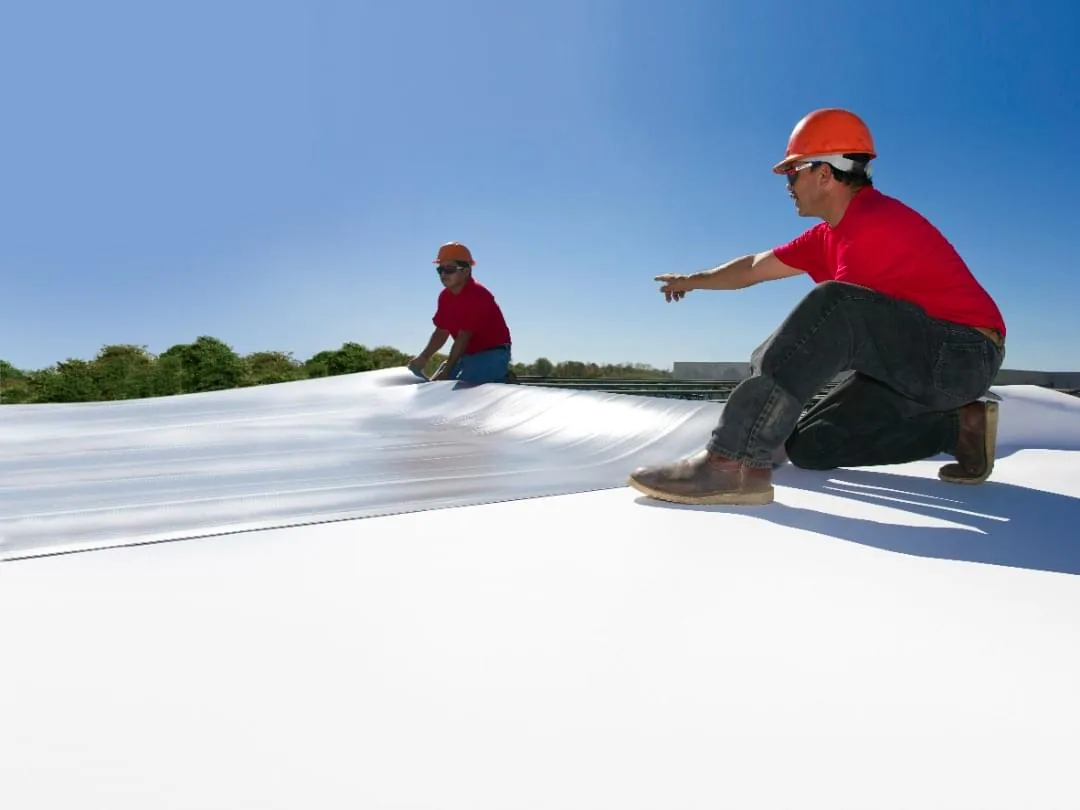
Heat-welded single-ply sheets, including TPO and PVC lines from GAF, Carlisle SynTec, Johns Manville, Holcim Elevate, Sika Sarnafil and Versico, are repaired by cleaning and welding compatible material. EPDM rubber is bonded with tape or adhesive instead. Layered bitumen, such as the sheets from Soprema, is lapped by torch, self-adhesion or cold adhesive, and Duro-Last panels arrive fabricated to the roof's measured shape.
Each family sets its own repair. A patch that welds on one sheet will not hold on another, and a sealant bead is never a substitute for a compatible detail. The written scope names the material, the preparation and the test that closes each repair.
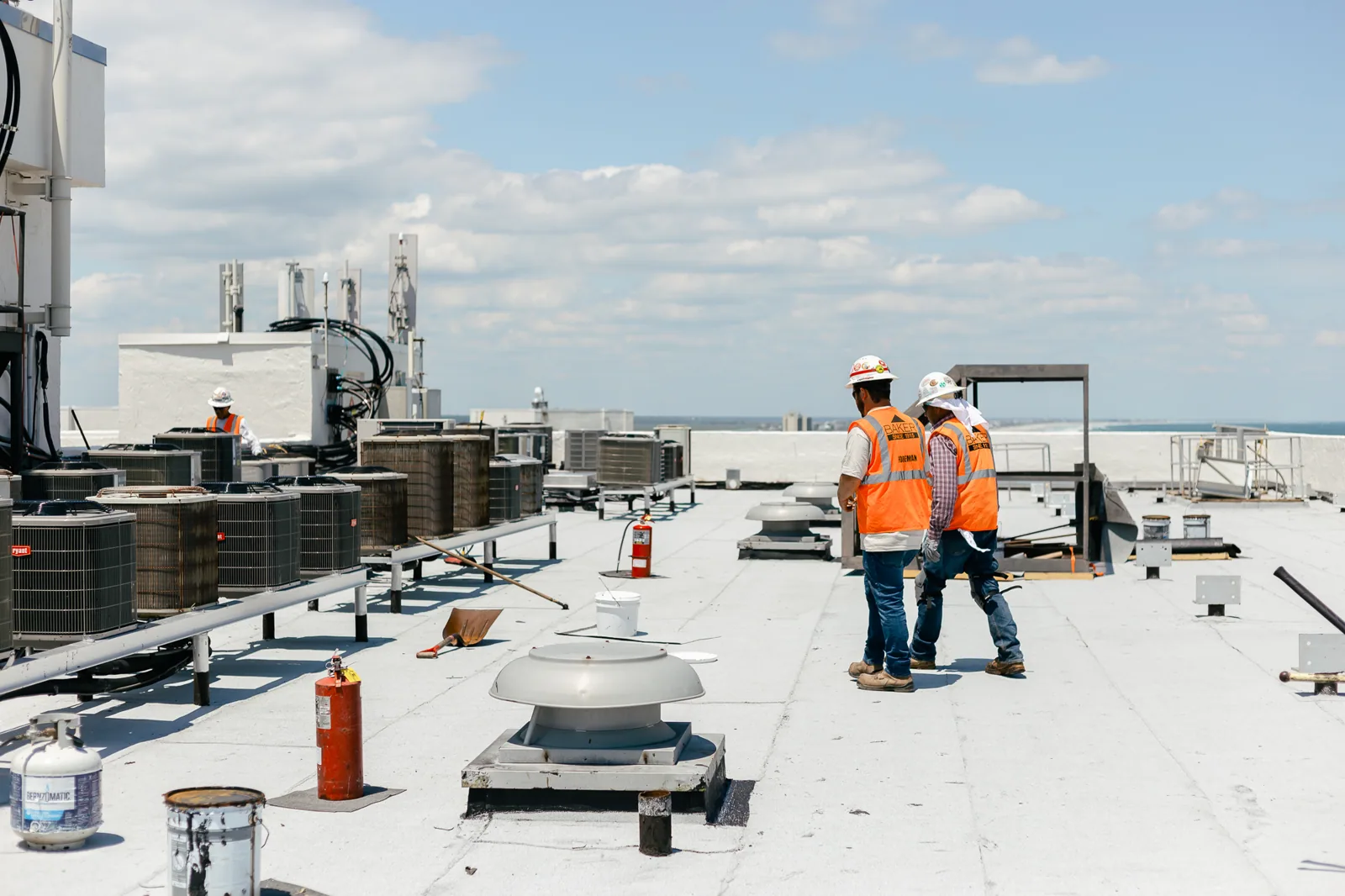
Edges and outlets are where storm wind and ponding water find a weak bond first. We check clamping rings, termination bars, coping joints and flashing height against the product's published details, then confirm the water has a clear route to an overflow. The three named industrial planning areas, Greenville, Tonnele Avenue and Chapel Avenue, do not shortcut this step: the roof at each address is verified on its own.
Dense blocks limit where pallets can stand and where a lift can reach. Before material is ordered we confirm the delivery stop, the hoist route and the zone that can close by evening, so the product on site matches the area the crew can protect that day.
The closeout file lists the installed material, preparation steps, batch information when supplied, photographs of each tie-in and the repaired zones. A later crew reads the same file, which keeps one manufacturer's detail from being applied to another's sheet.
From labels, project records and exposed edges first. If those conflict, a test cut shows the layers and the finding goes into the roof record. A color or a surface texture alone is never enough to choose a repair material.
Sometimes, when chemistry, preparation and the existing assembly allow a sound tie-in. We state the proposed material and the test area before the work is approved, and we record where one system meets the other.
No. The issued warranty document and the project records decide, and the issuer determines coverage. We record the work and the products used so the file is complete.
System identification, materials, preparation, repaired zones, photographs and any area left open for later. That file is what the next inspection starts.