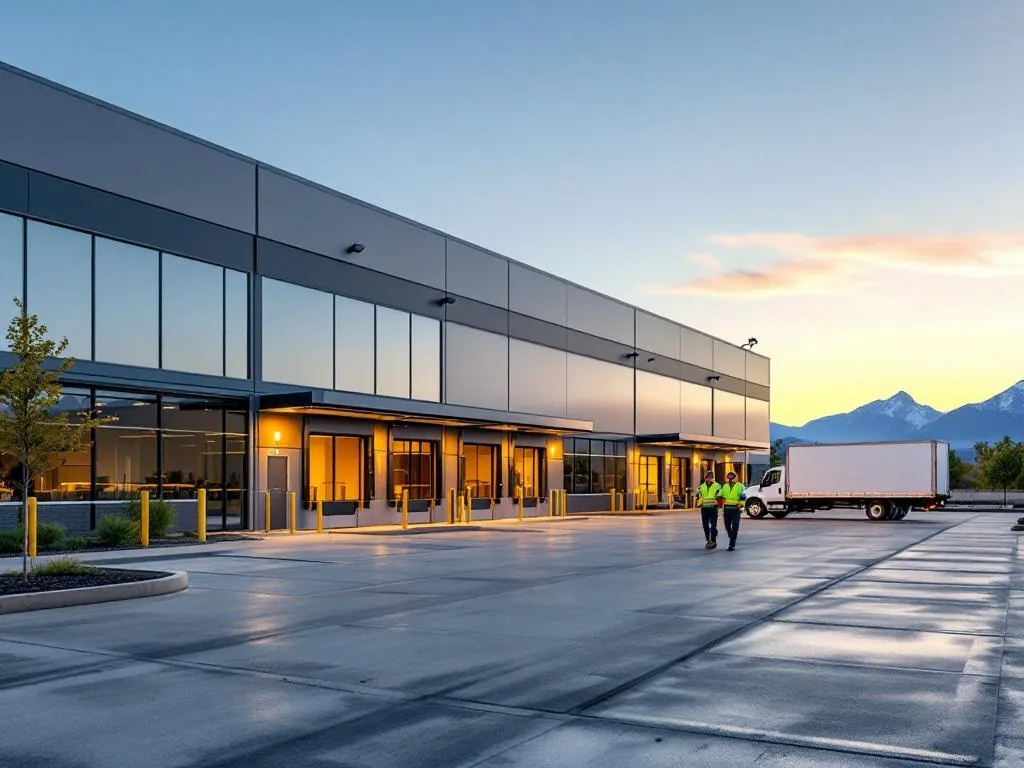
Roofing for Manufacturers in Jersey City, NJ
Roof repair, inspection and replacement for Jersey City manufacturers, sequenced around production lines, exhaust equipment, drainage and shift schedules.
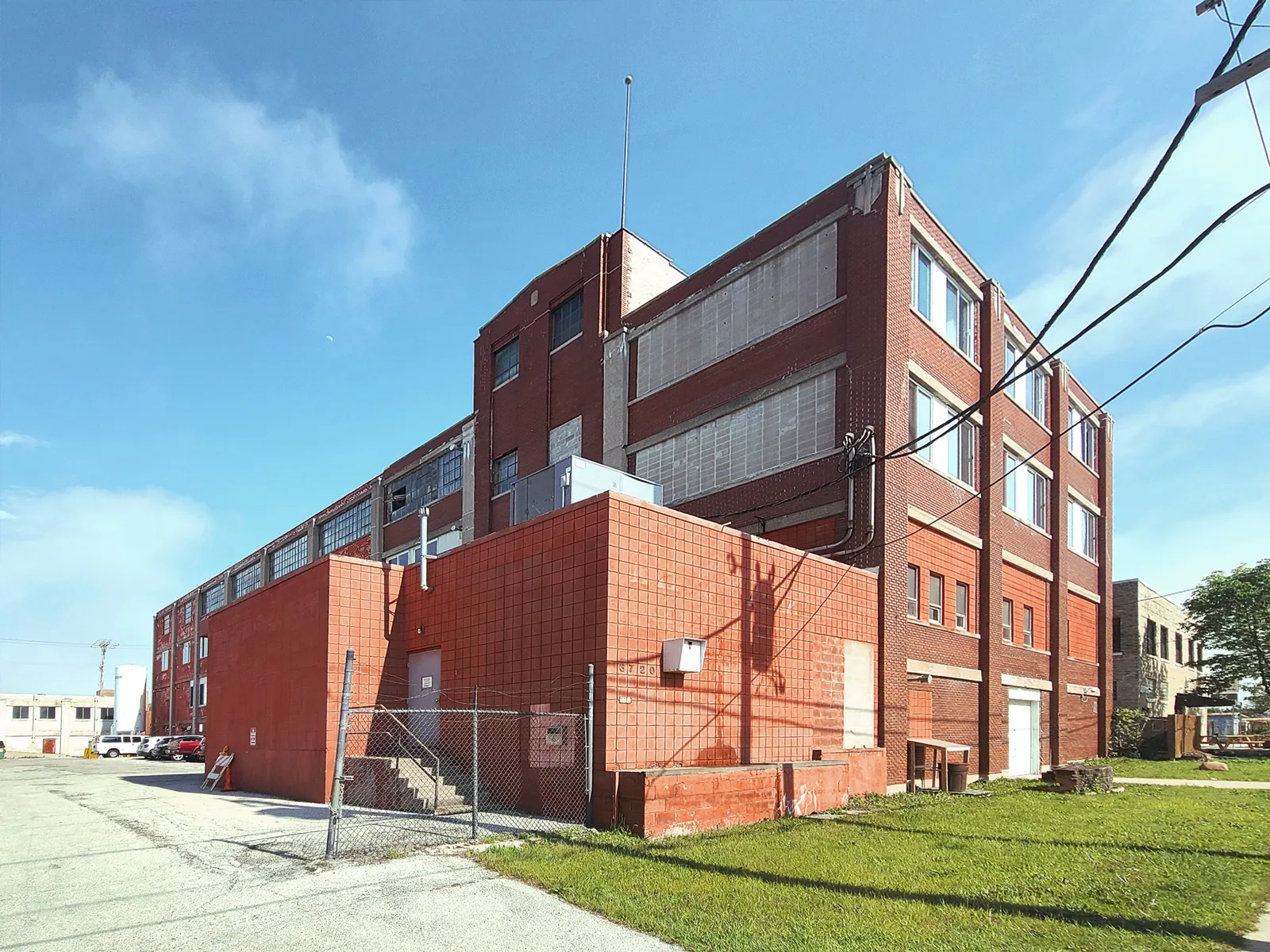
Roof repair, inspection and replacement for Jersey City manufacturers, sequenced around production lines, exhaust equipment, drainage and shift schedules.
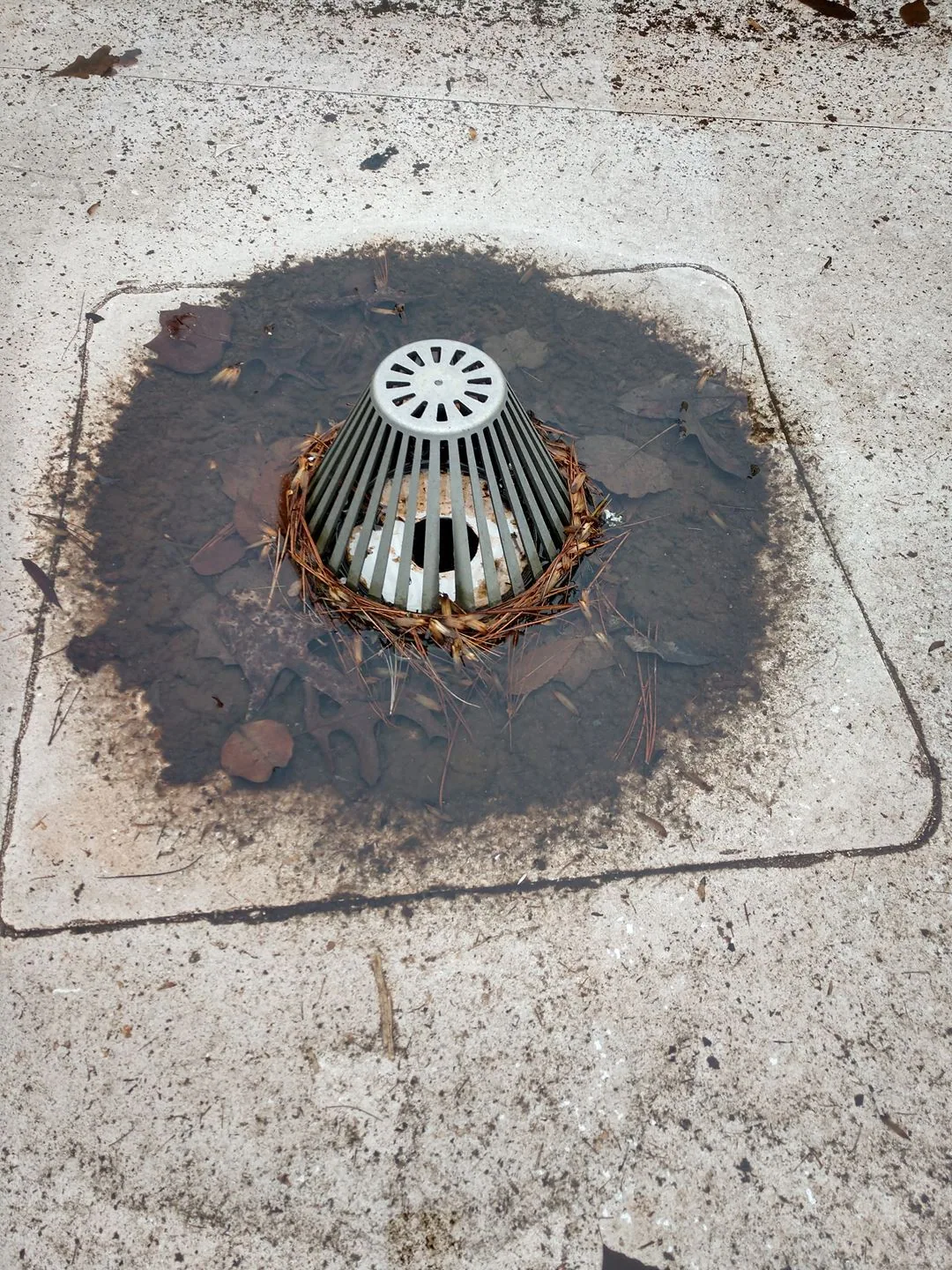
Exhaust stacks, make-up air units and process piping change what a manufacturing roof has to survive. Heat and chemical vapor hit the membrane near each penetration, and wet floors below stop a line as quickly as a power failure. For a manufacturer in Jersey City, NJ, the first job is a walk that connects the production floor to the roof zone above it. We note which bays run hot, which carry water or washdown, and where the line cannot stop. The roof plan then follows the plant's schedule instead of fighting it.
Jersey City's Greenville Industrial area, Tonnele Avenue Light Industrial area, and Chapel Avenue Industrial Park are distinct named industrial areas. For a manufacturer in Jersey City or the Hudson County town of Kearny, we confirm the actual process, access, and roof assembly before setting the work sequence.
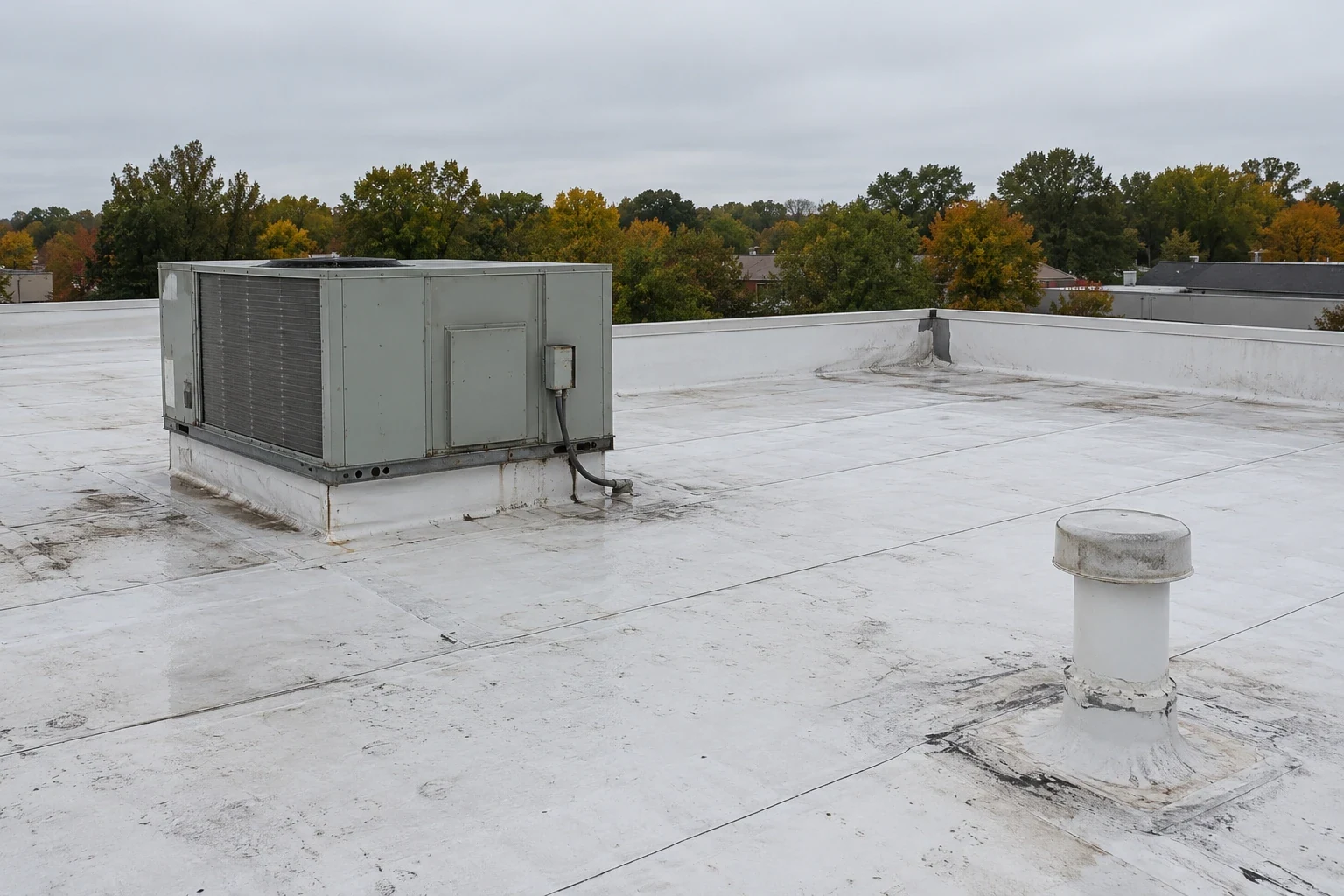
A production roof ages unevenly. The field may be in good shape while a corner near an exhaust fan is brittle from heat, stained from vapor, or pitted by something the stack puts out. We inspect those areas more closely than the open field, and we look for blisters, shrinkage, discolored seams and failed sealant at each penetration.
The question for the plant manager is whether the damage is cosmetic or functional. A stained membrane that still welds and sheds water can wait. A membrane that has lost plasticizer near an exhaust, or a flashing that has split around a pipe, is an opening waiting for rain. The inspection report grades each zone, shows the photographs, and marks where a targeted repair is enough and where a larger scope is warranted.
Where condensation inside the building is a recurring complaint, we check whether it is coming from the roof or from the process itself. Not every drip is a leak, and chasing the wrong cause wastes a work window.
Interior signs help the diagnosis. Rust blooms on the deck underside, white deposits on the ceiling, and stained insulation each point to a different cause. We photograph them from below and match them to the roof zone above, so the repair goes where the water actually enters.
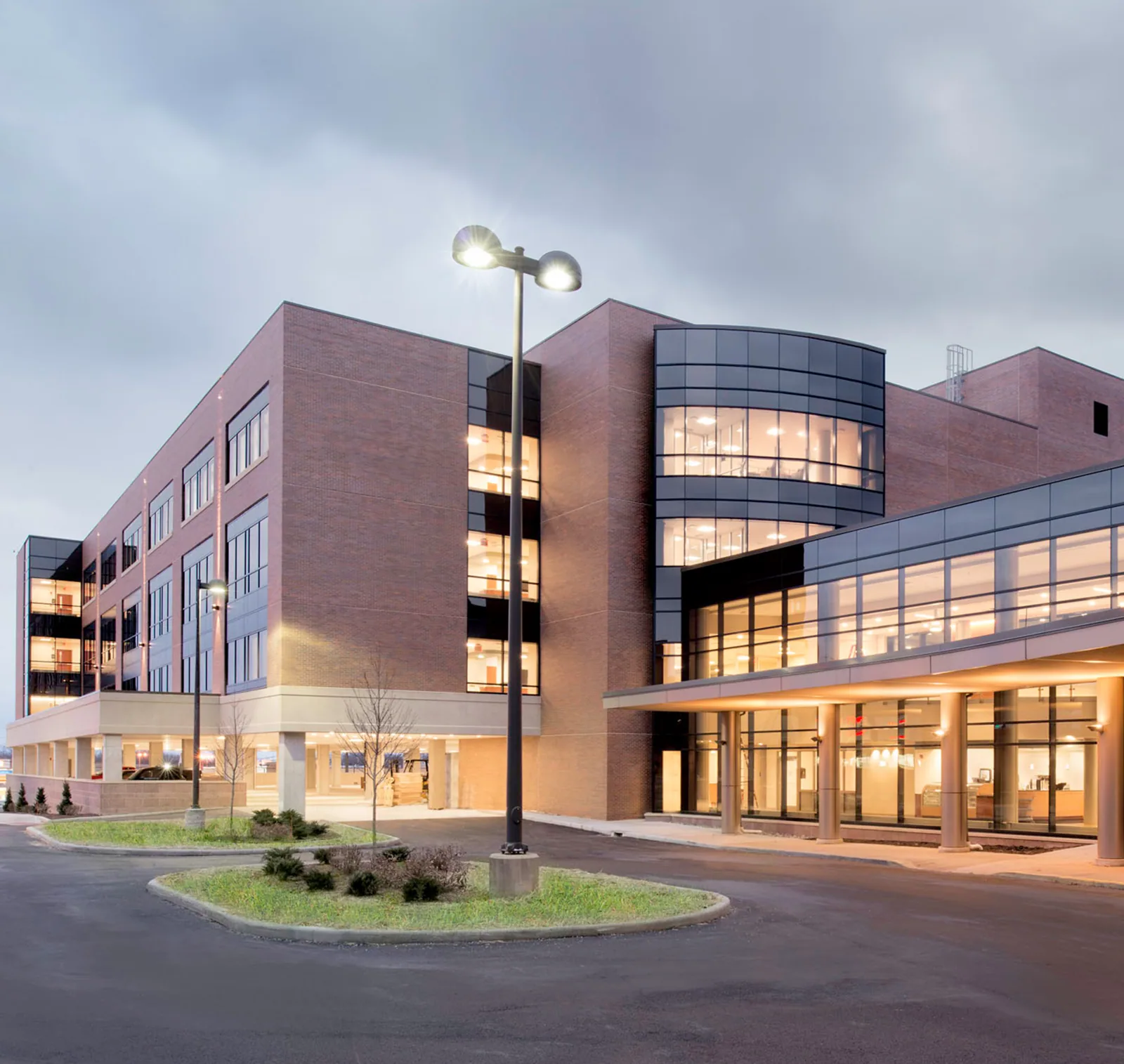
Bring the plant engineer and the safety manager. We will mark the hot and wet zones, agree on shift-based work windows, and set the access path for lifts and deliveries.
Not every membrane handles the same exposure. Some single-ply membranes soften around oils and fats. Others are formulated to resist them. A plant that discharges grease, solvent vapor or acid mist near the roof should choose the material with that exposure in mind, and the choice belongs in the specification before the first roll goes down.
Welded thermoplastic membranes such as PVC are often selected where chemical exposure is a concern, and KEE-based sheets add resistance to oils. Where the plant needs a durable, easily repaired surface, modified bitumen remains an option. We review the existing assembly, the load on the deck and the plant's own exposure data, then recommend a system. Process safety data can help identify materials that may reach the roof; we confirm the exposure and condition at the affected area.
Equipment curbs, platforms and pipe supports deserve the same care. Each is flashed with materials compatible with the membrane, and walk pads protect the traffic routes so that maintenance technicians do not wear through the surface.
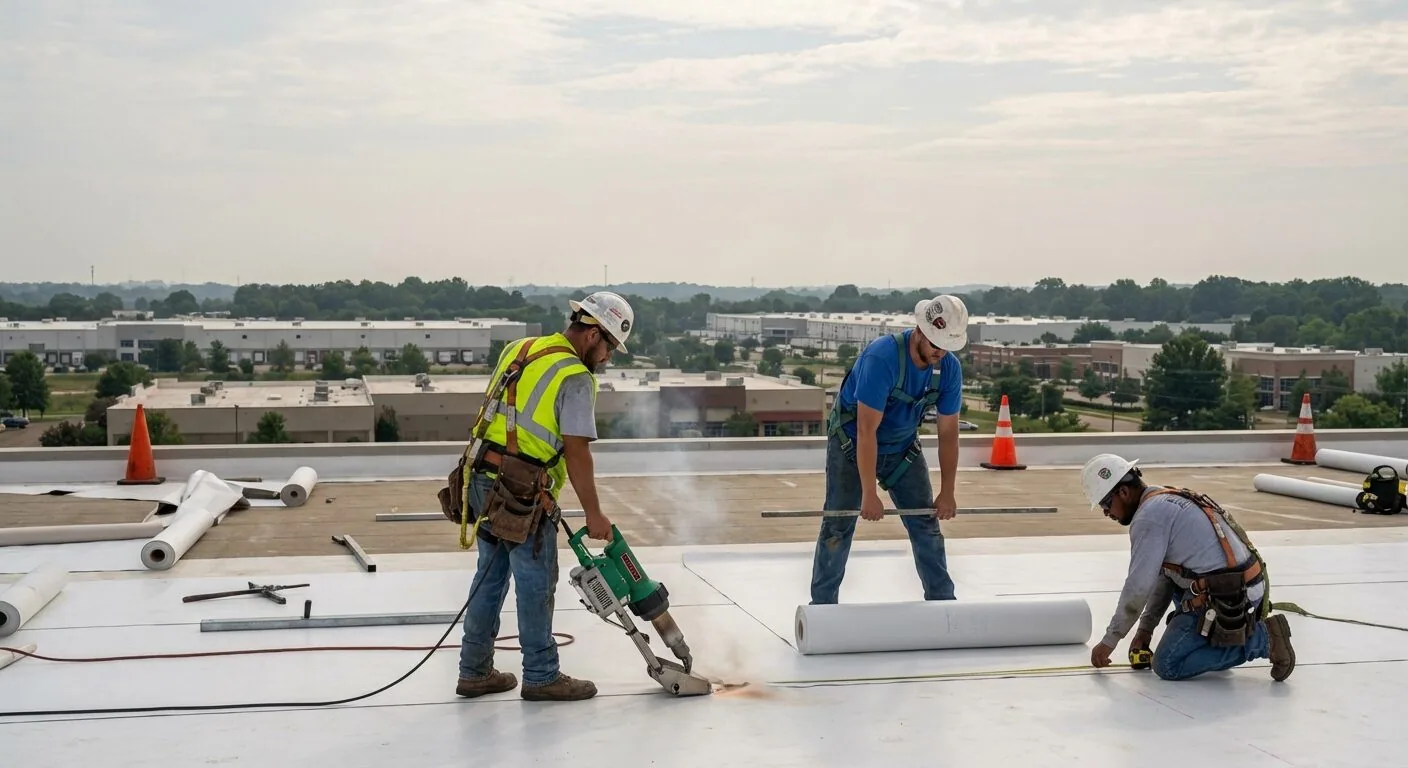
A roofer who shows up without knowing the plant's shifts creates a stoppage. We ask which lines run on which shifts, where product is staged, and which areas cannot take dust, noise or vibration. Then we divide the roof into zones and schedule each one for the lowest-impact window the plant can give.
Overhead protection is part of the plan. Where a tear-off will drop debris, we install protection or reroute the work so that nothing falls into open production space. Fire-watch procedures, hot-work permits and torch restrictions follow the plant's safety rules, and we coordinate them with the safety manager before the crew mobilizes. Cold-applied or welded systems often make sense on plants that restrict open flame.
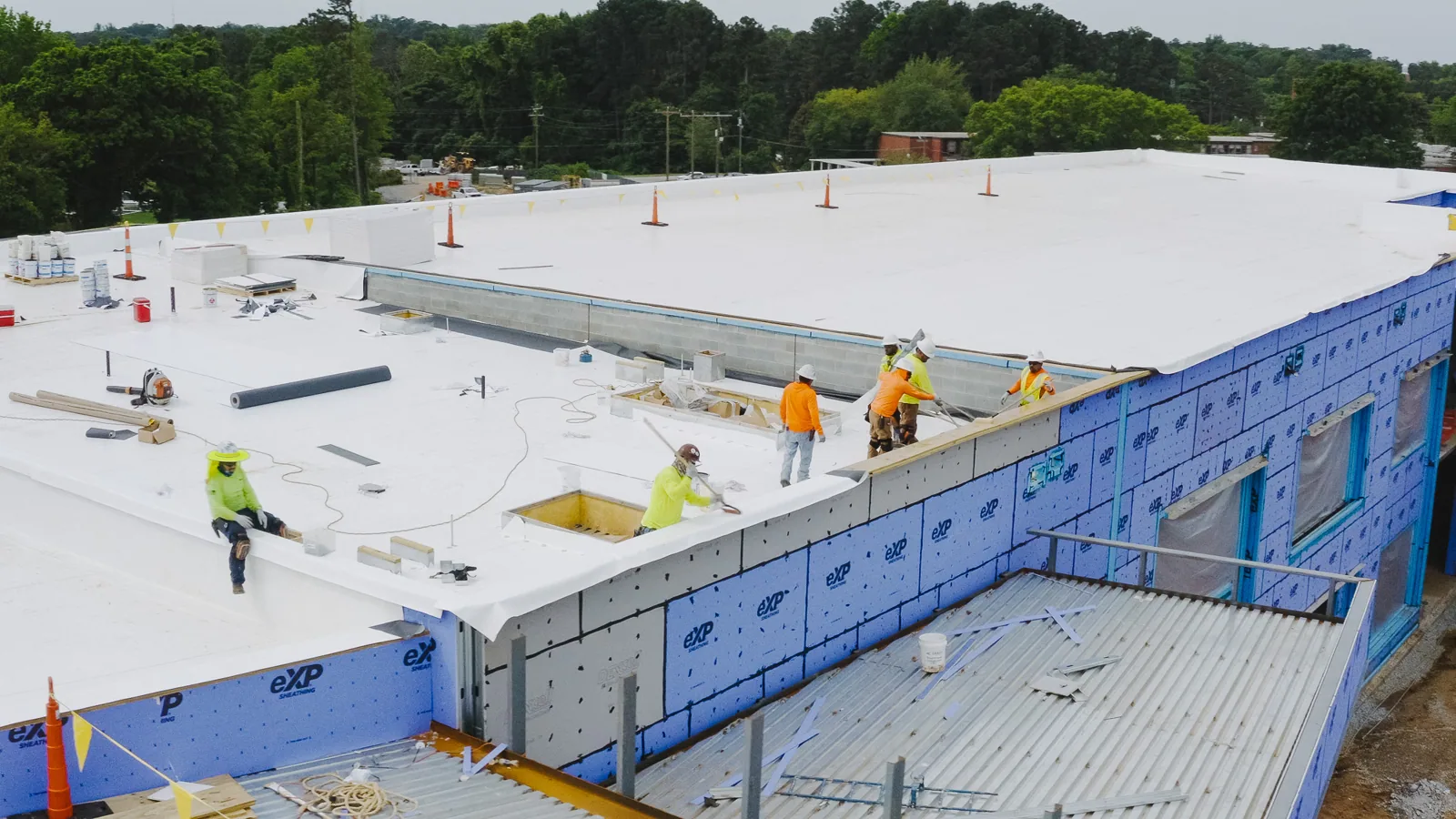
Staging is a second constraint. Where yard space is limited, trucks compete with shipping. We agree on a delivery time, a lift location and a place for dumpsters so that the roof project does not interfere with outbound freight. Material for a manufacturing plant roof is heavy, so the lift plan matters, and a general contractor running a plant expansion needs the same plan to know where the crane can set.
Localized flooding and combined-sewer loading are on the city's concern list, and Irene and Sandy left flooded streets and property damage behind. A large industrial roof collects a lot of water in a short time, so drains, scuppers and overflow paths need to be clear and correctly sized for the building.
We check outlet capacity, slope to the drains, ponding areas and the condition of the strainers. Water that lingers for days on a plant roof ages the membrane early and adds load to the deck. Before a larger roof or drainage change, the owner should verify property-specific stormwater and flood-overlay requirements with Jersey City. Routine drain and scupper service is among the lowest-cost ways to protect a membrane.
Plant engineers keep records on everything, and the roof should be one of the things they track. We supply a roof-zone map, dated photographs, a repair log and the next inspection date. If the plant has a computerized maintenance system, the same items can be entered as scheduled tasks.
That record supports capital requests. When the engineer needs funding for a replacement, a file showing repeated repairs in the same zone is far more persuasive than a general statement that the roof is old. Plants with more than one building can use a multi-site roof program to keep each roof on the same schedule. Facilities near Kearny or Elizabeth can be added to that schedule, and the logistics side of the business, such as 3PL operators storing finished goods, can share the same format.