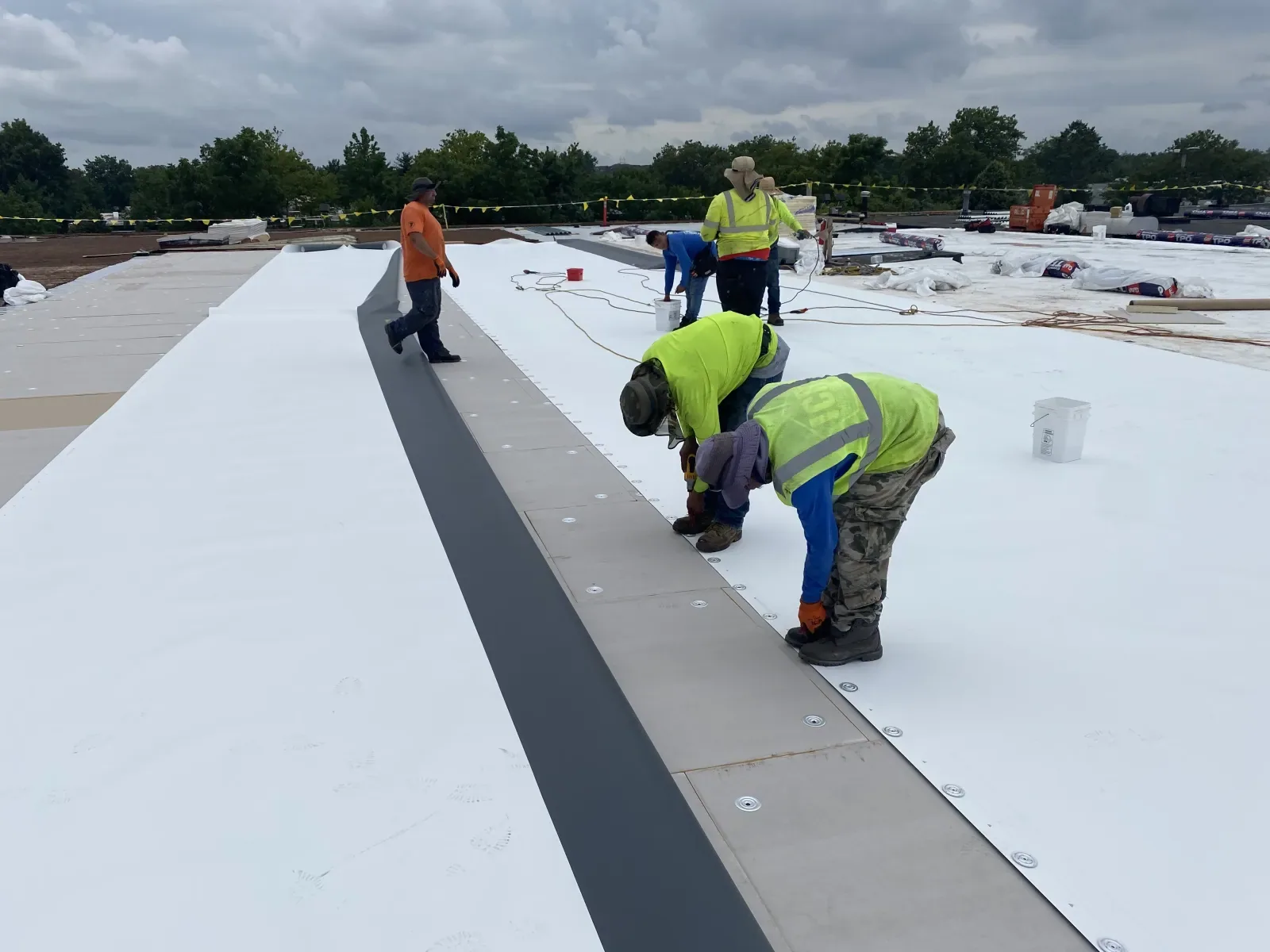
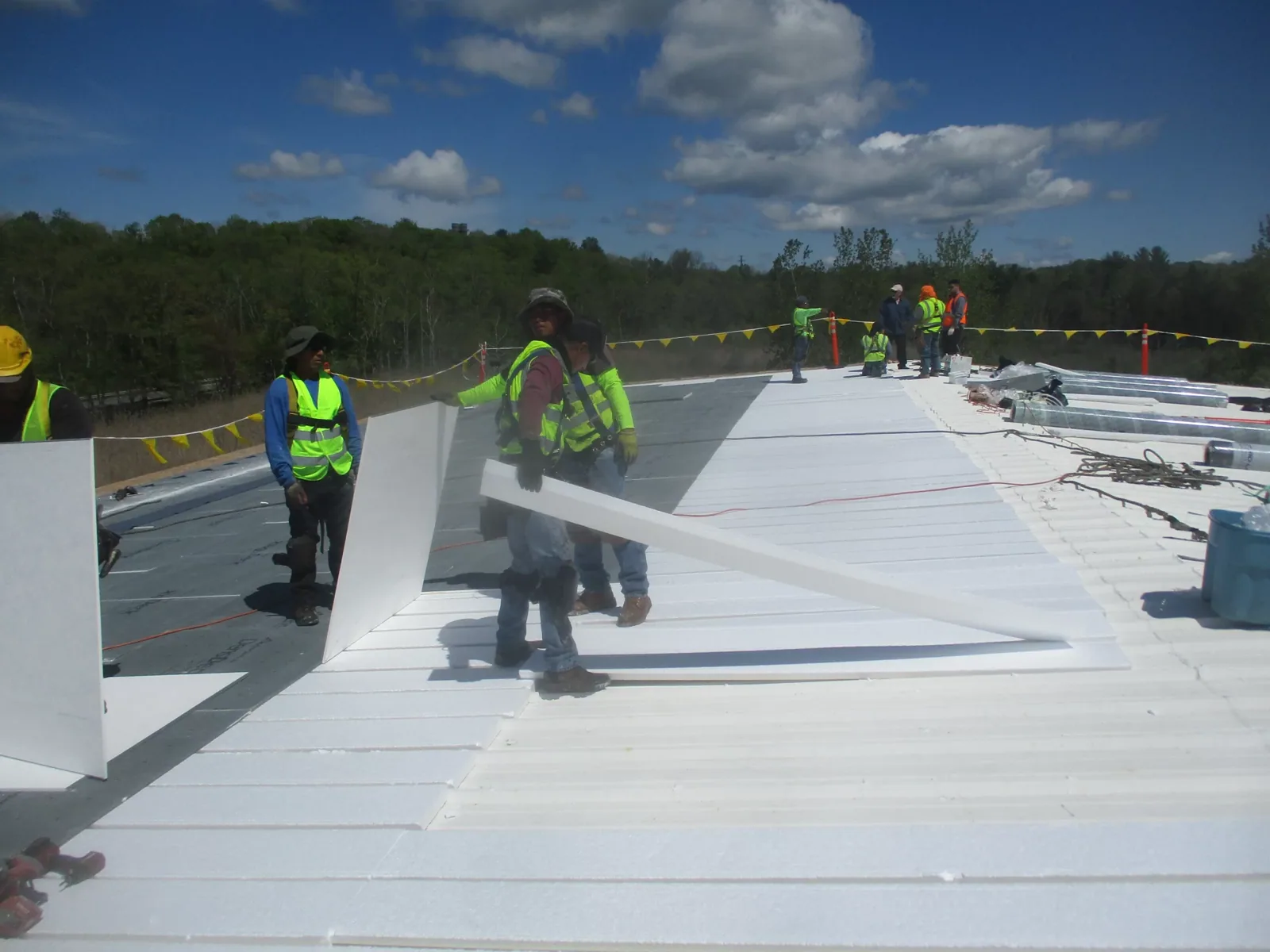
Standing Seam Metal Roofing in Jersey City, NJ
Inspect Jersey City standing-seam panels, clips, flashing, corrosion, drainage paths, and perimeter joints before repair or metal roof replacement.
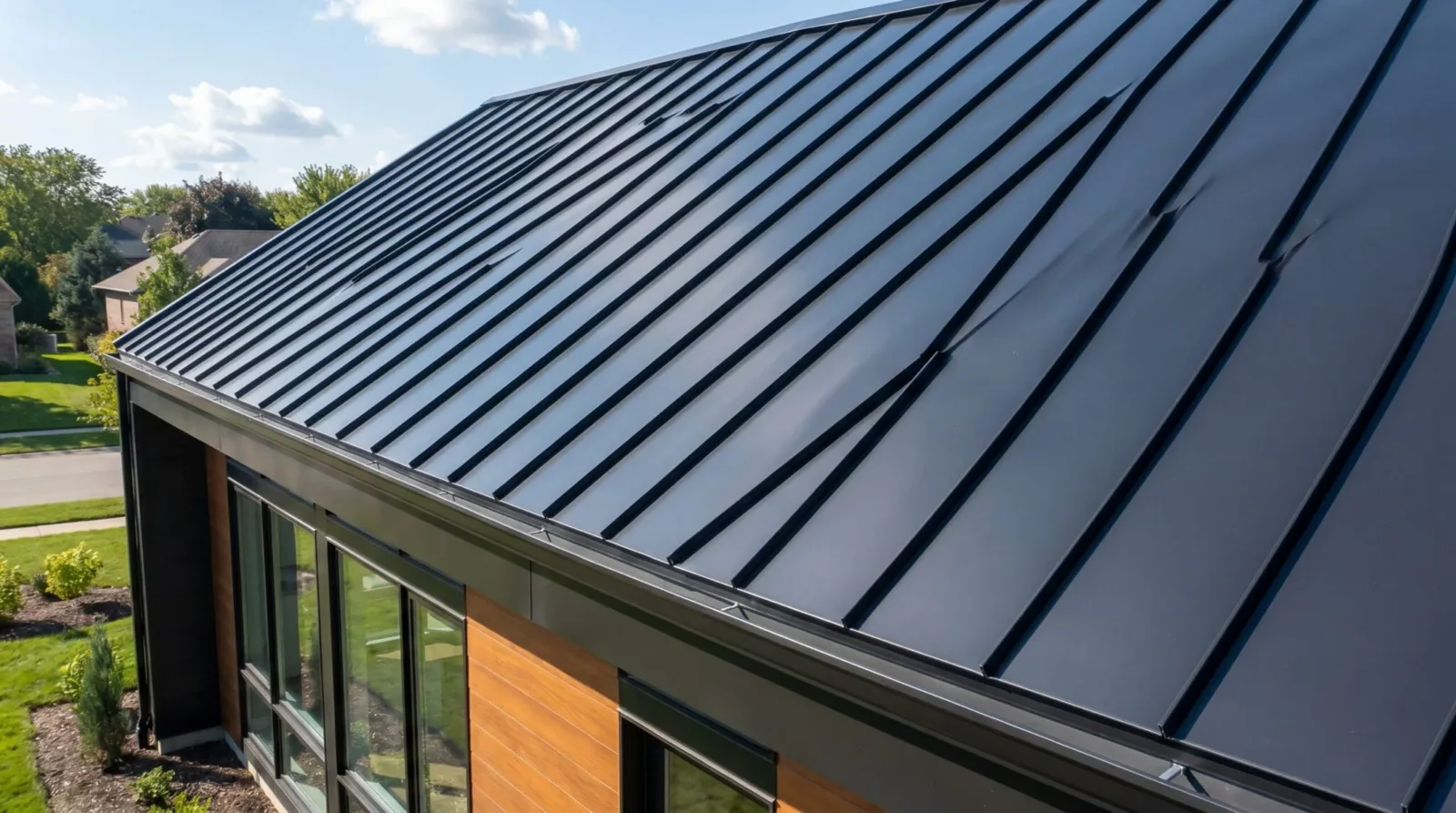
Inspect Jersey City standing-seam panels, clips, flashing, corrosion, drainage paths, and perimeter joints before repair or metal roof replacement.
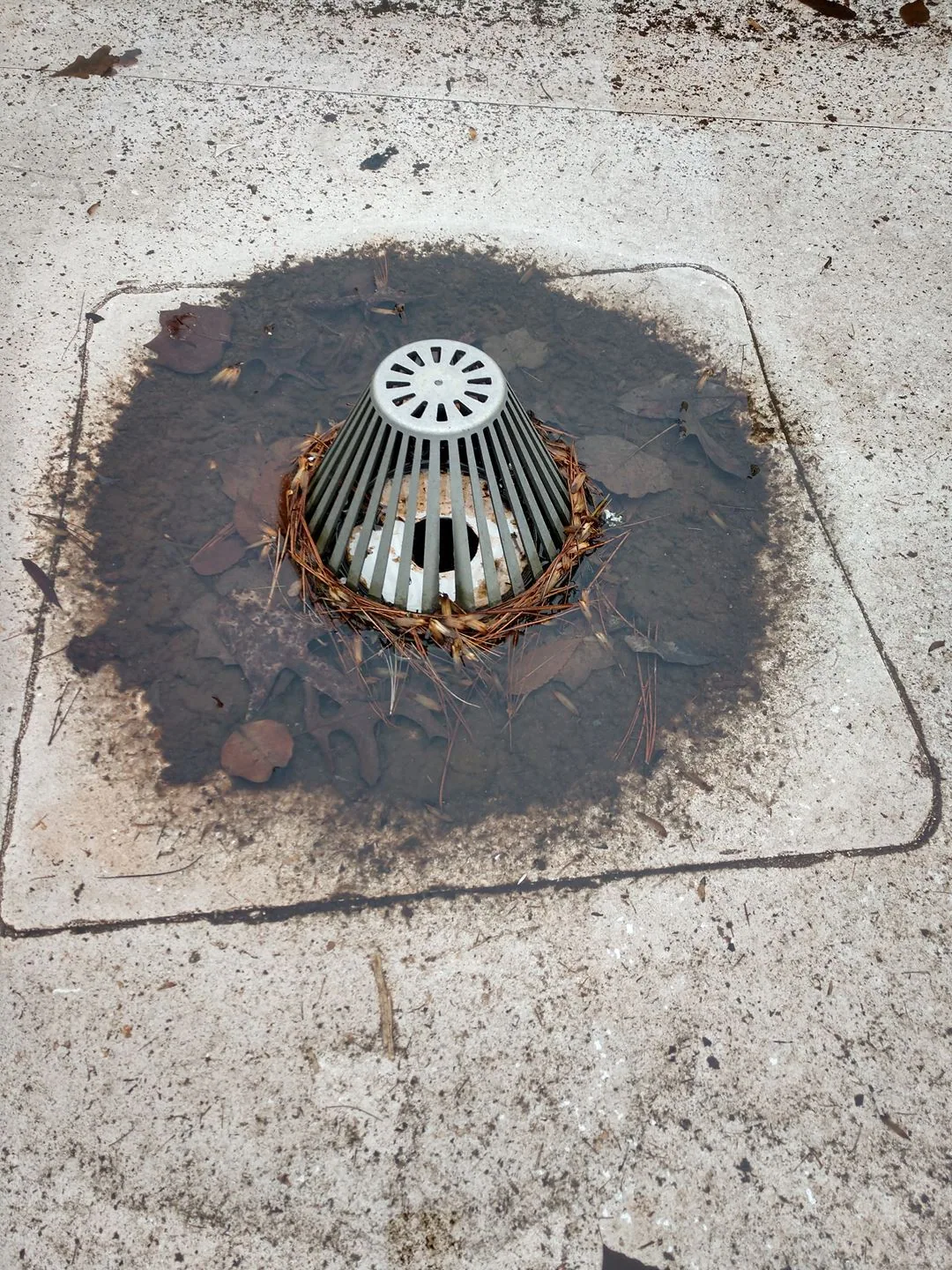
Standing-seam metal panels move as temperatures change, so clips, panel ends, valleys, and penetrations must work together. On a Jersey City, NJ commercial roof, we inspect the seam profile, attachment, corrosion, flashing, and water route before selecting a repair. Jersey City experienced severe flood impacts and property damage during Irene and Sandy. On this roof, we inspect current seam, flashing, and drainage conditions before choosing a repair. A roof survey records the panel system and its condition by slope or roof zone.
A raised seam sheds water along the panel length, but it does not eliminate risk at end laps, curb corners, valleys, gutters, or wall transitions. We look for separated seams, loose clips, backed-out fasteners, coating loss, rust, and oil-canning that may indicate movement or support issues. The field record distinguishes cosmetic distortion from a detail that affects drainage or weather tightness. We identify what should be corrected before applying sealant or replacing a panel.
Standing-seam panels expand and contract along their length. Concealed clips need to permit the designed movement while keeping the panel secure; incorrect fasteners or fixed points can stress the seam. We inspect panel ends, clip lines where accessible, eave conditions, ridge details, and evidence of rubbing or distortion. If records do not show the panel profile or attachment, we document what can be seen and identify any opening or manufacturer review needed before a repair is chosen.
A puncture or loose fastener calls for a different method than a failed seam. We map each condition and check whether metal gauge, finish, and geometry can be matched. A edge and gutter review includes perimeter metal, coping joints, downspout connections, and water discharge. We do not treat a bead across the exposed seam as a repair when the underlying clip or flashing is the cause.
Schedule a roof walk to map seams, clips, flashing, corrosion, and drainage. We will compare a defined repair with panel replacement or retrofit.
Coating loss can expose metal to corrosion, especially at cut edges, scratches, fasteners, and areas where water remains. We inspect rust extent, panel thickness concerns, finish condition, and contact between dissimilar metals. Light surface oxidation may permit cleaning and protective treatment, while advanced loss can require panel replacement. The scope shows how much metal is affected and whether nearby attachment points remain sound. Photos at a consistent scale help the owner compare future changes rather than rely on a broad roof label.
Coastal rain and the city’s dense development put drainage and access in the same conversation, but they do not determine corrosion on one roof. We inspect valleys, gutter outlets, panel ends, and debris traps directly. If water entry is traced to a metal flashing, a leak repair can correct the transition while the panel condition is evaluated. The written scope keeps panel repair separate from unrelated membrane or interior work.
A standing-seam repair may involve replacing a panel, rebuilding a ridge or eave, resetting a clip, repairing a penetration, or restoring perimeter metal. The selected detail must retain movement and direct water away from the joint. We identify access equipment, panel profile, finish match, and substrate condition before pricing. Where a concealed condition cannot be seen, the proposal states the inspection point and how a replacement boundary will be set if the opening reveals more damage.
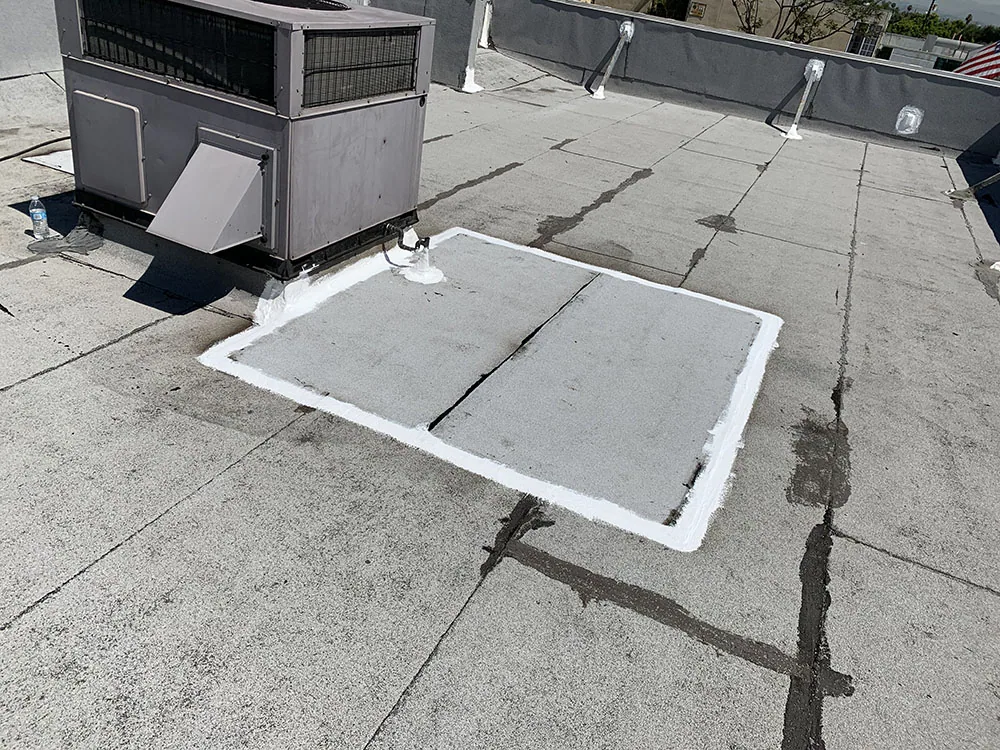
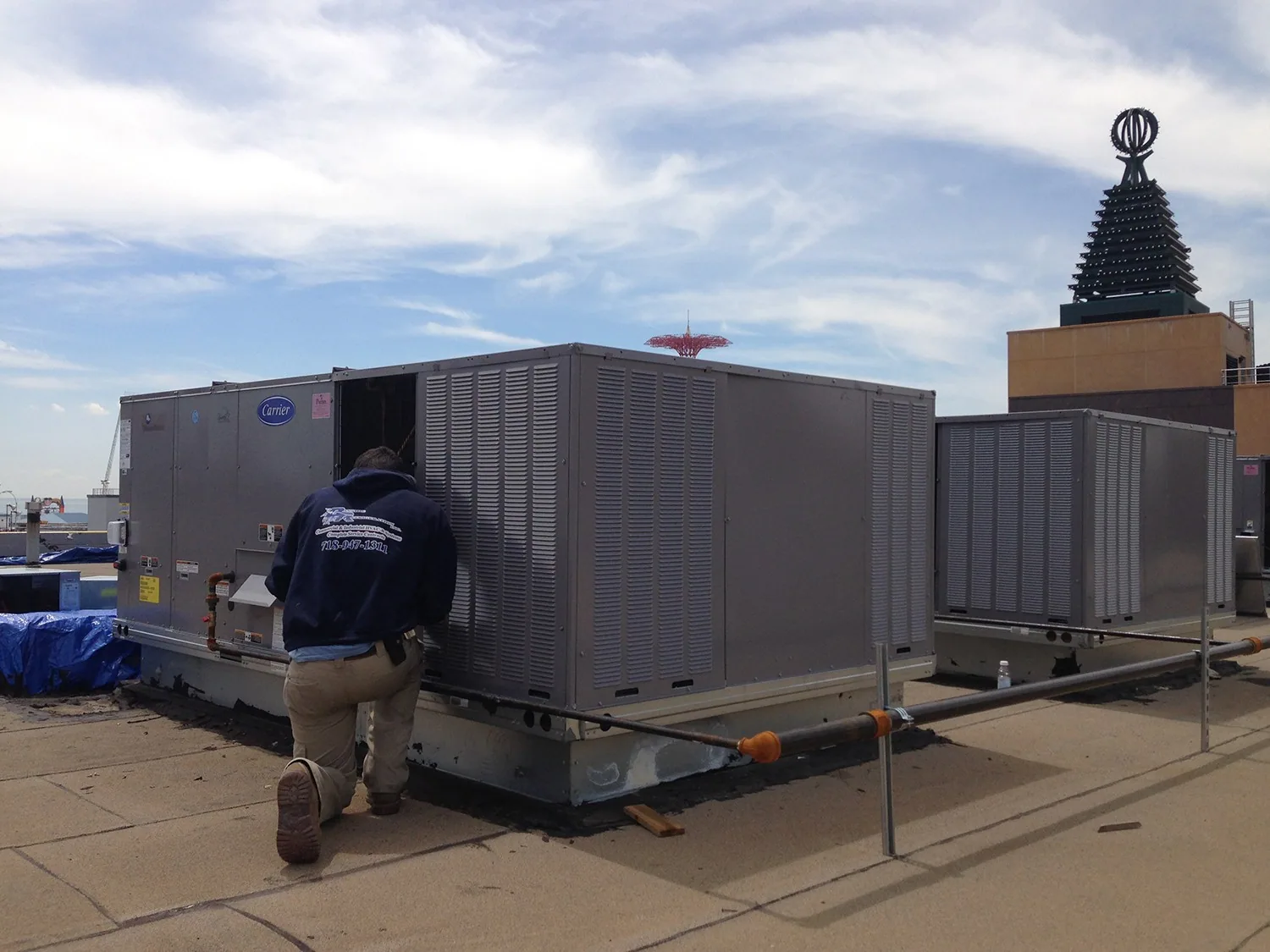
At rooftop equipment, the curb needs a metal-to-roof transition designed for movement. Our equipment support scope coordinates unit removal, curb height, and flashing with other trades. For a broader metal roof renewal, compare repair with replacement planning and a metal retrofit system. The alternatives state whether existing panels stay in place or become part of a new assembly.
Timing is affected by custom panel fabrication, finish availability, roof access, weather, crane requirements, and the need to keep a building operational. We confirm panel dimensions and edge conditions before ordering material. If a repair crosses several roof slopes, the sequence should close the exposed line before the next rain window. The closeout includes replaced panel lengths, attachment and flashing details, photos, and any condition that remains outside the repair scope.
West Side Avenue is a named Jersey City commercial center. A metal roof on that avenue or anywhere else in the city still needs a building-level review of slope, gutter capacity, downspout routing, valley flow, and ground discharge before a repair scope is set. The city’s localized-flooding concerns do not prove that a roof or leader is undersized. We check the actual outlet and note whether roof water can reach it without backing up at a seam or panel end. A drainage inspection can include adjacent low-slope areas where systems meet.
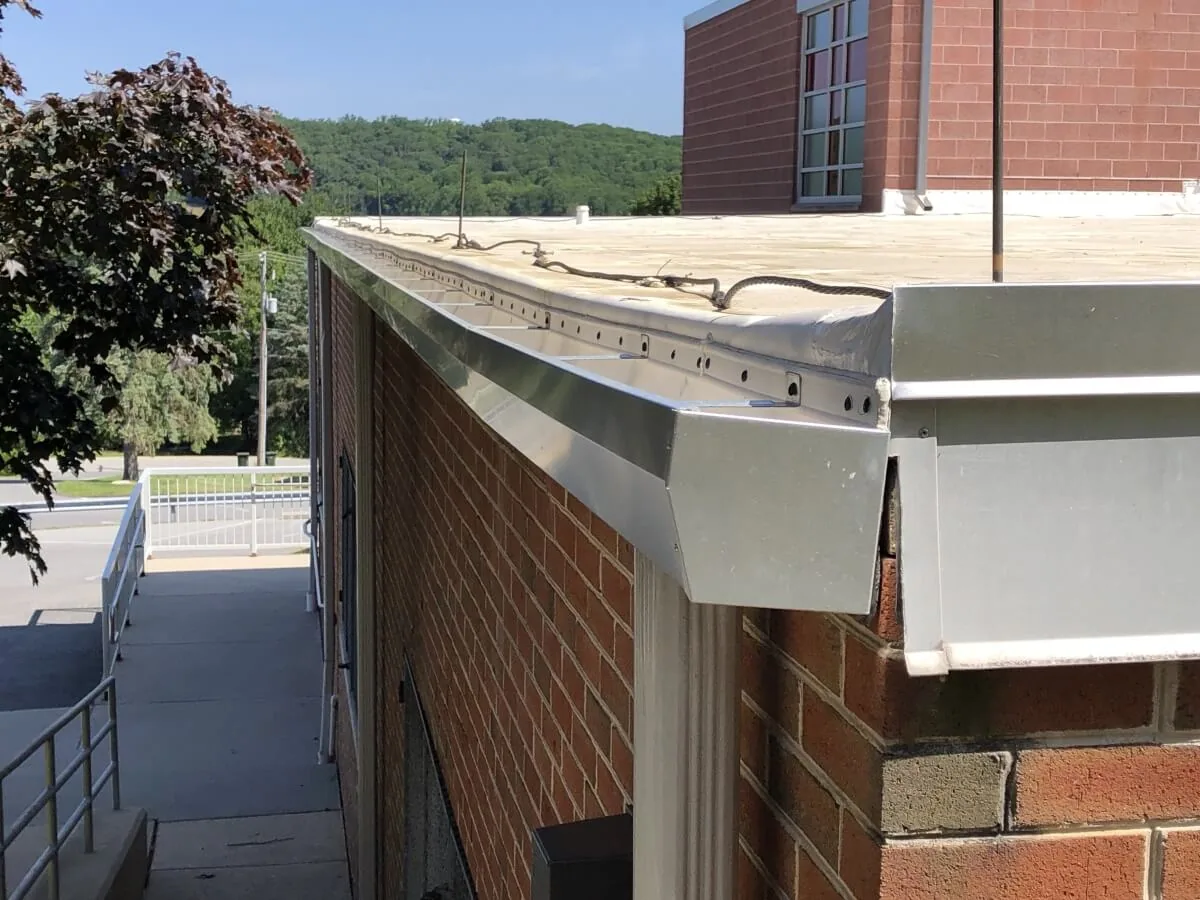
Metal movement also changes the way a gutter or counterflashing meets a panel. We check slip joints, cleats, sealant, fasteners, and the direction each seam carries water. A retrofit overlay may raise the eave and change where runoff falls, so gutter capacity and attachment need review before the new roof is designed. The owner gets a marked water path, not a general statement that a metal roof sheds water.
Repair may be the right choice when the panel field remains sound and failure is limited to a seam, flashing, fastener, or local corrosion area. A retrofit can be considered when broad panel deterioration or thermal performance leads to a new assembly over the existing roof. That option depends on structural capacity, attachment, drainage height, and edge conditions. We record the difference between a roof repair and a retrofit so the owner can compare scope, schedule, and future maintenance requirements.
A single-ply assembly or other low-slope system may be considered where the building geometry and project design support it. We also compare a metal overlay with replacing panels in kind. The system decision includes deck, purlins, insulation, curbs, edge metal, and drainage. A recover must not trap active leaks or rely on a structural assumption that has not been checked. We identify the engineering input needed before fastening a new frame or panel.
The closeout map identifies panel profile, slope, repair locations, fastener or clip work, flashing, gutters, and corrosion observations. Photos show panel joints and repaired transitions before concealment. Future inspection should look at seams, ridge and eave details, scratches, penetrations, debris, and any location where standing water meets metal. Service crews should use approved walk paths and avoid creating dents or scratches that lead to corrosion. The record can be updated after equipment or solar work changes roof access.
The city’s industrial plan lists Greenville Industrial; Tonnele Avenue Light Industrial is another named area. We confirm roof equipment, loading routes, access, and staging at each property before a lift or panel delivery. A separate Union City service visit can be coordinated for another property, with its own panel and drain map. Ask us to inspect the seam, attachment, and water path that are driving the current decision, then compare repair and retrofit options in a written scope.