Commercial Roofing in Union City, NJ
Commercial roof repair, replacement and maintenance in Union City, NJ, planned around tight access, occupied floors and written roof-zone records.
Commercial roof repair, replacement and maintenance in Union City, NJ, planned around tight access, occupied floors and written roof-zone records.
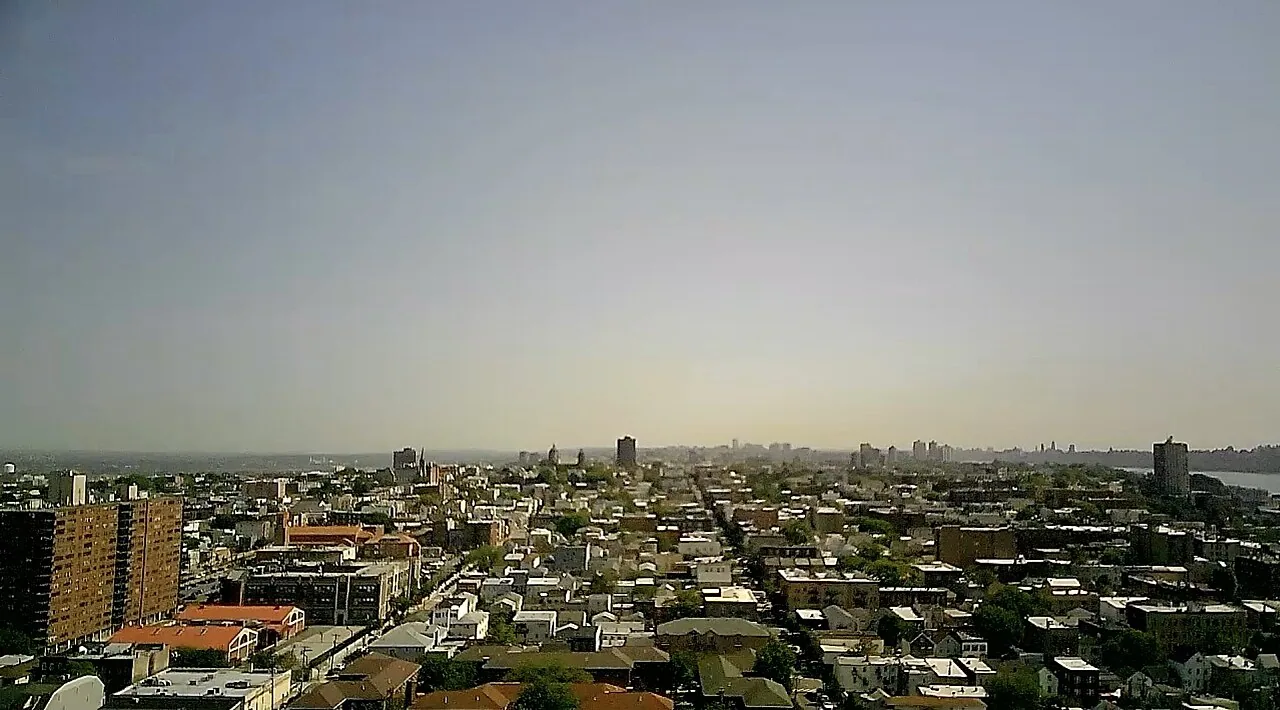
Union City, NJ covers 1.3 square miles, so delivery routes and staging can shape a commercial roof work window. We confirm where a truck can stop, how crews reach the roof, and whether loading must continue during the repair. We settle the lift plan, the staging area and the work window first. Then we walk the roof, mark the zones that hold water or open at the edges, and price the repair or replacement from what we saw. When the source of a leak is unclear, a commercial roof leak repair starts at the interior report and works outward.
A small city footprint changes what a crew can bring to the roof. Before mobilization, we confirm the roof hatch, delivery stop, tenant hours, street staging area, and any approval point that could change the work window. The inspection record maps each zone, while the drain review follows the outlet, overflow, and membrane transition. We can phase repairs to protect access and close out each active area at day’s end. Trucks may have a short curb window. Materials may need to go up in small loads, and a hoist or crane may need its own permit conversation with the owner and the street. We ask for these facts before quoting: where the delivery can stop, which stairs or hatch reach the deck, and whether the roof is shared by several tenants.
Once the access path is known, the sequence follows. We open only the roof zone that can be closed the same day. Insulation, membrane and flashing go in order, and the tie-in to the existing sheet is photographed before we leave. Daily closeout means the tenant below sees a dry ceiling in the morning, not a plan for tomorrow.
On an occupied floor, noise, odor and foot traffic are scheduled with the property manager. Adhesives, torches and hot-air welders each have their own limits, and we pick the method that fits the building's hours and ventilation.
Send the roof access details, the tenant hours to protect and any leak locations. We will walk the roof, flag the highest-priority zones and give you a sequence that fits the building.
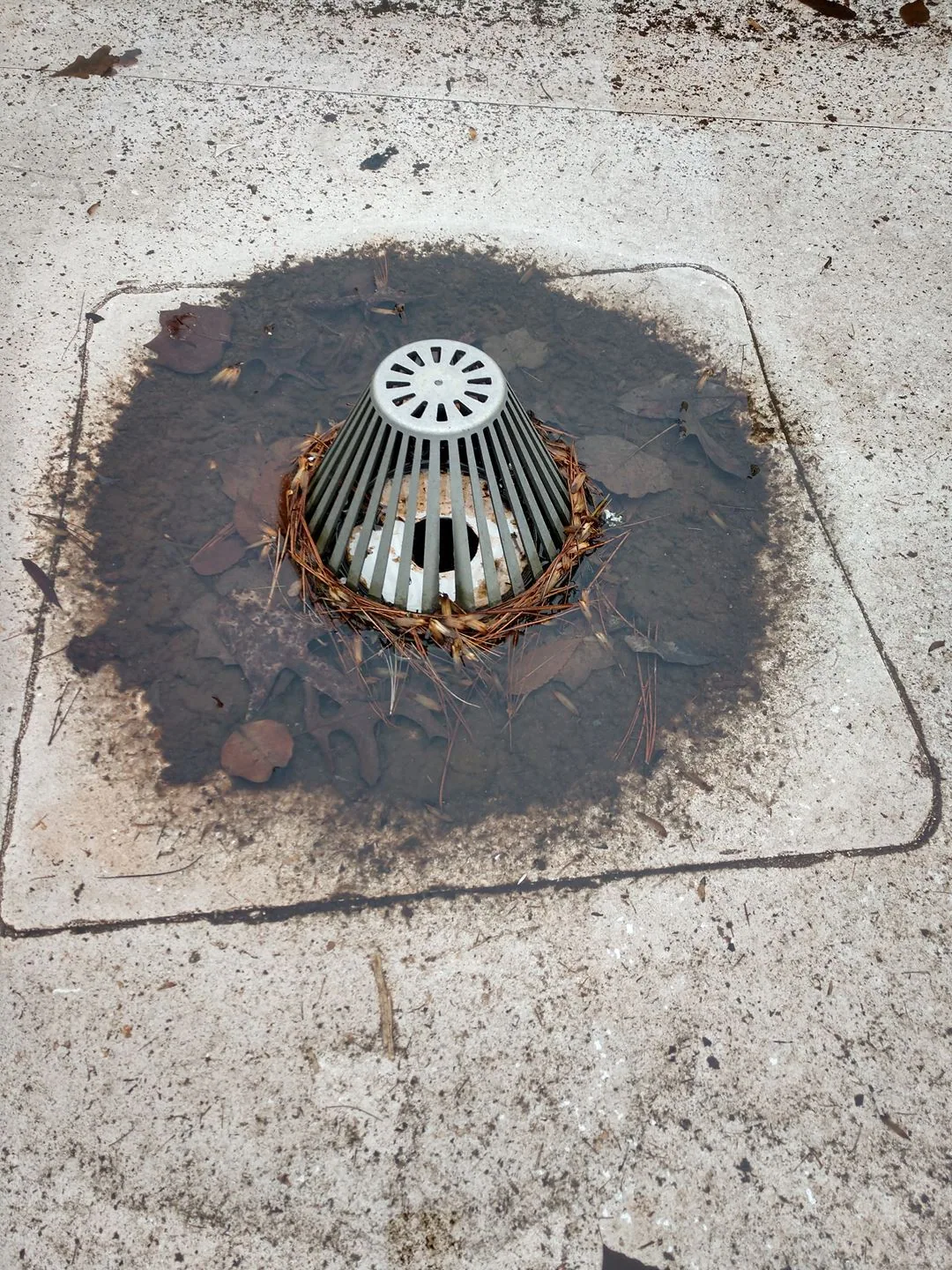
Jersey City faces localized flooding and stormwater loading on its combined sewer, and New Jersey's climate risks include intense storms and chronic flooding. In Union City, the roof walk checks each drain, overflow, and membrane transition against the building's actual water path.
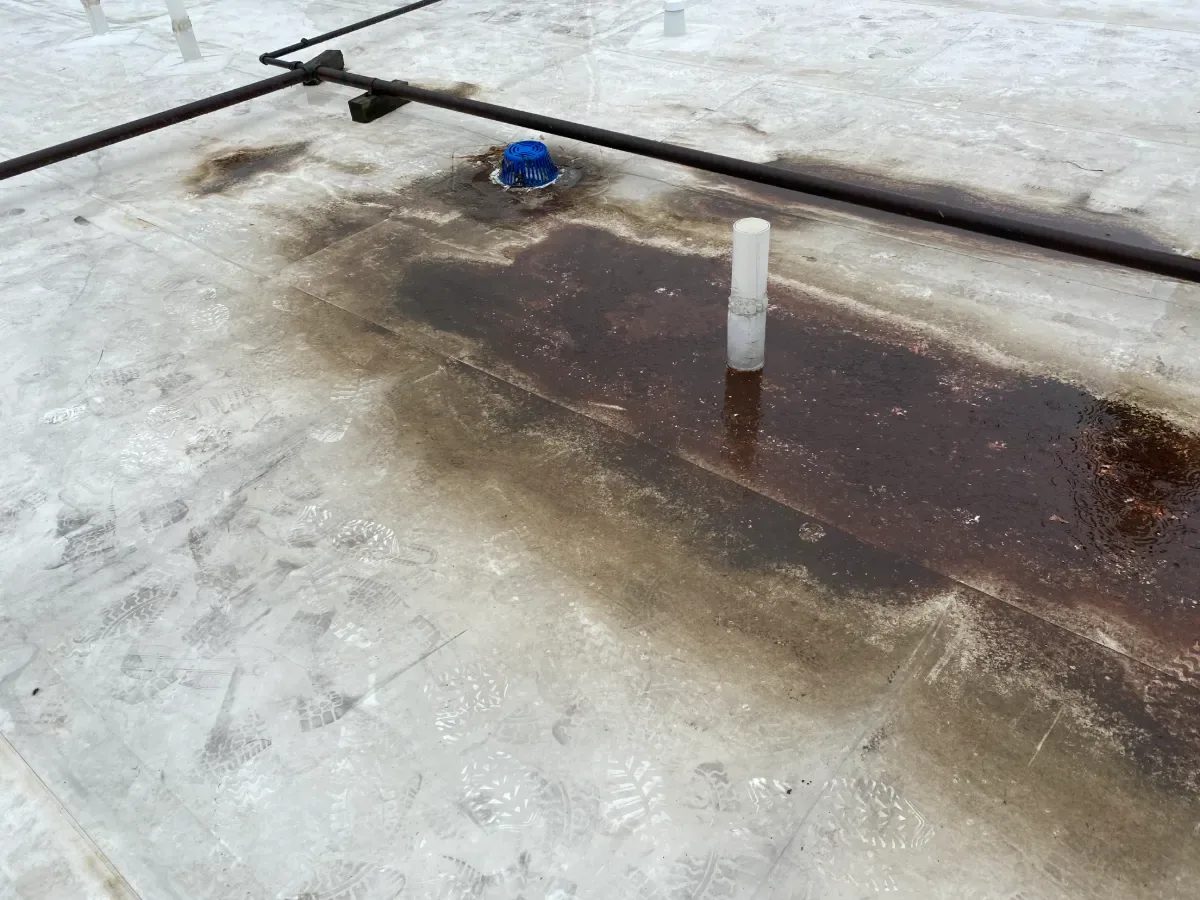
The test is simple. We look at where water stood after the last storm, how the membrane sits around the drain bowl, and whether the overflow route is open. Ponding that lasts more than a day or two after rain shortens membrane life and loads the deck. A ponding water repair may mean a new drain, a cricket, or tapered insulation, depending on how far the low area runs.
Gutters and downspouts on smaller buildings get the same attention. A downspout that discharges against a wall can soak the base of a facade and reach interior finishes within a season.
Commercial blocks often combine a flat roof over retail or office space with a sloped or metal section over a stair tower or a rear addition. Each section ages differently, so we write the condition report by section. A single-ply membrane gets its seams probed and its flashing checked. A built-up roof gets checked for blistering, alligatoring and exposed felts at the edges. Metal panels get inspected at fasteners, laps and penetrations.
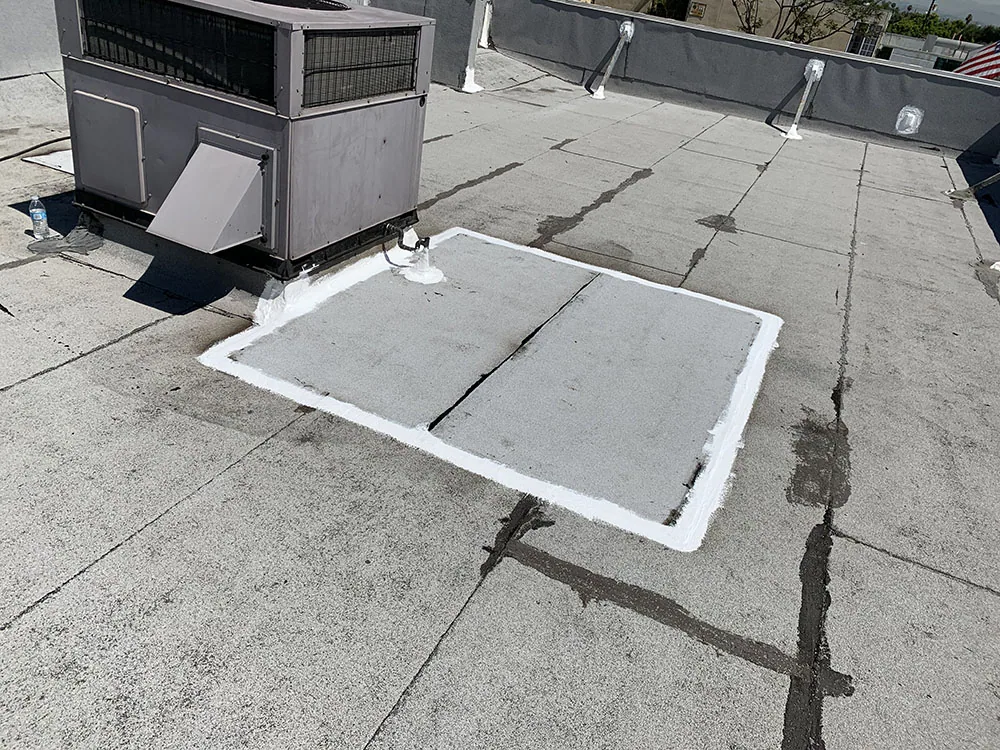
Choice of repair follows that survey. A TPO roof in sound condition can take a heat-welded patch. An older built-up roof with failed flashing may be better served with a new curb detail and a coating at the field. If the insulation is wet across a section, we remove that section and rebuild it, because a surface patch over wet board returns as another call within a season.
When tenants share a roof, we also map who owns which equipment. That prevents a repair from stopping at a boundary the building never intended and leaving an unflashed gap.
Three conditions decide the path: how much of the roof is wet, how many layers the building already carries, and how soon the owner needs a stable asset. If the wet area is small and the membrane is otherwise sound, repair is the economical move. If the roof is dry but worn, a coating or a recover may extend service. If the deck is damaged or insulation is saturated over a large share of the roof, replacement is the safe answer.
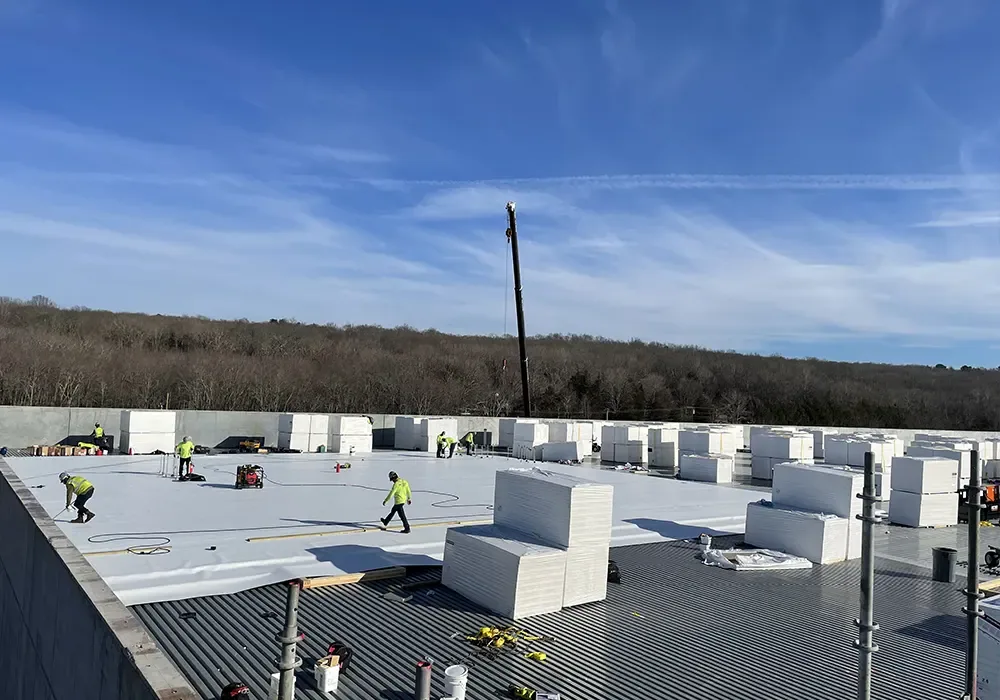
A roof recover adds a new membrane over the old one and avoids tear-off debris, which matters on a tight site with limited dumpster space. It does add weight and is not available when moisture is trapped. We confirm that with a moisture survey and test cuts before recommending it.
Cost moves with access, deck repairs, edge metal, the number of penetrations and how many days a hoist or crane stays on site. We give owners the repair, recover and replacement numbers separately so the capital decision is based on condition and not on the first bid.
The record we leave is built for a manager who was not on the roof. Photographs are tied to roof zones, the materials are listed, and anything we saw but did not touch is noted separately. For a portfolio with buildings in Union City and nearby Elizabeth or Hoboken, the same format lets the owner compare roofs and set the order of spending.
For a major renovation or change in building use, the owner can confirm local approval requirements before fixing the roof schedule. Our handoff records the assembly, penetrations, drainage, and work sequence needed for that review.
A condition report from the first walk can serve as the baseline, and each maintenance visit is compared with it.