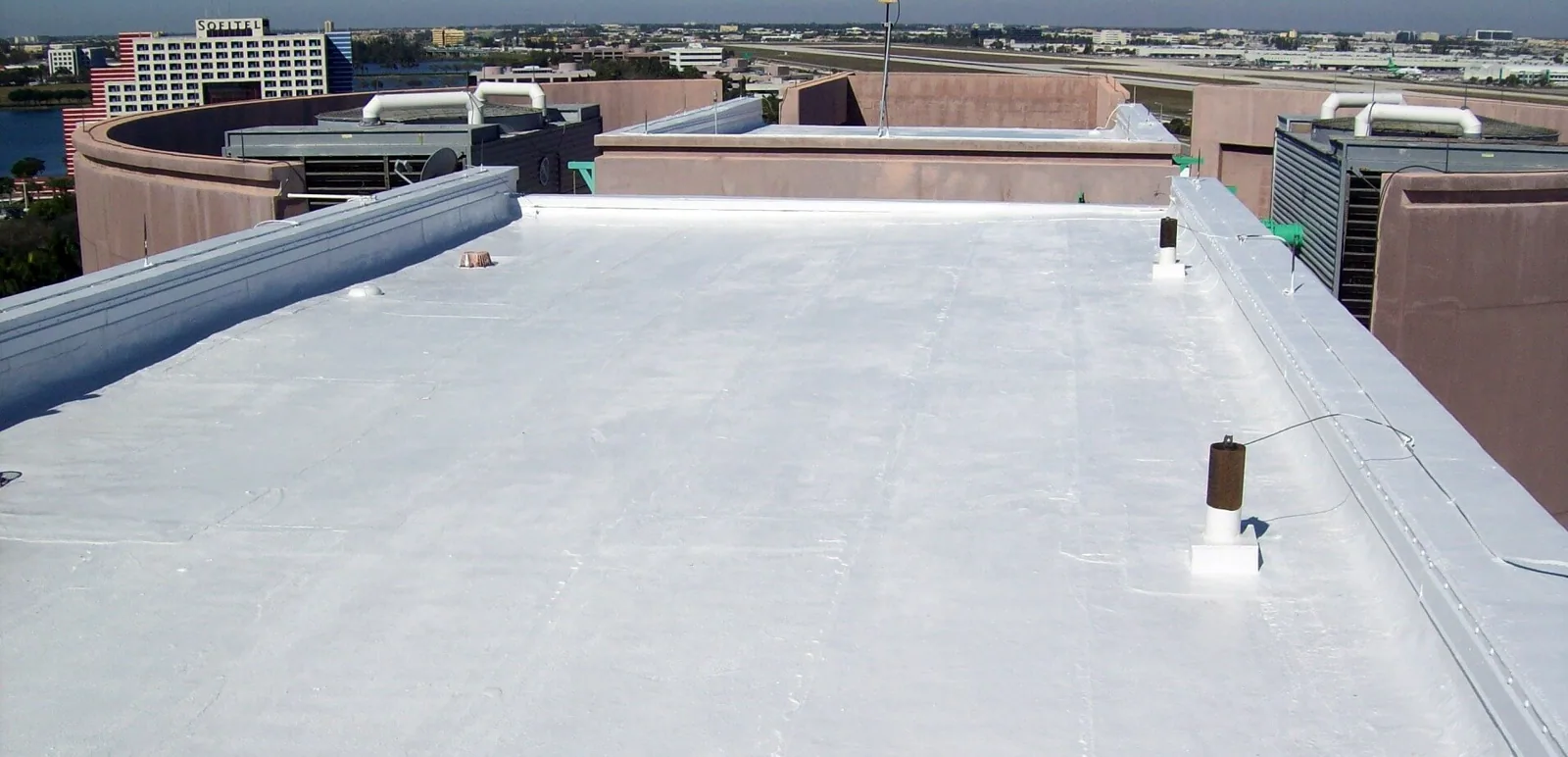
Ponding Water Roof Repair in Jersey City, NJ
Fix ponding water on Jersey City commercial roofs: trace blocked drains, low spots and deck deflection, then correct slope and drainage with a written scope.
Fix ponding water on Jersey City commercial roofs: trace blocked drains, low spots and deck deflection, then correct slope and drainage with a written scope.
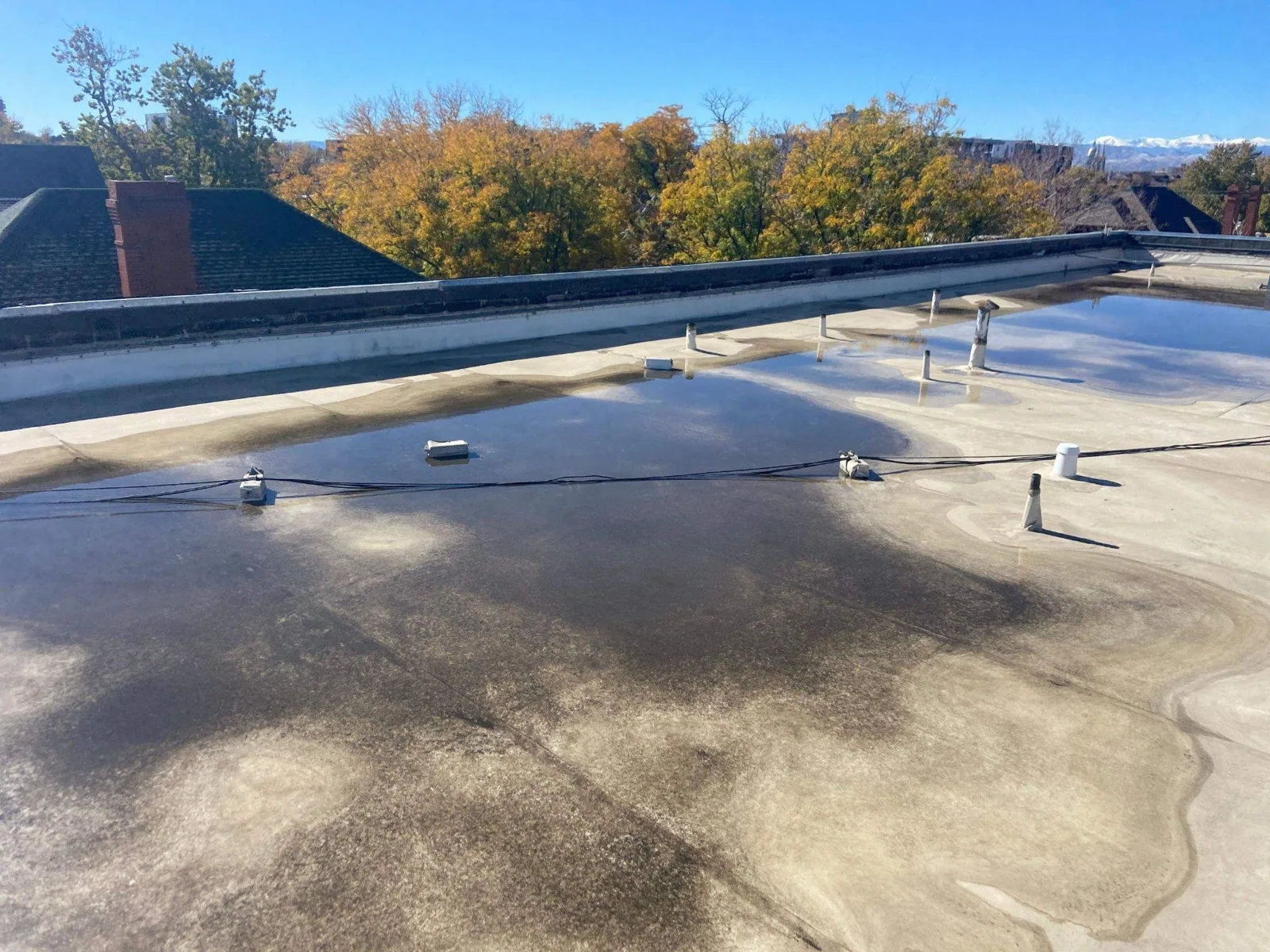
Standing water on a flat roof has three measurable parts: how deep it is, how long it stays, and where the water comes from. Those three facts decide whether the fix is a clean drain, a new sump, tapered insulation or a structural conversation. Jersey City identifies localized flooding and stormwater loading on its combined sewers as concerns, so a ponding call traces roof water from the surface to the drain and out to its discharge. On the roof, we map depth, persistence, and outlet condition before selecting a remedy.
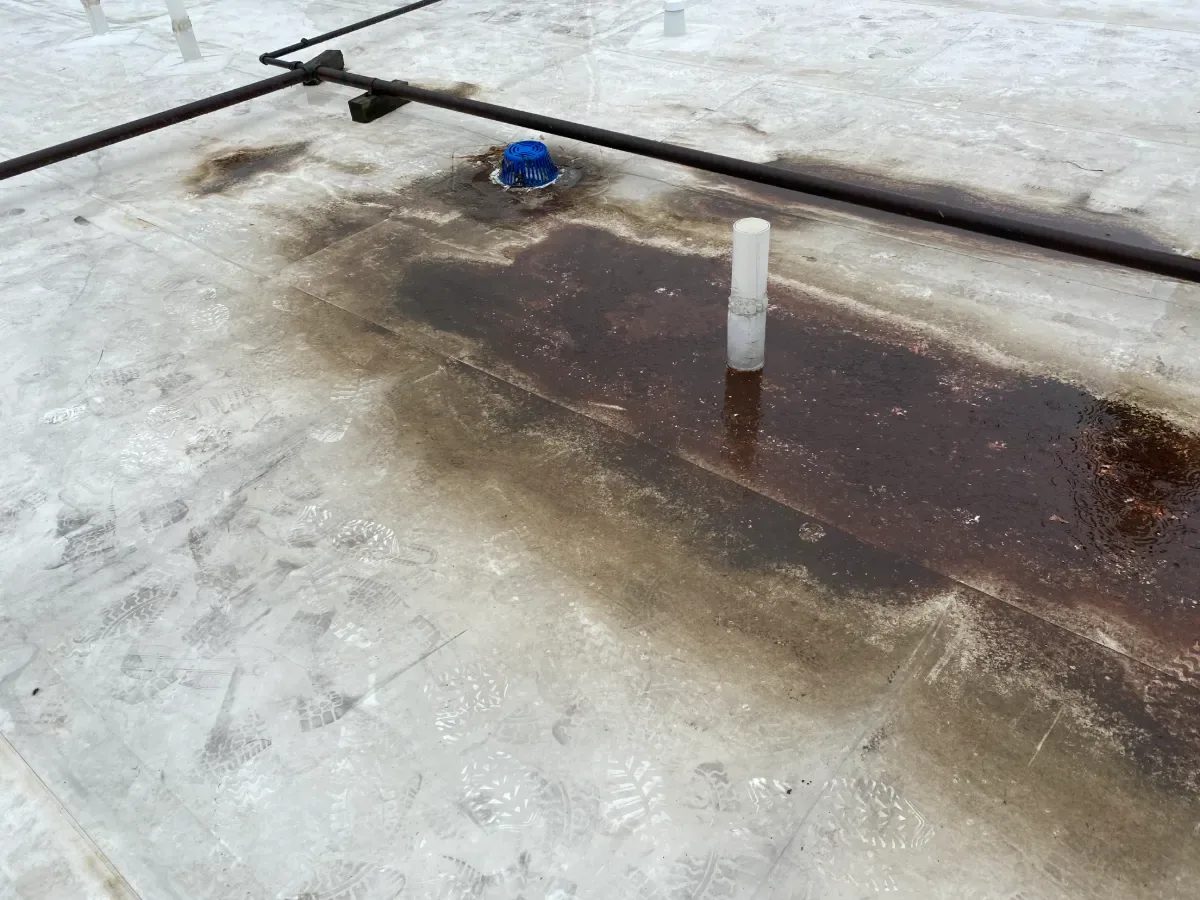
We start by walking the roof the day after a rain, because that is when ponding shows. We photograph each puddle, measure its depth, mark its edge and trace it to the nearest drain. The roof map sets the inspection sequence.
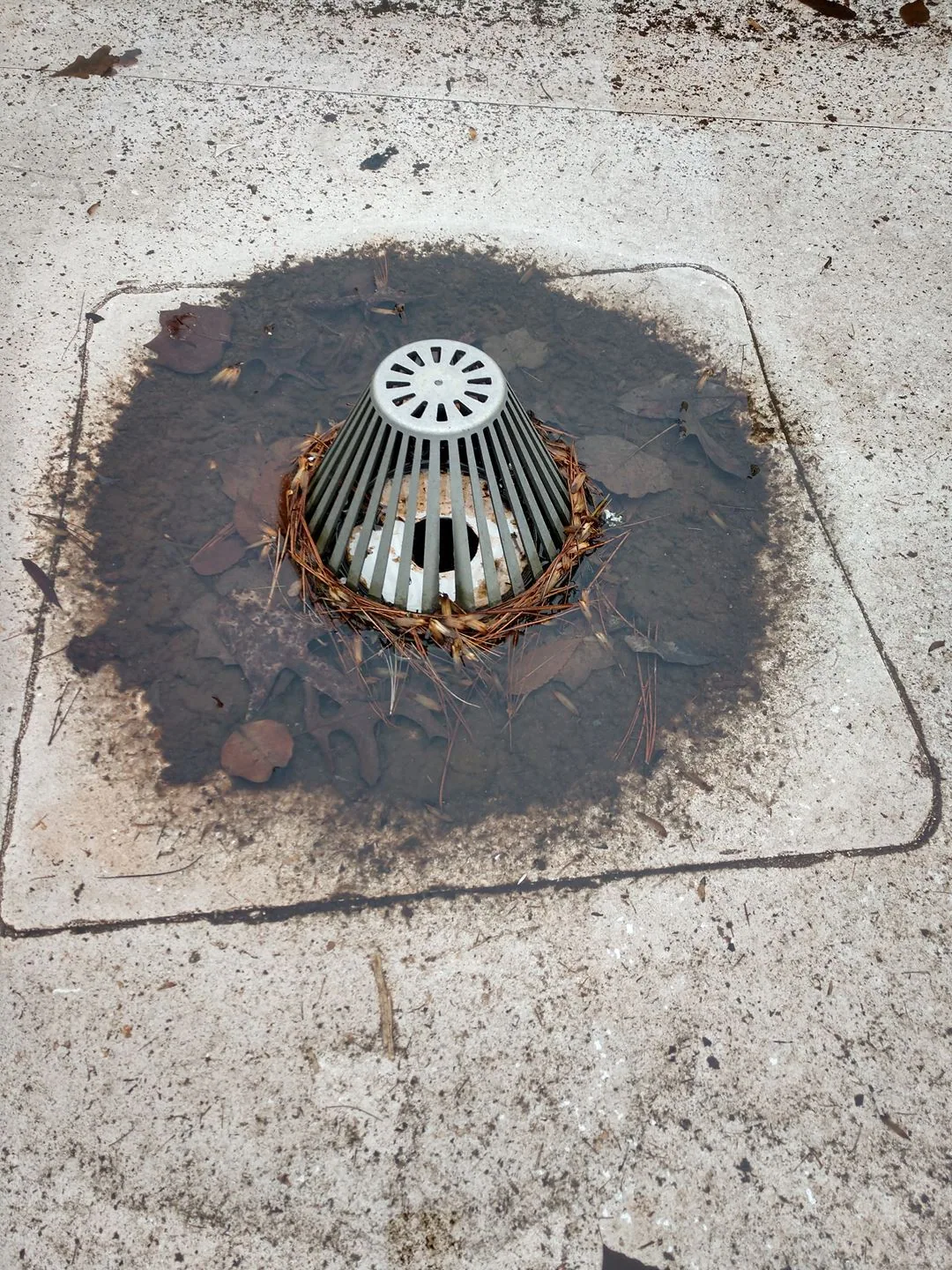
Most ponding starts at a drain that is partly blocked. Leaves, grit, torn membrane, balls, bottles and old sealant collect in the bowl, and the water backs up onto the field. We clear each bowl, check the strainer, test the flow and look at the drain body for cracks or loose connections. Where the clamping ring is loose or the flashing around the drain has opened, we repair it.
Overflow drains and scuppers are the safety net. They should sit above the main drain and discharge where water can do no harm. If an overflow scupper is blocked or missing, water rises until it finds the parapet flashing. Jersey City records pair Irene and Sandy with severe flooding and property damage, a reason to check how roof drains recover after a major storm. We check overflow capacity and discharge at the roof before selecting drainage work.
A routine drain and scupper service before each wet season prevents most of these problems. It is the cheapest line in a maintenance plan and one of the most valuable.
Tell us which roof holds water and when you last saw it. We will map the ponding, trace it to the cause, and write the repair plan.
If water remains after the drains are clear, the roof surface itself has low areas. They come from several causes: insulation that has compressed, a deck that has deflected under equipment weight, tapered boards that were never installed, or old layers that settled. We use a level or a laser to map the elevations, and we compare them with the drain locations.
Deflection is the one that needs a structural opinion. A deck that sags under a rooftop unit may be carrying more load than it was designed for, and no membrane repair will fix that. We tell the owner when the problem looks structural and recommend an engineer. We do not guess about capacity.
Some low spots are shallow and cosmetic. Others hold enough water to add real weight. A cubic foot of water weighs about sixty-two pounds, and a large puddle adds up. That is why we measure depth and area, not just note the presence of water.
Standing water speeds up wear. Algae and dirt grow in the puddle, UV and heat cycle the membrane differently under water than around it, and in winter ice forms and expands. Seams under water are under constant pressure, and any weak weld can leak. Some membranes tolerate ponding better than others. Many manufacturers limit warranty coverage where water stands, so the condition can also affect paperwork.
We inspect the ponded area closely. We look at seams, laps, flashing at the edges of the pond, and the surface for blistering or chalking. On modified bitumen or built-up roofs, we look for granule loss and cracking in the plies. A modified bitumen surface that has been under water for years may need replacing in that section.
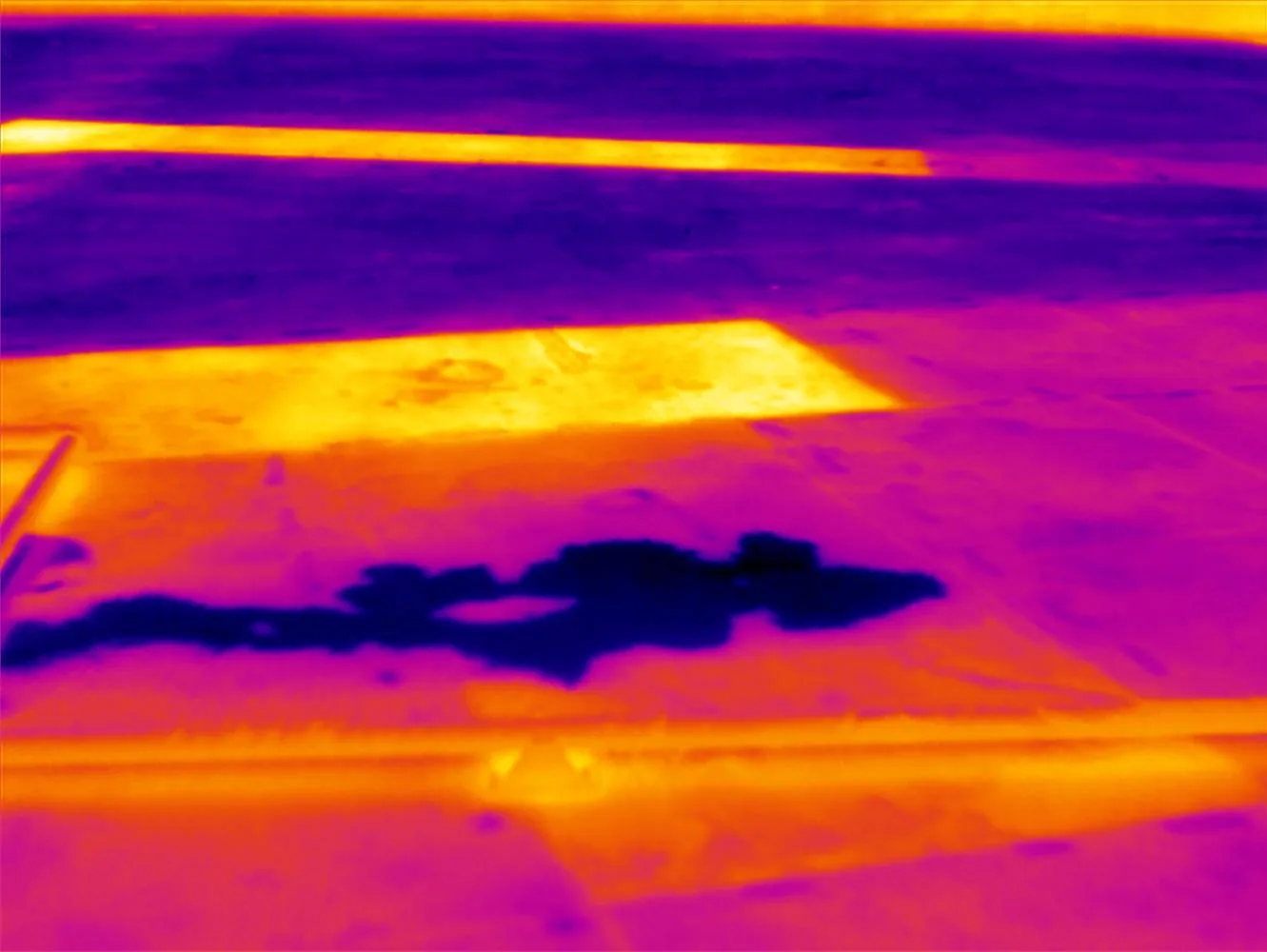
If the water has soaked the insulation, an infrared moisture survey maps the wet area. Wet insulation loses its R-value and adds weight, and it does not dry on its own. Water that finds a failed flashing at the edge of a pond goes straight inside.
The fix follows the cause. If a drain was blocked, we clean it and add a maintenance schedule. If the roof has a low spot near a drain, we can add a sump or install tapered insulation to guide water to the outlet. If the drain is too small or too few, a new drain can be added with proper plumbing. If the deck has deflected, we consult a structural engineer before adding anything heavy.
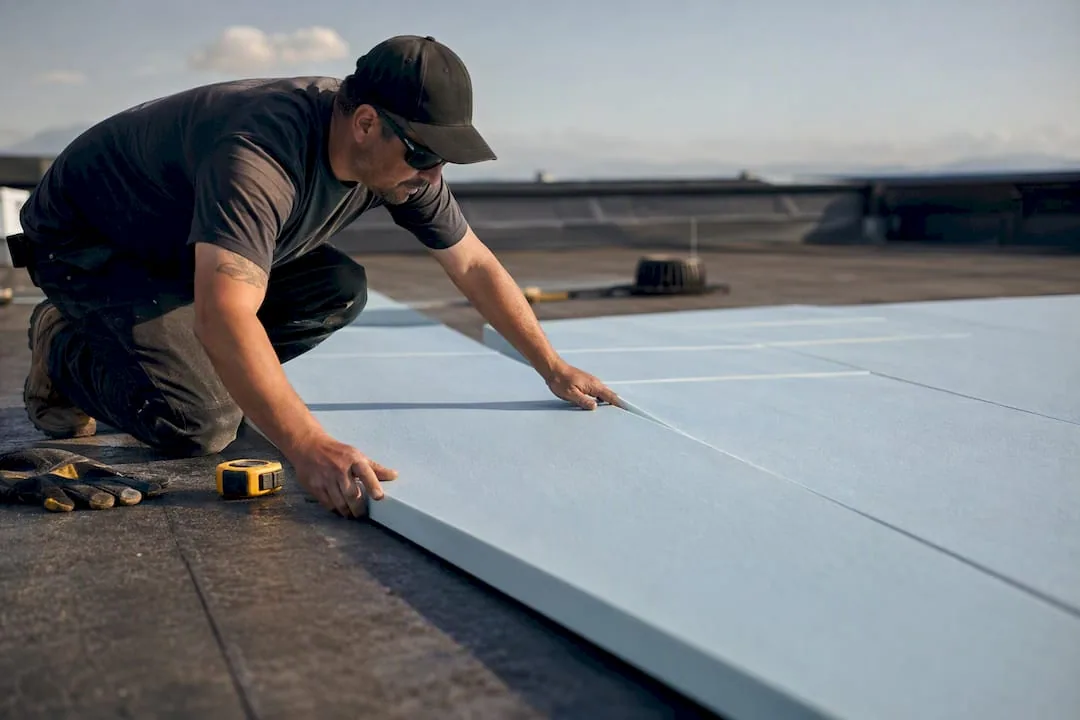
Tapered insulation is the most common permanent solution. It builds slope into the roof by varying thickness, directing water to the drains. It works best as part of a recover or a replacement, when the membrane is already being renewed. The insulation and cover board layers beneath the membrane set the slope that moves water to the outlets.
A recover can add slope without a full tear-off, provided the existing layers are dry and sound. A coating alone does not fix ponding. It may seal the surface under water, but the water will keep sitting there. We say so before an owner pays for a coating that does not address the cause.
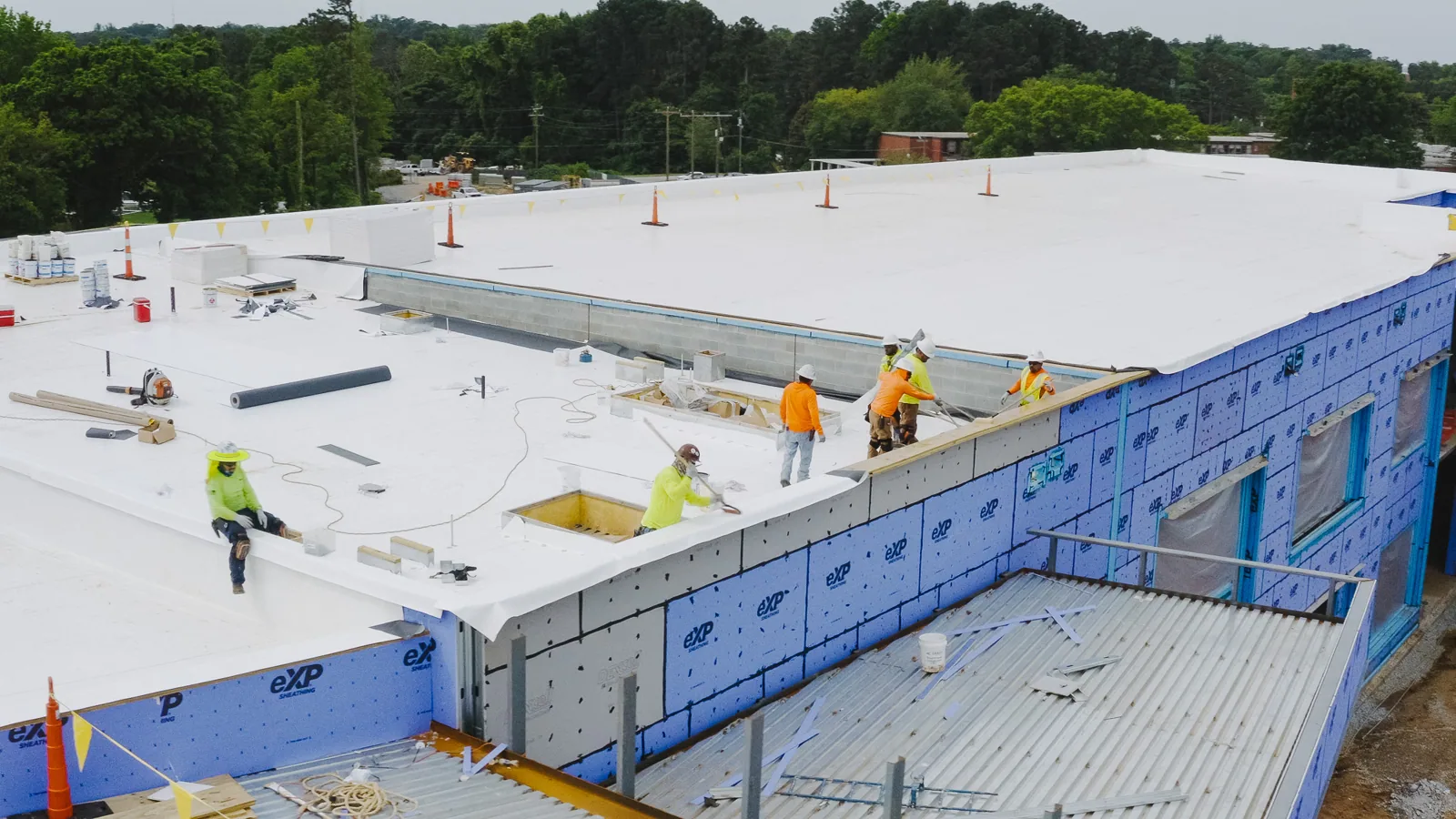
Drainage work depends on dry weather. Sump installation, taper and membrane need dry surfaces, so the weather window sets the schedule. We watch the forecast, mobilize when the roof has been dry long enough, and close each zone before leaving. Temporary drain protection stays in place so debris does not enter the new work.
On an occupied building, we plan access through the least disruptive route and keep noise and dust away from tenants. Before setting lift or delivery hours in Downtown Jersey City, we confirm the staging area and access path with the property manager. Downtown is one of six Jersey City districts named in the Master Plan. The roof walk records the actual hatch, staging point, and delivery route before work is sequenced.
After the repair, we map the roof again, photograph the drains and record the water behavior after the next rain. The owner receives the drawing, the photographs and the maintenance schedule. A visit after the first heavy rain confirms that the water now moves to the outlets.
Owners with many buildings can ask for the same drainage check across the portfolio through a multi-site program. Properties in Hoboken or Bayonne can be added. For a ponding problem caused by a leak, the seam repair process runs alongside this one.