Roof Condition Reports in Jersey City, NJ
Written roof condition reports for Jersey City buildings, with dated photos, roof-zone plans, water path findings and a ranked list of repairs.

Written roof condition reports for Jersey City buildings, with dated photos, roof-zone plans, water path findings and a ranked list of repairs.
The photographs in a roof report decide whether the report is used or filed. A wide shot of a roof says little. A close shot of a lap, tagged to a roof zone and a date, tells a property manager where to send a crew and tells an insurer what the roof looked like before a storm. In Jersey City, Irene and Sandy brought flooding and property damage. Dated roof photographs give a useful baseline when a later inspection follows storm damage.
Our written condition report is built to be read by someone who was not on the roof. It names the roof zone, shows the condition, states the water path, and gives the next step with a priority. A facility manager can act on it the same day.
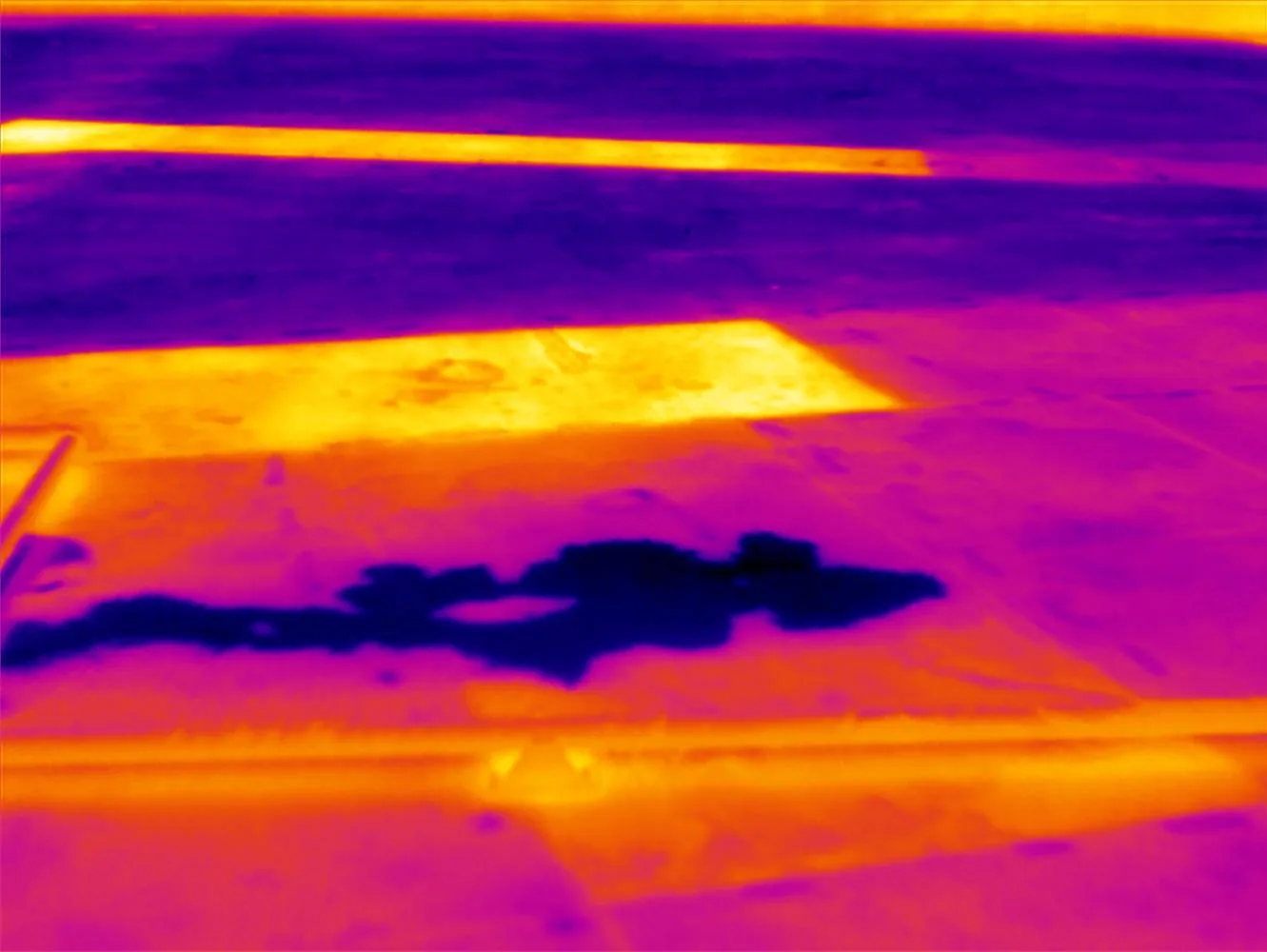
We walk the whole roof, not a sample. Seams, laps, flashings, penetrations, drains, parapets and edges are each checked and photographed. For low-slope membranes, we probe suspect seams and press on blisters or soft spots. Where surface evidence points to trapped moisture, an infrared scan shows the thermal pattern, and a core confirms it. A drone pass covers areas that are unsafe to walk, such as a fragile skylight field or a wet section near an edge.
Nothing in the written report is a guess. Every finding connects to a photograph, a location on the roof plan, and a condition grade, so a reader can verify it without a second visit.
Set a walk with us to confirm access, tenant notice rules and the roof zones that matter most. The written report comes back with photographs and a ranked repair list.
Each report carries the same structure so it can be compared year to year.
Grades are plain. A zone graded sound needs routine maintenance only. A zone graded fair has a defect that will worsen without a repair this season. A zone graded poor has an open water path or wet insulation, and it moves to the top of the list. We explain the reason for each grade in a sentence under the photograph, so a reader can disagree with the grade and still follow the logic.
The priority list is what an asset manager reads first. It separates the active opening from the maintenance issue, which keeps the budget pointed at the roof that is leaking and not at the roof that merely looks worn. The same list feeds the roof register, so the report is part of a running record.
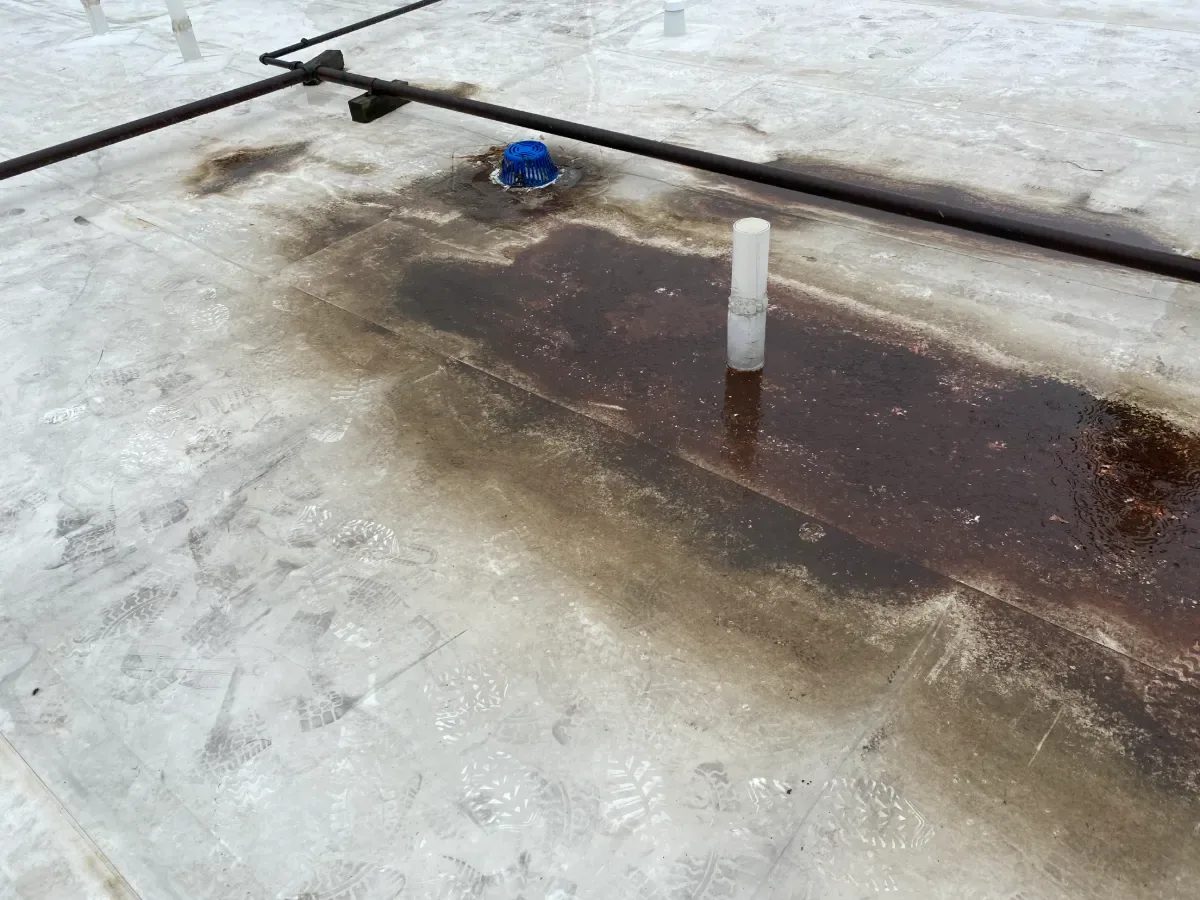
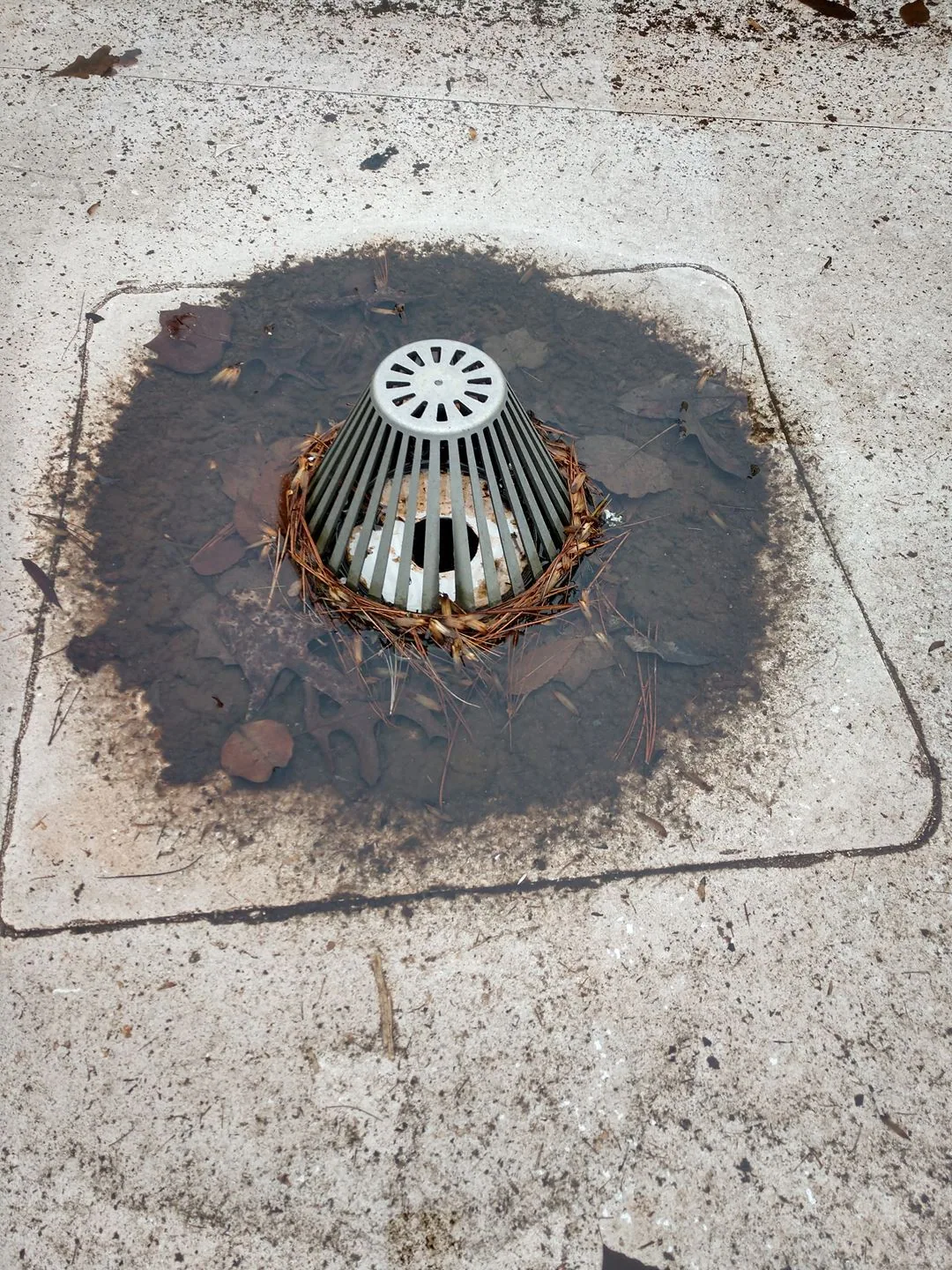
Most reports we write have a drainage section, because water that stays on a roof drives so many other failures. Combined-sewer stormwater loading and localized flooding are on the city's own concern list, so the drainage section of a report is worth reading first. On the roof, we trace each outlet, check the bowl and the flashing around it, and look for debris, standing water and signs of past ponding such as dirt rings and algae.
When ponding is found, the report states where it sits, how deep the water was, and whether the low area follows a deck deflection, a drain that is set high, or a membrane that has stretched. That distinction matters because it changes the fix. A ponding repair that adds tapered insulation answers a deck problem. A cleaned drain answers a maintenance problem. The report keeps them apart.
Report emphasis shifts with the building. The Route 440/Culver area is a named commercial corridor, while Greenville Industrial is a named industrial area in Jersey City. A large low-slope building in either one draws attention to wide field areas, rooftop equipment penetrations and perimeter edge metal. A smaller building near the Central Avenue or West Side Avenue commercial centers calls for a closer look at parapets, compact roof sections, and tie-ins between levels.
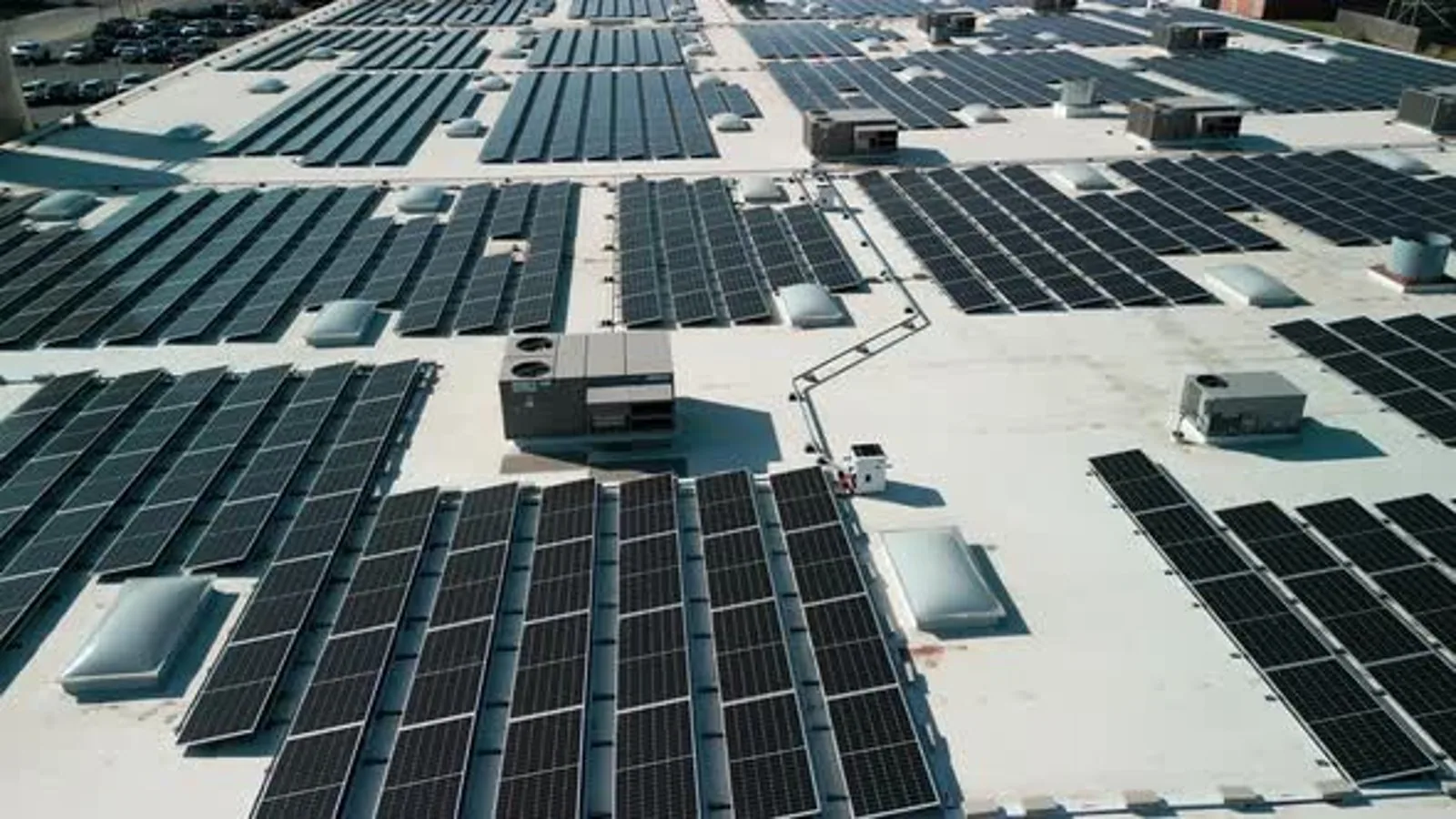
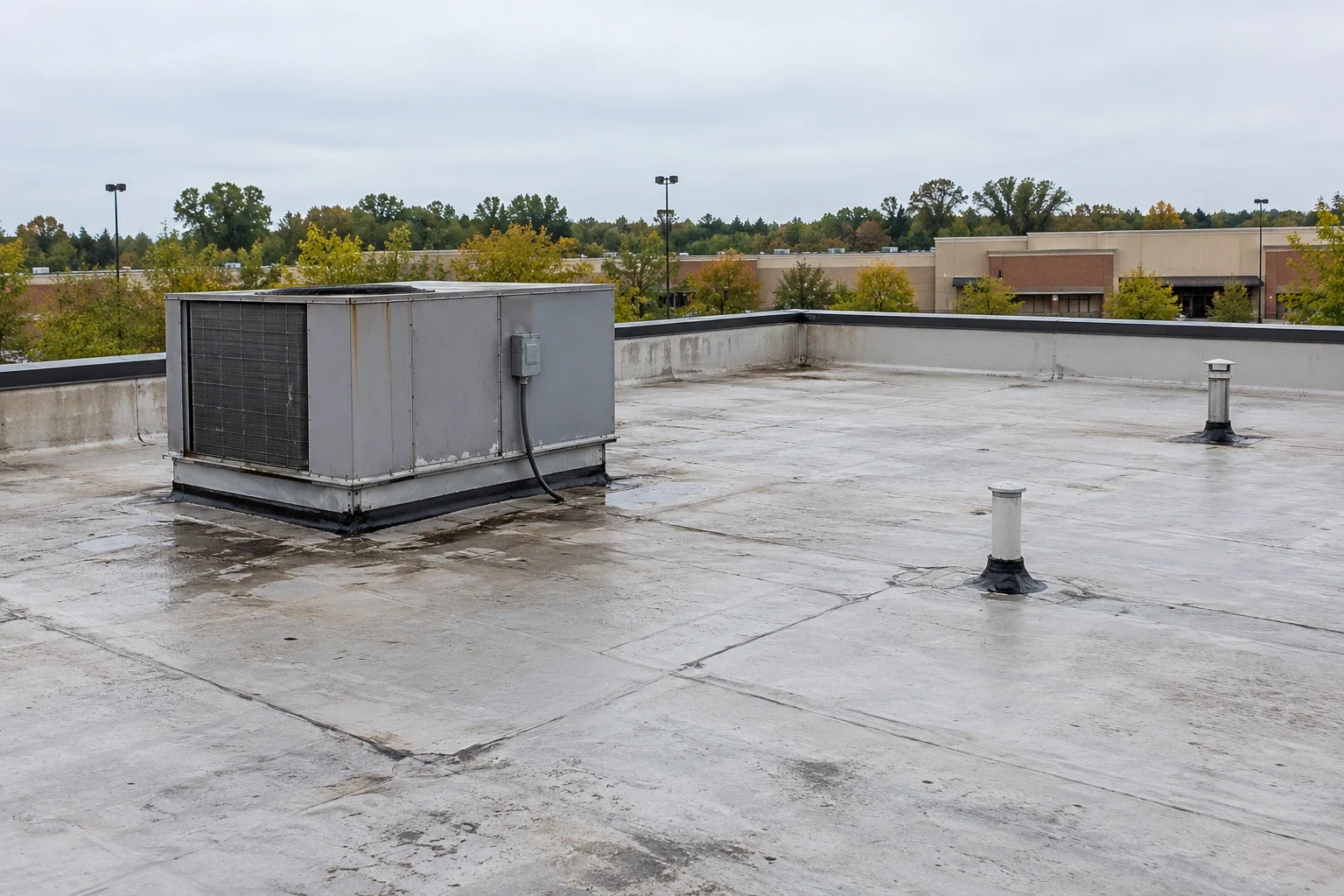
A shopping center has long rows of shared roof and many tenant-installed penetrations. Each of those gets a mark on the plan, since a tenant's unit curb is a common leak point. The report follows what the roof carries, so grades and priorities fit the building the owner actually has. Rooftop units, solar racks, antennas and vent stacks each get a mark on the plan, along with the flashing around them, because every one of those is a hole cut into the membrane and a place where a seal can open.
A report is most useful when it is timed to a decision. We schedule condition reports ahead of budget season, ahead of a lease renewal, ahead of a refinancing, and after a storm that the owner wants documented. A report run after the weather window opens in spring lets the owner schedule repairs before summer heat. One run in autumn catches storm wear before the freeze.
Access is set at the same time. We confirm roof hatch locations, stair or ladder routes, rooftop restrictions and tenant notice rules before the walk. On occupied buildings, the report notes whether the recommended repairs can be done outside tenant hours or need a staging area at ground level. That information goes into the priority list, so work can be sequenced realistically.
The finished report supports several next steps. It can drive a repair order, a maintenance contract, a manufacturer inspection request or an insurance submission. For owners with warranty coverage, it supplies the condition evidence behind warranty claims and maintenance proof. For owners who have storm damage, it provides the baseline that claim assistance depends on.
Owners elsewhere in Hudson County who hold buildings in Kearny can have the same report format applied there, so the findings can be compared across towns. The report follows the roof, not the postal code.