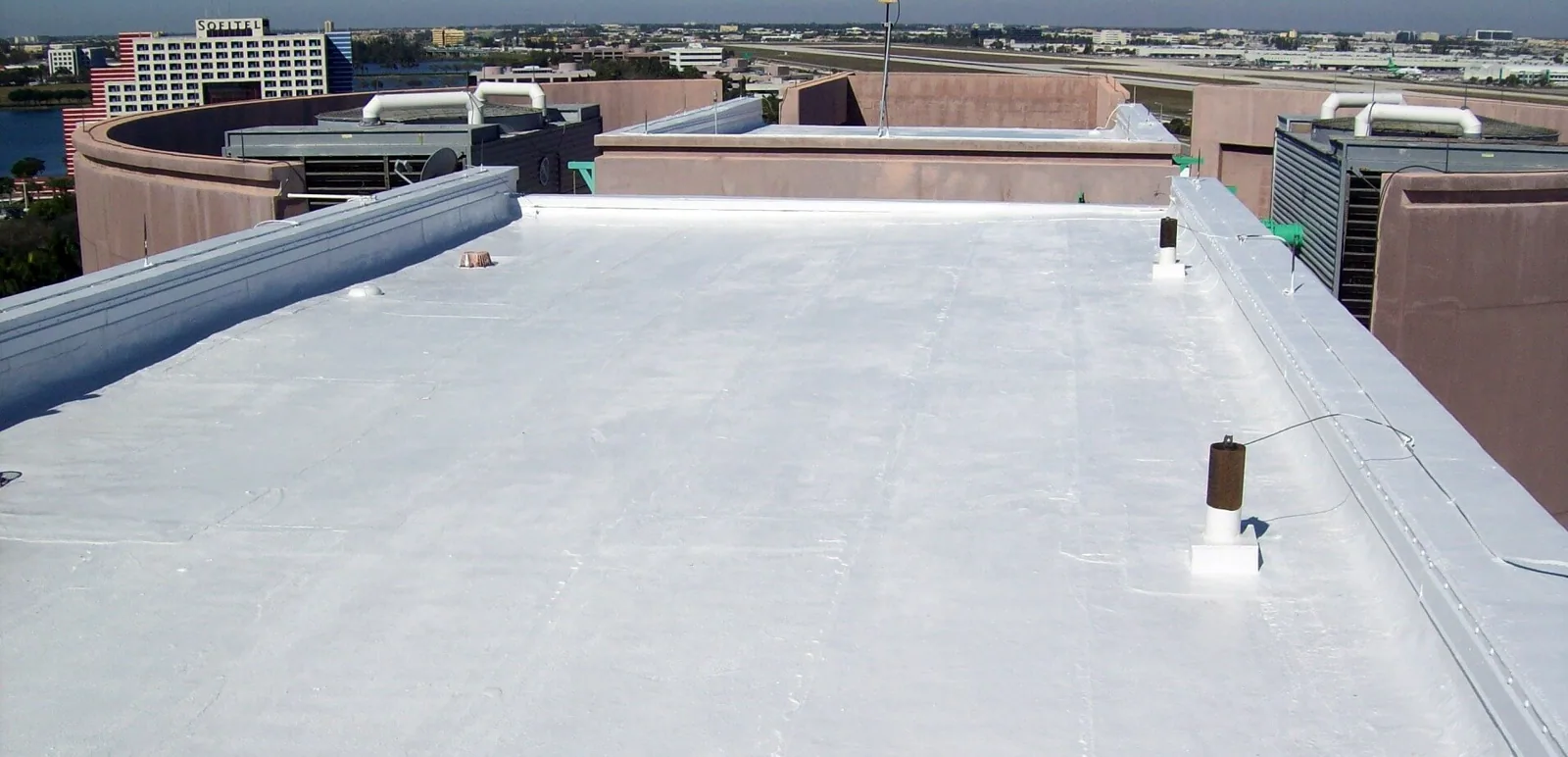
GAF Commercial Roofing Systems in Jersey City, NJ
Installation, repair and maintenance of GAF TPO, PVC and modified bitumen roofs in Jersey City, with seam testing, edge details and drainage checks.
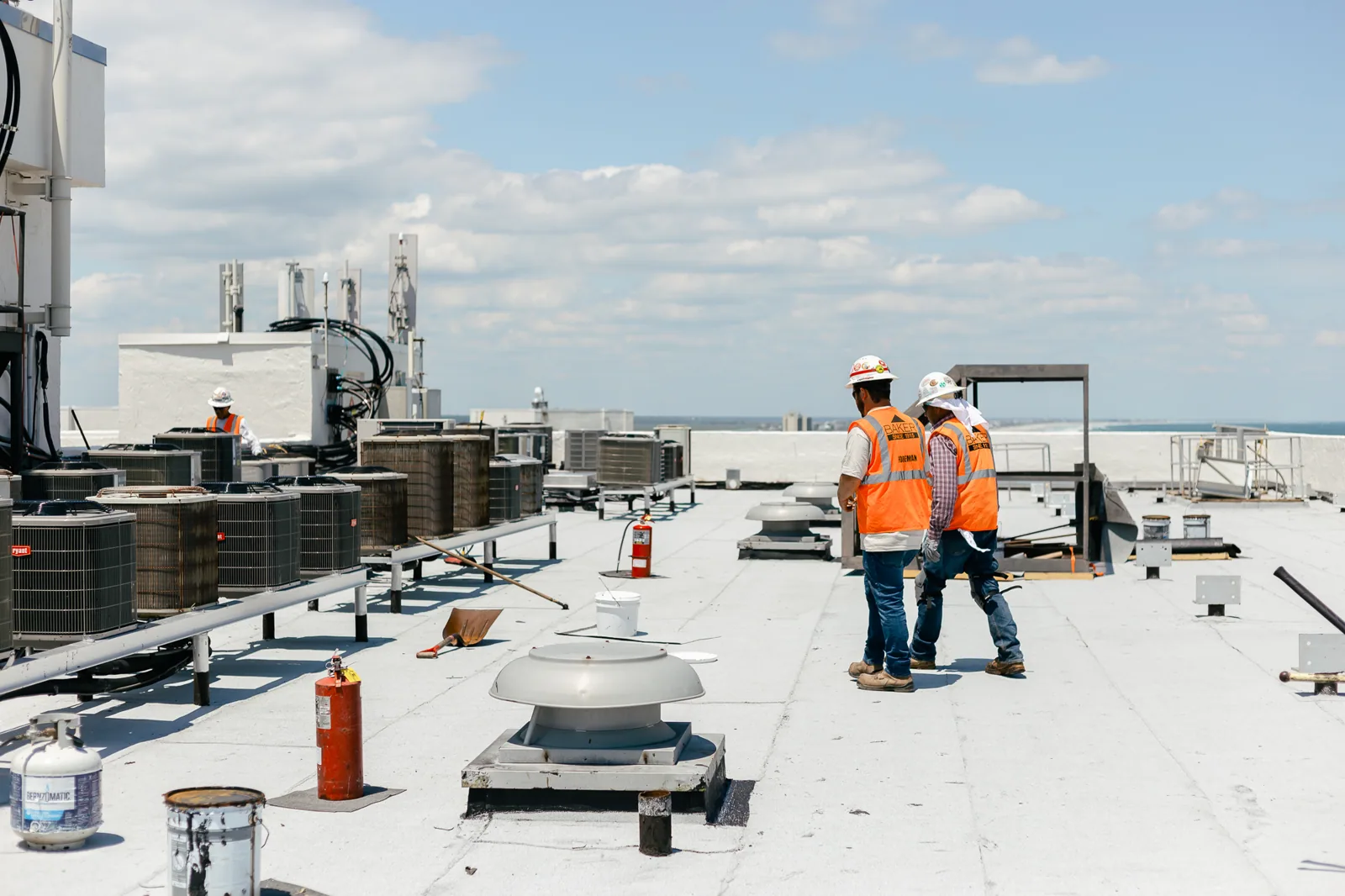
Installation, repair and maintenance of GAF TPO, PVC and modified bitumen roofs in Jersey City, with seam testing, edge details and drainage checks.
GAF commercial systems reach Jersey City, NJ rooftops in three forms most owners will meet: heat-welded TPO, welded PVC, and modified bitumen. The product name on the label matters less than the assembly beneath it, because a membrane performs only as well as its insulation, attachment and flashing. Jersey City is a dense urban and coastal community vulnerable to climate impacts. Localized flooding and stormwater loading on the combined sewer system are listed among city concerns. That puts drains, edges and tie-ins at the center of any membrane decision.
We install, repair and maintain GAF systems following the manufacturer's published details, and we evaluate existing GAF roofs by what the field shows. The first question for an owner is the condition of the water path. The second is the sequence that keeps the building dry while the work proceeds.
GAF's commercial lines include its EverGuard TPO, a thermoplastic polyolefin sheet whose seams are fused with hot air. Welded seams make a continuous surface, and a probe test at the seam shows whether the weld took. The company also sells PVC single-ply, which behaves similarly at the seams but resists many grease and chemical exposures. Modified bitumen rounds out the offer, with torch, hot or cold-applied and self-adhering forms.
Which family fits a Jersey City roof depends on its use. A roof with kitchen exhaust or rooftop chemical vents may point to PVC. A large open field with moderate foot traffic often suits TPO. A roof with heavy rooftop traffic, many small penetrations or tight detailing may call for modified bitumen, whose layers resist abuse. We name the choice in writing and give the reason.
Set a walk with us to identify the system on your roof, test its seams and drains, and decide between repair, recover and replacement. A written scope follows.
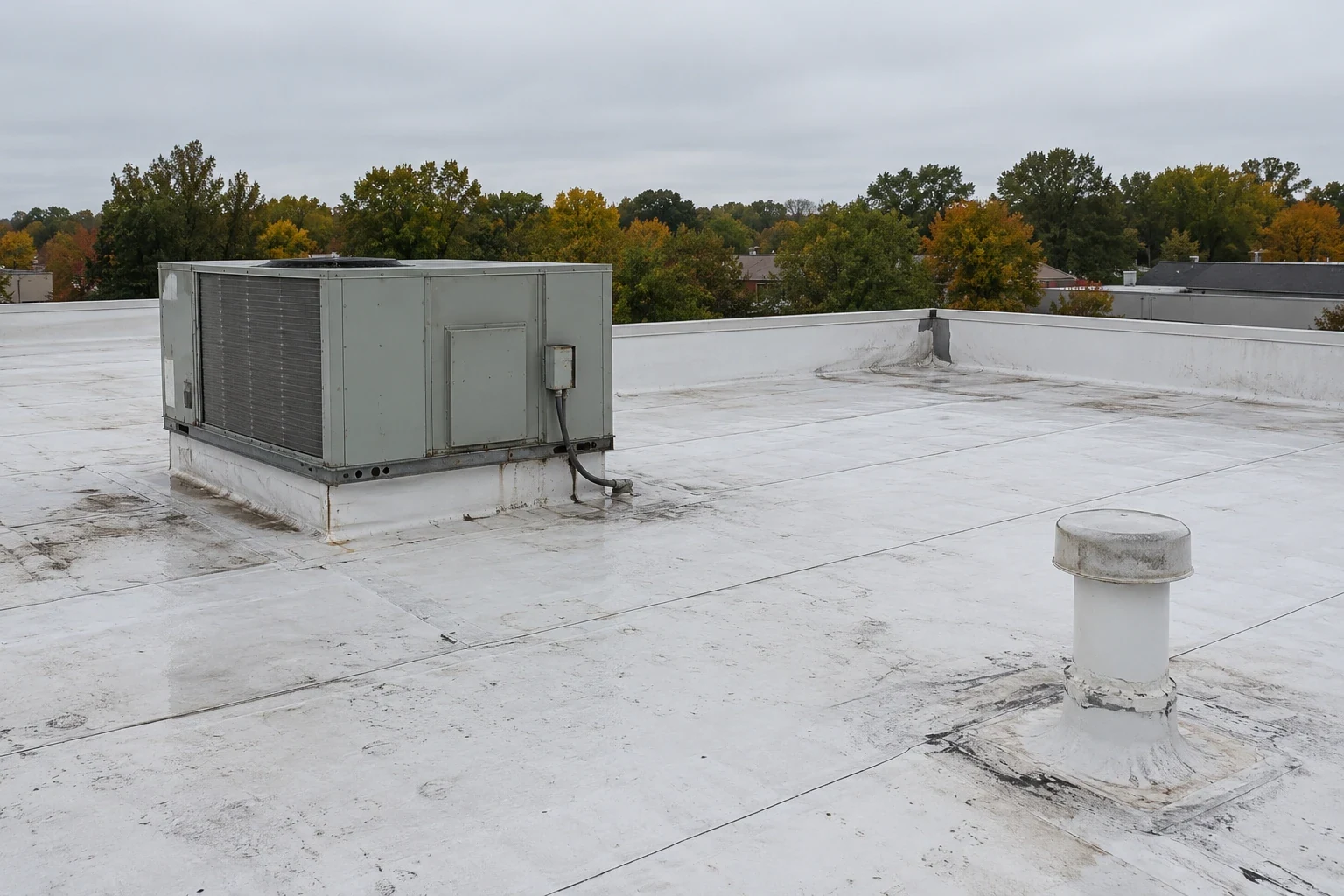
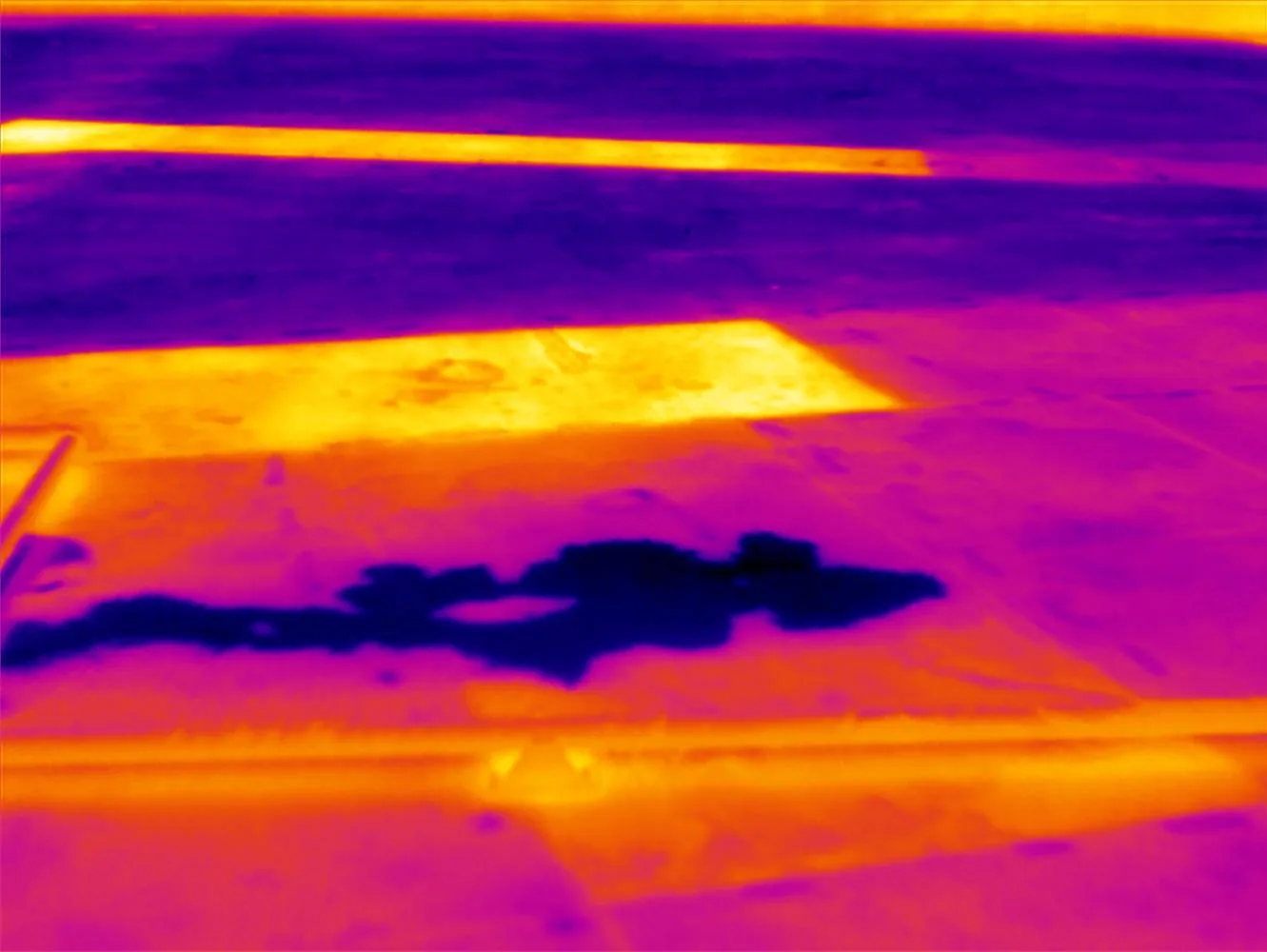
An existing roof has already told its story by the time we arrive. We walk the seams, press at the laps, look at fastener plates and flashing terminations, and check whether the membrane has shrunk away from the parapet. Cuts and blisters get photographed and located on the roof plan. Where moisture is suspected, an infrared scan and core cuts show what lies beneath the surface.
We identify the system on the roof before proposing a repair. Membrane type, thickness, attachment method and insulation determine which patch material and which technique will bond. A repair that does not match the system fails early. Where the label or paperwork is gone, the core sample and the seam behavior tell us what we are working.
Jersey City's built environment changed substantially after 2000: investment came first to Downtown, Newport, and Journal Square, with redevelopment later reaching other neighborhoods. A roof in one of those districts could carry a newer system, an older one, or a patched mix, and the field work settles which. Mixed layers, previous overlays and abandoned penetrations show up at the core. We map them so the repair does not bridge over a hidden defect.
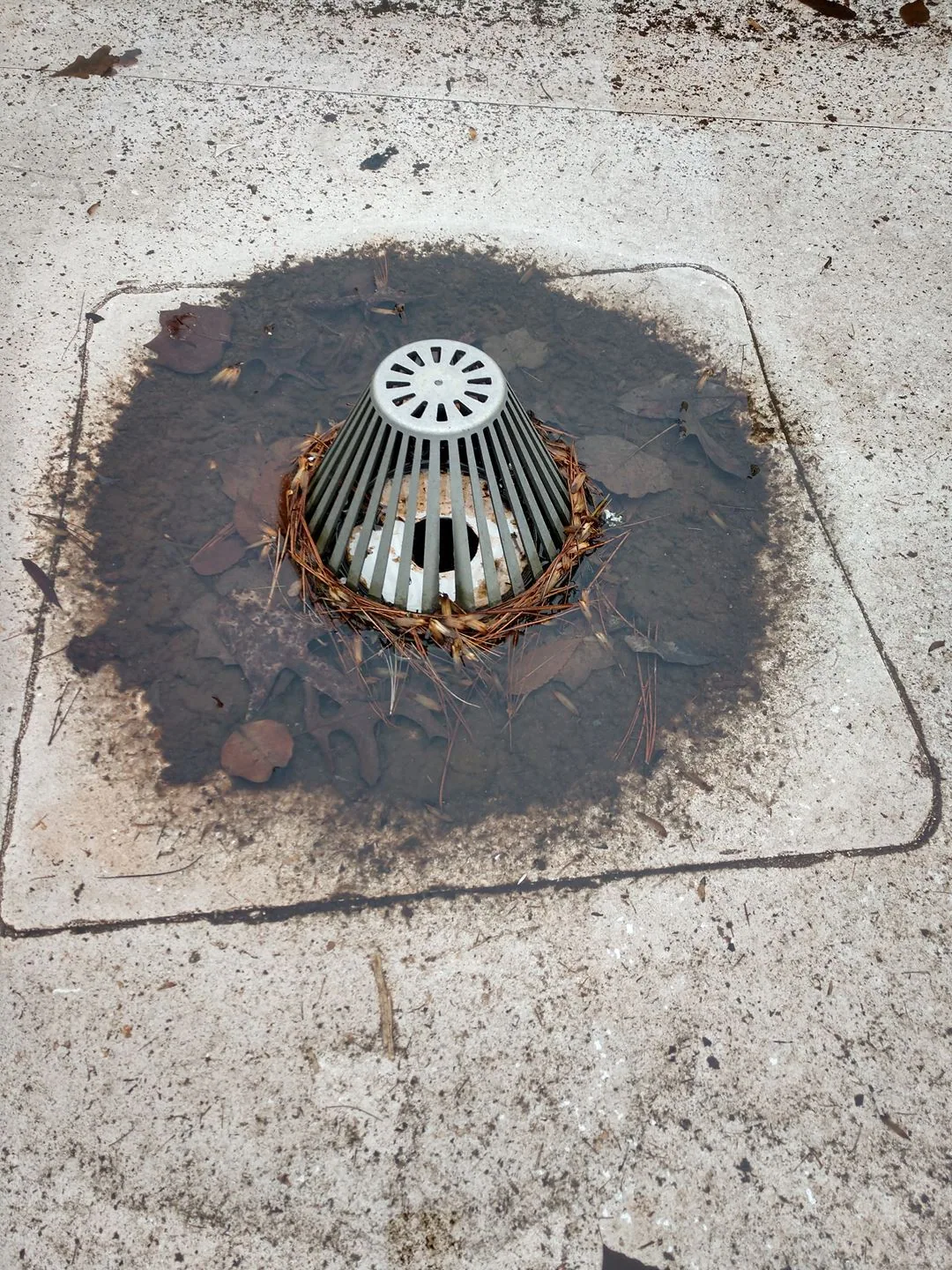
Jersey City has a Flood Overlay Map and a Stormwater Control Ordinance. Irene and Sandy brought severe flooding and property damage, while stormwater loading on the combined sewer system remains a city concern. Roof outlet details therefore belong in the review. We check that drain bowls are flashed, that sumps are formed so water reaches the outlet, and that overflow scuppers sit at a height that works.
Edges get the same attention. Wind lifts membrane from its perimeter first, so edge metal, coping and termination bars are inspected against the manufacturer's attachment details. The edge metal on a coastal-exposed roof is a small line item that protects the field membrane.
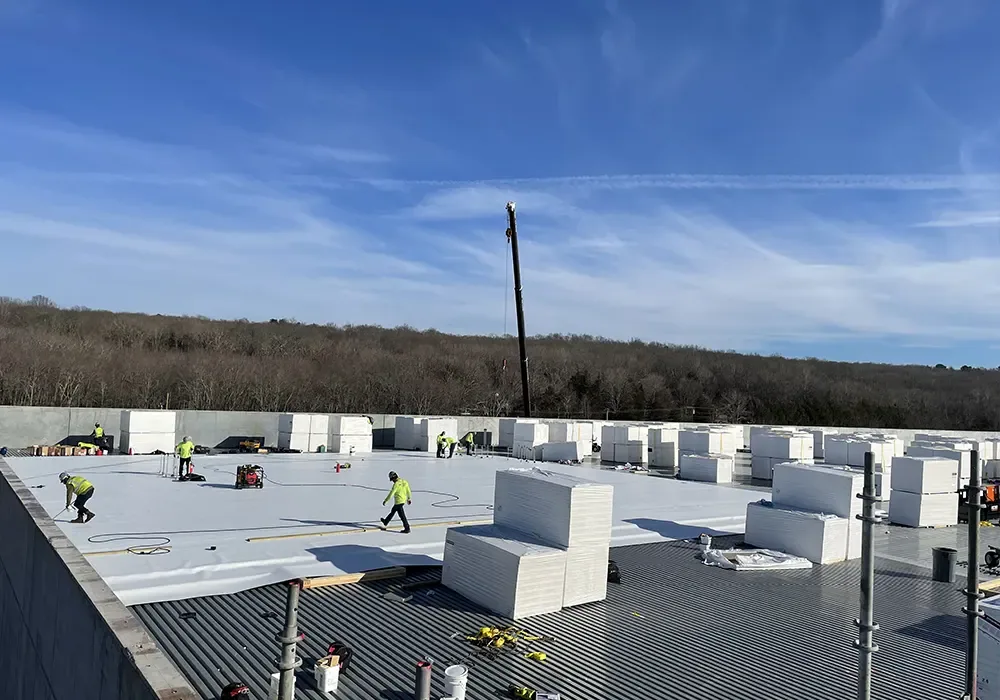
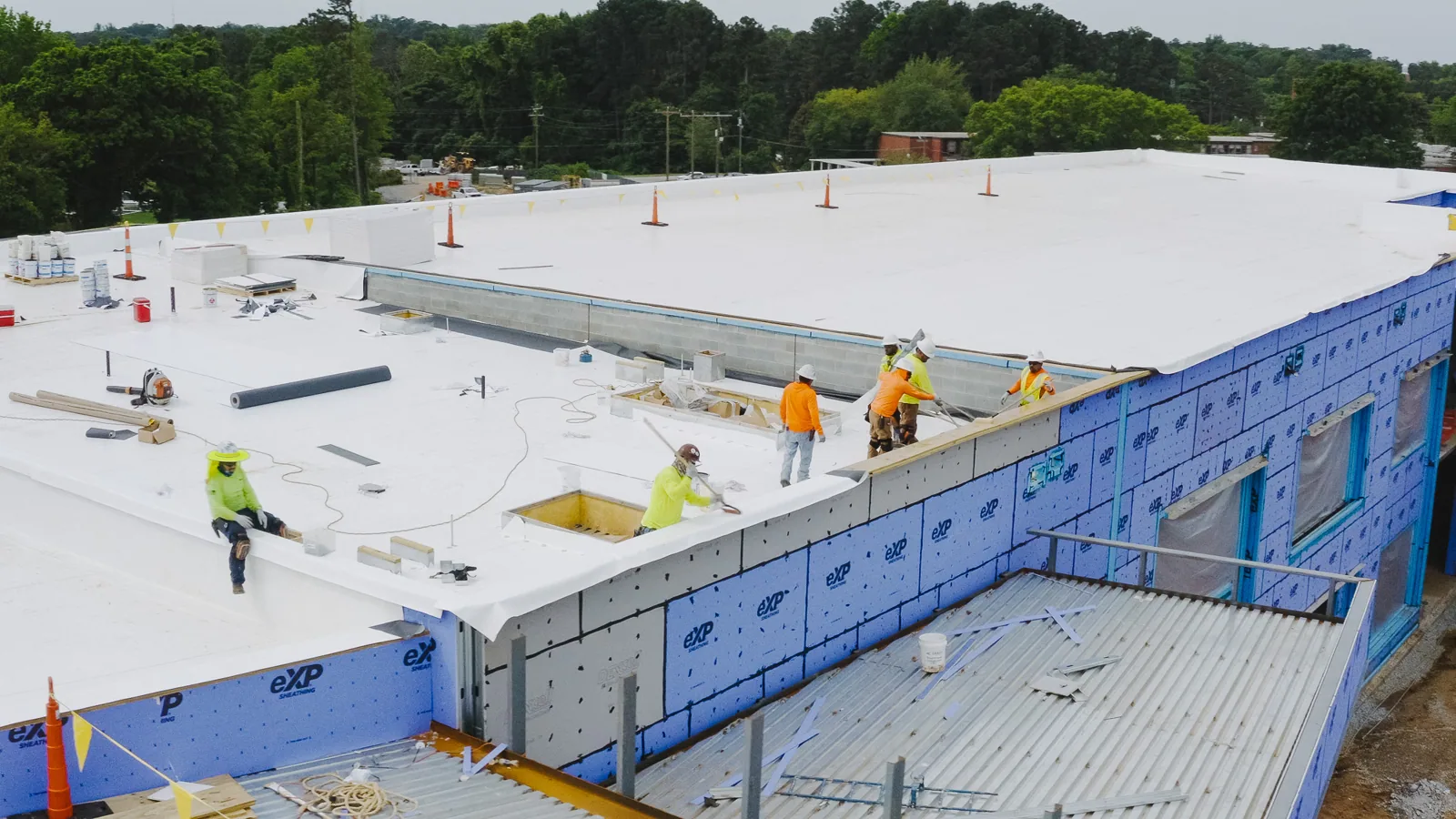
On a replacement, we remove the existing system to the deck or to sound insulation, set new insulation and cover board, install the membrane and form the flashings in the order the manufacturer details specify. A recover over the existing roof applies where the old insulation is dry and the deck is sound. In both cases the crew works to a lift plan and a staging area, and the building stays occupied in many cases.
Each day ends with a daily closeout. Tie-ins are sealed, loose materials are removed, and the water path is confirmed clear. Weather decides what is opened: wind and rain stop torch work and welding, and cold affects adhesives. Parapet walls, curbs and pipe boundaries get flashed the same day they are exposed, since an open wall base is the quickest route for water into an occupied floor. Where a forecast is poor, the crew finishes a section instead of starting a new one.
GAF commercial roofs may carry manufacturer warranties, and the terms depend on the system, the installation and the type of warranty chosen. We install to the published details and record the work: product lots, photographs of seams and flashings, and daily logs. That record helps an owner who later files a claim or sells the building.
Owners who inherit a GAF roof can use warranty management to find the paperwork, learn the maintenance duties and keep a repair log. Mismatched repairs and unlogged penetrations are the usual ways coverage weakens. A short access rule for rooftop trades prevents most of them.
Owners often ask whether GAF is the right brand. The answer is in the roof, the budget and the maintenance plan. TPO and PVC systems from different manufacturers share the same basic seam logic, and so a quality installation and clean flashing details matter more than the logo. Some owners choose GAF because their portfolio already uses it. Others compare it with Carlisle SynTec or Johns Manville before deciding.
For a building in Hoboken or Jersey City, we lay out the options side by side: system type, thickness choices, attachment method, insulation, cover board and expected maintenance. The owner decides with the full picture, and we install what is chosen. Every choice is written down with its reason, which helps the next manager understand why the roof looks the way it does.