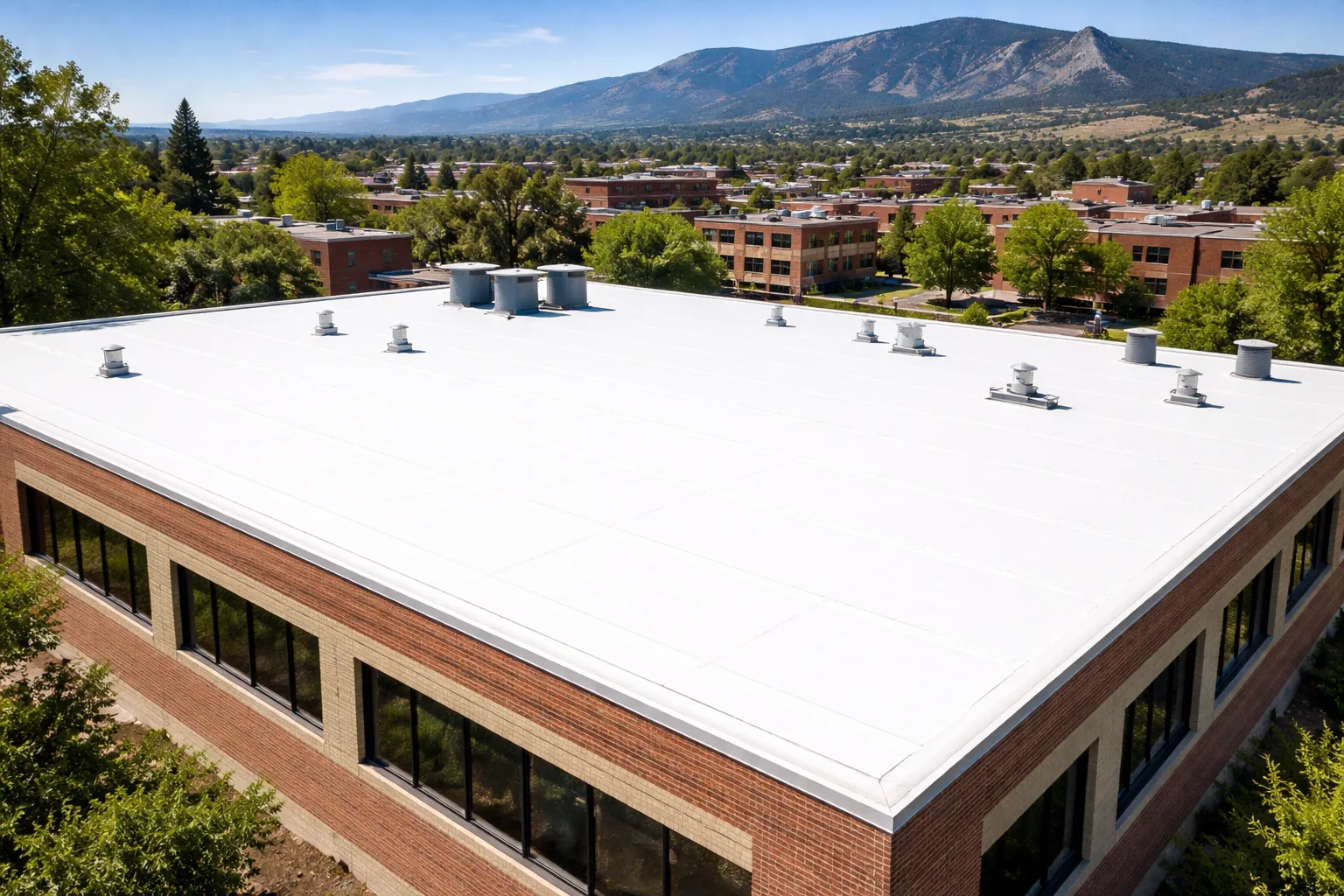
Johns Manville Roofing in Jersey City, NJ
Installation, repair and maintenance of Johns Manville single-ply, built-up and modified bitumen roofs in Jersey City, with insulation and moisture checks.
Installation, repair and maintenance of Johns Manville single-ply, built-up and modified bitumen roofs in Jersey City, with insulation and moisture checks.
Johns Manville roofs are often judged by what sits under the membrane. The company makes single-ply sheet, built-up and modified bitumen products, and polyisocyanurate insulation, so a JM roof on a Jersey City, NJ building may be a full assembly from one maker or a membrane over someone else's board. Reading which it is comes before any repair. New Jersey's statewide resilience strategy lists rising temperatures and intense storm events among the climate risks the state addresses, and a roof that sheds heat and rain through every season needs insulation, membrane and flashing that still work as a set.
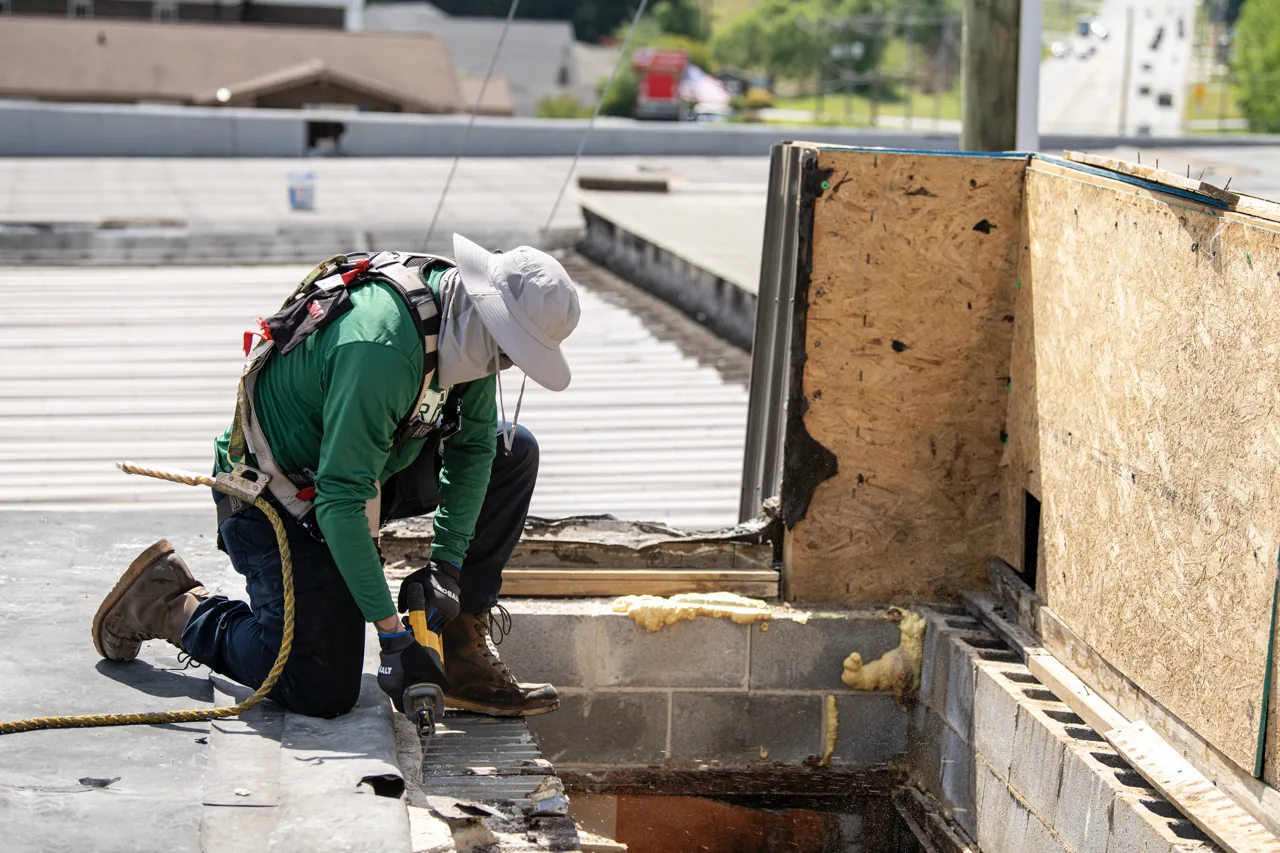
We install, repair and maintain Johns Manville systems according to the manufacturer's published details. On older JM roofs, we find out first what remains of the assembly and whether it still carries load.
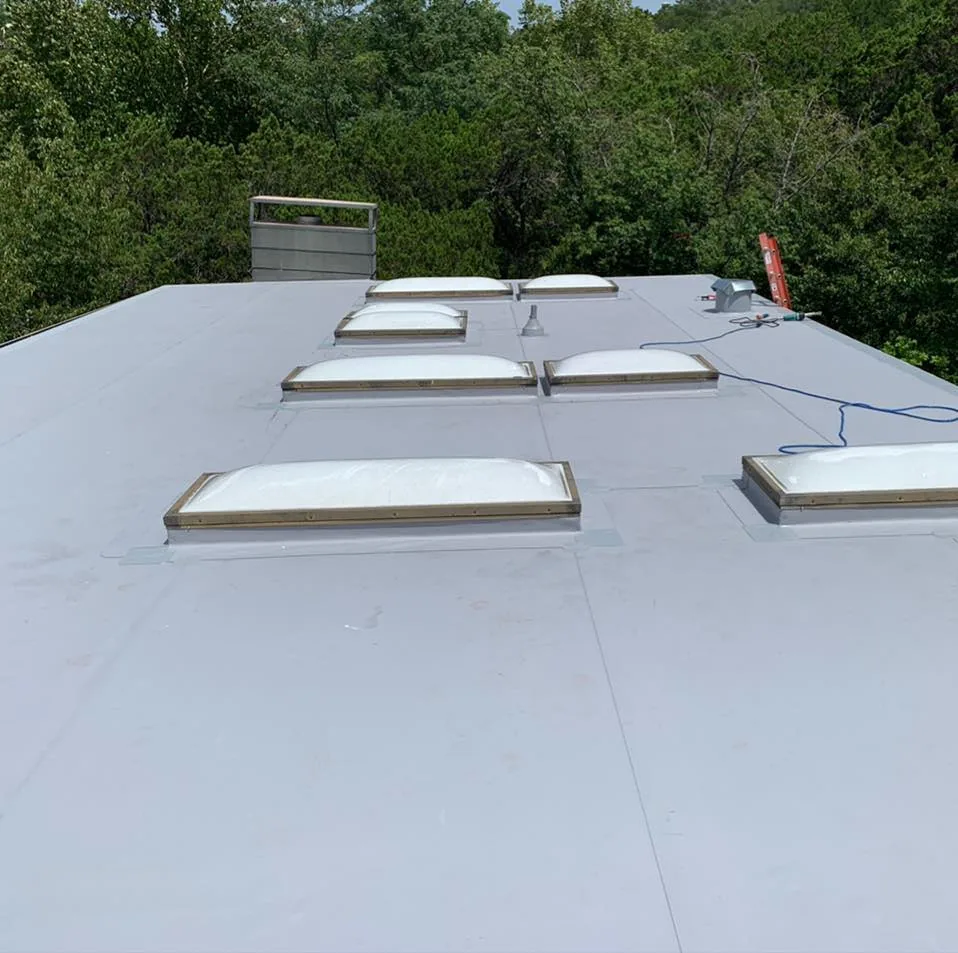
Johns Manville sells PVC, TPO and EPDM single-ply membranes, along with built-up and modified bitumen systems for owners who want multiple layers. Its polyiso boards sit under many of those assemblies. Single-ply systems install fast and use a lighter build. Built-up roofing and modified bitumen layer felts or sheets over insulation and give redundancy, which can help on roofs that see foot traffic or rooftop work.
The right pick follows use. A roof that carries little equipment and has a clean drainage design suits single-ply. Thickness is the next choice: a thicker sheet costs more at install and gives more material to wear through before the reinforcing scrim shows. A roof with heavy service traffic and many penetrations may justify a layered system. We explain what each assembly does, what it needs for maintenance and where it fails, and the owner chooses.
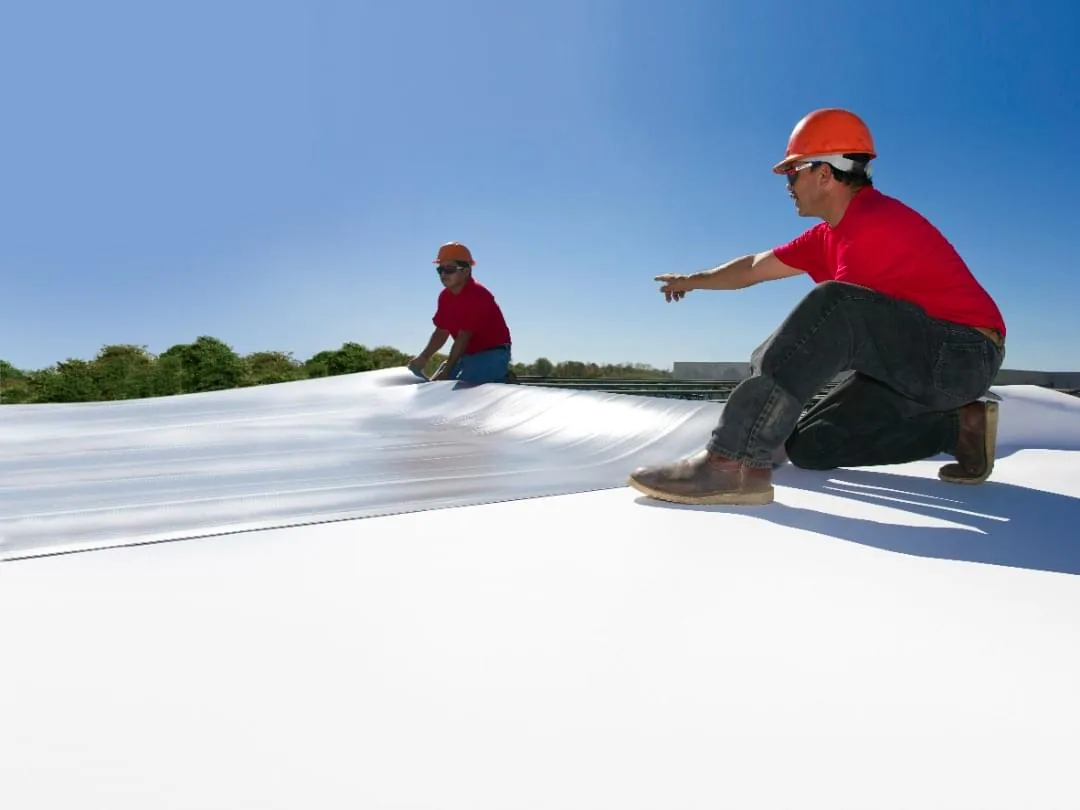
Schedule a walk with us to identify the membrane and insulation, run a moisture check, and set the work window. You will get a written scope for repair, recover or replacement.
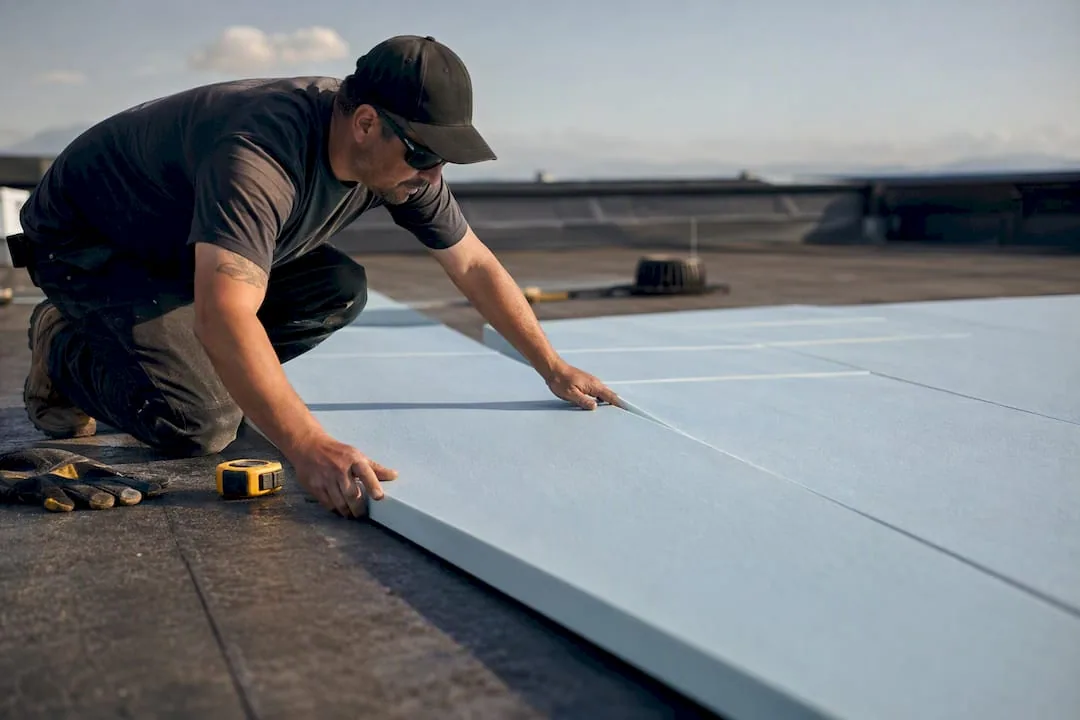
Insulation controls how much heat moves between the building and the roof surface, and it supports the membrane. Polyiso boards come in thicknesses set by energy code and design needs, and cover board over them protects against punctures and hail. Wet insulation loses much of its value and adds weight, and a roof with saturated boards will leak into the building long after the surface appears sound.
Roof insulation also sets how a building behaves at the edge of the work. Wherever rooftop equipment has been replaced since the membrane went on, new curbs cut into old insulation are a common source of wet boards, and we probe around them first.
We check insulation by moisture survey and core. Where the boards are dry, a cover board and new membrane can restore the roof. Where they are wet, they come out. Tapered insulation also appears often on low-slope roofs, since it builds slope toward drains and eliminates ponding that a flat deck would hold.
The National Weather Service's Newark station publishes local temperature, precipitation and snowfall normals, and the monthly figures show the spread a membrane has to live through each year. Heat softens and ages surface layers, ultraviolet light chalks and cracks them, and cold stiffens them again. Seams and flashings carry the movement.
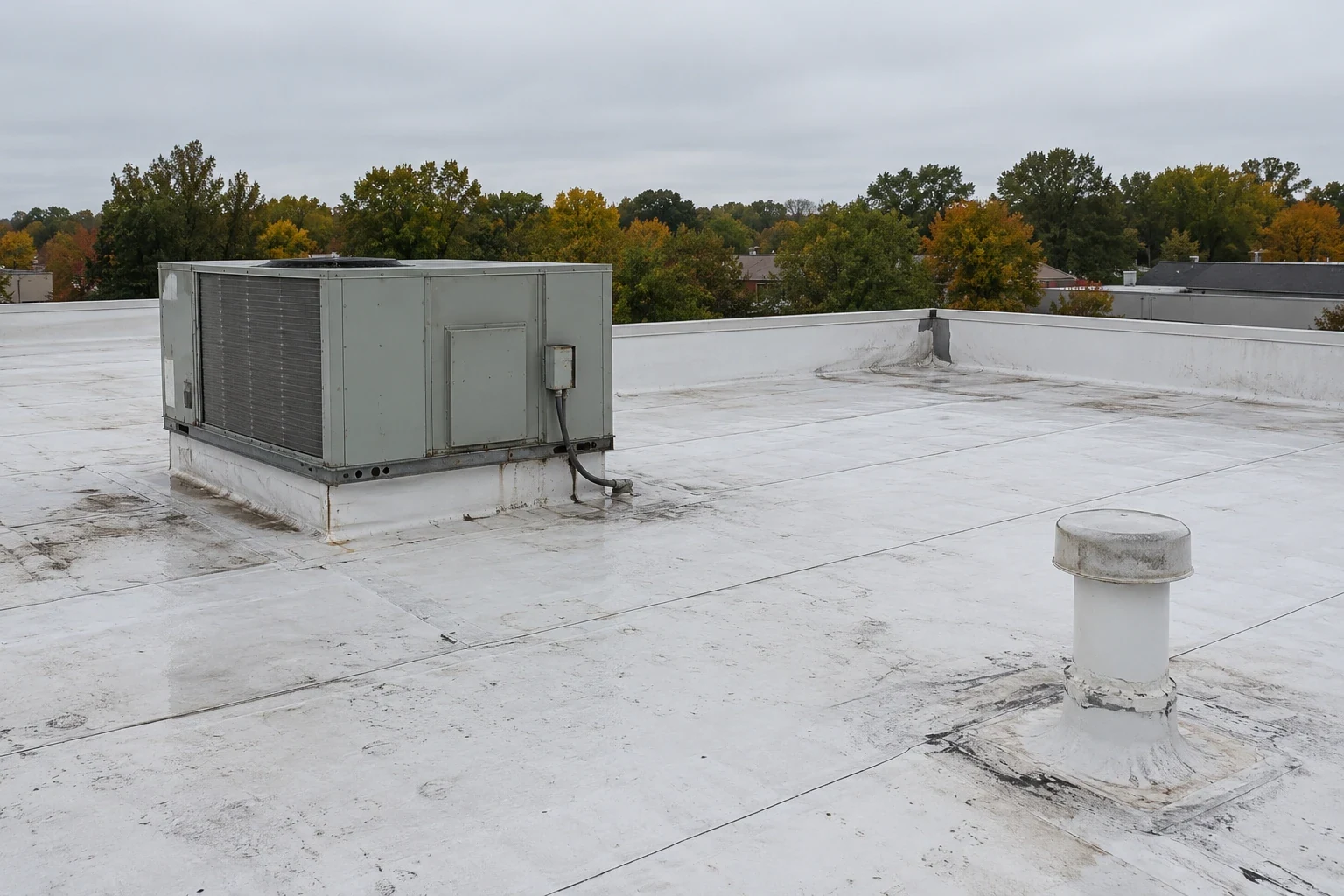
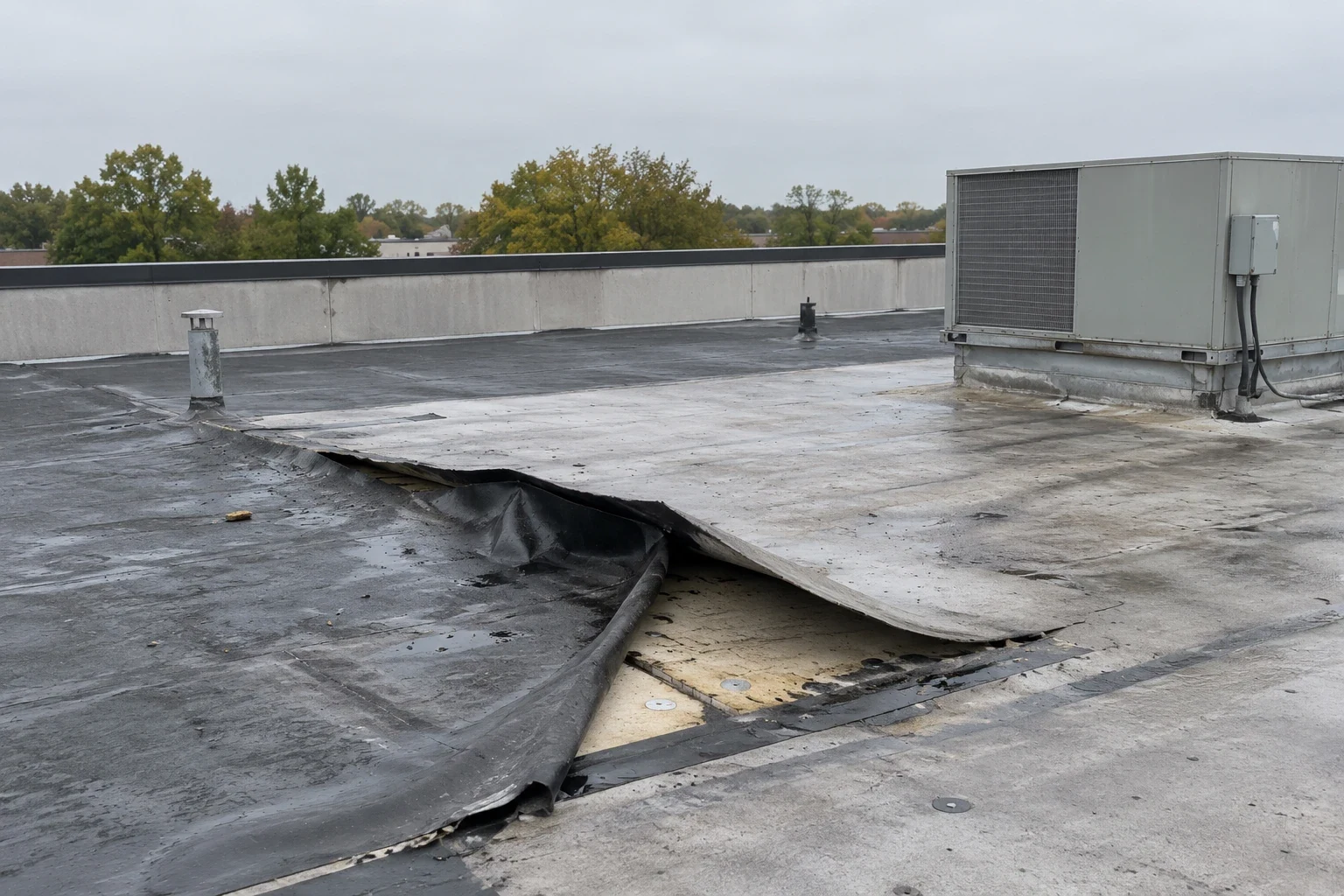
On an inspection we look for the fingerprints of that cycle: crazing on bitumen surfaces, shrinkage at parapets, loose granules, open laps and gaps at pipe boots. The damage from heat and sun is repairable when found early, and a reflective cool roof surface reduces the temperature the membrane sees.
Findings go on the roof plan with photographs, and we sort them: a surface problem that coating can address, a seam problem that needs re-welding or re-bonding, and a layer problem that points to replacement. That sort tells the owner whether the next dollar goes into maintenance or into the capital plan.
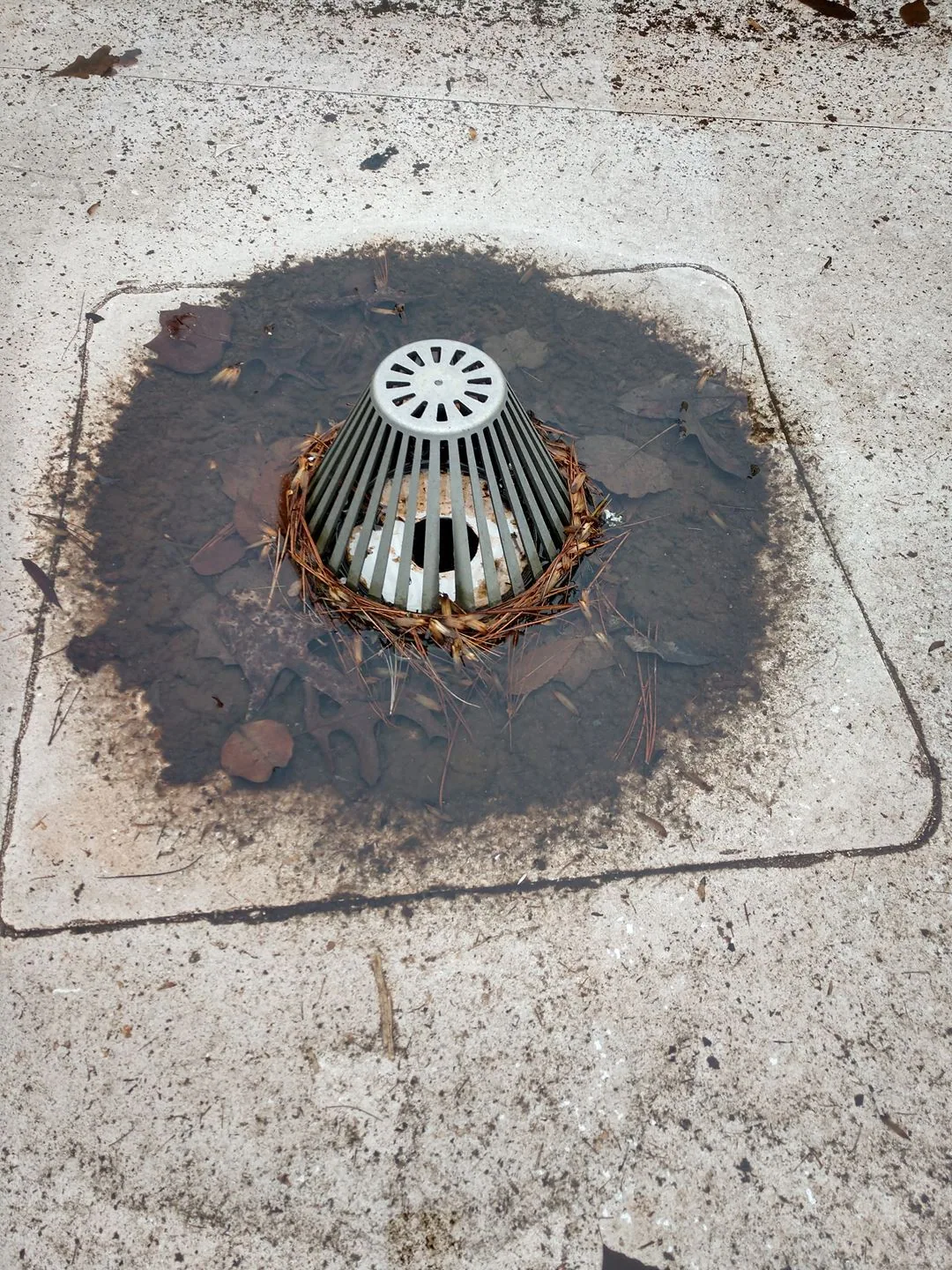
Stormwater loading on the combined sewer is a stated concern in City guidance, and Irene and Sandy brought power outages along with flooding and property damage. On the roof, that means every outlet has to be clear and every scupper set to move water out promptly. A built-up roof with a poorly formed sump holds water against its surface and speeds its aging.
We trace drainage after rain and test outlets with water when the roof is dry. Edges are checked too, since wind and water begin their damage there. Coping, edge metal and gutters are fastened and sealed according to the system's details, and we replace loose or corroded pieces before a storm rather than after one.
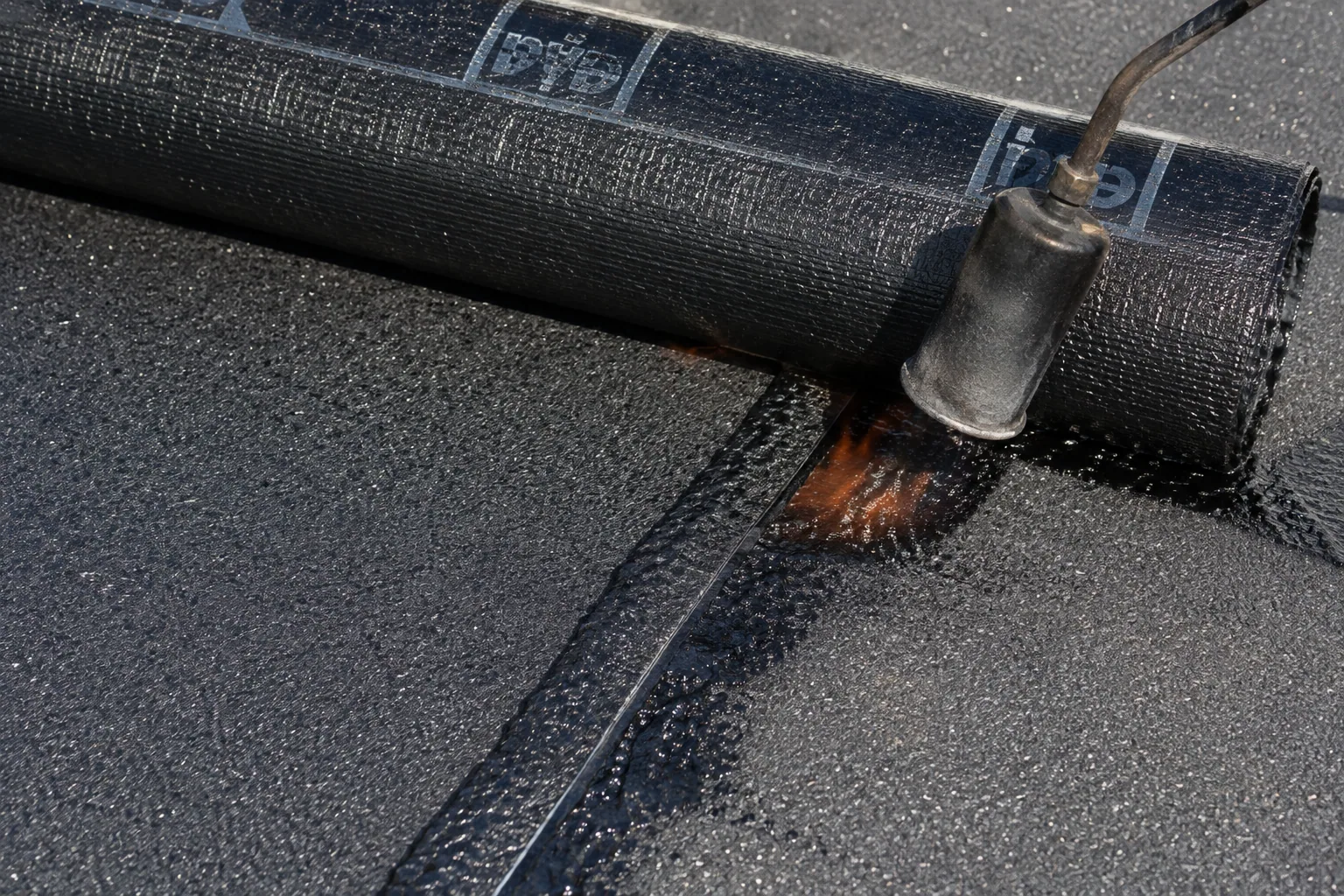
Much commercial reroofing takes place above working floors. The sequence is simple: protect the interior, open a roof zone that can be closed that day, work from the drains outward, and confirm the water path at closeout. With occupied-building reroofing, noise limits, fumes and dust all need planning. Torch-applied systems need fire watch procedures and hot work approvals, while cold-applied and self-adhering products avoid open flame.
We discuss access with the building manager first: where materials stage, where the lift stands, how debris leaves and what hours the tenants tolerate noise. The schedule then fits those facts. A work window that ignores tenant hours fails in the first week. Material goes up in the order it will be needed, with insulation staged first, so the lift does not park over a zone the crew is trying to close.
Johns Manville warranties come with conditions that depend on the specific product and installation. We install to published details, photograph the layers as they go down and keep a log of product batches and dates. That file helps with later claims and with sale due diligence. It also tells the next maintenance crew which fasteners, plates and adhesives went into the roof, which saves guesswork on every repair that follows. When a section is replaced after a storm, the file shows how the new work ties into the old, with photographs of the tie-in before it was covered.
Owners who compare JM with Sika Sarnafil or Soprema can ask for side-by-side scopes. Buildings in Union City and other nearby towns follow the same logic, since heat, cold and rain do not stop at city lines.