Restaurant Roofing in Jersey City, NJ
Commercial roof repair and replacement planning for Jersey City restaurants, with exhaust, grease, access, and service-hour details checked.
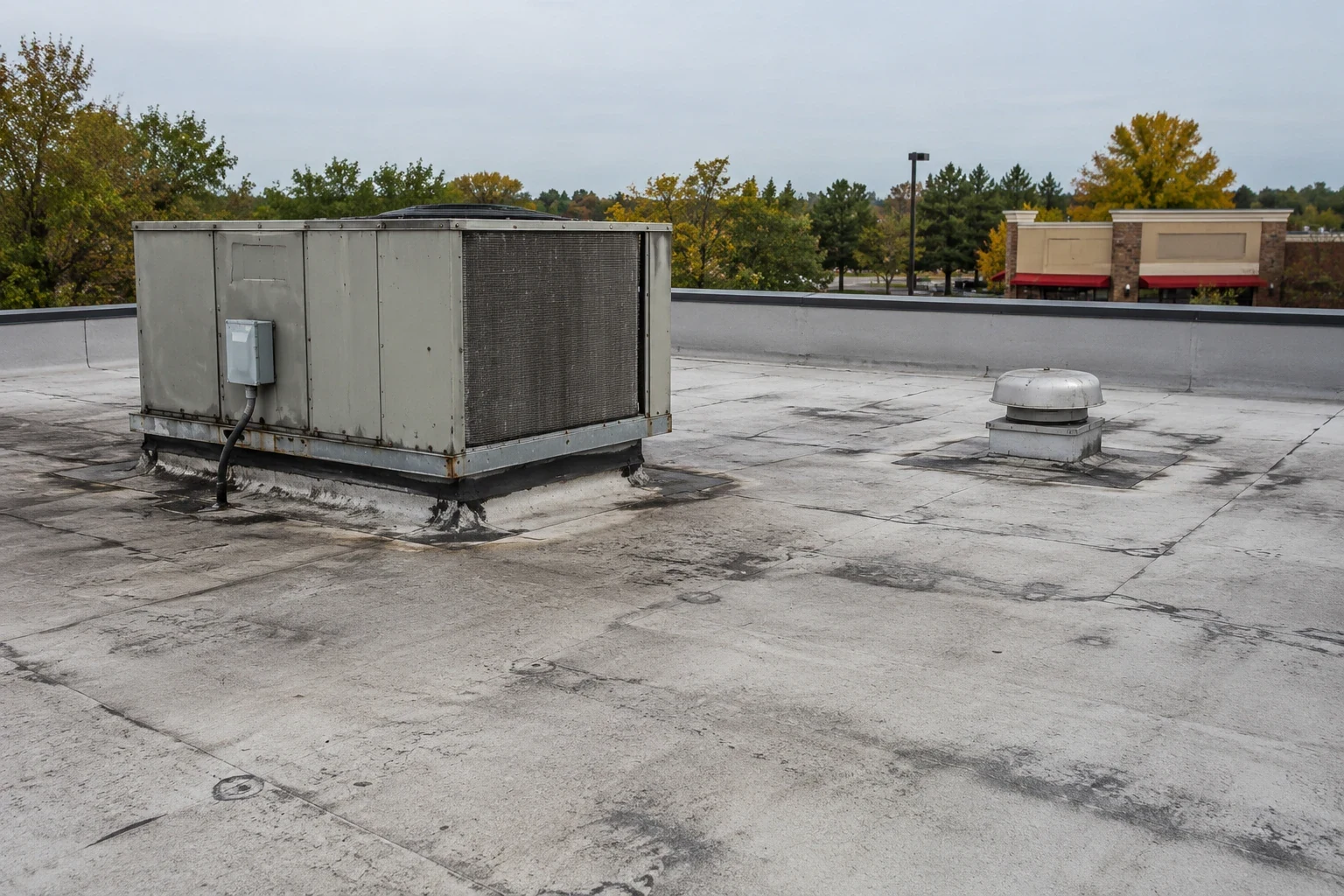
Commercial roof repair and replacement planning for Jersey City restaurants, with exhaust, grease, access, and service-hour details checked.
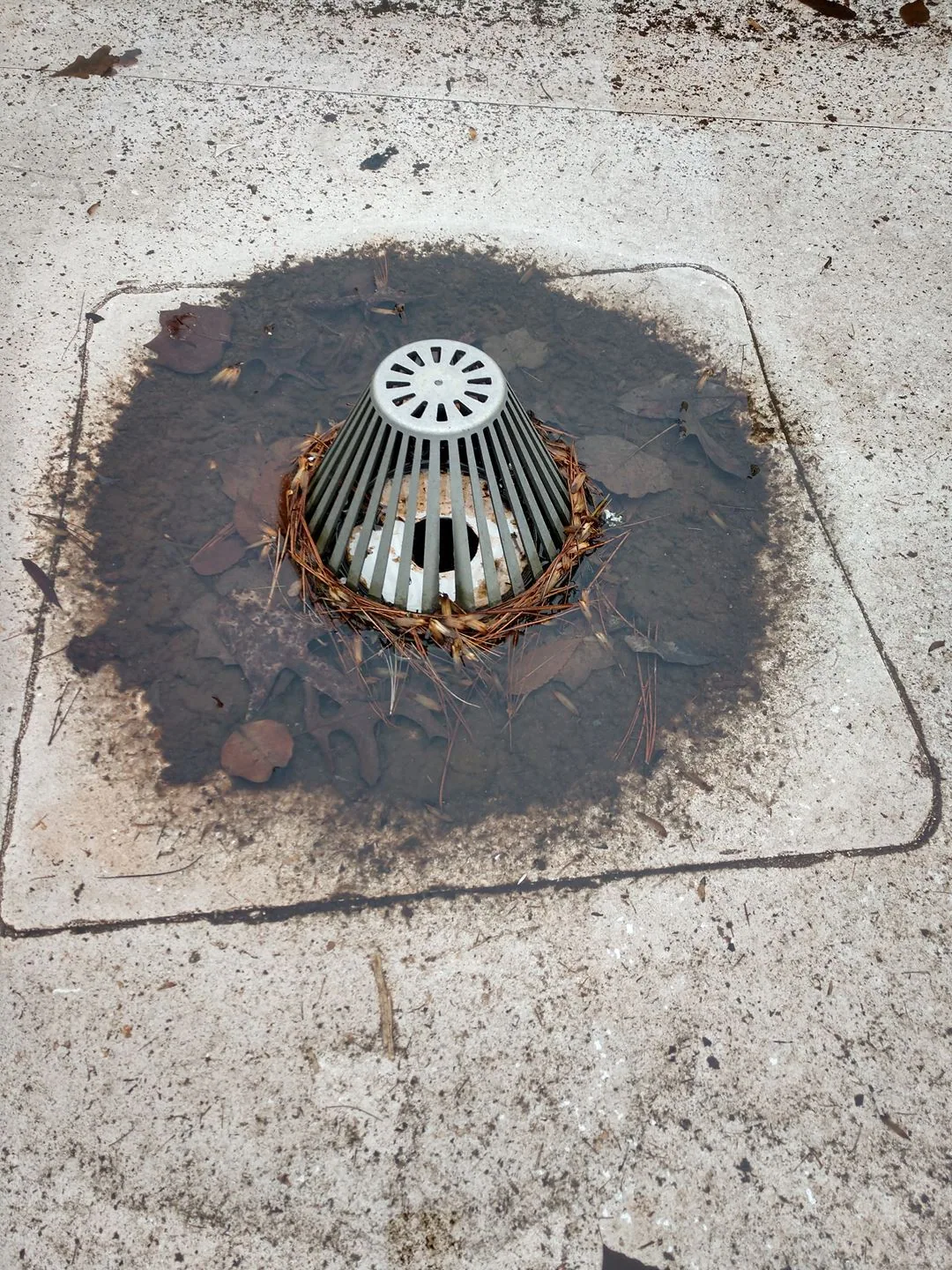
A restaurant roof has details that do not appear on a tenant plan. Exhaust hoods, grease-laden discharge, make-up air, refrigeration lines, and frequent service access interrupt the membrane field. We inspect those points with the leak report, trace drainage, and confirm when the roof can be reached without disrupting deliveries or meal periods. Jersey City identifies localized floods and added load on combined sewers; for a restaurant, roof discharge belongs in the site’s water-management review. We inspect the restaurant roof’s drains, overflow, and low areas before defining the repair boundary.
The city’s commercial geography includes Central Avenue and West Side Avenue, as well as the Journal Square and Route 440/Culver centers. Restaurant layouts and roof assemblies vary by property. We verify the actual curb, flashing, membrane, and access conditions before proposing a repair or larger renewal.
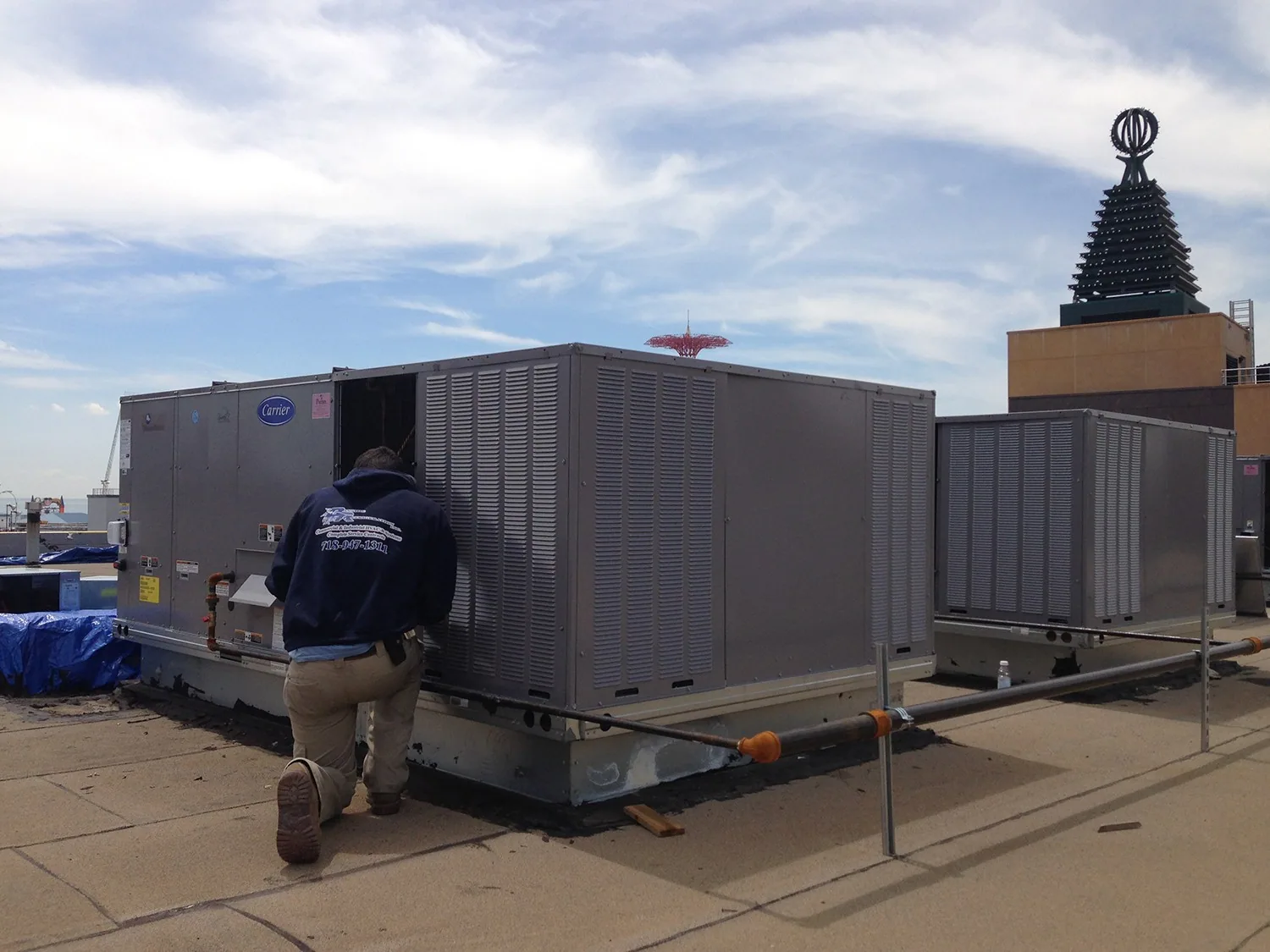
Exhaust discharge can leave residue near the fan curb and roof surface. We note where it lands, inspect nearby seams, and check whether cleaning or maintenance should precede membrane work. The detail review includes curb corners, counterflashing, fasteners, vibration, and any support that has shifted. If an exhaust contractor must disconnect equipment, we align that handoff before opening the roof.
An equipment curb repair can include the equipment curb and adjacent membrane in the same zone record. The scope states whether repair addresses flashing, membrane, support, or an identified drain issue. It does not assume the exhaust caused an interior leak without tracing the water path. This distinction keeps the roofing crew and kitchen-service contractor from working at cross-purposes.
Exhaust fans create vibration and carry heat as well as discharge. We note the fan support, curb movement, flashing condition, and any gap where the membrane meets the equipment. If the fan needs service, the kitchen contractor may need to lift or disconnect it before the roofing detail is rebuilt. We set that responsibility in the work plan so a finished membrane is not disturbed by a later equipment move.
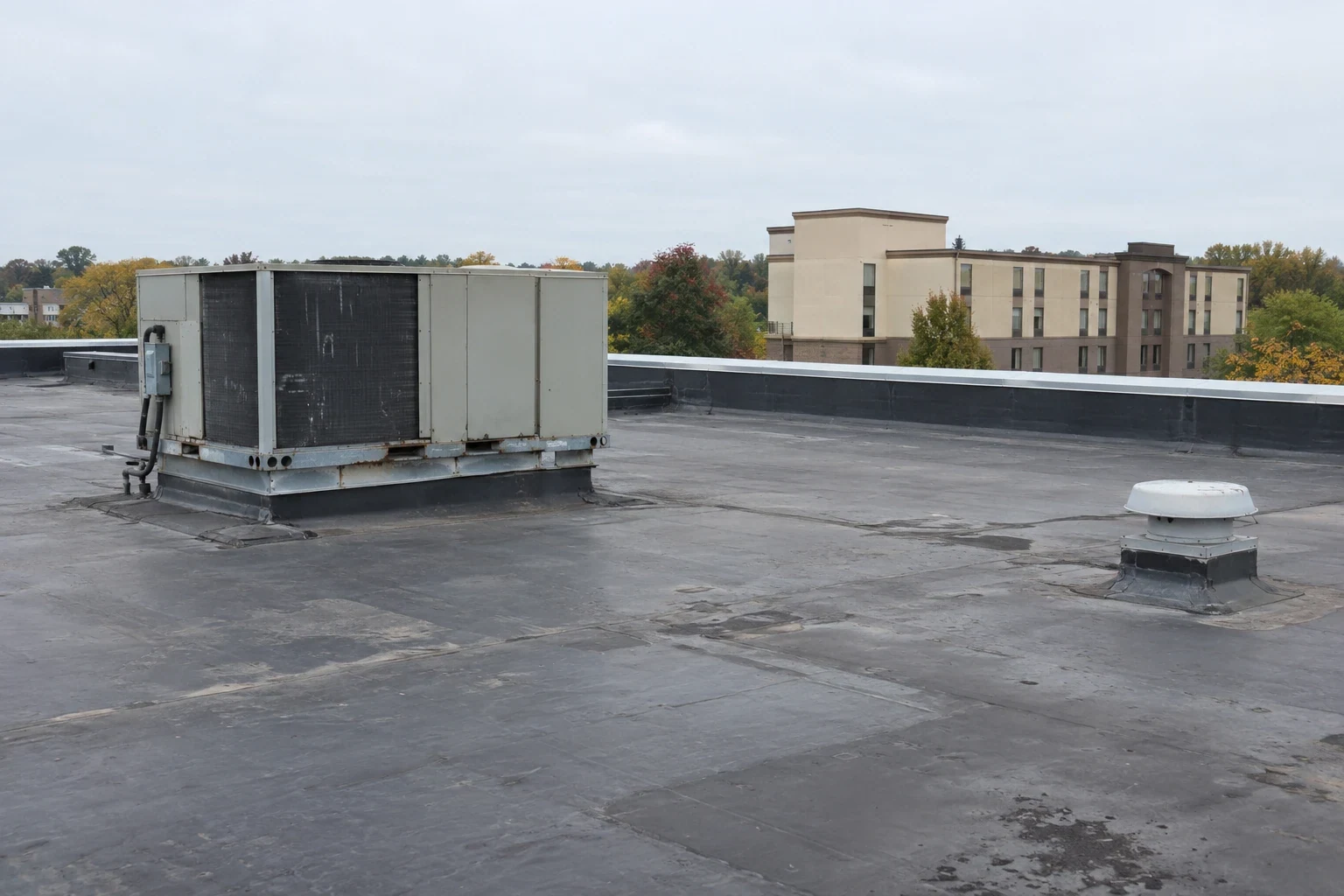
Identify the highest-priority roof zones, access rules, and acceptable work windows. We will map the condition, trace the water path, and define a written scope.
Restaurants may receive ingredients before opening and rely on uninterrupted ventilation during service. We review roof hatch access, loading time, waste pickup, customer areas, and hours when noise must stop. A small repair can often be bounded to a short window. Broader removal may need a sequence that avoids peak meal periods and secures each section before staff return to the building.
The property manager identifies a contact for alarms, keys, and any roof equipment that cannot be switched off without notice. We plan a staging area outside the service path and record who accepts the daily handoff. A roof inspection provides the work window and roof-zone limits. If weather changes the schedule, the closeout says what was protected and what remains for the next visit.
Grease residue, lint, and kitchen exhaust can collect near the curb and drain. The inspection records the surface condition and whether a cleaning step is needed before repair or coating. We do not place new material over contamination that would interfere with adhesion. After preparation, the selected repair or restoration is tied into compatible, sound surfaces, and the closeout records which area received treatment.
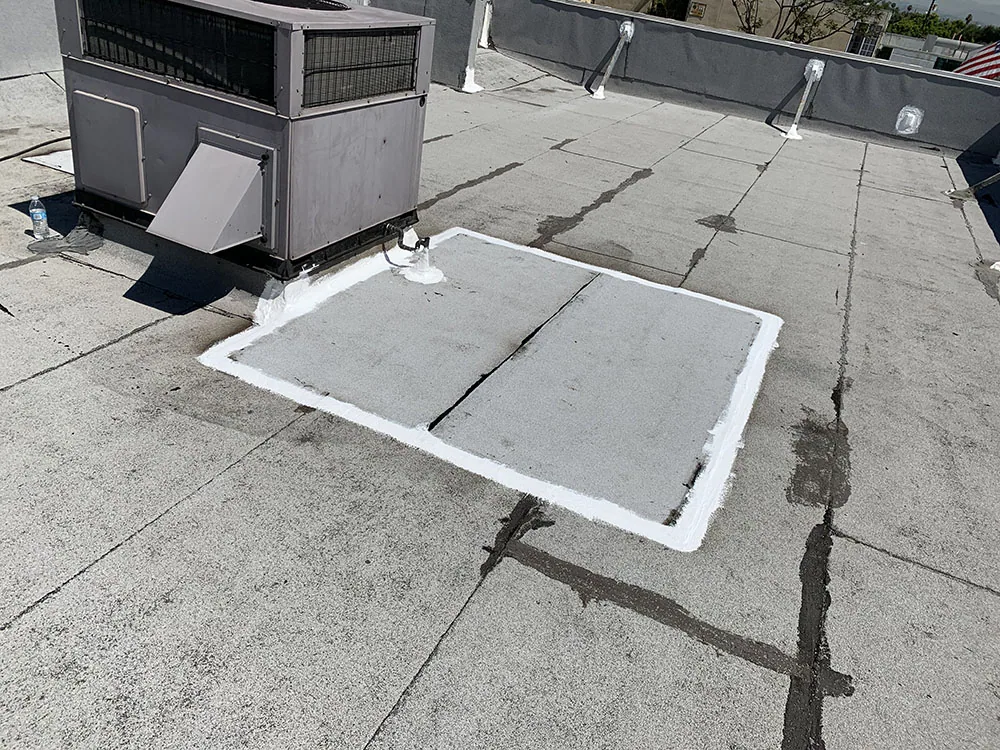
A repair around a hood curb should leave a clean, inspectable perimeter. We remove unsuitable material, prepare the substrate, and tie the new flashing into the existing membrane using compatible products. The scope documents the curb corners and adjacent field seam, where movement can reopen a narrow gap. Before the kitchen resumes its normal service sequence, the manager receives the status of the roofing detail and any equipment task that remains open.
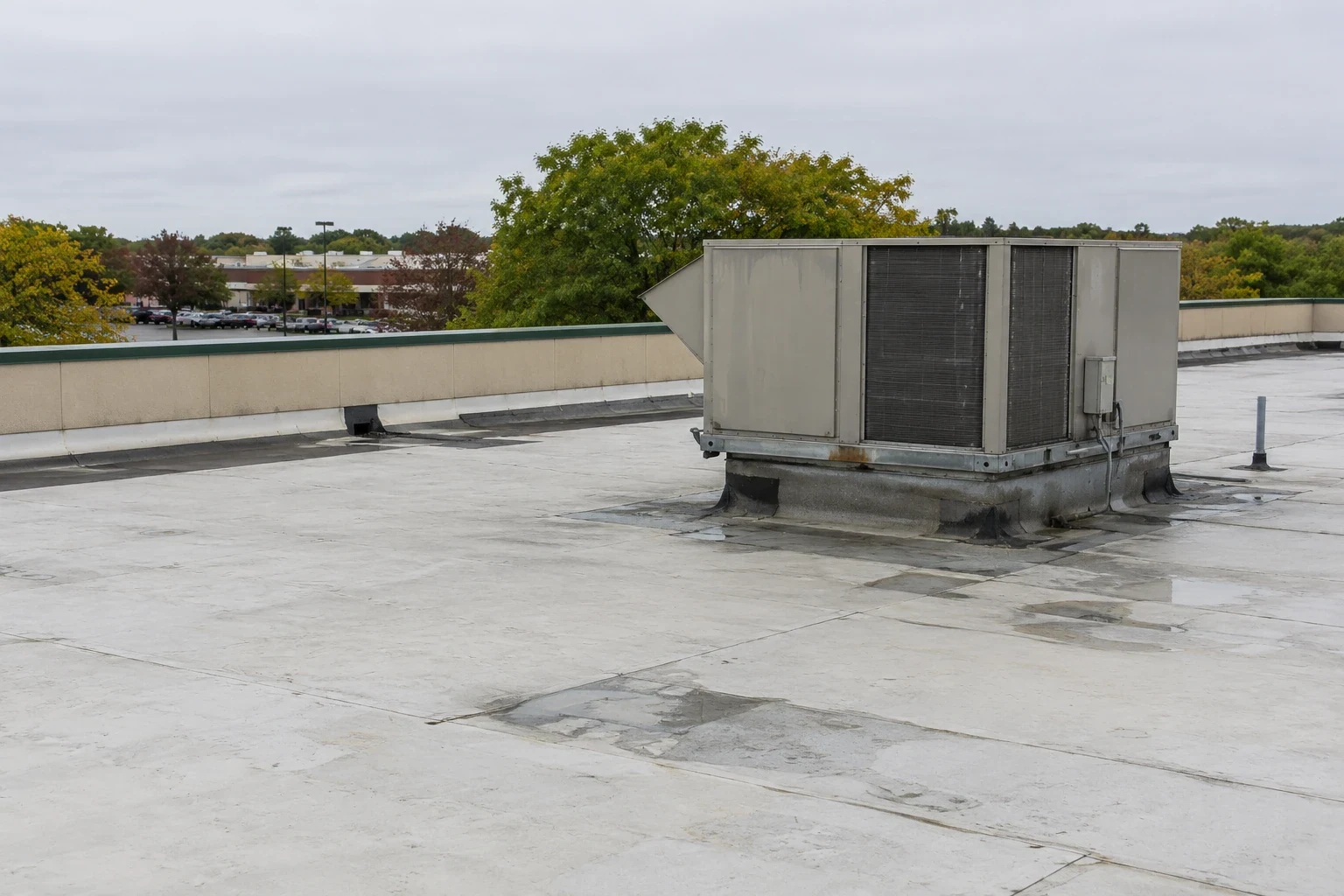
A roof drain near grease residue or kitchen exhaust needs direct inspection. We check for debris, impaired flow, low spots, and membrane separation around the opening. The interior stain is traced to the roof, not presumed to sit directly above it. We map the actual outlet path and low areas at this roof before selecting a correction.
For an uncertain moisture pattern, a moisture survey can supplement visual inspection where the assembly permits, and a drain and scupper service clears the outlet question. We mark readings and compare them with seams, curbs, and known leak reports. If a drain repair is required, temporary protection must leave a controlled water path. The owner receives a scope that states what is being corrected and whether other roof areas need separate review.
Service lanes can be active before opening, during supplier drop-off, and after closing for waste pickup. We ask the manager to identify the quiet window and keep deliveries separate from lift and debris movement. The sequence places noisy work away from the period when kitchen exhaust or customer access is most constrained. If a schedule change is needed, the work zone remains protected and the operator receives the next confirmed arrival time.
Repeated patches around a fan curb can signal a detail problem rather than a field membrane failure. We identify the material, inspect the curb-to-roof transition, and check adjacent laps and insulation. A local repair is appropriate when the opening is isolated and surrounding material remains sound. A recover or replacement becomes a comparison when moisture, widespread deterioration, or incompatible previous layers are found.
A commercial leak repair can schedule removal by zone and coordinate curb work with other trades. Restaurant operations influence delivery, debris, noise, and access, but they do not dictate the roofing assembly. The scope balances those constraints with the condition found during inspection. Each phase ends with protected edges, checked drains, and a written record for the operator.
For 2022, retail sales in Jersey City were reported at $3.978 billion. For a restaurant roof, the work window follows the kitchen hours, exhaust schedule, service lanes, and approved access at the property. We include those constraints with photographs, repair locations, materials, and any remaining issue in the job record.
After the work, the closeout names the roof zone, curb or seam repaired, drains checked, and access condition left behind. The manager can use the same record to compare a later inspection. For a restaurant group with more than one property, the report fields used on a grocery roof can be standardized while keeping each building's findings distinct.
A Newark roof review can carry the same detail labels across a group. A grocery roof plan adds refrigeration service and receiving windows to the operating sequence.
A short repair can still require a second visit if equipment blocks the detail or the roof cannot be safely closed in one shift. We note that dependency before mobilization and identify who will clear the access. The restaurant contact can then schedule kitchen service and deliveries against a known roof window.