Commercial Rooftop Equipment Curbs and Supports in Jersey City, NJ
Plan Jersey City rooftop equipment curb and support work around membrane condition, drainage, access, vibration, and the required trade sequence.
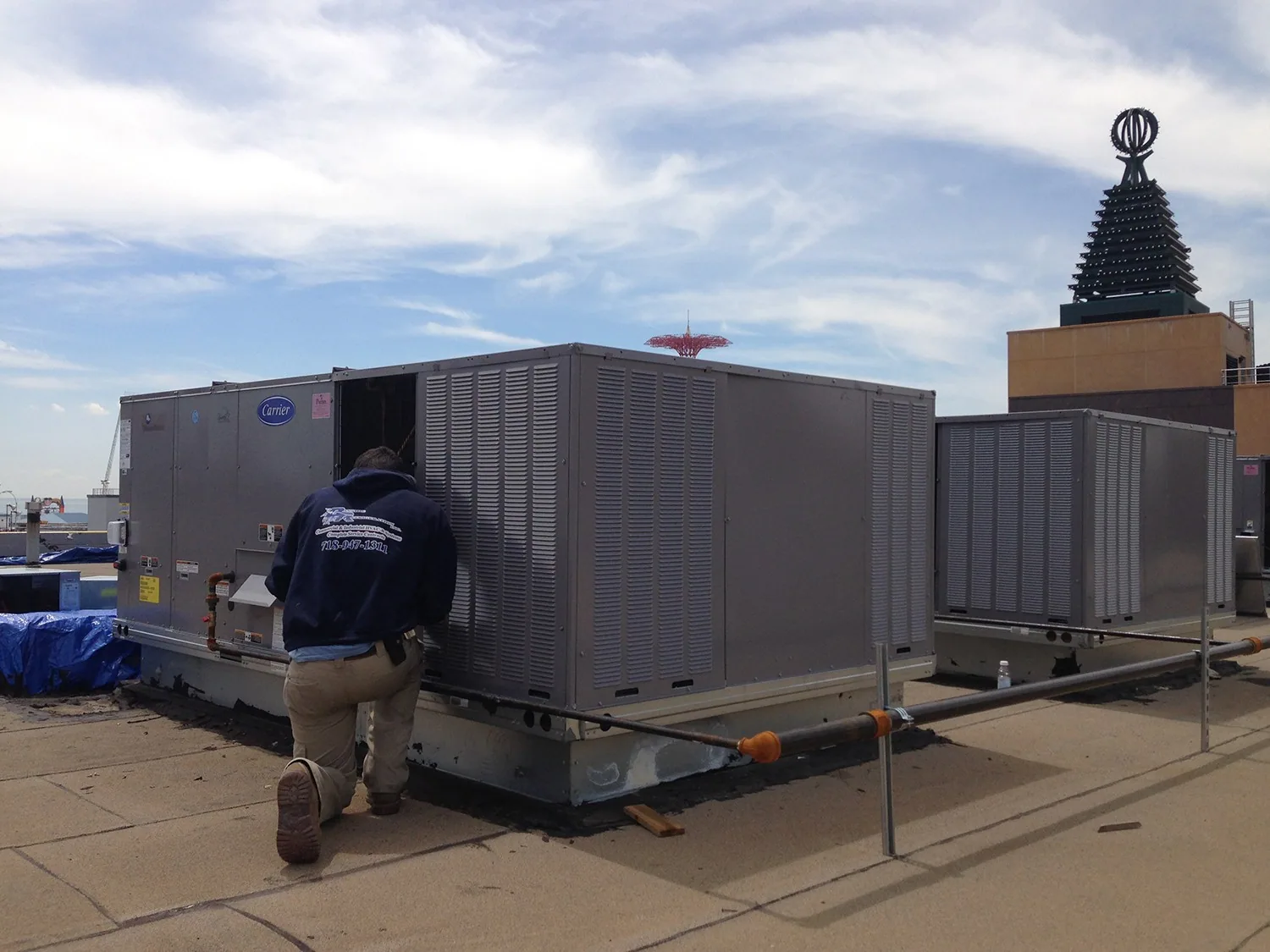
Plan Jersey City rooftop equipment curb and support work around membrane condition, drainage, access, vibration, and the required trade sequence.
Equipment work can turn a sound roof into a leak path when a curb, rail, or support is cut in without checking the assembly below it. On a Jersey City, NJ building, we map the unit, its service clearance, roof zone, drain path, and access route before setting a scope. The first decision is whether the existing curb can be repaired, flashed into a new membrane, or replaced with the equipment work. A coordinated commercial roof inspection records those conditions before trades begin.
Greenville Industrial, Tonnele Avenue Light Industrial, and Chapel Avenue Industrial Park are named industrial planning areas in Jersey City. We map the actual equipment, curb, and support at each property before setting the work sequence. We verify each curb and support in place. A marked plan separates roof repair from mechanical scope, identifies who removes and resets equipment, and gives the owner a sequence that can be priced without guessing about hidden flashing.
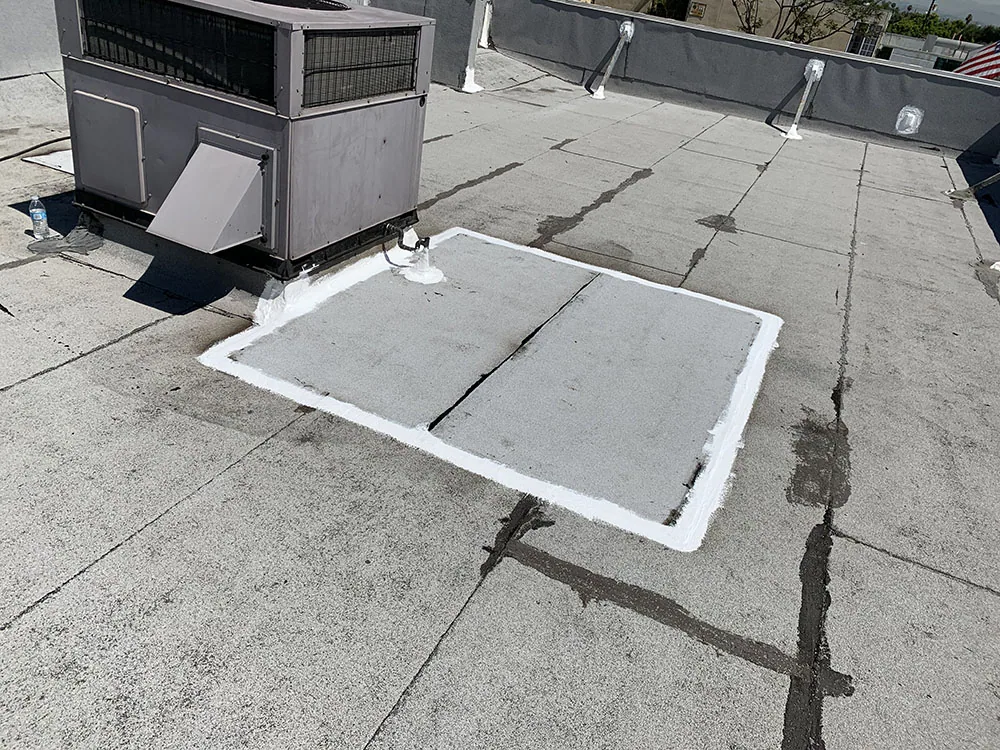
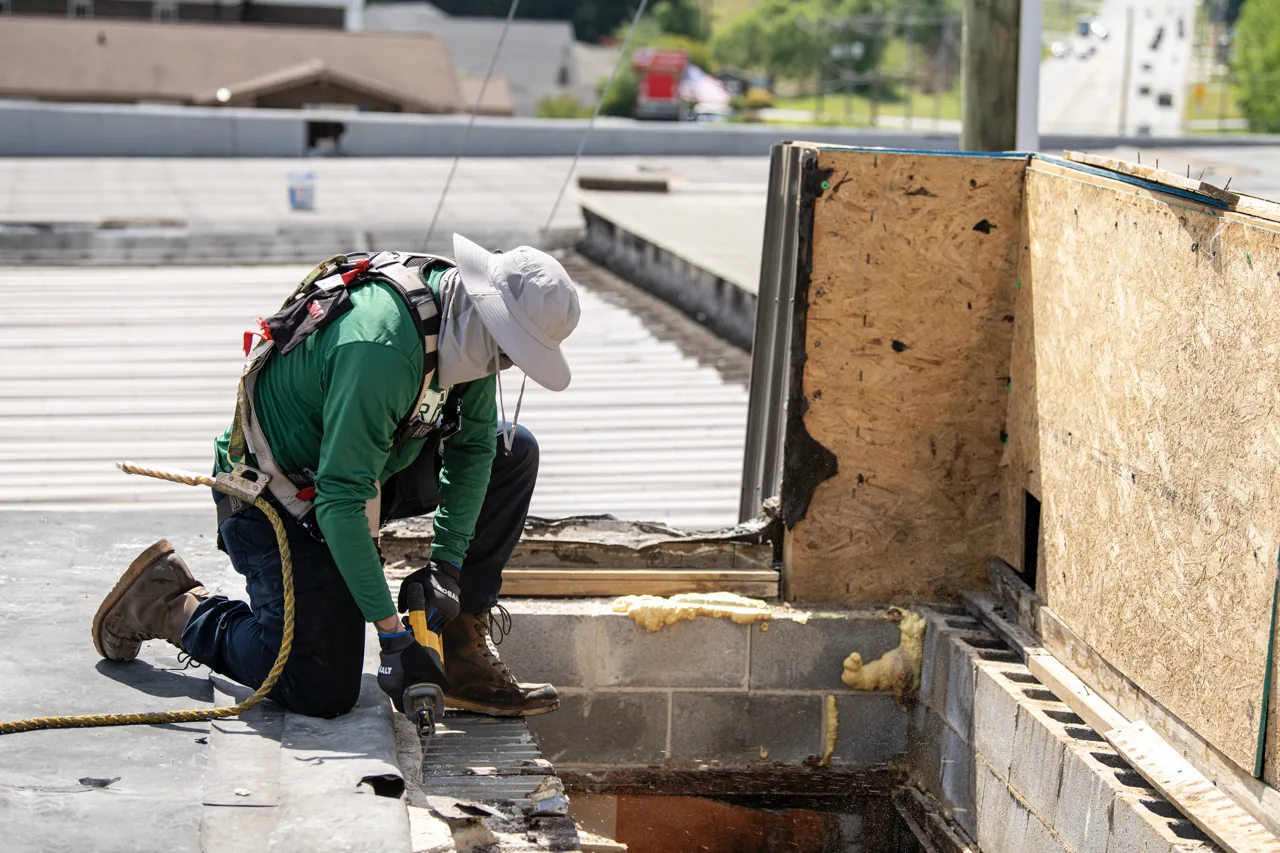
A curb transfers equipment loads into a roof assembly and creates a raised transition that must stay watertight. We look for loose counterflashing, open corners, fasteners through exposed membrane, movement at the equipment base, and patch layers that conceal the original detail. A rail or sleeper needs separate review because its load points and water paths differ from a fully flashed curb. Photos show the condition at each side, then the scope states what remains, what gets removed, and where new material ties into the existing field.
The decision cannot stop at the visible top surface. A roof condition report can log membrane type, curb dimensions, nearby laps, insulation clues, and any interior staining reported by staff. We open the assembly only when the inspection evidence and the proposed repair require it. That keeps a curb replacement from expanding into an unplanned tear-off while still giving the owner a clear record of any wet or deteriorated layers found around the support.
Arrange a site walk around the equipment release date. We will map the curb, drain path, roof zone, and trade handoff before the lift is scheduled.
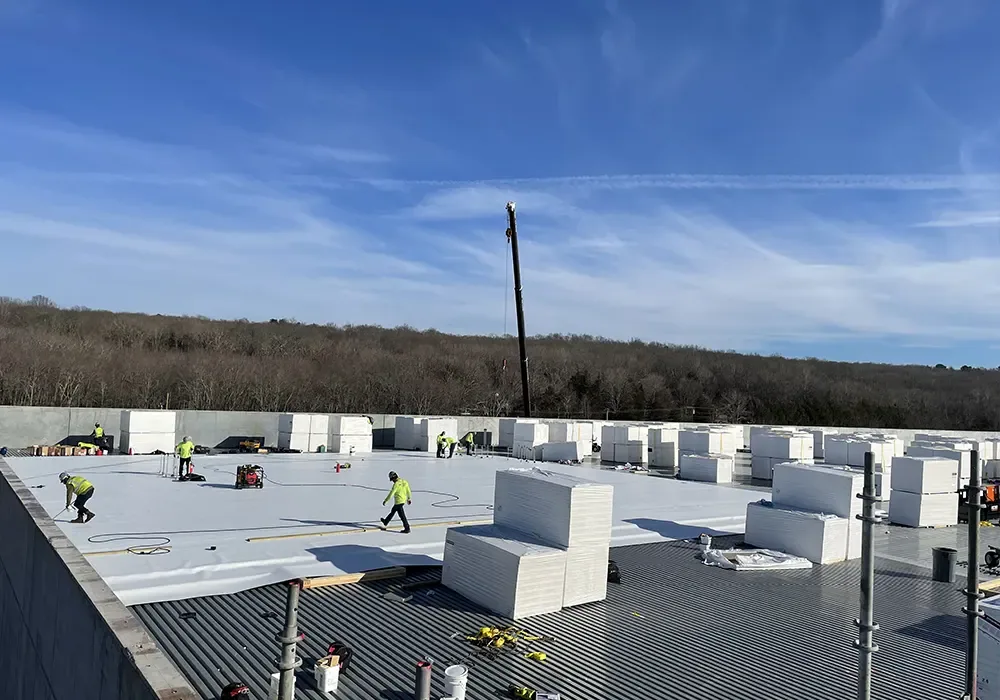
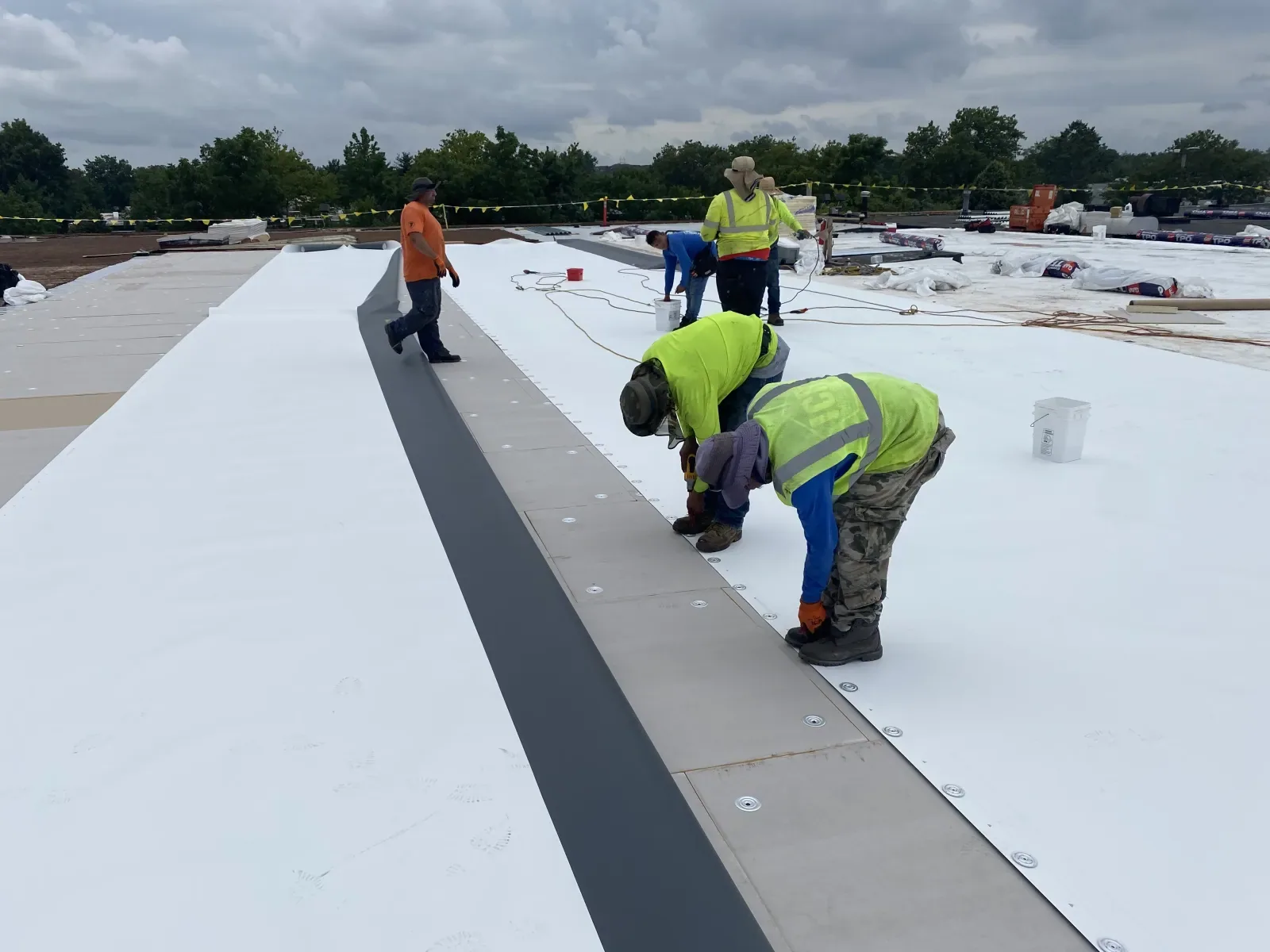
The equipment contractor and roofer need one lift and work sequence. Before a unit is disconnected, we confirm who controls power, refrigerant, rigging, protection, and temporary weather cover. The curb height and footprint are checked against the new membrane build-up, insulation, and required service clearance. If equipment stays in place, we identify which sides can be reached and whether a phased detail can close watertight at the end of each shift. The schedule names the trade handoff instead of leaving an open roof around a unit overnight.
For an occupied commercial building, the site contact identifies lift routes, loading windows, and floor restrictions before the work order is set. We coordinate the roof zone with the building contact and mechanical lead, then record the daily closeout point. If water entry is already present, a linked commercial roof leak repair can address the active opening while the permanent curb scope is prepared.
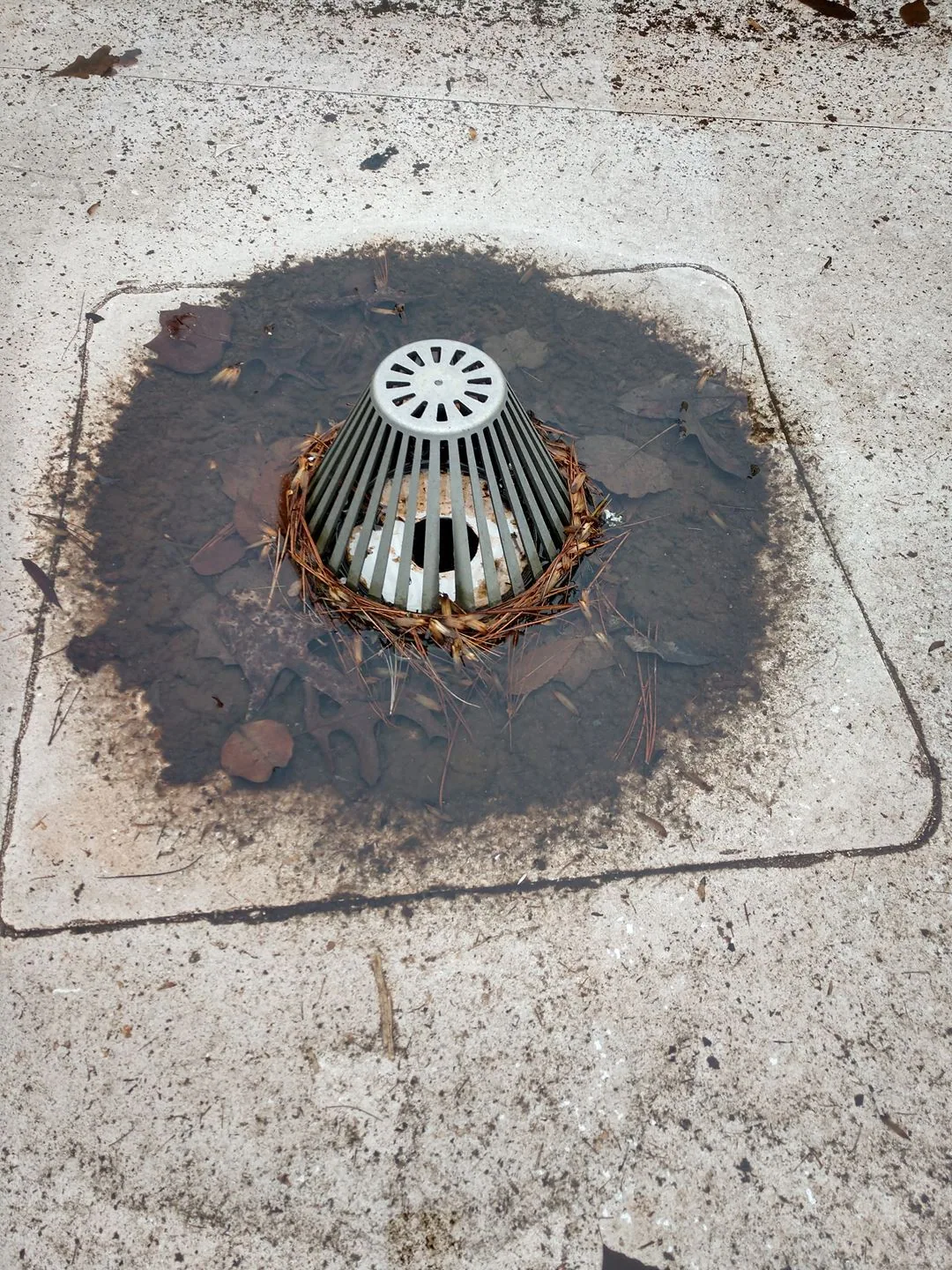
Curbs interrupt slope and can create a low pocket on the uphill side. We check whether water bypasses the drain, collects behind a rail, or reaches a lap through a deteriorated pitch pocket. The correction may involve a saddle, cricket, drain adjustment, new flashing, or a membrane repair, depending on the assembly. We trace the path during inspection and mark where the surface directs runoff. A pond that remains after ordinary drainage time warrants investigation, but the observation alone does not prove that the deck or insulation is wet.
Localized flooding and stormwater loading on the combined sewer are Jersey City concerns. At the property, we inspect roof slope, drain capacity, and curb transitions together before setting the repair boundary. Where a drain detail is part of the failure, the scope may include commercial roof drain and scupper work alongside curb flashing, with each trade boundary stated in writing.
A curb can often remain when its metal is sound, the opening is stable, and the membrane tie-in can be restored. Replacement becomes more likely when corrosion, movement, damaged framing, repeated patching, or the wrong height prevents a durable transition. A support system can require a different structural review than the membrane repair. We show separate options when the evidence permits them: localized flashing repair, curb reset, or a broader roof replacement with equipment coordination. The price drivers are access, unit handling, curb fabrication, insulation changes, and the amount of membrane that must be opened.
A new assembly changes the curb detail, so it cannot be treated as a small accessory to the membrane selection. The proposed TPO roof system, PVC, EPDM, or another assembly has its own approved flashing approach and attachment requirements. We match the detail to the selected product and existing deck conditions. For a building with several work zones, our occupied-building reroofing sequence can identify access, temporary protection, and closeout boundaries before the mechanical work is scheduled.
The closeout record lists each curb or support by roof zone, with dated photos before work, during the tie-in, and after final inspection. It notes the materials installed, the boundary of the repair, and any condition left for a separate decision. The owner can compare the record with mechanical service documentation without mixing roof scope and unit performance. If a curb cannot be finished because equipment is not released on schedule, the daily report identifies the temporary protection and the next trade handoff.
A site walk begins with the highest-risk curb, the route for equipment removal, and a roof zone where the membrane can be closed the same day. We can also review work across commercial properties in Hoboken when a portfolio includes more than one municipality; each roof condition stays separate in its report. For a curb that remains active or a work window that cannot shift, set the service walk before the lift date. The scope should say what is included, what the mechanical contractor owns, and what evidence closes the work. The closeout also records who accepted the equipment handoff and the next inspection date. Each curb also gets a reset check date, so a unit lifted for service is followed by a look at its flashing before the next rain.