Grocery Store Roofing in Jersey City, NJ
Grocery roof inspections and repairs in Jersey City with attention to refrigeration equipment, drains, deliveries, and open-store work windows.
Grocery roof inspections and repairs in Jersey City with attention to refrigeration equipment, drains, deliveries, and open-store work windows.
Grocery roofing has a narrow margin for disruption. Water above refrigeration, food preparation, or customer aisles can affect operations before the membrane condition is clear. We inspect the reported zone, nearby equipment curbs, seams, drains, and flashing, then plan access around deliveries and store hours. Localized flooding and sewer loading are Jersey City concerns; the roof survey checks the actual drain paths and conditions.
Commercial centers such as Journal Square and corridors including Central Avenue, West Side Avenue, and Route 440/Culver give the local setting. The roof at one grocery property may differ from another in assembly, equipment, and loading access. We establish those details before selecting repair, recover, or replacement.
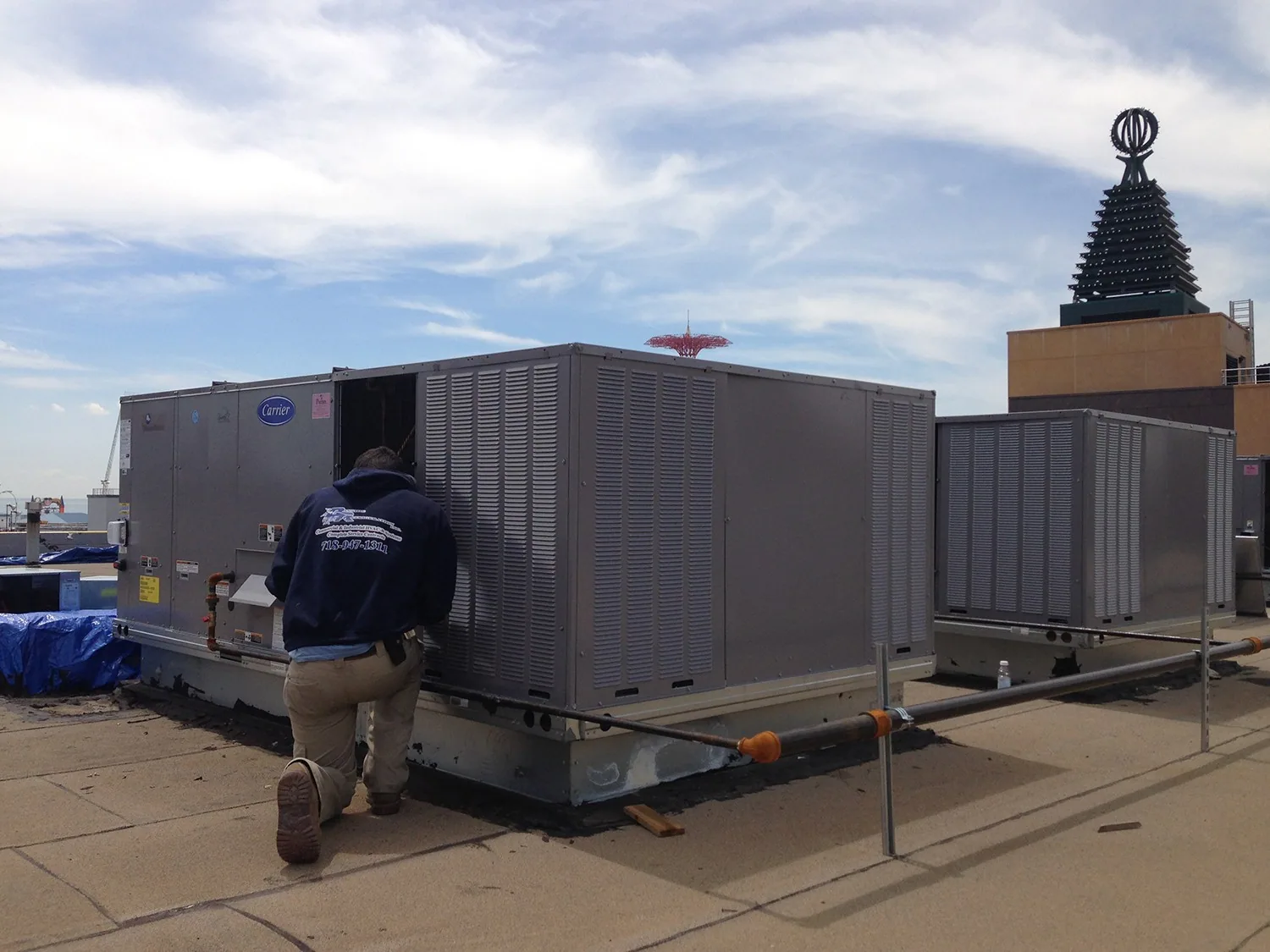
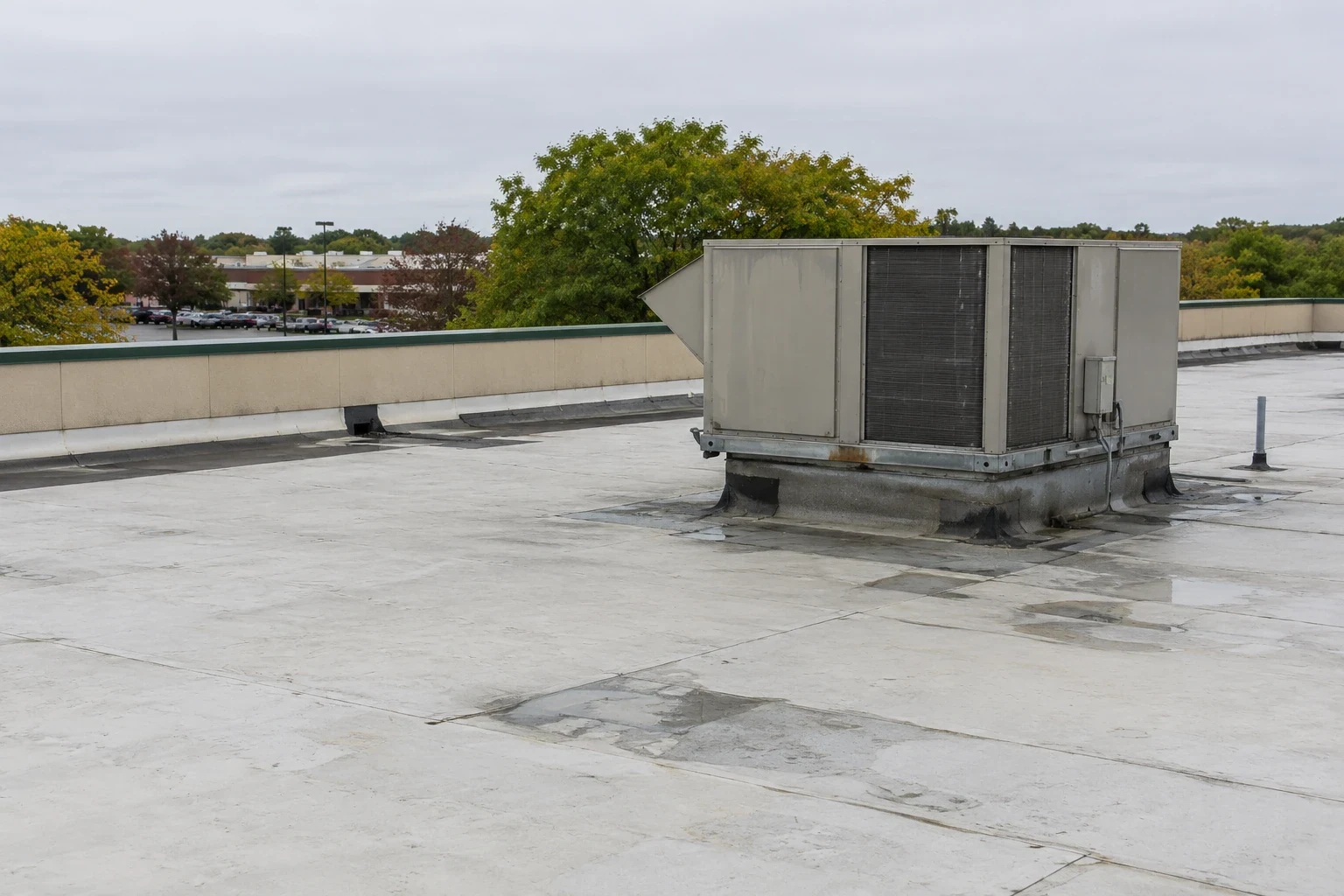
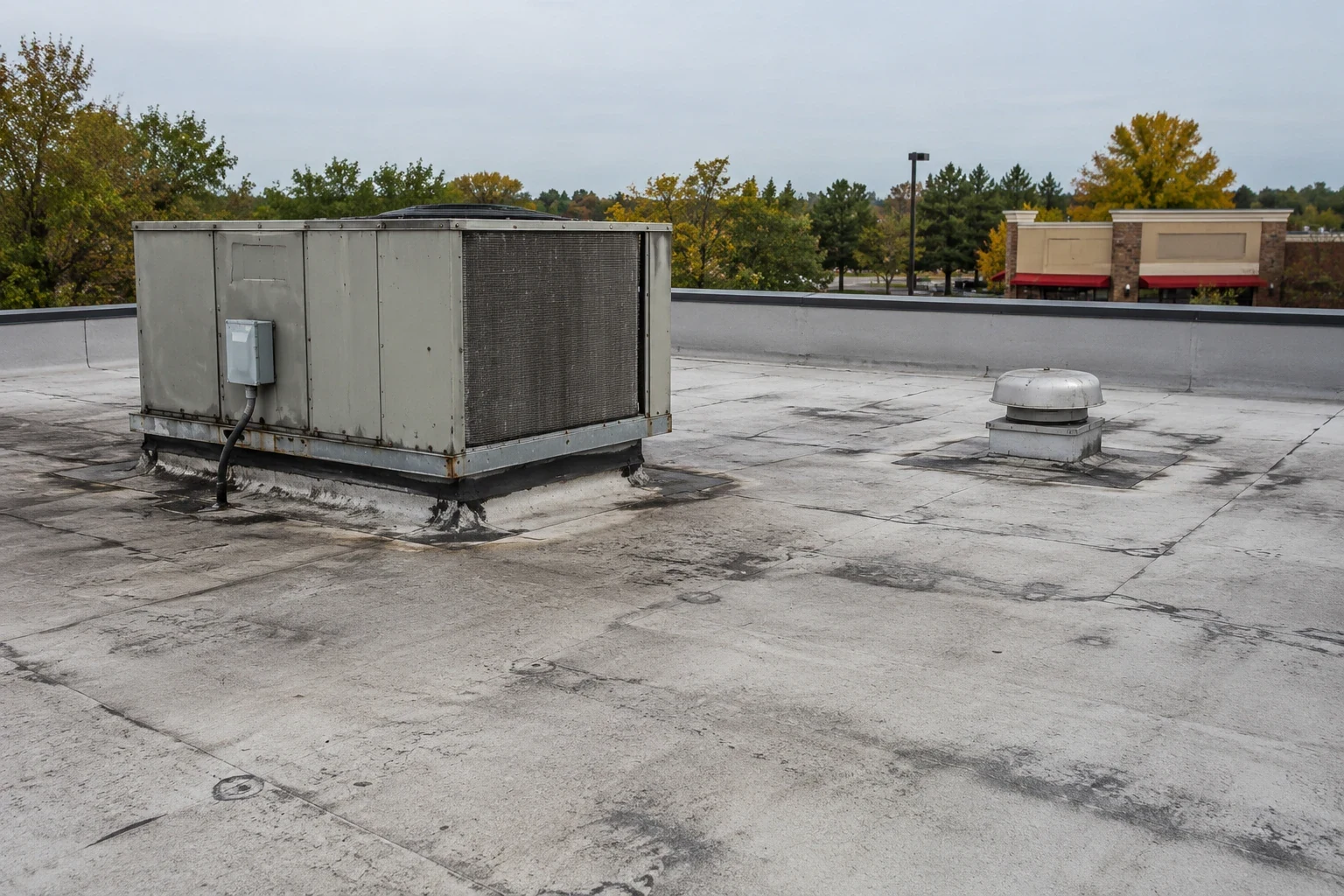
Refrigeration lines, exhaust, conduit, and equipment supports interrupt the membrane field. We inspect each curb corner and penetration for open laps, movement, loose counterflashing, or a prior patch that no longer holds. The survey records the equipment location and the roof zone so maintenance staff can match a reported interior issue to the correct detail.
A curb repair must account for the membrane and the connection to the equipment support. We coordinate roof access with the store's refrigeration contact when work could affect service or require a shutdown. A curb and penetration review can include curb review alongside the broader condition map. The scope names the detail being repaired and leaves unrelated equipment or membrane areas outside the work boundary unless inspection shows a connection.
Interior protection also needs a route. A leak over food preparation, refrigeration, or a public aisle can require a temporary collection point before roof access is available. We coordinate that first response with store management, then inspect from the roof and identify the likely opening. The report records the interior location, weather timing, roof zone, and temporary protection used. If the issue affects a mechanical system, the refrigeration contact receives a separate handoff rather than an assumed roofing fix.
Identify the highest-priority roof zones, access rules, and acceptable work windows. We will map the condition, trace the water path, and define a written scope.
Grocery deliveries arrive on a schedule, often through a service lane that also carries waste and vendor traffic. We confirm truck windows, lift placement, roof entry, and debris movement before mobilizing. Materials can be staged away from a receiving route, and the work area can be separated from customer entrances. The manager identifies any hours when noise or access must stop.
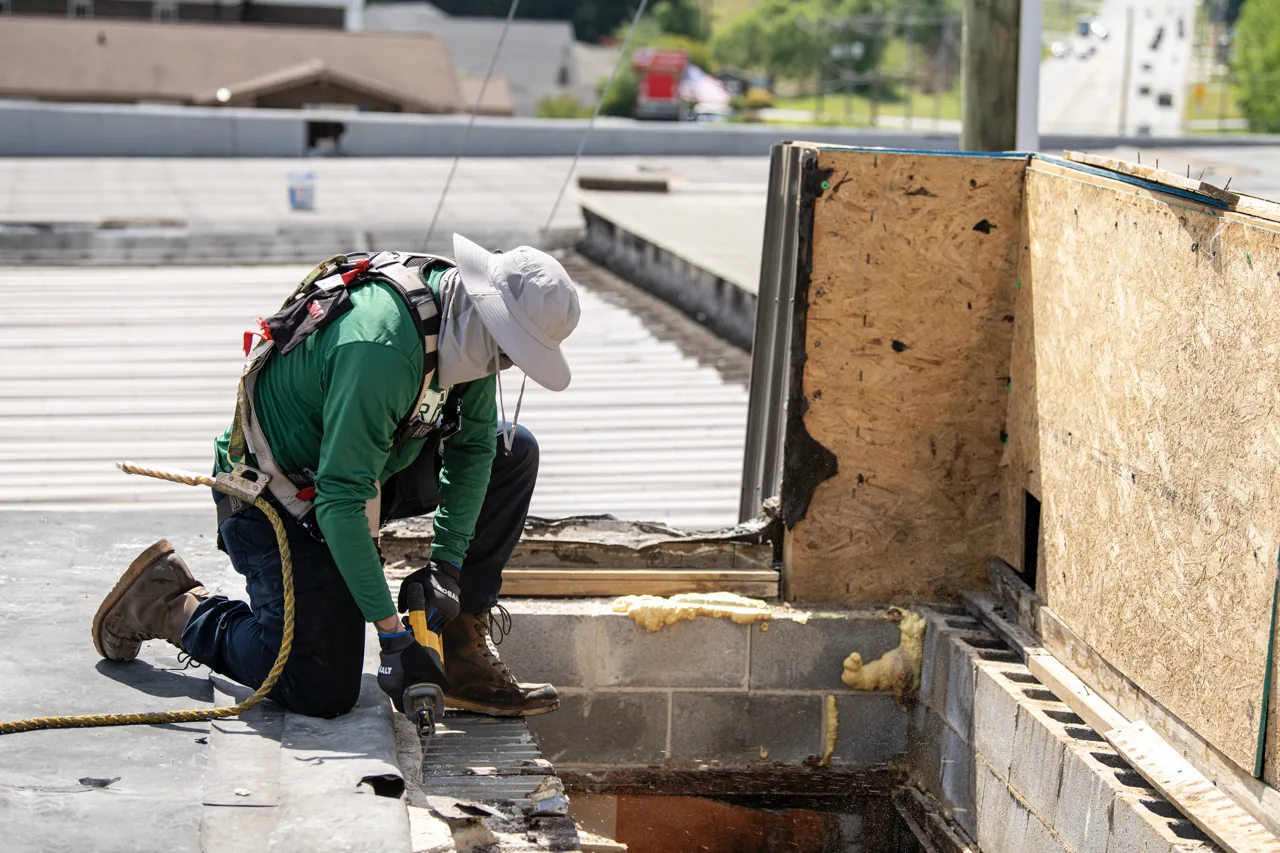
We open only the area that can be secured within the planned shift. The daily closeout notes temporary protection, completed tie-ins, accessible drains, and remaining work. A roof inspection keeps those boundaries visible while the store stays open. If another leak is reported during a phase, we inspect that roof zone independently and record whether it belongs in the active scope.
When equipment and membrane work overlap, the sequence identifies who disconnects, protects, and returns each system. We confirm whether a curb can be repaired in place, whether a line needs support, and when the equipment technician must be present. The roof crew then completes the membrane tie-in around a known boundary. This avoids leaving loose flashing or an open penetration between trades and gives the manager a documented owner for every unfinished interface.
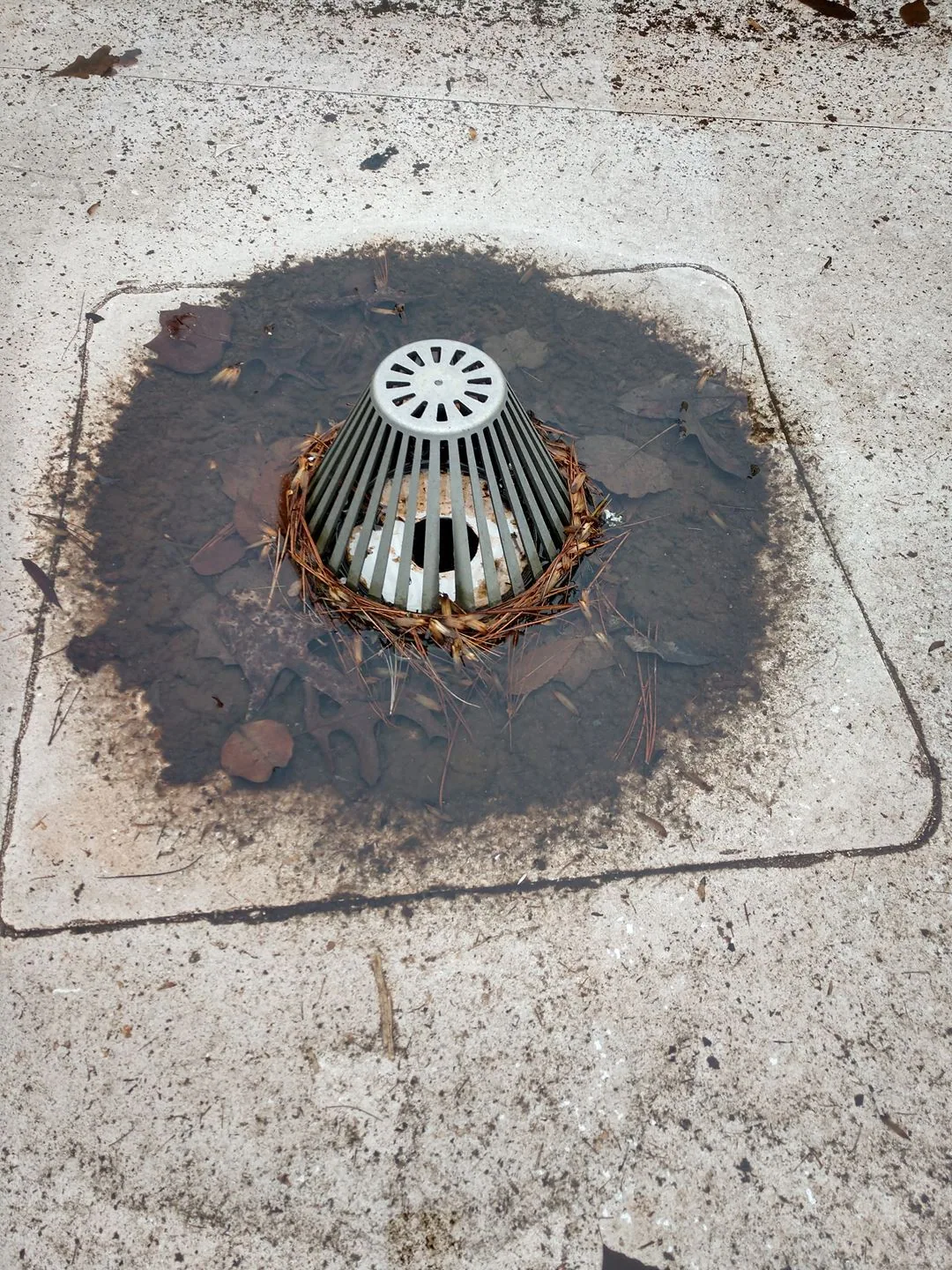
A water stain above an aisle may follow a roof slope, a curb, or a drain connection. We trace the route instead of cutting a large opening at the ceiling. The inspection checks the membrane surface, drain bowl, overflow route, seam alignment, and flashing near the reported area. Severe flooding and property loss in Jersey City accompanied Hurricanes Irene and Sandy. The roof walk identifies the water path and outlet condition at this property. We tie that finding to a marked zone and repair boundary before the store approves work.
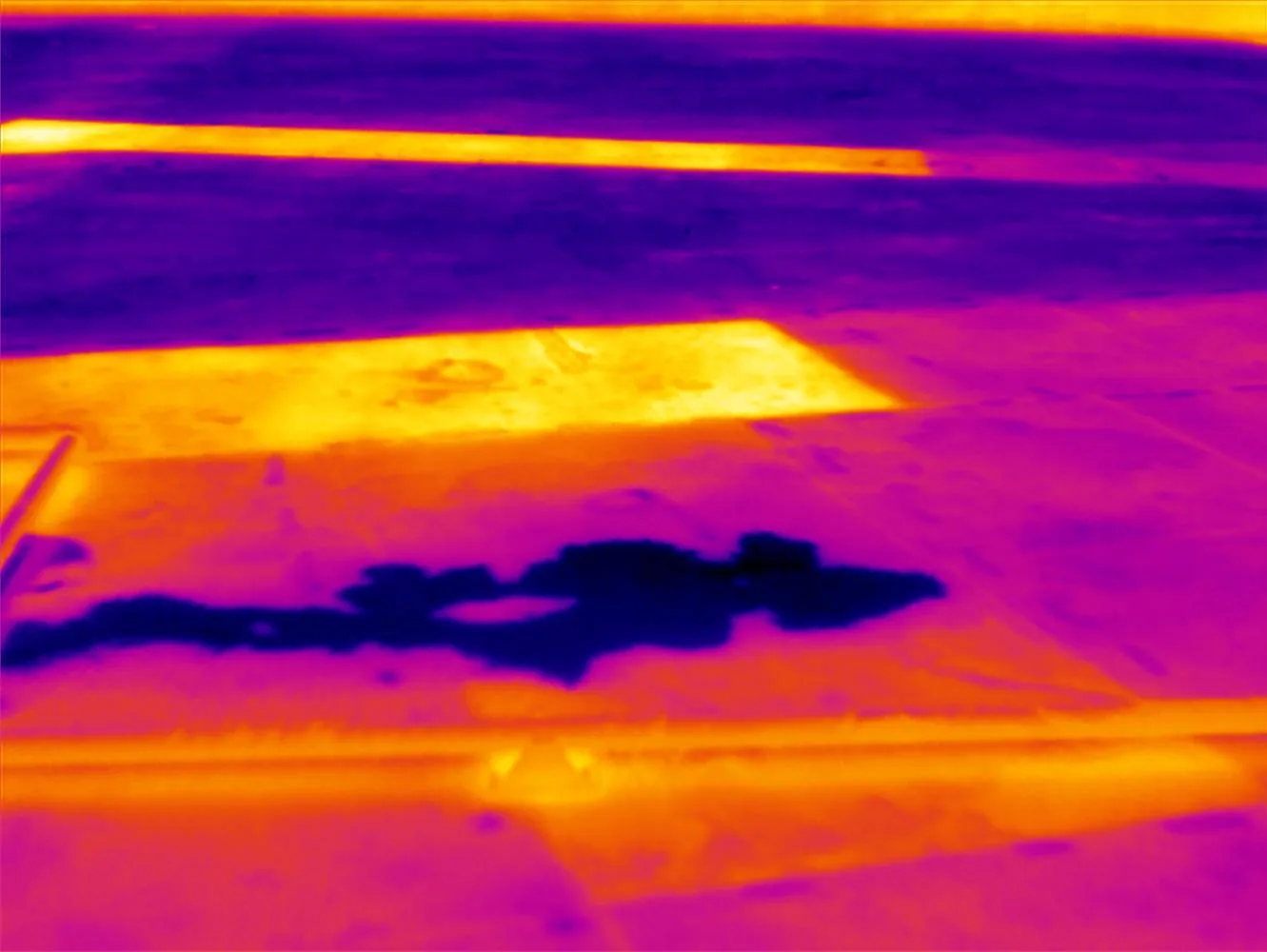
When moisture testing fits the assembly, a moisture survey can help map suspect areas. We record the method and boundaries and compare readings with visible conditions. The store team can then prioritize protection for refrigeration, inventory, and occupied aisles. We distinguish an urgent opening from a broader maintenance concern and specify whether the next step is repair, testing, or a larger scope review.
Inventory and receiving schedules can affect where material is lifted and how waste is removed. We confirm the receiving calendar before setting a delivery, then keep packaging and removed membrane out of truck and customer paths. The daily closeout includes the area protected and the next delivery or lift window. Those details allow the store to prepare staff without changing the roofing scope after material has been staged.
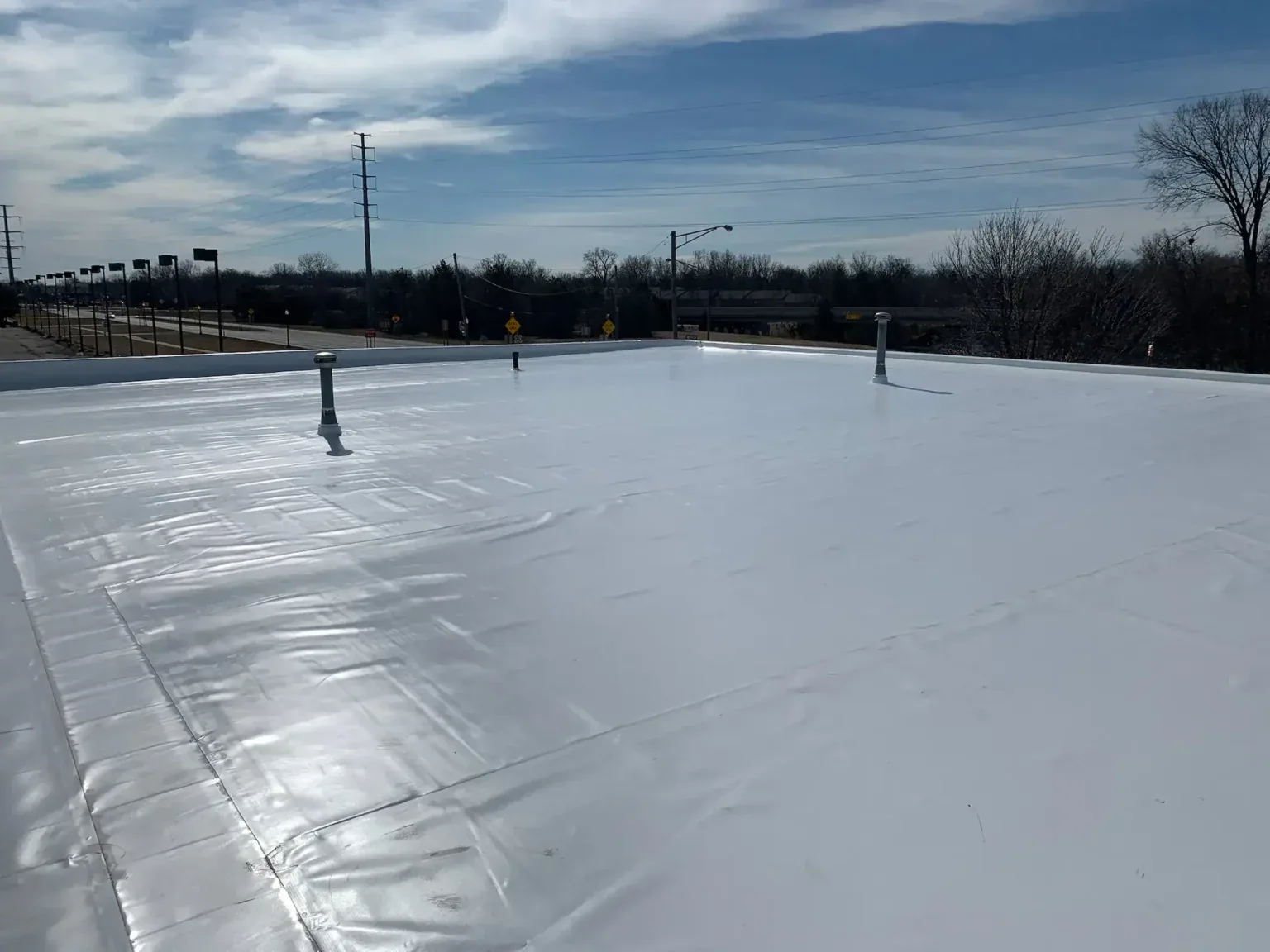
Grocery roofs may include membrane, insulation, cover board, and layers added during earlier equipment or tenant changes. We verify what is present and note tie-ins before proposing a system. An isolated seam or flashing failure may call for a repair. Repeated moisture, widespread deterioration, or an unsuitable existing layer can shift the comparison toward recover or replacement. The roof condition, not a generic product preference, determines the option.
A phased occupied-building reroof can be phased around loading and receiving operations. The sequence identifies each roof zone, drain protection, equipment coordination, weather hold, and end-of-shift condition. If replacement is selected, the owner receives a defined work boundary and tie-in plan. That lets operations staff prepare for a limited disruption instead of learning about access changes after materials arrive.
A receiving area can also be the best route for roofing material, but only if deliveries and lift movements are scheduled separately. We check turning space, clearances, and the placement of any waste container with the store contact. The roof hatch may offer another route, yet its size and security still need an on-site check. The final plan states which path will be used and how it will be restored at shift end.
Jersey City retail sales totaled $3.978 billion in 2022. At a grocery property, the work plan accounts for its operating hours and receiving schedule. We keep the record grounded in the property: zones, membrane observations, drains, curb details, photographs, tenant operations, and work completed.
The final handoff identifies repaired locations, open items, and the next inspection need. If a grocer operates several properties, consistent labels make it easier to compare condition without assuming their roofs share the same assembly. A big-box retail roof can use consistent labels across sites while each report preserves findings for its own building.
A Hoboken roof walk can follow the same curb and drain record. For mixed retail portfolios, a restaurant roof review adds exhaust and service-hour coordination.