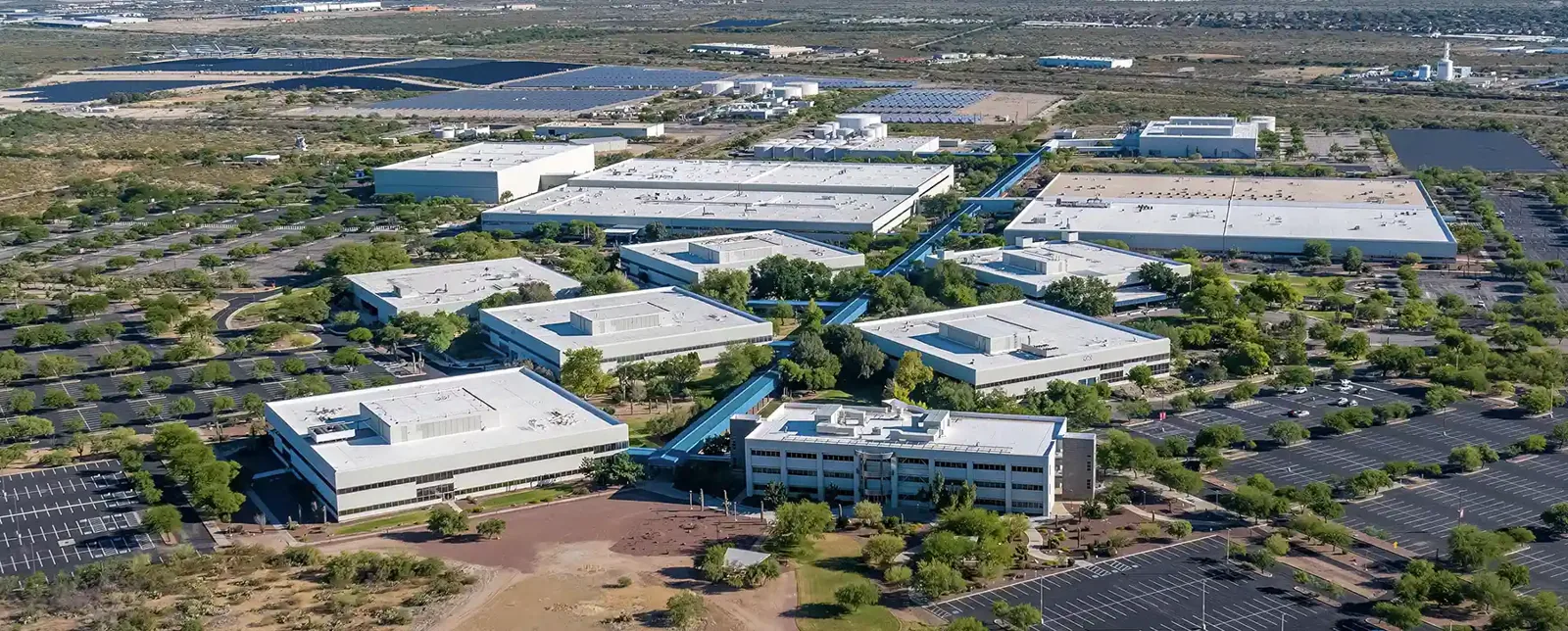
Wind Damage Roof Repair in Jersey City, NJ
Commercial wind damage roof repair in Jersey City: torn membrane, lifted edge metal and displaced equipment, dried in fast and repaired to a written scope.
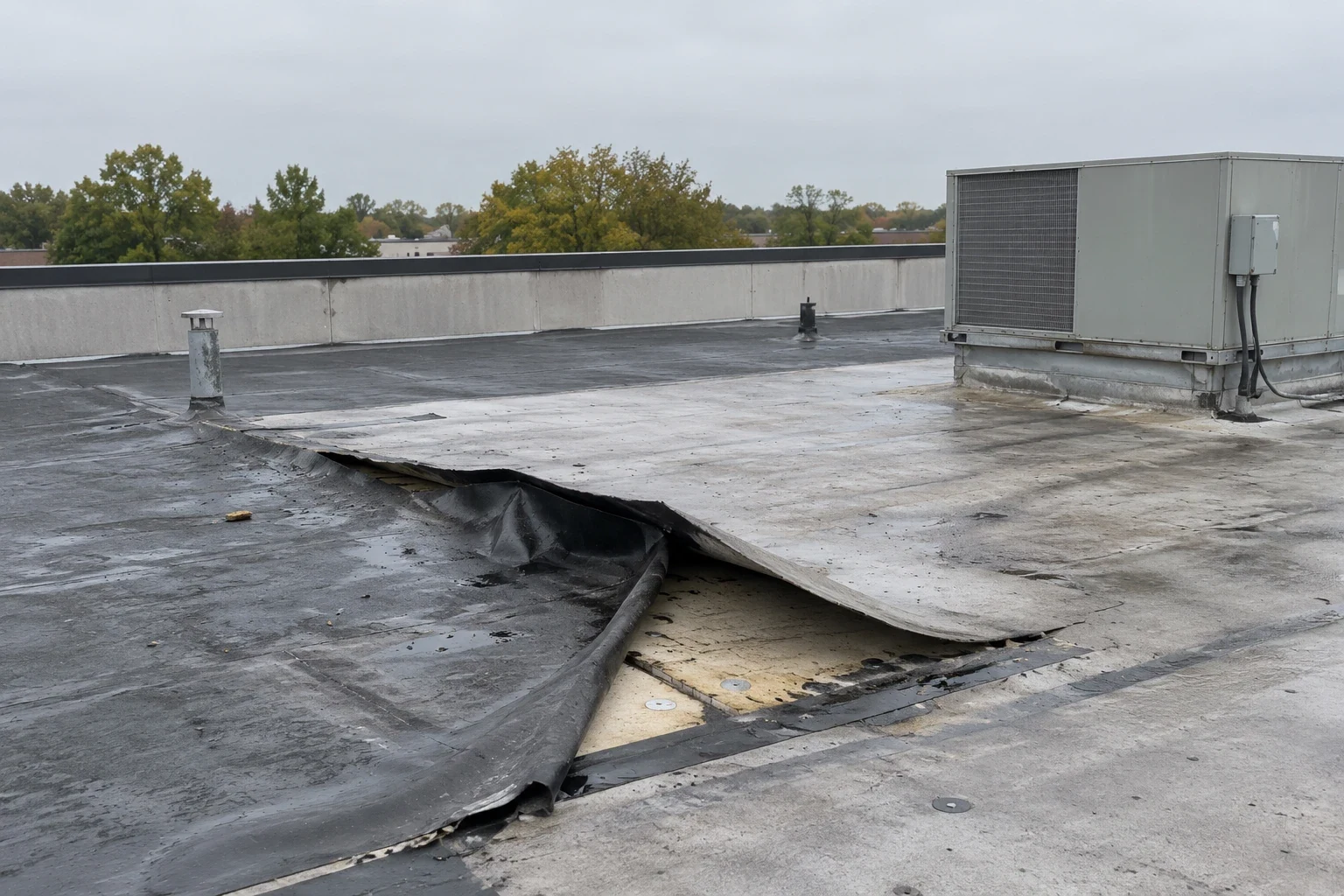
Commercial wind damage roof repair in Jersey City: torn membrane, lifted edge metal and displaced equipment, dried in fast and repaired to a written scope.
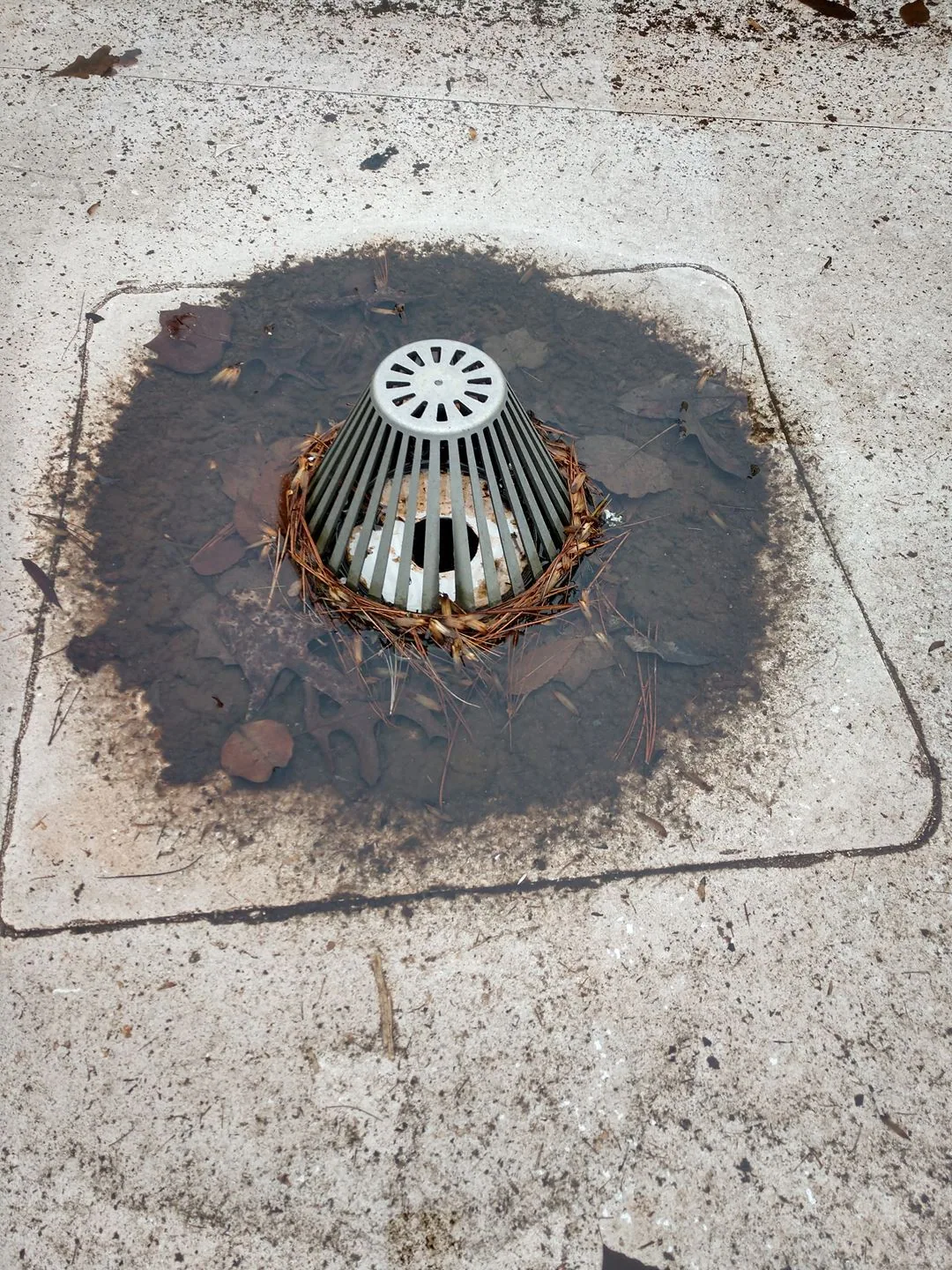
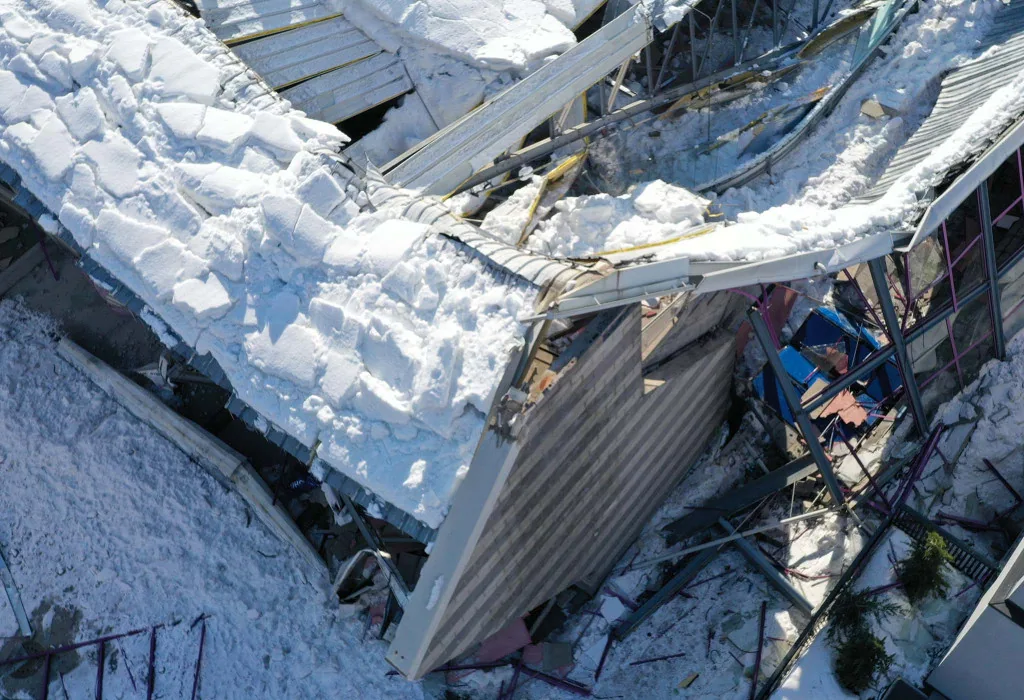
A torn corner on a Jersey City roof is a sequencing problem before it is a repair. Someone has to secure the loose material, stop the water, and decide what the open area will look like by tonight. Only then does the permanent scope make sense. We approach wind damage in that order: make the roof safe, dry in the opening, document the loss, and repair to the system that is actually on the building. Jersey City is a dense coastal community with climate exposure. The repair scope accounts for the roof's actual edge, attachment, and drainage details.
The first call usually comes from a facility manager who sees a flapping membrane or loose coping from the street. We ask for the building address, the roof access route and a photograph, then send a crew with tarps, fasteners and sealants. The goal of the first visit is not a finished roof but a stable one.
After the dry-in, we survey the roof in three passes. The perimeter pass looks at edge metal, coping, parapet flashing and the termination bar along the wall. Wind finds any loose component there and works it free. The field pass checks the membrane for tears, billowing, lifted seams and fastener pull-out. The equipment pass checks curbs, pipe supports, vents, exhaust hoods and antenna mounts, which can shift or tip.
Each finding goes on a roof diagram with a photograph. We separate damage caused by the event from older conditions, such as a seam that was already opening or a flashing with dried sealant. That distinction matters for a repair plan and for a claim, and we describe what we see without assuming either answer.
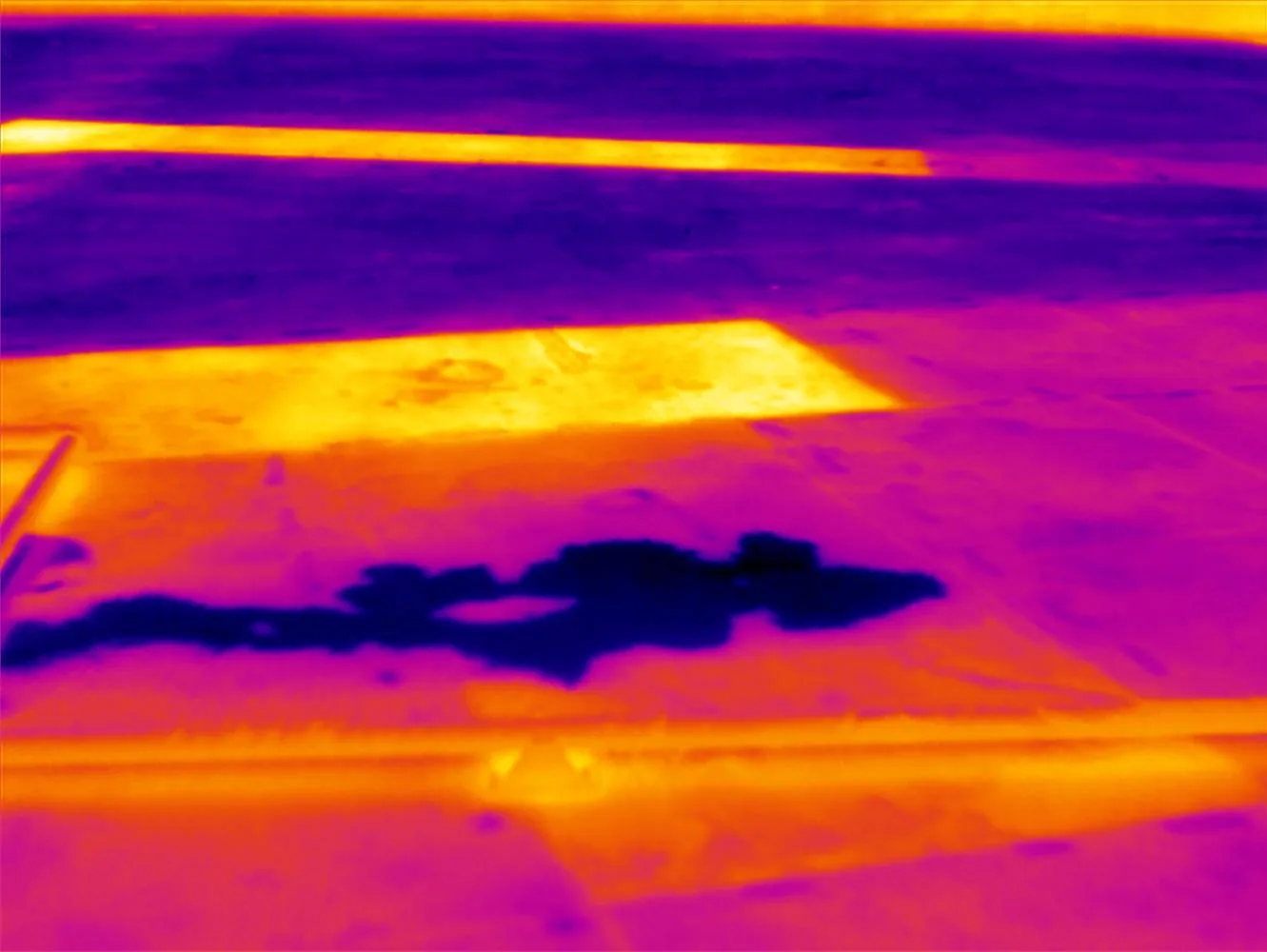
Where the membrane has billowed or fluttered, we check whether the insulation beneath has been disturbed and whether moisture has entered. A moisture survey after the dry-in shows how far water traveled under the surface, and it keeps the repair from sealing wet insulation inside the roof.
Flashing at walls and curbs deserves its own look, since wind-driven rain exploits any gap. A failed flashing found at this stage is cheaper to fix now than after the next heavy rain, and the repair is usually small if caught early.
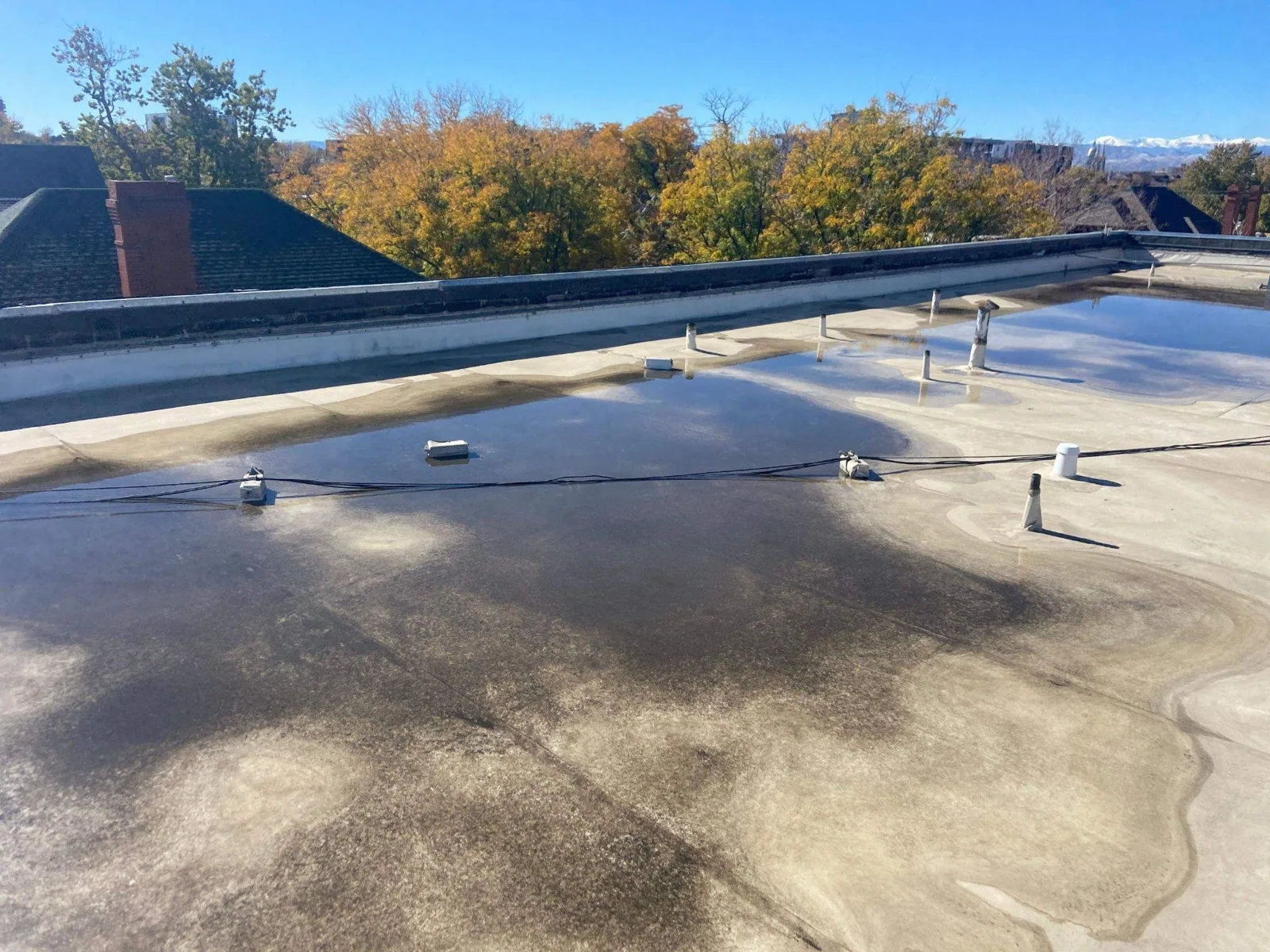
Send the building address, the access route and a photo of the damage. We will secure the roof, stop the water path and write the repair scope.
How a roof is attached decides how it fails. A mechanically fastened membrane can lose fasteners in a row and flutter along the line. A fully adhered system can peel at a weak bond, leaving a clean-looking strip of substrate. A ballasted roof can lose stone and expose the membrane beneath. A metal roof can lose a panel or a clip line. Each failure points to a different repair.
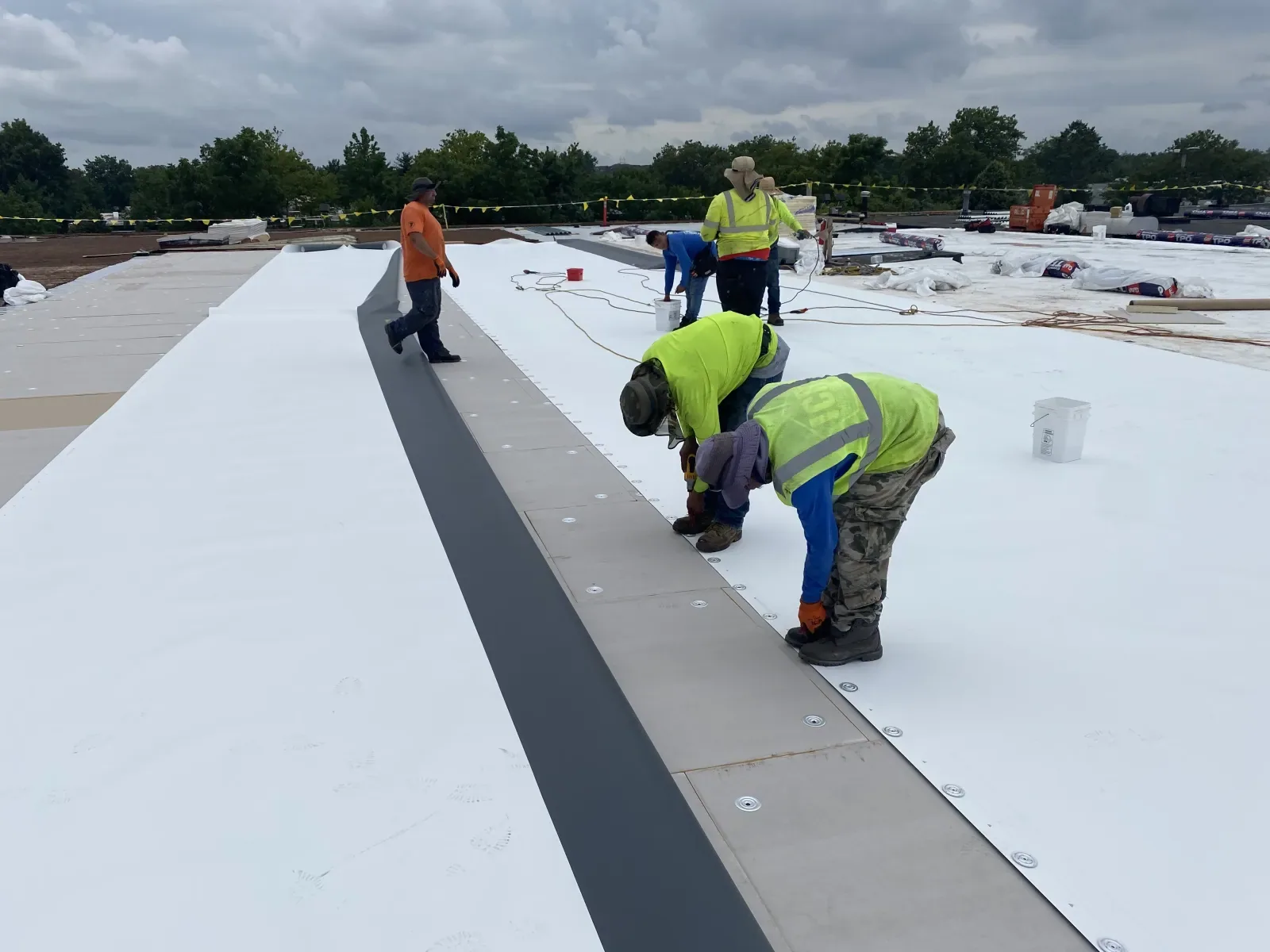
For a single-ply roof, the repair often includes new fasteners, patches heat-welded or adhered to match the membrane, and replacement of damaged seam stretches. Our TPO repairs follow the welding and cleaning steps that the sheet needs, and we test the welds before leaving. For metal, we reset or replace panels and check clips, seams and sealants.
Edge metal and copings are the parts most often replaced. They rely on continuous cleats, sealed joints and fasteners that reach the substrate. We reinstall them to the manufacturer's detail or to the code requirement in force, so that the next storm does not pull the same edge. Where an old edge was undersized, we say so and price the upgrade as an option.
Wind damage often needs a crane or lift, and in Jersey City the curb lane is shared with traffic and deliveries. We arrange the street access, the hoist route and the staging area before the permanent repair starts. If a lift cannot reach the roof edge, we carry materials through the building, and that depends on the tenants and the access path.
Weather decides the order. Welds and adhesives only set on dry surfaces at workable temperatures, so each day's scope is cut to the area we can close before dark. The temporary protection stays on until the permanent repair is ready to replace it. A daily closeout report tells the facility team what is repaired, what is protected and what is next.
Jersey City took flooding and property damage in Irene and Sandy. Intense storm events are among New Jersey's climate risks. After a major storm, many roofs need work at once, and crews are in demand. That is why we triage: active water entry first, safety hazards next, cosmetic damage last.
The damaged area is not always the whole problem. A roof that lost a section to wind may have been at the end of its service life, and a patch next to old membrane may not hold. We lay out the choice plainly: repair the damaged area, recover a larger section, or replace the roof.
Repair is the right answer when the damage is local and the rest of the roof is sound. A storm damage repair can restore the roof to its condition before the event. Recovering or replacing makes sense when the adjacent membrane is brittle, when fastener patterns are inadequate, or when the insulation is wet. If the scope grows, a full replacement may offer a better path than repeated patches.
After 2000, investment reached Newport, Downtown, and Journal Square first, then redevelopment extended into other Jersey City neighborhoods. The survey identifies the actual roof assembly and condition before setting a repair boundary.
At closeout we give the owner photographs of the damage, the dry-in, the repair and the finished surface. We include product data, a diagram of the repaired area and any warranty information. A follow-up visit after the next significant storm confirms that the repair held.
For owners with several buildings, a multi-site roof program adds a spring check of edge metal and fasteners across the portfolio, before storm season. Buildings in Hoboken or Bayonne can join the same schedule. The hurricane damage repair process uses the same documentation when a larger event hits.