Membrane Puncture and Foot-Traffic Repair in Jersey City, NJ
Repair punctures, gouges and foot-traffic wear on Jersey City commercial roofs with matched patches, walk pads and a written record of every service trip.
Repair punctures, gouges and foot-traffic wear on Jersey City commercial roofs with matched patches, walk pads and a written record of every service trip.
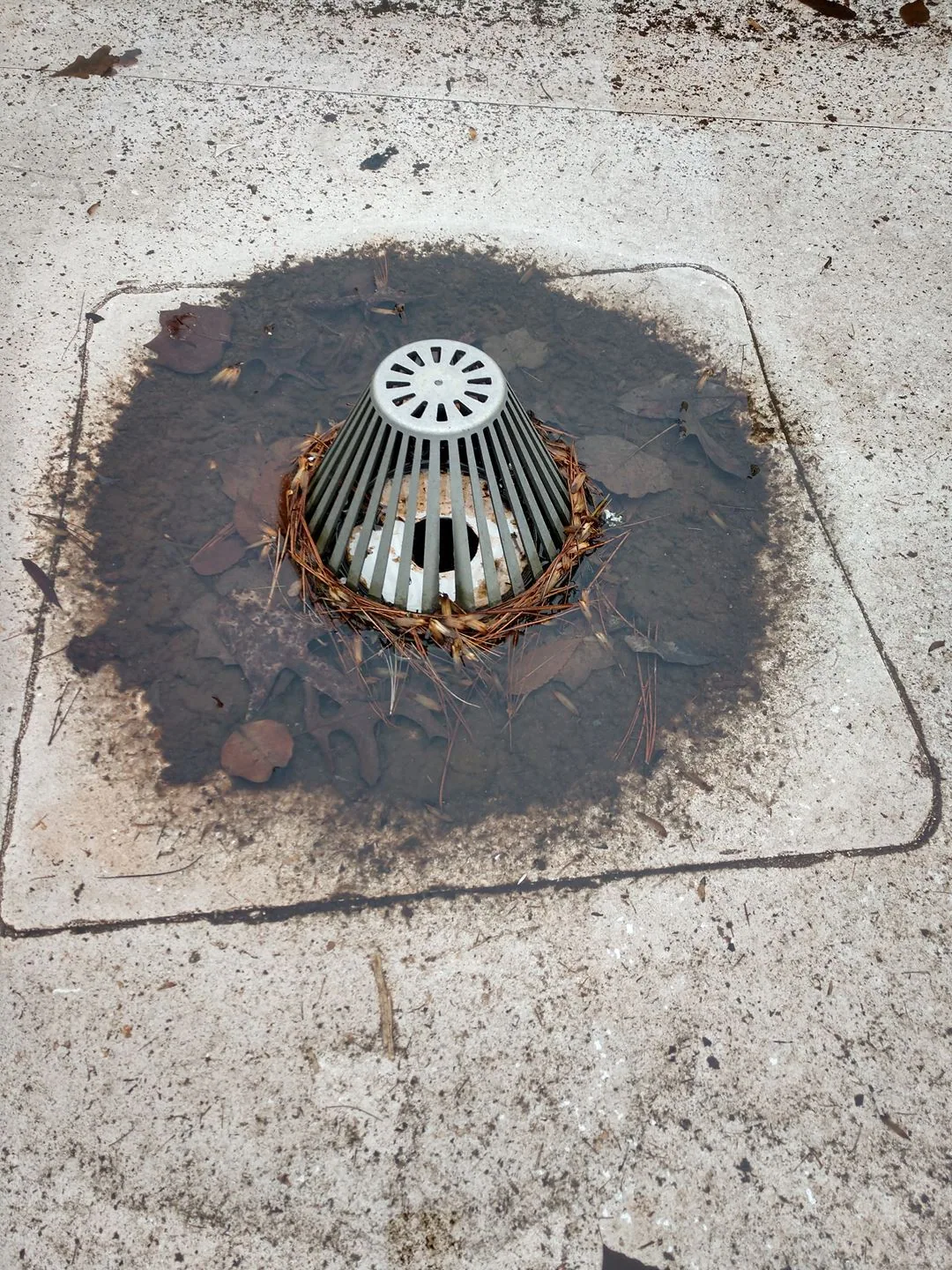
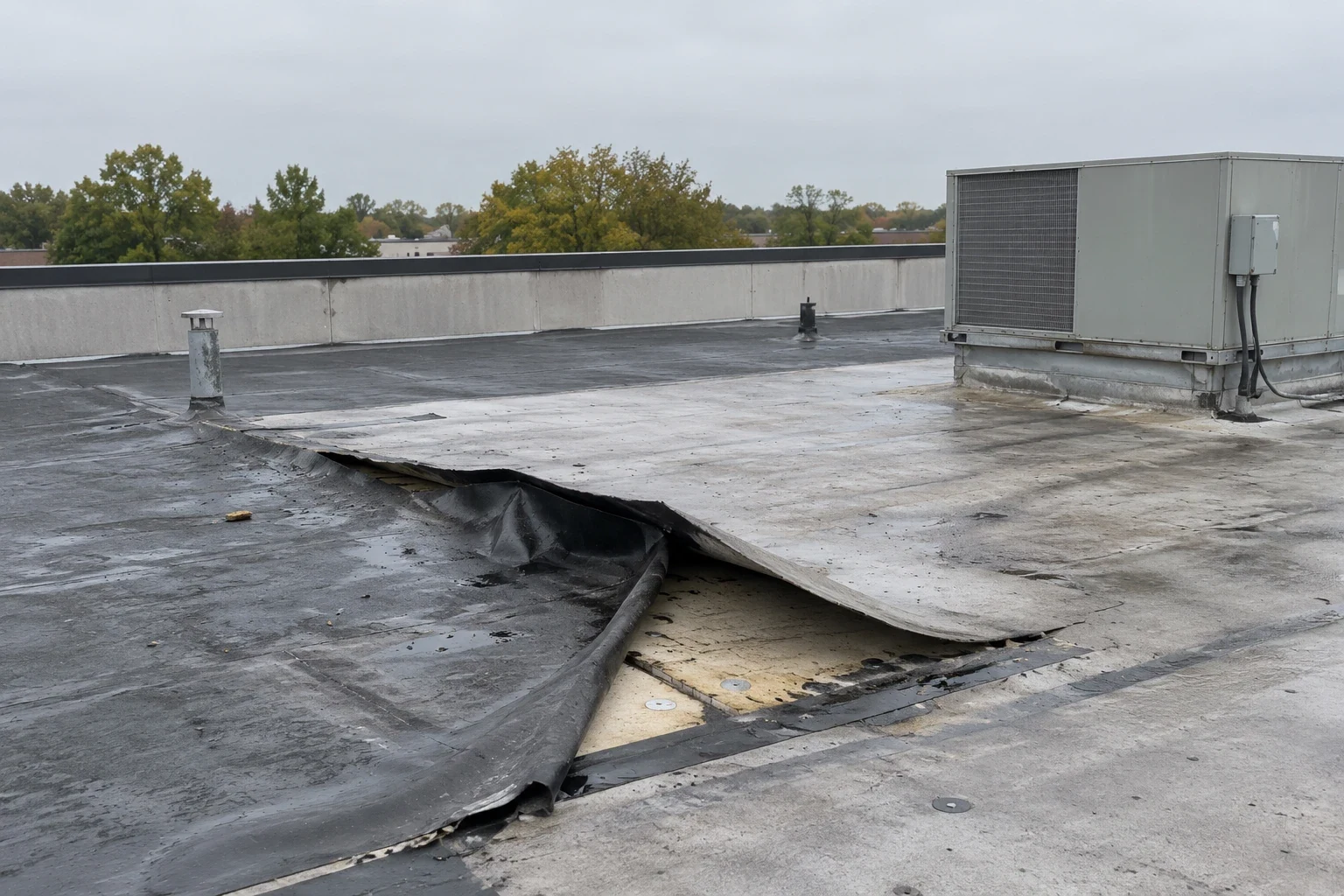
Foot traffic writes its own record on a membrane: scuffs along the path to the rooftop unit, a gouge where a ladder foot landed, a puncture where a dropped tool or a screw came down. In 2020, Jersey City had 19,835.1 residents per square mile within 14.74 square miles of land. A roof access map helps the owner set trade routes and protect the membrane around equipment and hatches. The decision for the owner is whether the damage is cosmetic, structural to the waterproofing, or an open path for water. We sort each mark into one of those groups before anyone picks up a patch.
Punctures are cheap to fix when found and costly when left. A pinhole lets water into insulation, where it spreads sideways and stays. The first sign inside may be a stain far from the hole.
With that dense urban setting, rooftop access and service paths deserve a planned route. We map the actual hatch, equipment clearances, and foot traffic before placing walk pads or setting repair limits.
The inspection begins at the roof hatch and follows the routes technicians take to the equipment. Wear concentrates there: along the straight line from door to unit, at turns and where people step off an access ladder. We photograph the worn areas and mark each puncture, tear, gouge and abrasion on a roof diagram.
We then look beyond the visible hole. A puncture near a seam may have opened the lap. A gouge across a reinforcement layer may have exposed fabric. A mark near a drain may have damaged the flashing. We probe the area and check the surrounding membrane for blisters, softness and rippling, which suggest water beneath the surface.
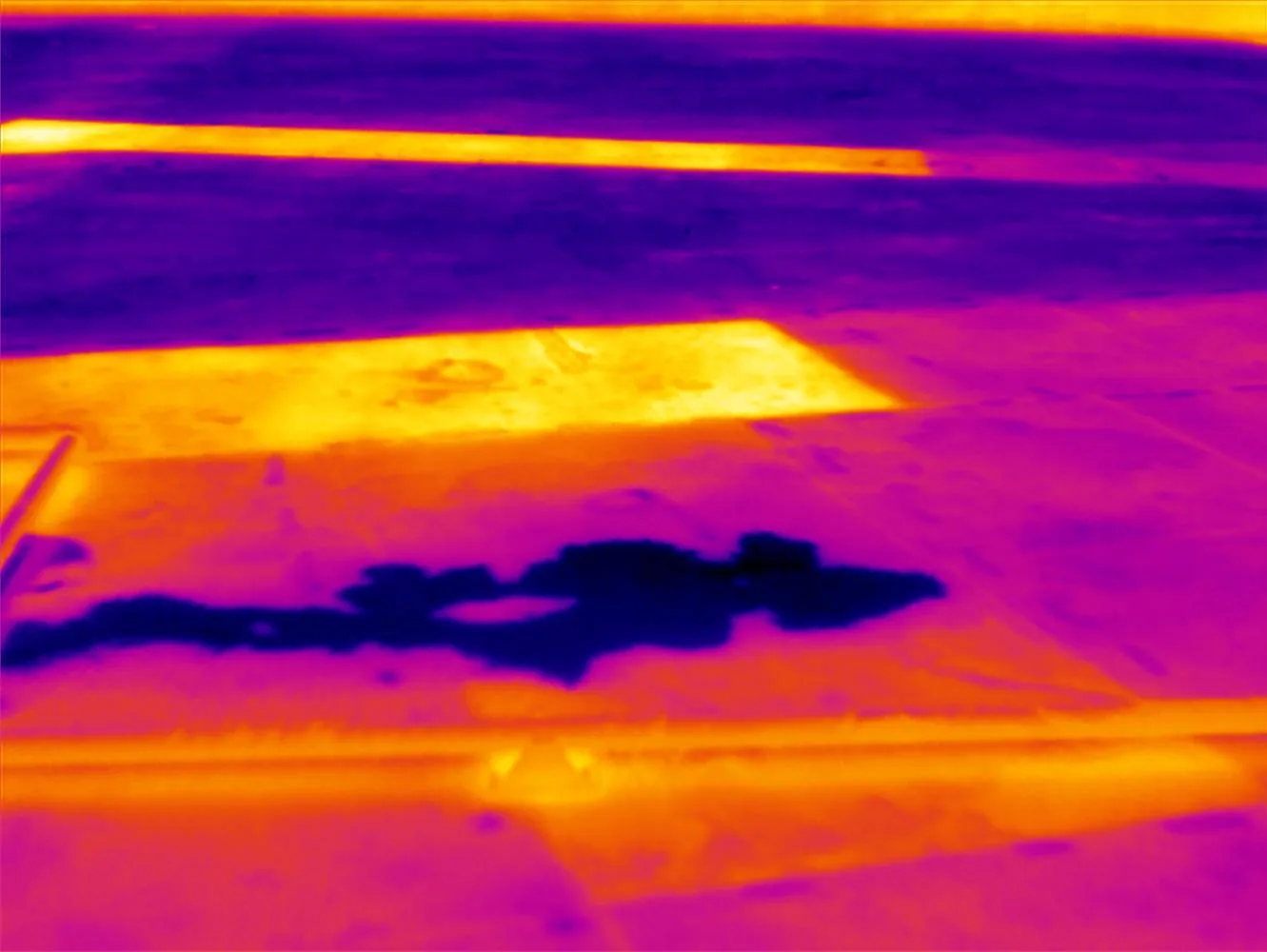
Where we suspect moisture, an infrared moisture survey maps wet insulation around the damage. A small repair in a wet area will fail, so the insulation is dried or replaced first. Even a minor puncture can have a surprising reach under the membrane.
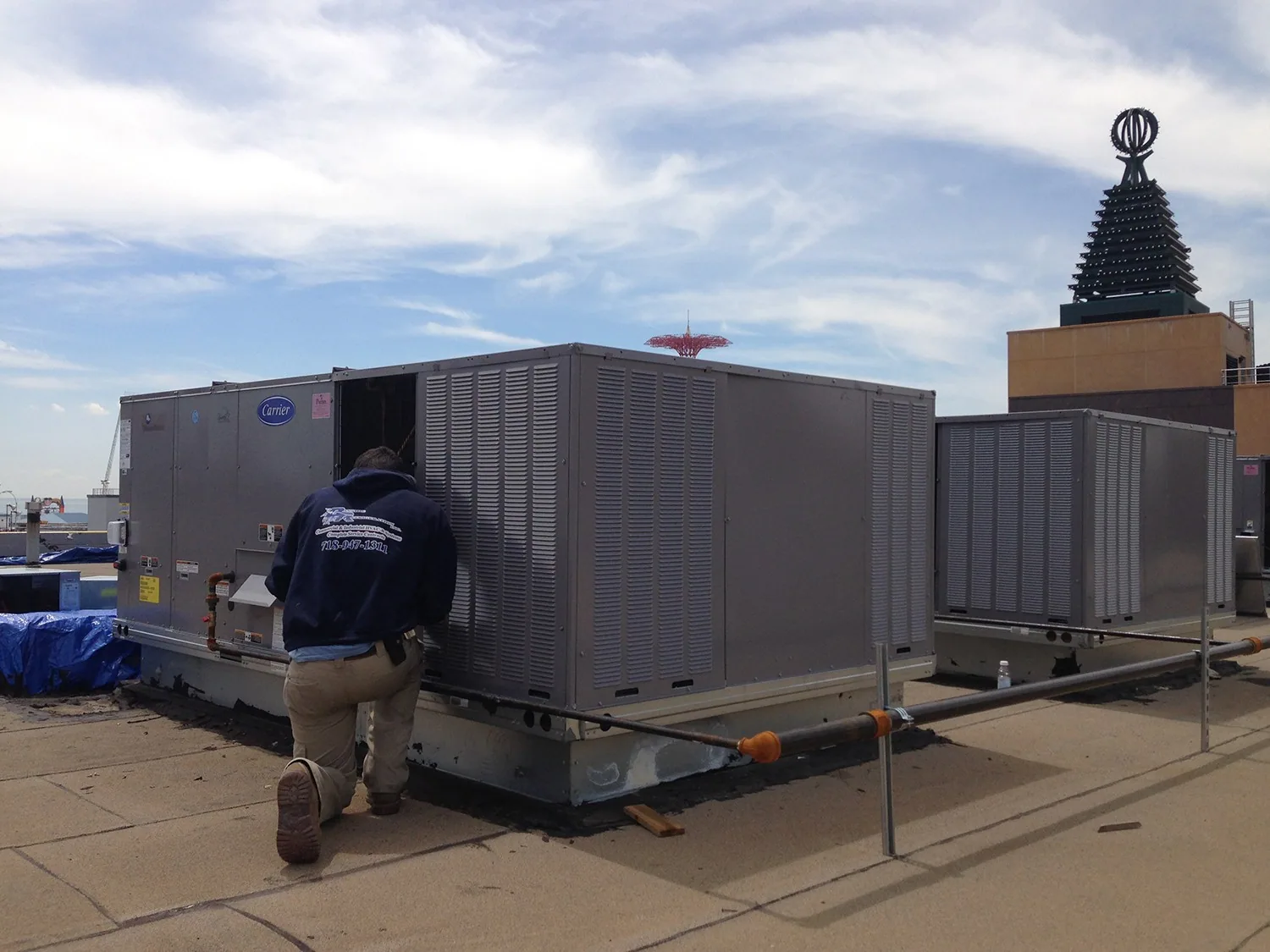
Hidden damage turns up under rooftop equipment as well. When a unit is replaced, the old curb area may show gouges from dragging, and the membrane under a removed unit may have been punctured by its feet. We check the footprint of any removed equipment before the new unit is set, and we repair the surface while it is open and easy to reach.
Tell us how the roof is reached and which trades visit it. We will map the wear, repair the openings and place walk pads along the busiest routes.
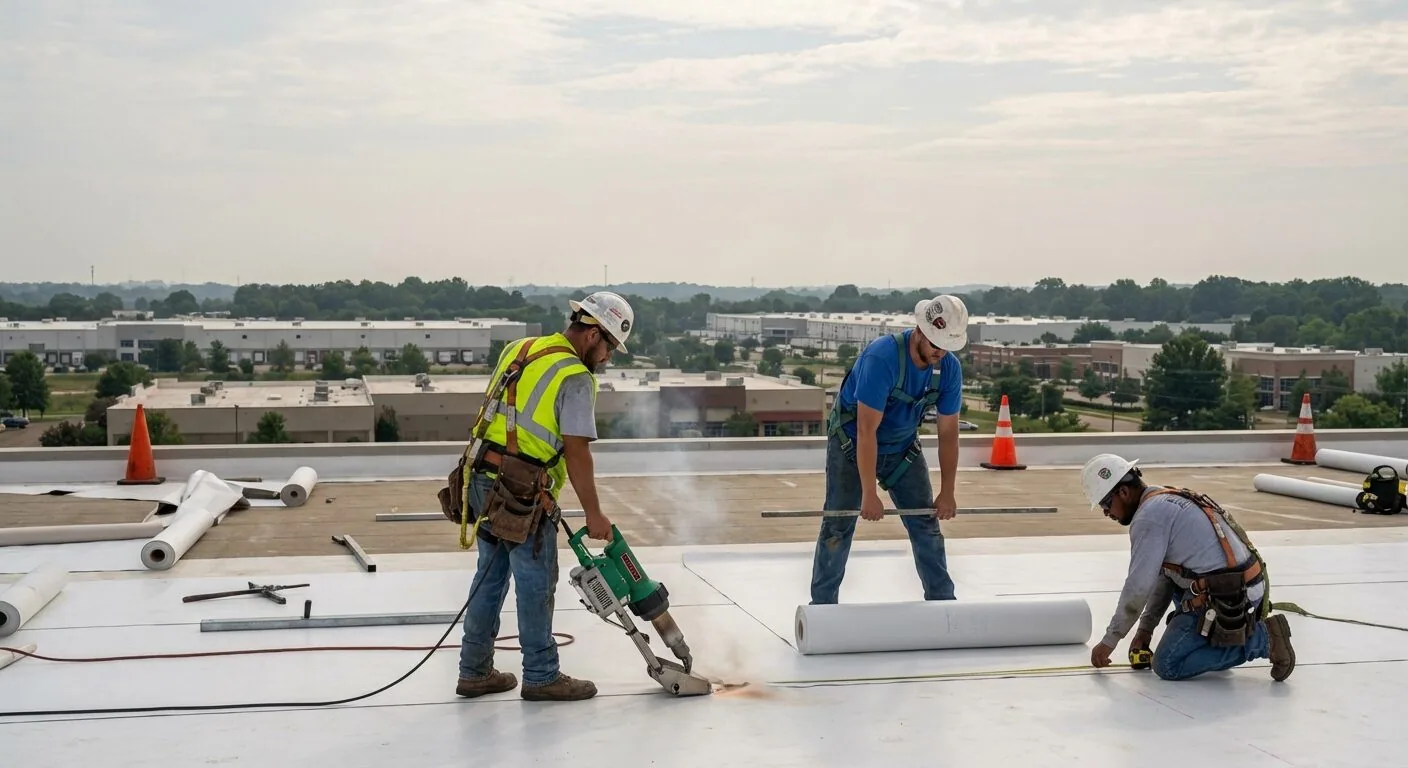
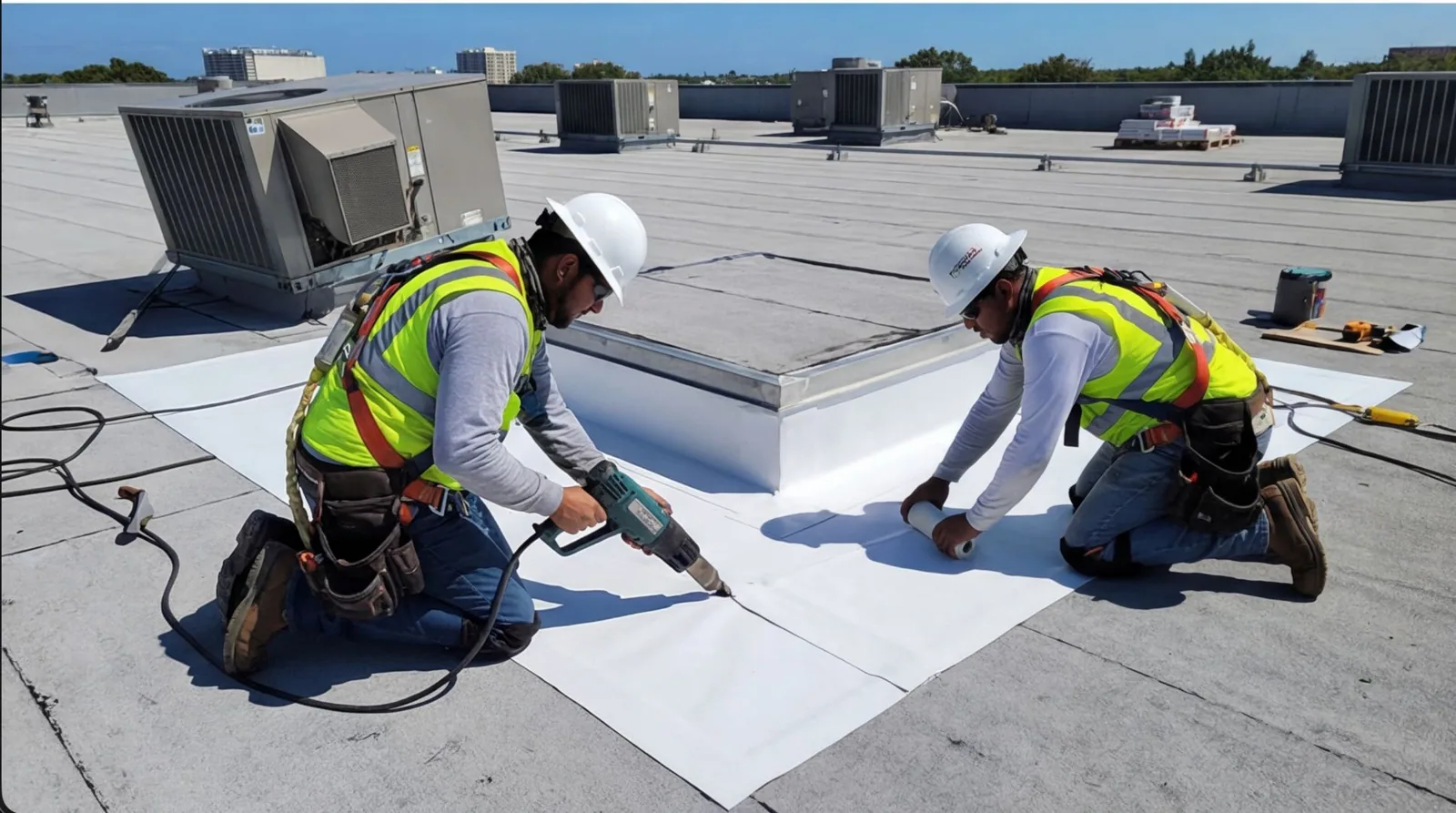
The patch has to bond to what is there. On thermoplastic roofs, a cleaned and heat-welded patch of the same material fuses to the field sheet. On rubber roofs, a primed patch with adhesive or tape forms the bond. On modified bitumen, a torched or adhered patch of compatible sheet is used. On built-up roofs, new felts or a patch of modified sheet are installed over a cleaned surface. Mastic and sealant are not substitutes for a proper patch, and they fail quickly on a surface that moves.
The patch should extend well beyond the damage, with rounded corners so edges do not lift. We clean the area, remove dust and oil, and prepare the surface to the manufacturer's requirements. After installation, we probe the edges and test the bond.
For roofs that are aging, a patch may not bond. The surface may be too hard or too weathered. We test a small area first, and if it fails, we use a larger patch or recommend a more extensive repair. A commercial roof repair scope states which approach fits.
The permanent fix for foot-traffic damage is to give traffic a place to go. Walk pads, installed along the routes to equipment, take the wear that would otherwise land on the membrane. They are cheap compared with the repairs they prevent. We place them where the diagram shows heavy use, bonded or welded to the membrane so they do not shift.
Trade rules help too. Every contractor who goes on the roof should know the paths, the no-walk areas and the requirement to report damage. We provide a simple roof access sheet for the building: where the hatch is, where to walk, what to avoid and whom to call. Tools and materials left on the surface cause punctures, and the sheet says so.
Rooftop equipment access matters. Where technicians must reach a unit often, a platform or a ramp over low obstructions can prevent trips and damage. Our work on equipment curbs and supports includes these details.
Ladders and hatches create their own damage. A ladder leaned against a parapet scrapes the coping and crushes the flashing, and a hatch that slams shut can crack the curb sealant. Ladder pads, hatch dampers and a marked landing area protect these spots. After any roof visit by another trade, a storm damage check or a general walk reveals whether new damage has been done.
A few isolated punctures call for spot patches. A cluster of damage in a high-traffic zone may call for a section repair, replacing the worn membrane with new sheet and adding walk pads. Roof-wide damage, such as impact pitting or widespread abrasion, may call for a recover or coating.
We lay out the options with their costs and limits. A patch is inexpensive and quick, but it adds a seam. A section repair costs more and lasts longer. A coating can protect a worn surface if the membrane is sound underneath. When damage is widespread and the membrane is old, a recover may be worth considering, since repeated patching eventually costs more than renewal.
The state lists chronic flooding, hotter weather and intense storms as climate risks, and a punctured membrane gives all three an open door. For a punctured membrane, the immediate question is whether water can reach insulation or an open lap. Delays between damage and repair let water in and the weather work on weak edges.
We keep a log of every repair: location, date, cause, method and photograph. Over time, the log shows where damage keeps occurring and what to change. If punctures cluster at one unit, a walk pad or a platform fixes the pattern. If they cluster near a door, we add protection there.
A scheduled maintenance visit after trades have been on the roof catches new damage early. Many owners ask for a visit after any major rooftop equipment service. Buildings in Hoboken and Bayonne can use the same log format. When a repair leaves a lap open nearby, seam repair finishes the job.