Storm Damage Commercial Roof Repair in Jersey City, NJ
Repair storm damage on a Jersey City commercial roof with safe dry-in, mapped findings, claim-ready photos, and a documented return inspection plan.
Repair storm damage on a Jersey City commercial roof with safe dry-in, mapped findings, claim-ready photos, and a documented return inspection plan.
A storm-damaged Jersey City roof needs a safe opening and water path before a permanent repair decision. We locate the exposed zone, protect the space below, and record which seams, edges, drains, or penetrations changed. Emergency response runs around the clock, including holidays. A roof inspection follows the stabilization with a marked condition report and repair boundary.
Hurricanes Irene and Sandy brought flooding, outages, and property damage to Jersey City. Stormwater loading also affects the city’s combined sewer system. We connect that history to the building’s actual roof details, not to an assumed cause. The first visit separates storm impact from pre-existing wear and identifies work the property team can authorize now.
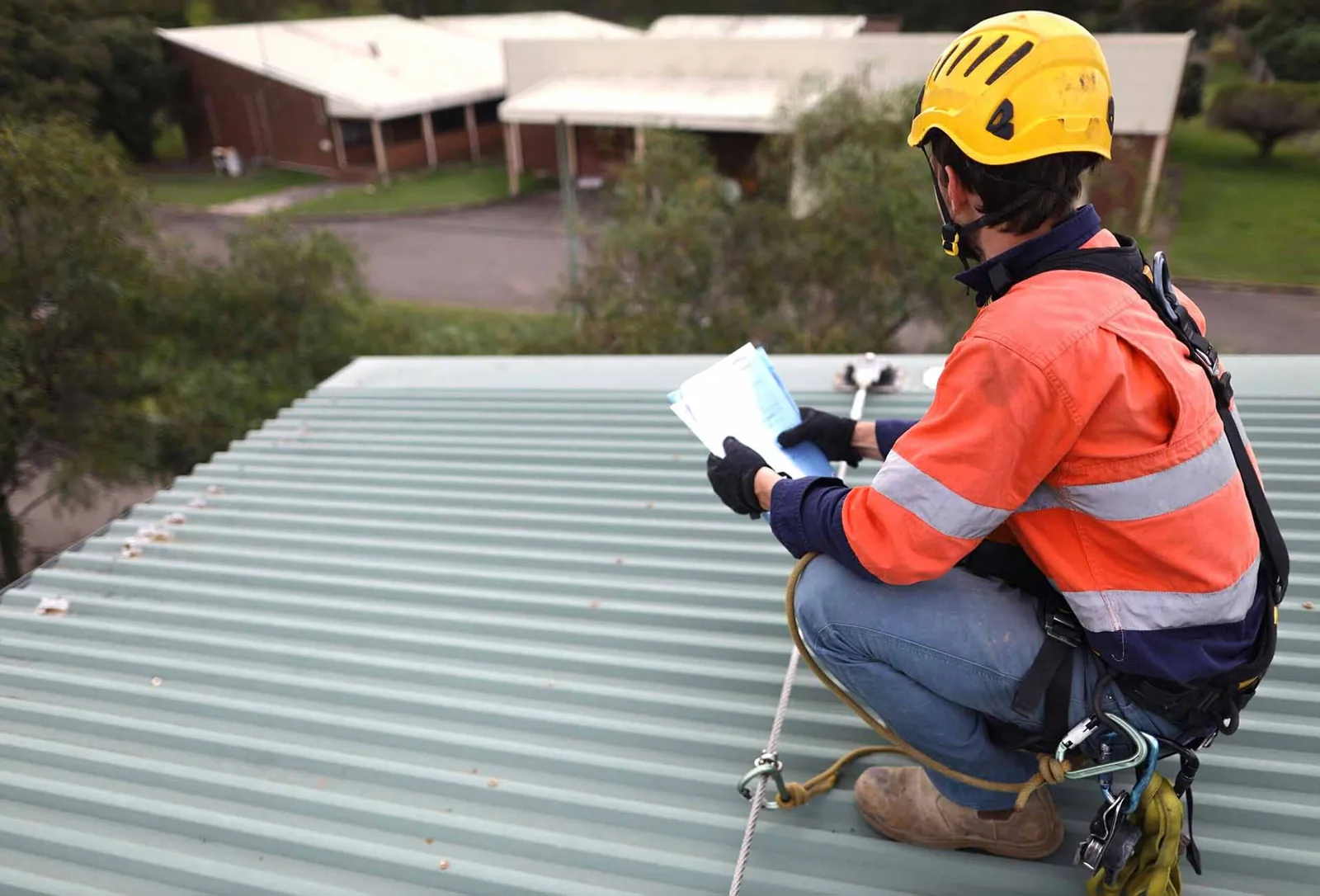
The site contact identifies active water entry, affected rooms, sensitive equipment, and any tenant routes that must stay open. We coordinate roof access and interior protection before opening the work area. A drain, seam, or perimeter may be the source, while water can travel along the deck before appearing inside. The crew traces the route and photographs the opening before placing temporary protection.
A safe dry-in is the first completed milestone. We set an end-of-shift edge, document temporary materials, and identify any area that still needs observation. If rain continues or the surface cannot accept a permanent tie-in, we return in a suitable window. For a night or holiday leak, our emergency roof response coordinates initial access and stabilization around the building’s operations.
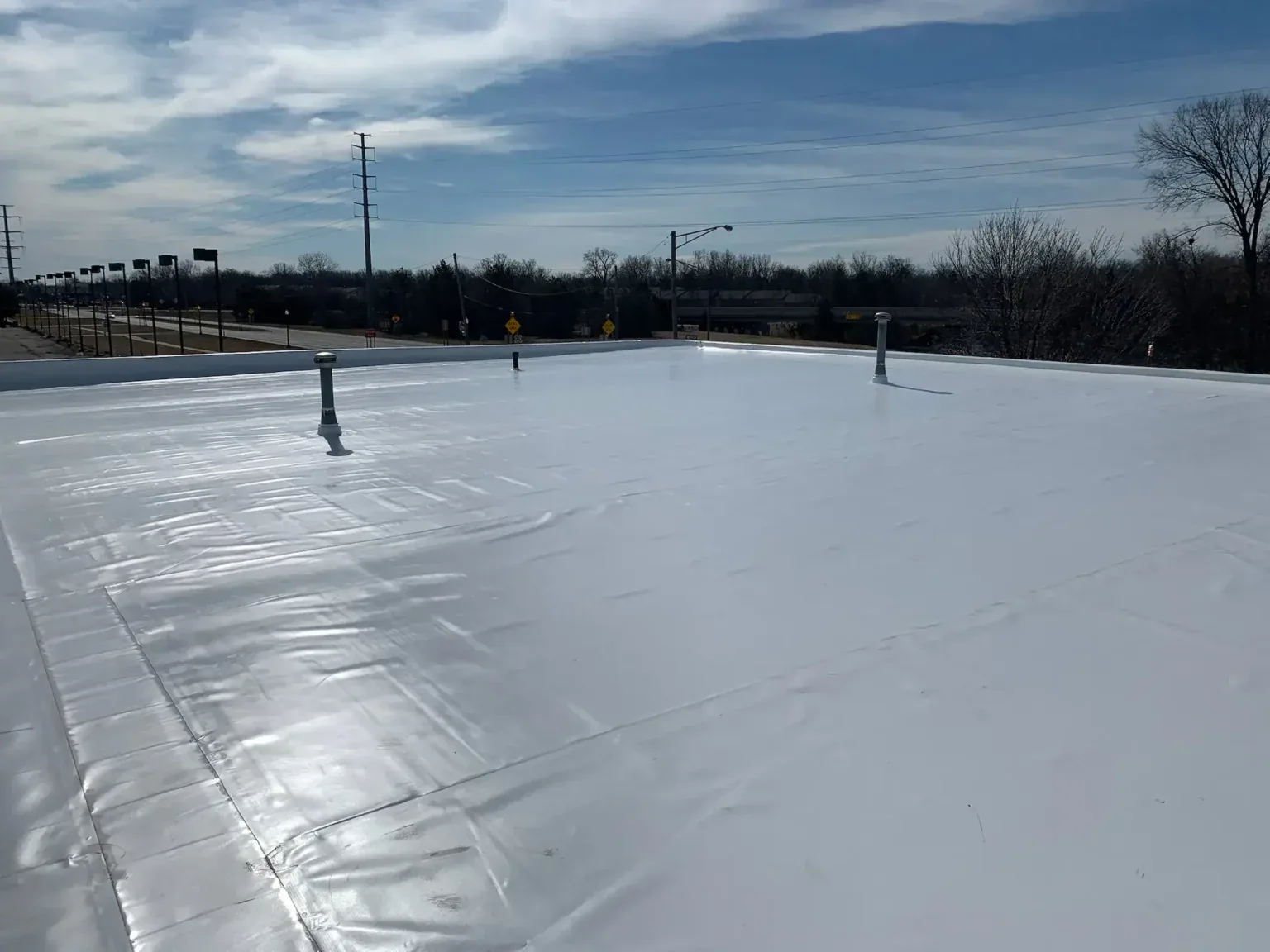
Share the affected roof area, active water entry, and building access rules. We will protect the space, document the condition, and outline permanent repair options.
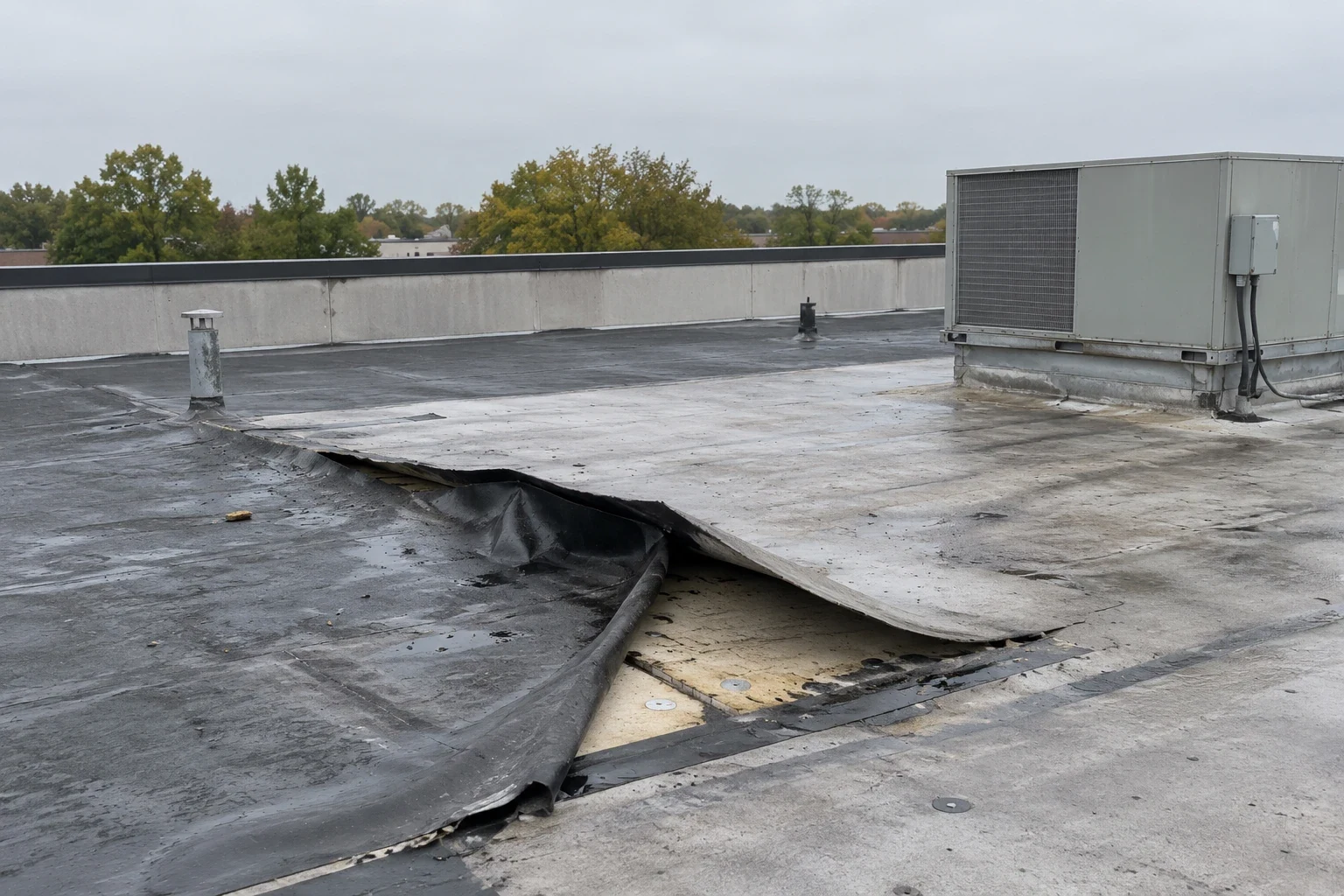
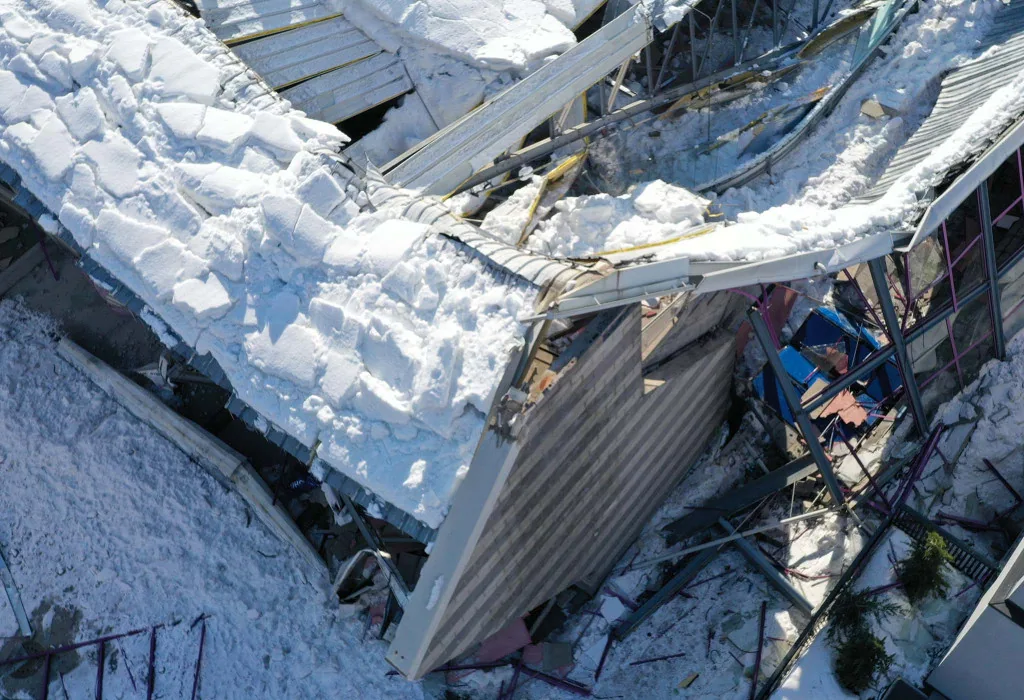
We map lifted edges, punctures, torn membrane, broken flashing, displaced equipment covers, and blocked drainage. Photographs show the condition and its location by roof zone. If the owner has prior repair records, we compare them with the current surface to distinguish a fresh opening from older wear. That distinction helps the repair scope stay tied to the storm event without treating every roof defect as new.
At each location, we note whether a seam is open, an edge is lifted, material is missing, or water has only marked the surface. Those categories shape the work sequence. An exposed insulation edge needs a different temporary cover than a loose metal cap. The owner sees a photo beside the repair action, with roof locations translated into practical zone names.
Jersey City’s commercial areas include the Route 440/Culver area and Central Avenue, with properties serving different uses and access needs. We do not infer damage from a corridor name. The crew checks each roof surface and records what is visible. A wind-damage assessment can focus on edge uplift and metal, while water entry at a drain or curb may require a different repair detail.
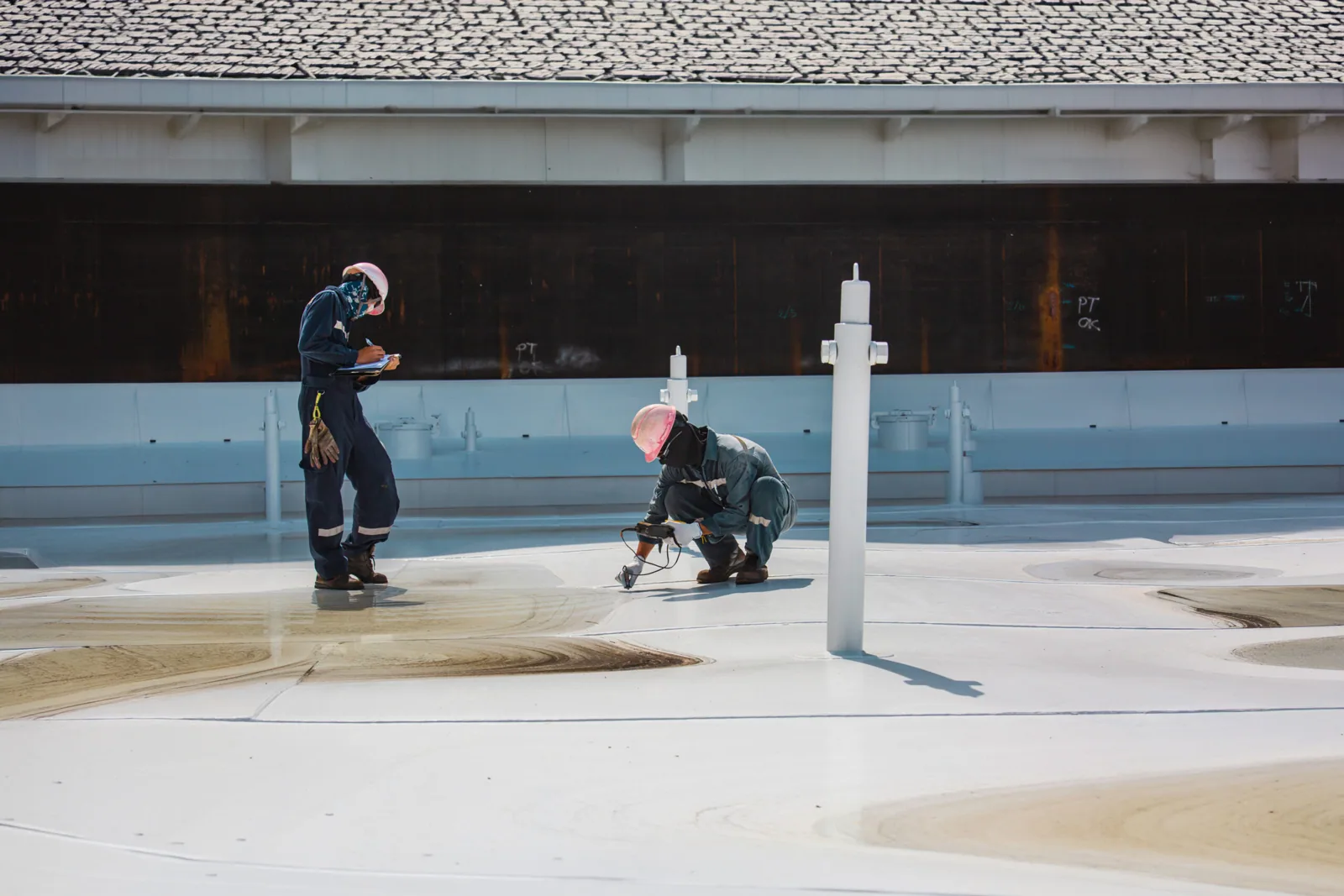
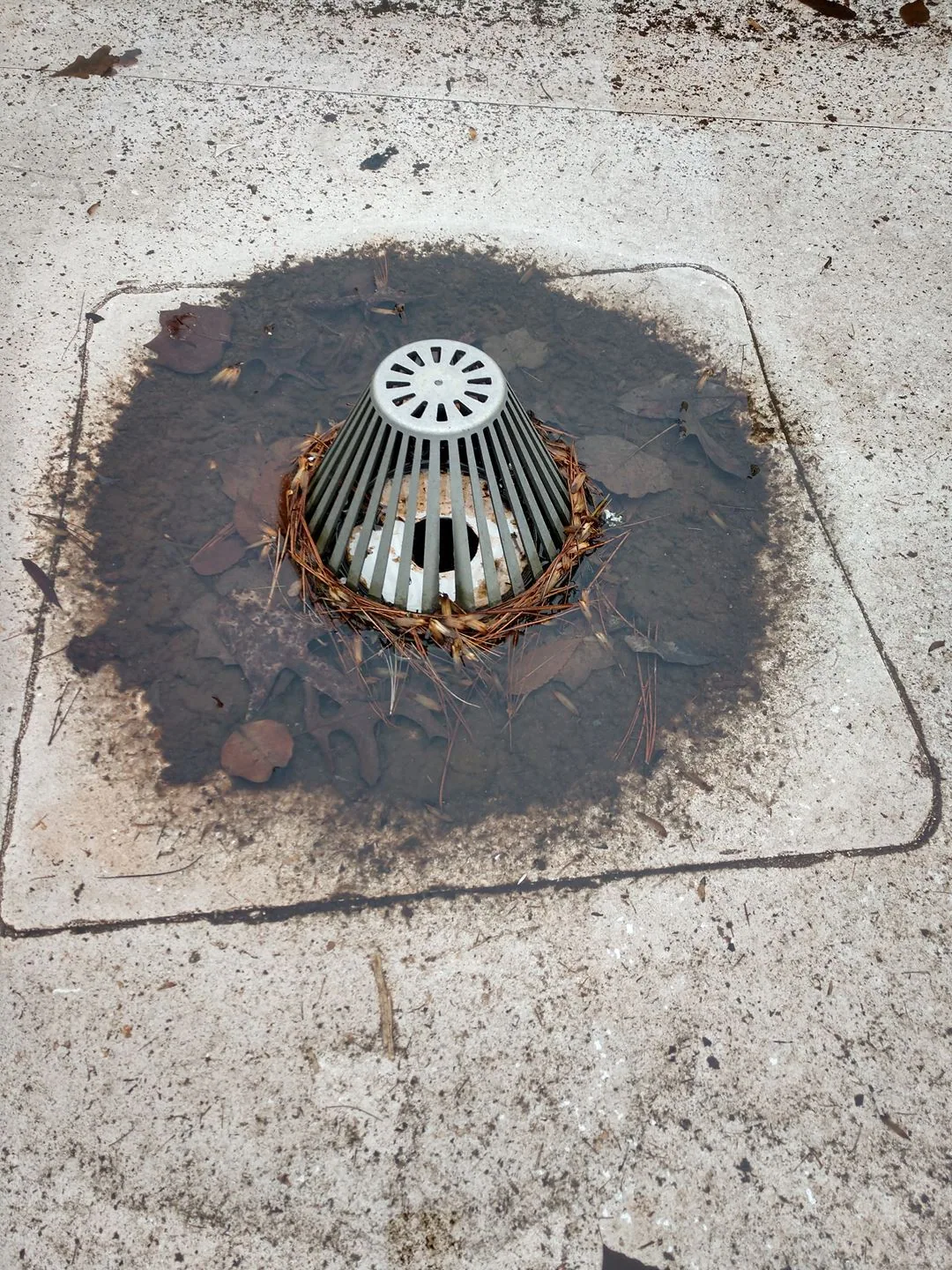
Stormwater can expose a weak outlet detail or leave debris at a low point. We inspect drain strainers, bowls, overflow routes, scuppers, crickets, and membrane transitions around the discharge. A clogged strainer, split flashing, or open lap requires a distinct correction. The report also notes whether standing water was observed during the visit or inferred from a stain after the roof dried.
Jersey City’s combined sewer system carries stormwater loading concerns, so outlet flow belongs in the recovery plan. The roof crew can correct membrane flashing or clear debris within the approved scope. Below-grade piping and municipal drainage are separate systems. A drain and scupper repair can be coordinated with the storm correction when the outlet detail is part of the failure path.
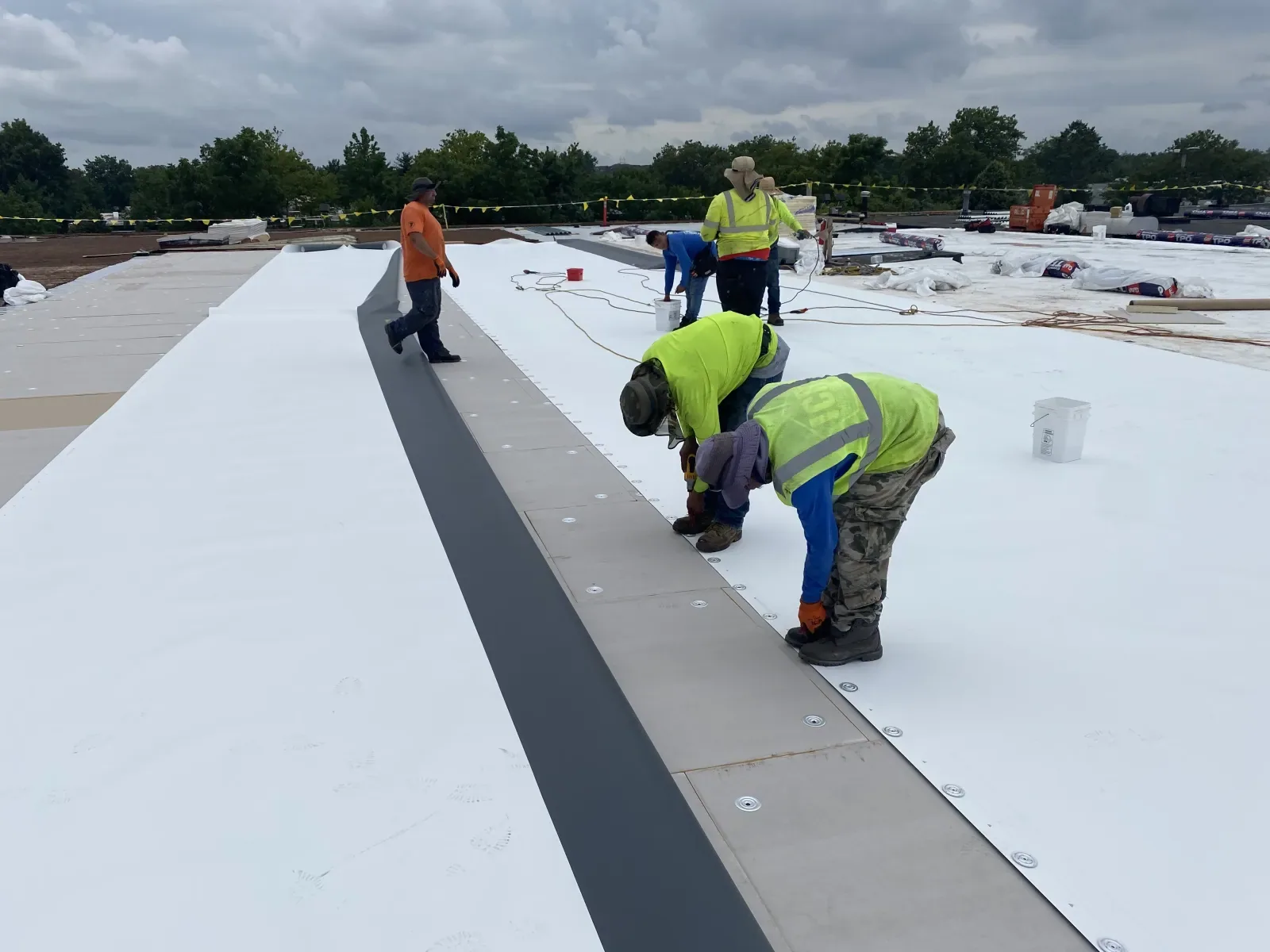
A local tear or open lap may take a compatible patch if surrounding material is sound and dry. A larger wet area, displaced insulation, or repeated perimeter failure can require removal or a broader roof scope. We show the owner where the damage stops, what material must be opened, and what can remain. The recommendation distinguishes confirmed findings from a concealed condition that still needs a test.
Journal Square and Greenville are separate Jersey City districts, but storm damage is assessed at the individual building. We inspect the roof zones, transitions, and equipment rather than applying a neighborhood-wide assumption. If the membrane is damaged across several sections, a replacement plan can compare repair, recover, and tear-off against the documented storm condition.
We photograph visible damage, mark locations, note inspection dates, and describe the repair work required to restore the roof. A clear record separates observed conditions from the estimated cost of approved work. The property owner submits documentation through its chosen process; an insurer decides coverage and payment. We can keep the repair scope and supporting images together for the claim file.
Claim records are easier to review when photographs show both a close detail and the surrounding roof context. We label the image with the capture date, roof zone, and the work proposed at that location. The file can include invoices and completed work records once the repair is finished. It does not replace the owner’s policy documents or claim submission process.
Storm events may also leave interior damage or mechanical issues outside the roofing contract. We note those items for the owner and keep the roof scope focused on membrane, flashing, drainage, and edge details. A claim documentation service can organize photographs and work records. For a distinct asset in Bayonne, we create a separate damage map instead of transferring Jersey City findings.
Closeout records the temporary dry-in, permanent repair, materials, photographs, and any area still under observation. The site contact receives a return-check date or weather trigger when follow-up is needed. We compare the repaired seam, edge, or outlet with its pre-repair photograph and note whether water movement has changed. The owner can keep the event record beside the roof maintenance log.
Jersey City’s built environment includes a mix of districts and changing commercial areas. Each repair remains tied to the roof zone and the property’s operating schedule. A later maintenance inspection can check nearby details after the immediate damage is closed. If another storm affects a different section, we map that condition separately and note whether its access window differs.