Failed Flashing Repair in Jersey City, NJ
Repair failed roof flashing in Jersey City: wall terminations, curbs, pipe boots and parapets rebuilt with compatible materials and documented for the owner.
Repair failed roof flashing in Jersey City: wall terminations, curbs, pipe boots and parapets rebuilt with compatible materials and documented for the owner.
Most leaks on a sound membrane enter at a termination, a curb, a pipe or a corner. Flashing is where the roof surface turns up a wall or around an obstruction, and every one of those turns is a place where two materials must stay joined through heat, cold and rain. In Jersey City, NJ, coastal rain meets a dense urban form, and the walls, parapets and rooftop equipment on its buildings give water many such turns to find. We start a flashing repair by tracing the water path to the exact detail, then decide whether the fix is a re-seal, a rebuild or a replacement of the whole termination.
The first question to a facility manager is where the water appeared inside, because the interior location points toward the roof zone. The roof walk then confirms which detail failed.
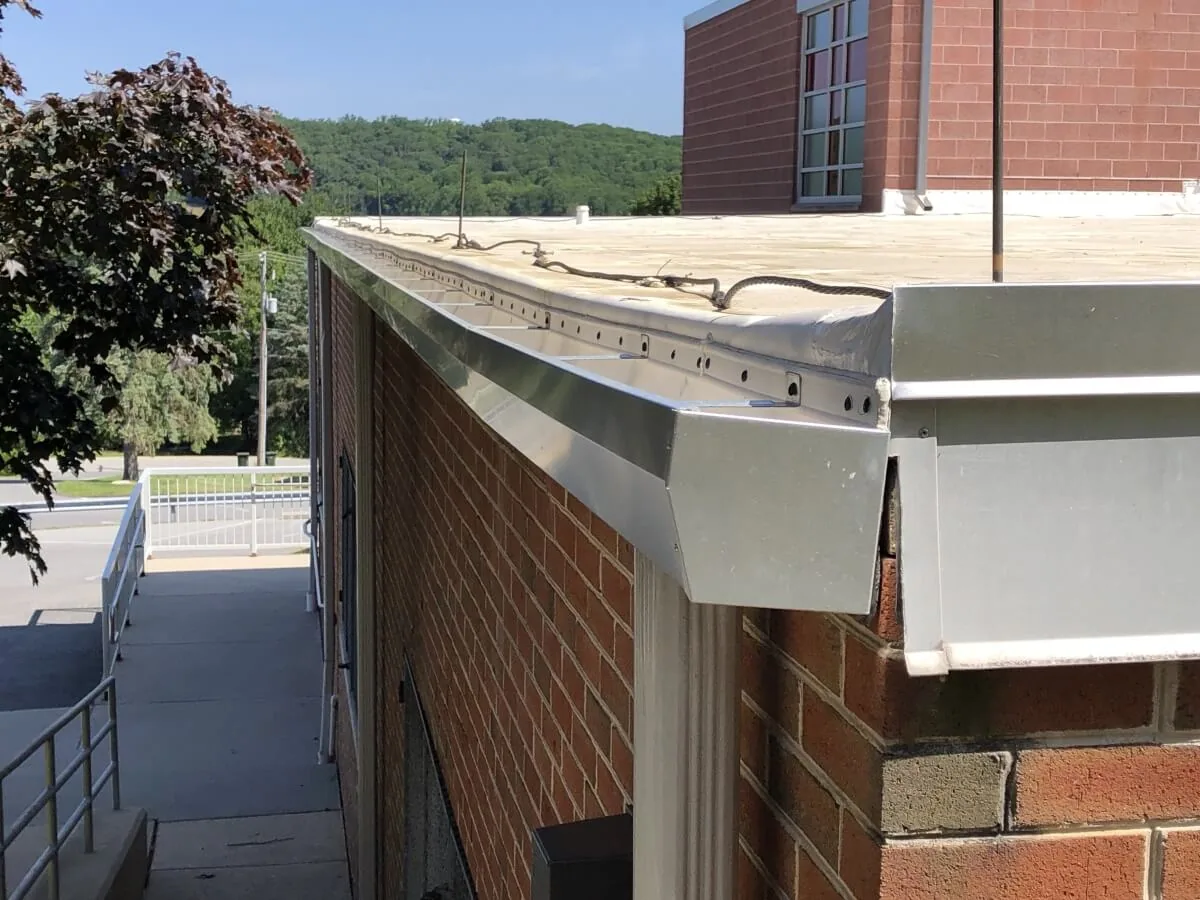
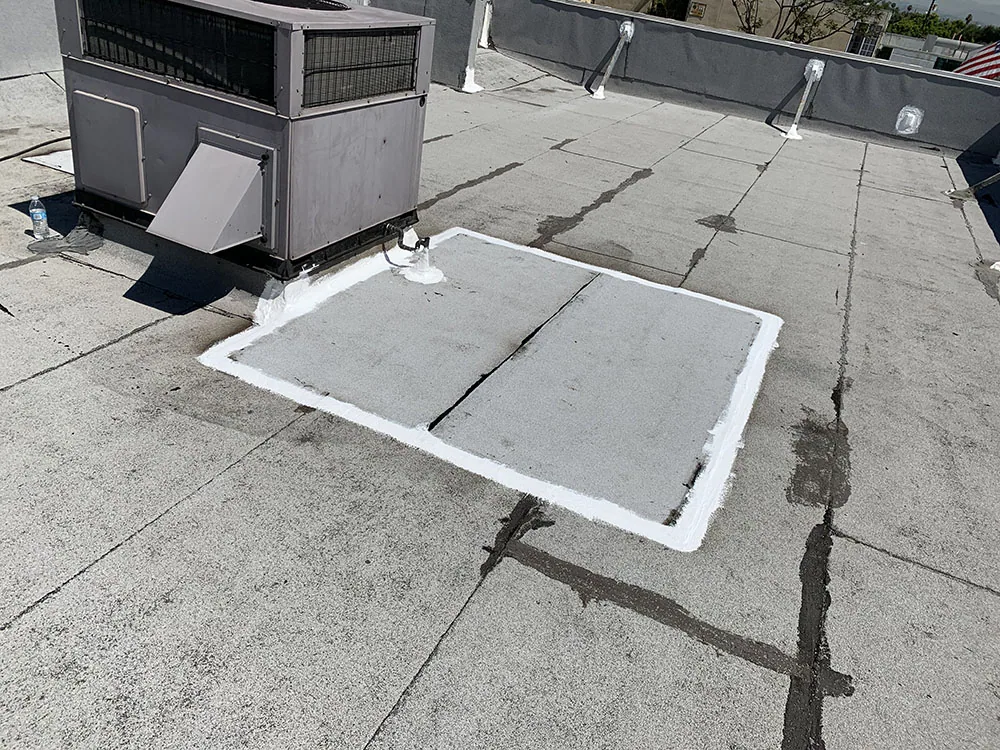
We inspect every flashing on the roof, not only the one near the stain. Wall flashings are checked for height, termination bar condition, sealant and fastener spacing. Curb flashings are checked at the corners, where membrane is folded or cut and where leaks often start. Pipe boots are checked for cracked rubber, loose clamps and failed sealant. Parapet flashings and copings are checked for open joints and loose caps.
Look at the corners first. A tight inside corner or an outside corner at a curb requires a formed or cut-and-welded piece, and a field-folded corner without reinforcement can split under thermal movement. We photograph each corner and mark failures on the roof diagram.
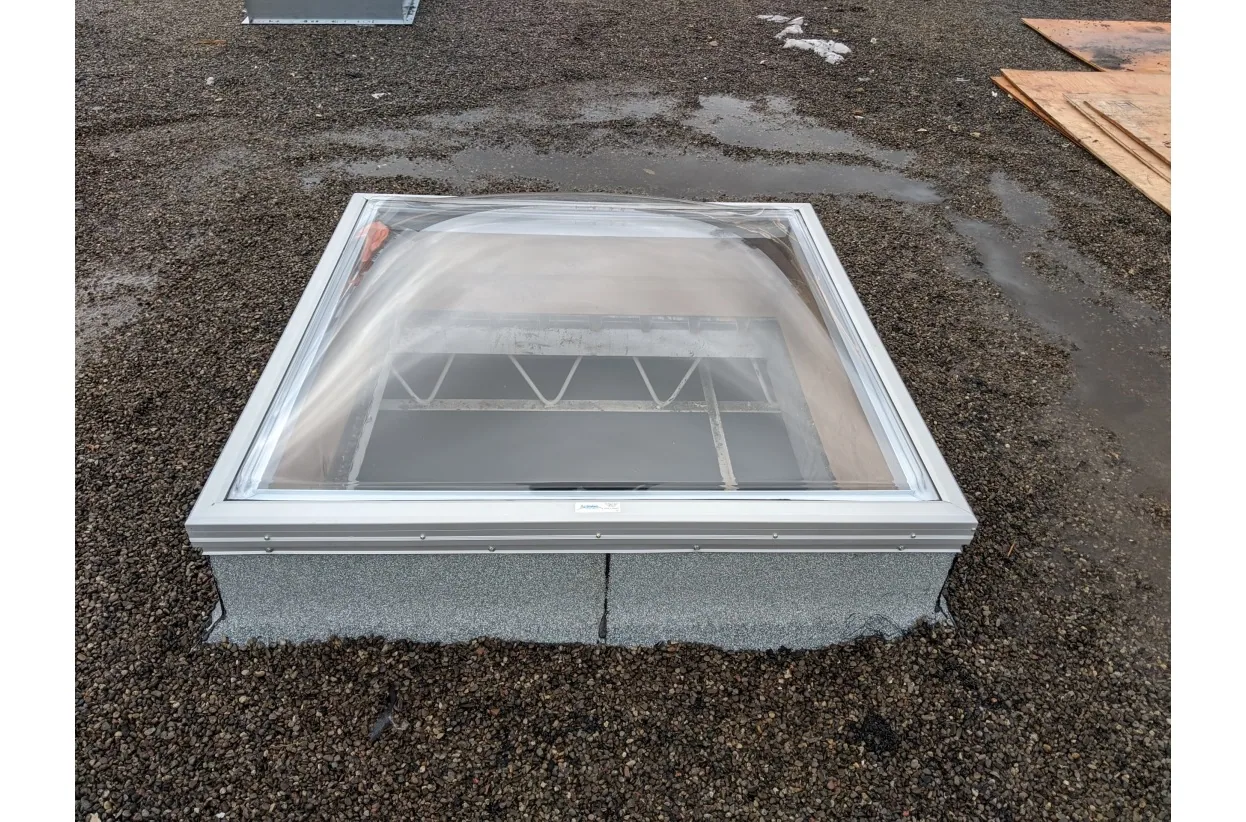
Penetrations multiply over time. Antennas, conduits, gas lines and sensors are added by other trades, and not all of them are flashed properly. A skylight and penetration flashing review lists each opening with its condition. Some have a proper boot, some have only sealant, and sealant alone does not last.
Tell us where water appeared inside and how the roof is reached. We will find the failed termination, mark it on the roof diagram and write the repair.
Failure usually comes from movement, age or a wrong material. Roofs expand and contract with temperature, and the flashing must move with them. A rigid sealant bead cracks. A membrane that was glued to a wall without a termination bar peels as the wall shifts. A metal flashing without expansion joints buckles. And mixing incompatible materials, such as a bituminous mastic on a single-ply membrane, can break down the membrane itself.
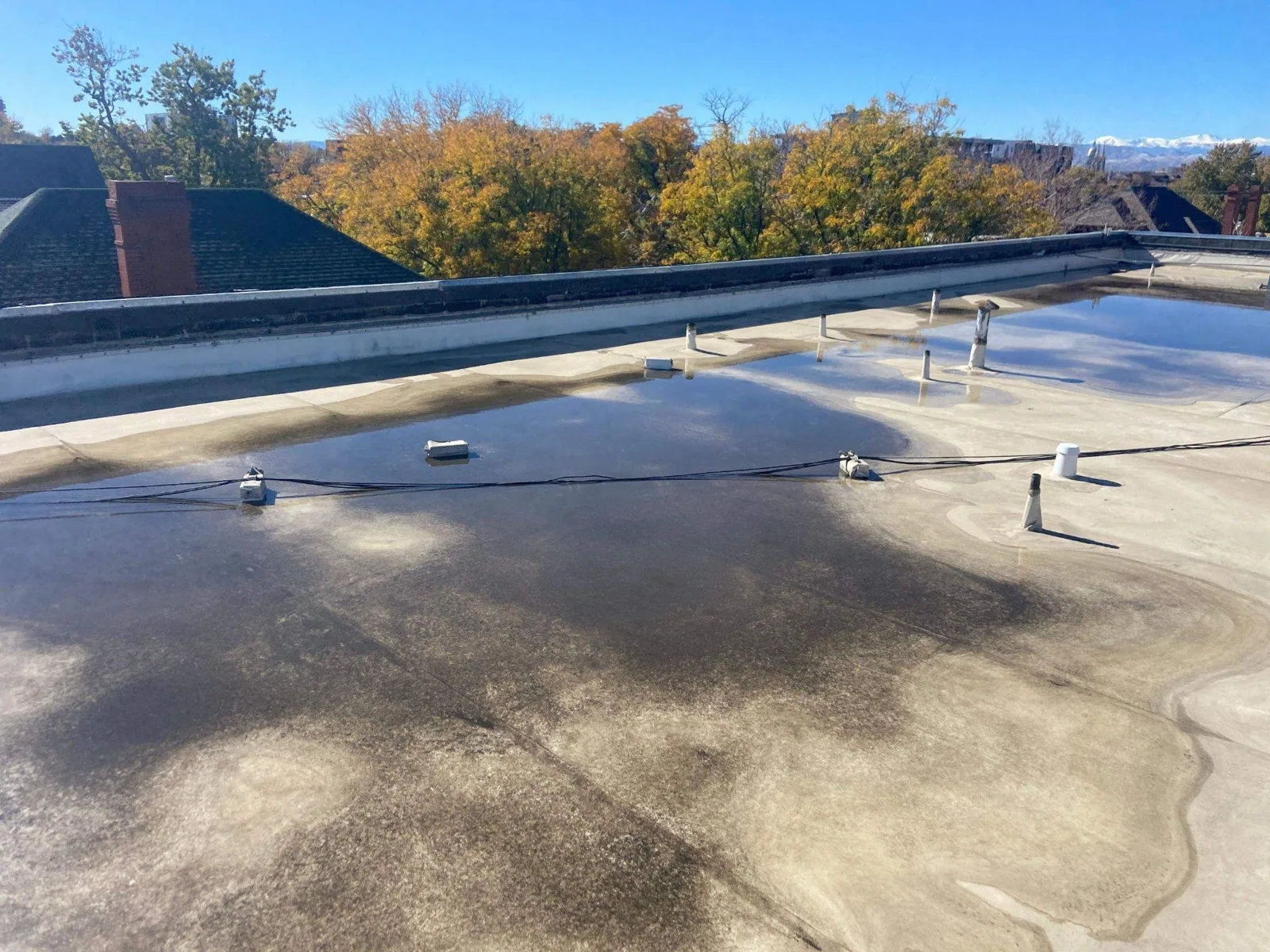
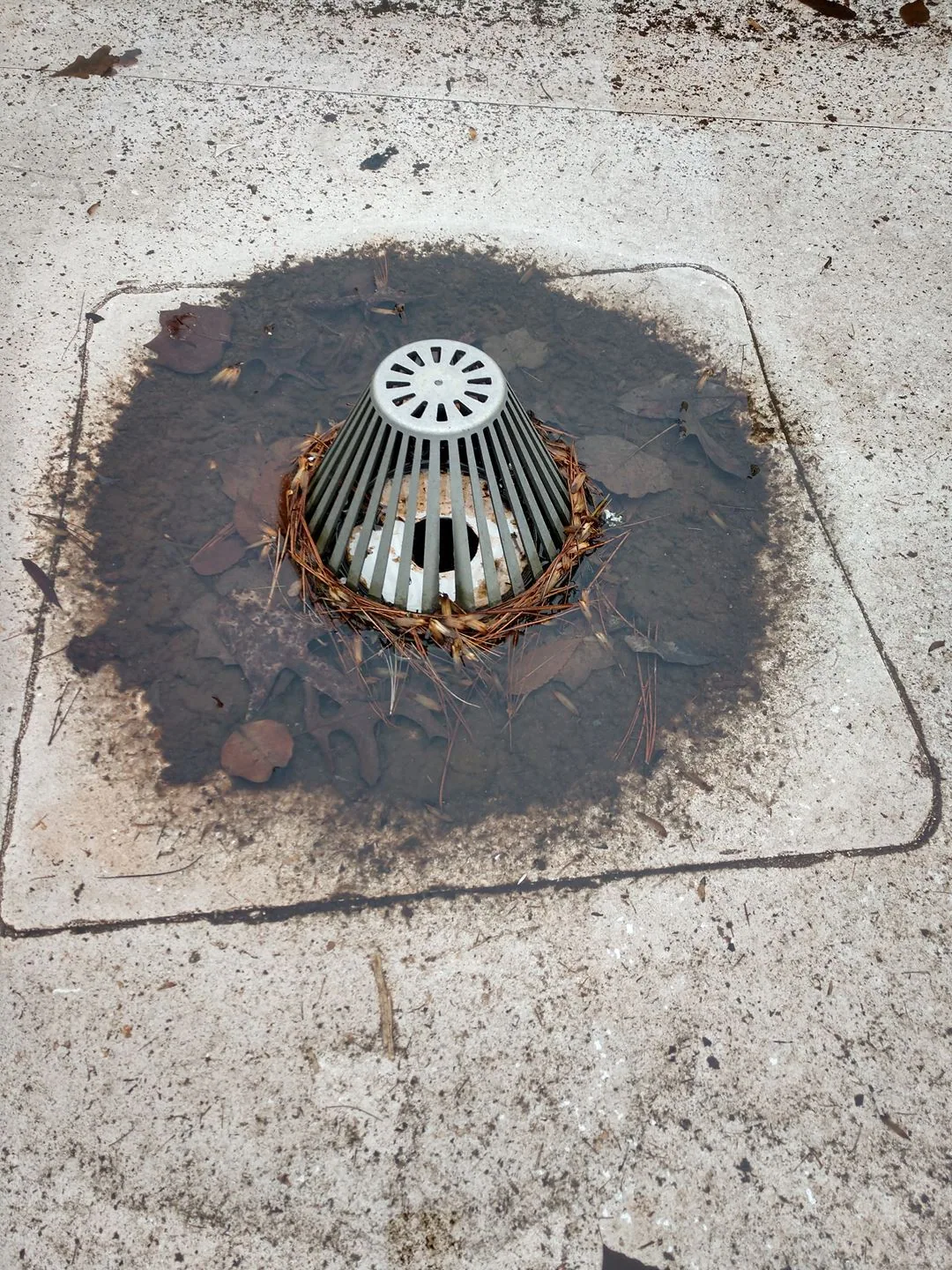
Water makes it worse. When ponding water reaches a wall base, the flashing sits under constant load. A clogged scupper or drain lets water rise against the parapet, and it finds any gap. Rooftop equipment that vibrates loosens curb flashing fasteners over time. Heat and UV degrade sealants and rubber boots, especially on dark surfaces.
Each cause calls for a different repair. If the cause is movement, the fix must allow for it with a flexible detail. If the cause is drainage, the drainage is repaired as well. If the cause is a wrong material, the compatible one replaces it.
Inspection from below helps confirm the diagnosis. Stained ceiling tile at an exterior wall, rust on a deck underside beneath a curb, or damp insulation around a pipe all point to the flashing above. We compare those signs with what we find on the roof, so a repair at one detail does not leave a second, quieter leak behind it.
A re-seal is appropriate when the flashing is intact and only the sealant has aged. We clean the surface, remove the old sealant, prime where needed and apply a compatible product. This repair is quick and cheap, and it is also temporary if the underlying detail is poor.
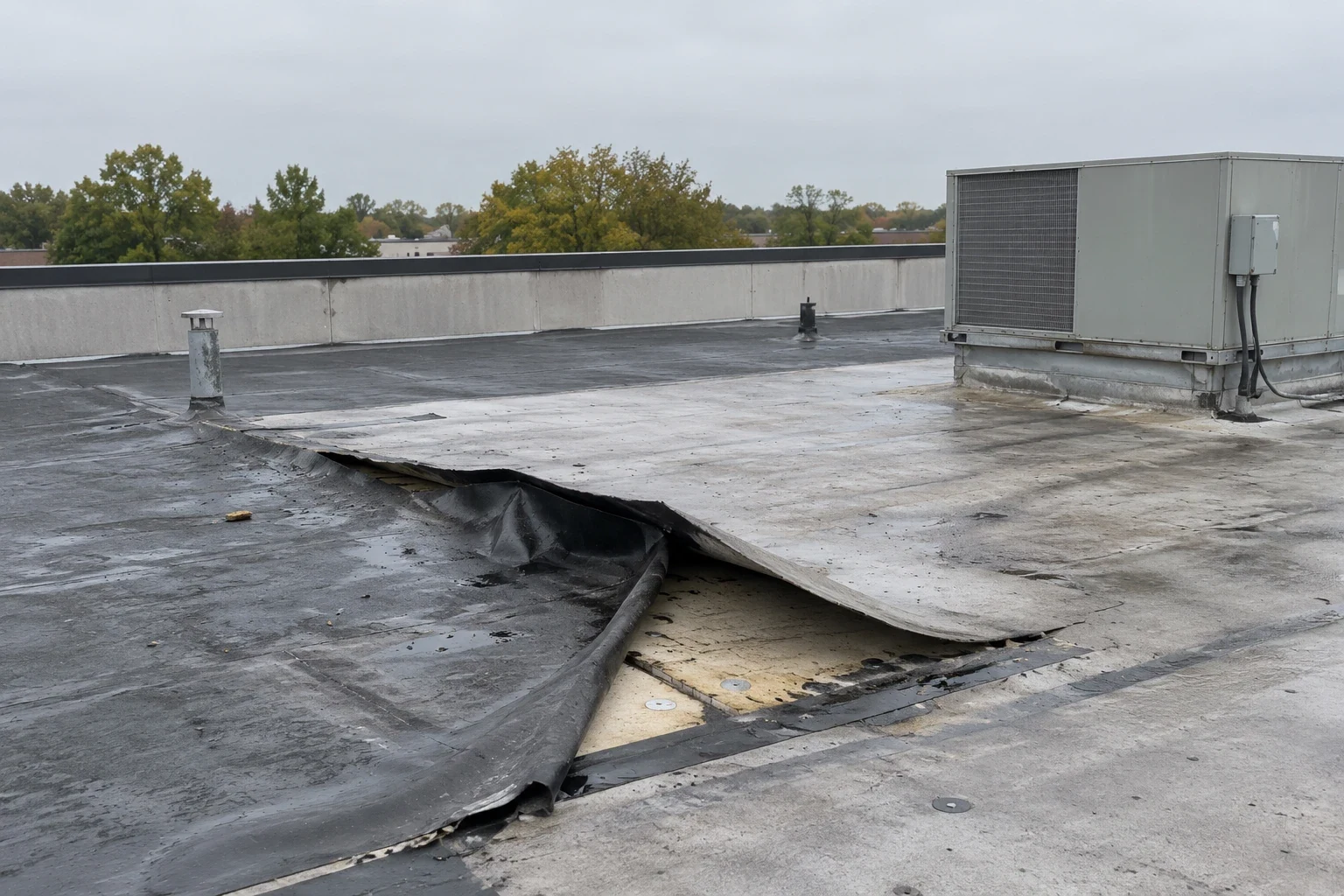
A rebuild replaces the flashing material and its attachment. We cut out the failed membrane or metal, install new base flashing with the right height and fastening, add a termination bar or counterflashing and seal the top. For single-ply roofs, new flashing is welded to the field membrane. For built-up and modified bitumen roofs, it is torched or adhered with compatible plies.
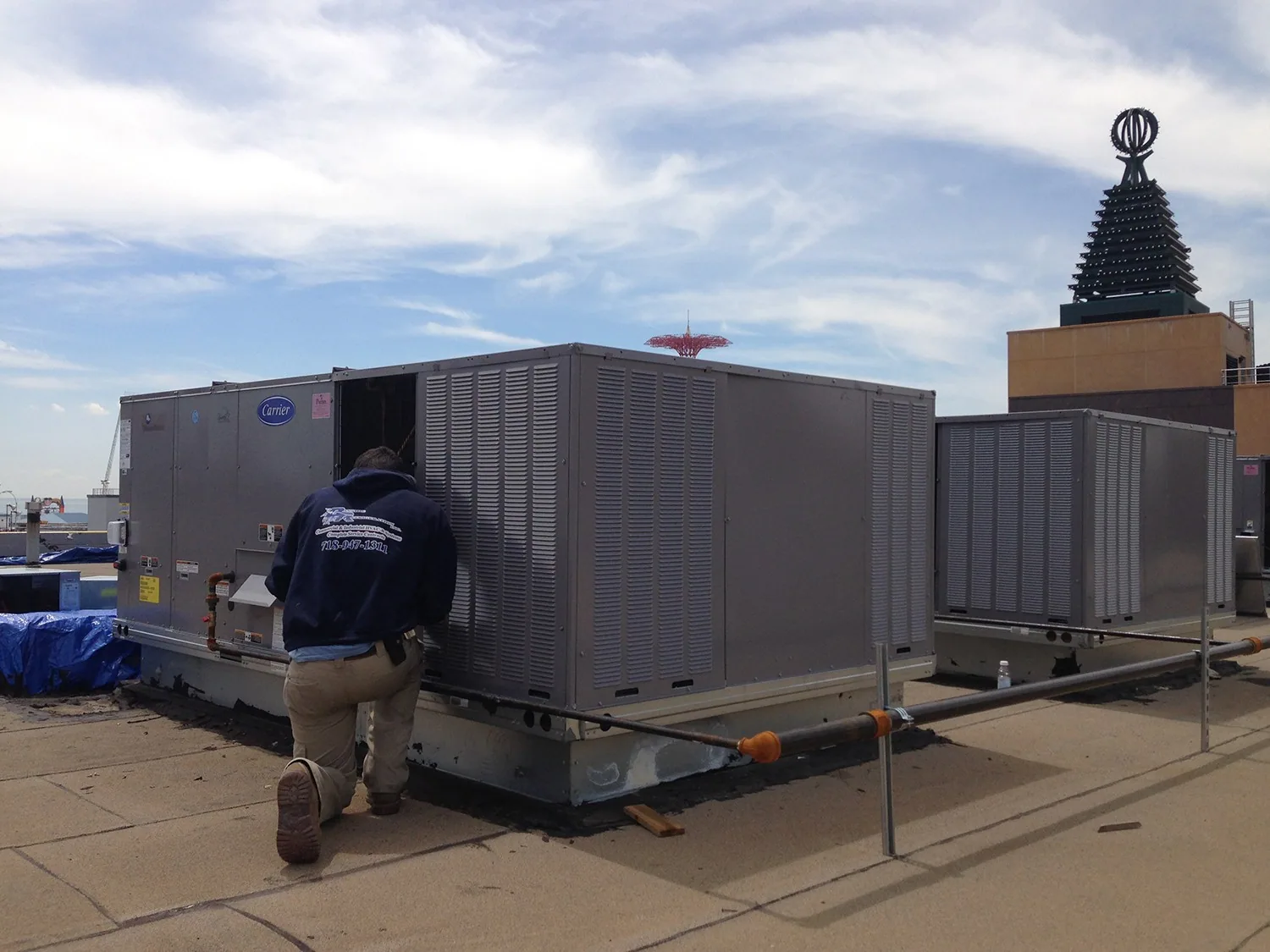
Replacement of the whole termination is needed when the wall itself is deteriorated, when the flashing height is below the required minimum, or when the surrounding membrane is too aged to bond. We say which applies and why. For parapets, the edge metal and coping often needs replacing at the same time, since a new flashing under a failed coping will fail again. Curb flashings on equipment frequently need work alongside the equipment supports themselves.
Flashing work is a tie-in job. New material has to bond to old membrane, and the bond needs dry, clean surfaces and the right temperature. We choose the repair day by the forecast and prepare enough work to close each detail in the same visit. A flashing opened in the morning is closed by evening.
On a roof with many flashings, we sequence from the high side to the low side so water that runs during the work does not enter a new opening. Temporary covers protect any detail that cannot be finished. Where tenants sit directly below, we confirm access and protect the interior before opening the work.
In Jersey City, Irene and Sandy left power outages, severe flooding, and damaged property. When a storm interrupts flashing work, temporary protection gets extra care. Compatibility of the repair material with the membrane is checked before we start, because a mismatch can undo the work in a season.
Cold-weather work needs extra thought. Adhesives and some sealants will not cure in low temperatures, and welded seams need clean, dry sheet. When the forecast does not allow a permanent flashing repair, we install a temporary one built to last through the cold spell, document it, and return when conditions improve.
The record for a flashing repair is a map: each detail located on the roof diagram, with a photograph before and after and the material used. We include the termination height and the fastener pattern for walls. The next facility manager can then see what was done and where.
We recommend a follow-up check after the first heavy rain, then at the next maintenance visit. A leak repair that traced to flashing should not return, and the follow-up confirms it. Storm damage may reopen details too, as in wind damage cases. Buildings in Hoboken and Union City follow the same mapping method, and a failed seam nearby is handled under seam failure repair.