Sika Sarnafil Roofing in Jersey City, NJ
Installation, repair and maintenance of Sika Sarnafil welded PVC roofs in Jersey City, with weld testing, exhaust exposure checks and drain details.
Installation, repair and maintenance of Sika Sarnafil welded PVC roofs in Jersey City, with weld testing, exhaust exposure checks and drain details.
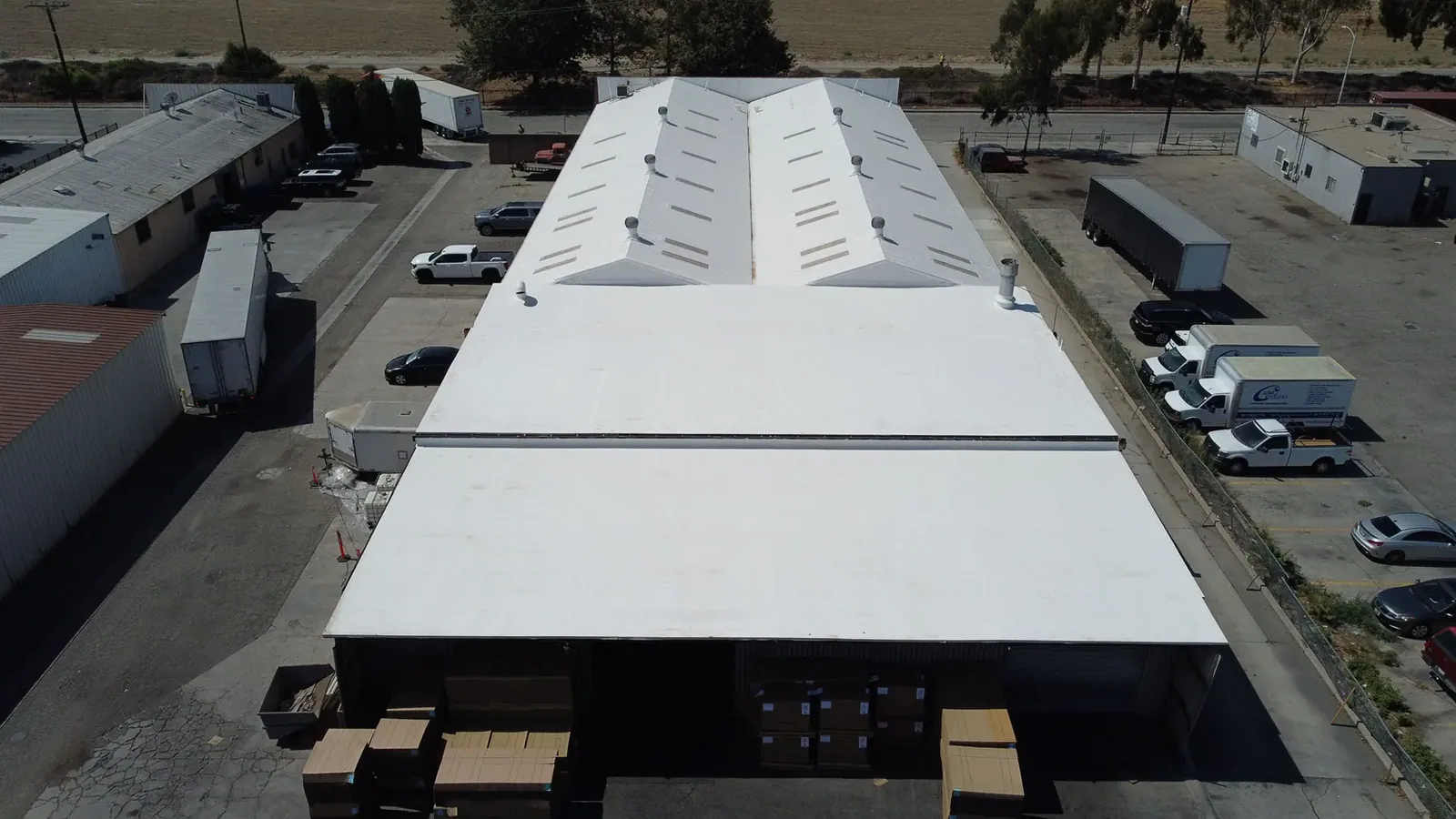
Sarnafil is a PVC membrane, and its defining trait is the weld. Seams are fused with hot air into a continuous sheet, and flashings are welded to the field with the same method, so a well-built Sarnafil roof has few mechanical joints for water to find. Sika, the maker, also supplies liquid-applied resin products used at details where a sheet will not fit. On a Jersey City, NJ building with rooftop exhaust, process vents or heavy equipment, PVC's resistance to many fats, oils and chemicals is often the reason it is on the roof in the first place.
We install, repair and maintain Sika Sarnafil systems according to the manufacturer's published details. On an existing roof, we begin with the welds and the details around equipment, because that is where this system is most likely to show trouble.
PVC sheet is reinforced with polyester or glass scrim, and plasticizers keep it flexible. Over time, plasticizers can migrate out, and the sheet can stiffen and shrink, particularly at corners and near heat sources. Seams stay watertight when the weld is clean, but contaminated surfaces, cold temperatures or poor pressure produce weak joints. A probe along the seam edge reveals them.
The PVC roof system also differs from KEE, a PVC alloy that adds a ketone ethylene ester for improved plasticizer retention. We read which one is on the roof by documents and sample, and repair accordingly. Patch material must be compatible with the base sheet. Using the wrong patch gives a bond that looks right and fails inside a season.
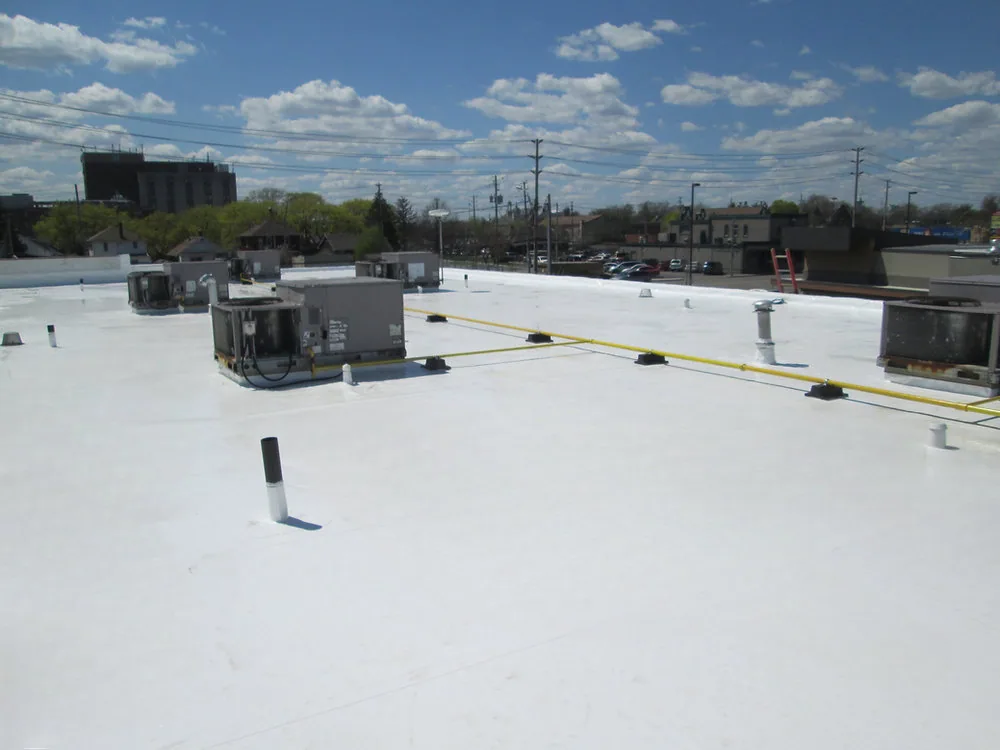
Book a walk with us to probe seams, trace exhaust deposits and check drains and flashings. A written scope for repair or replacement follows with photographs.
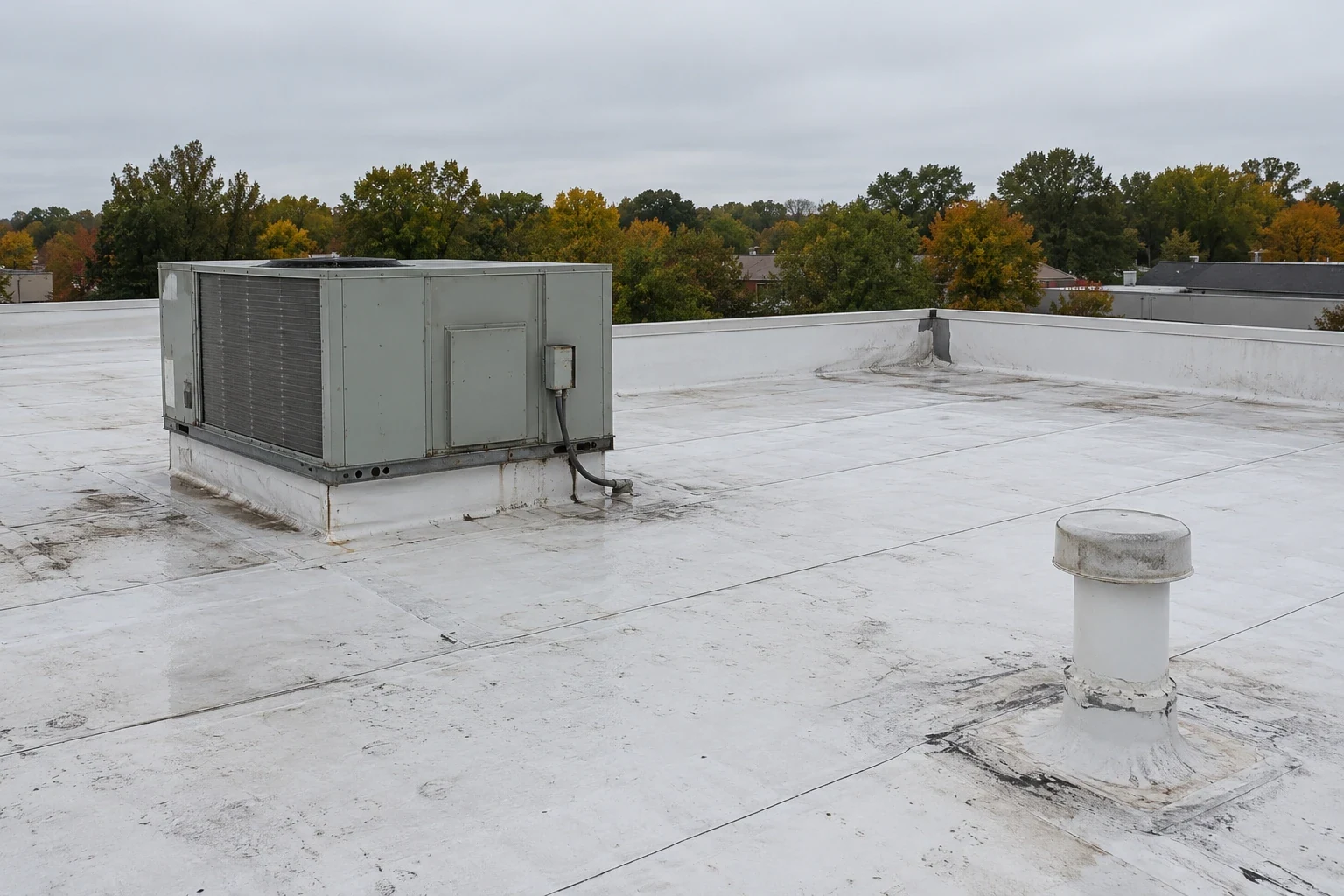
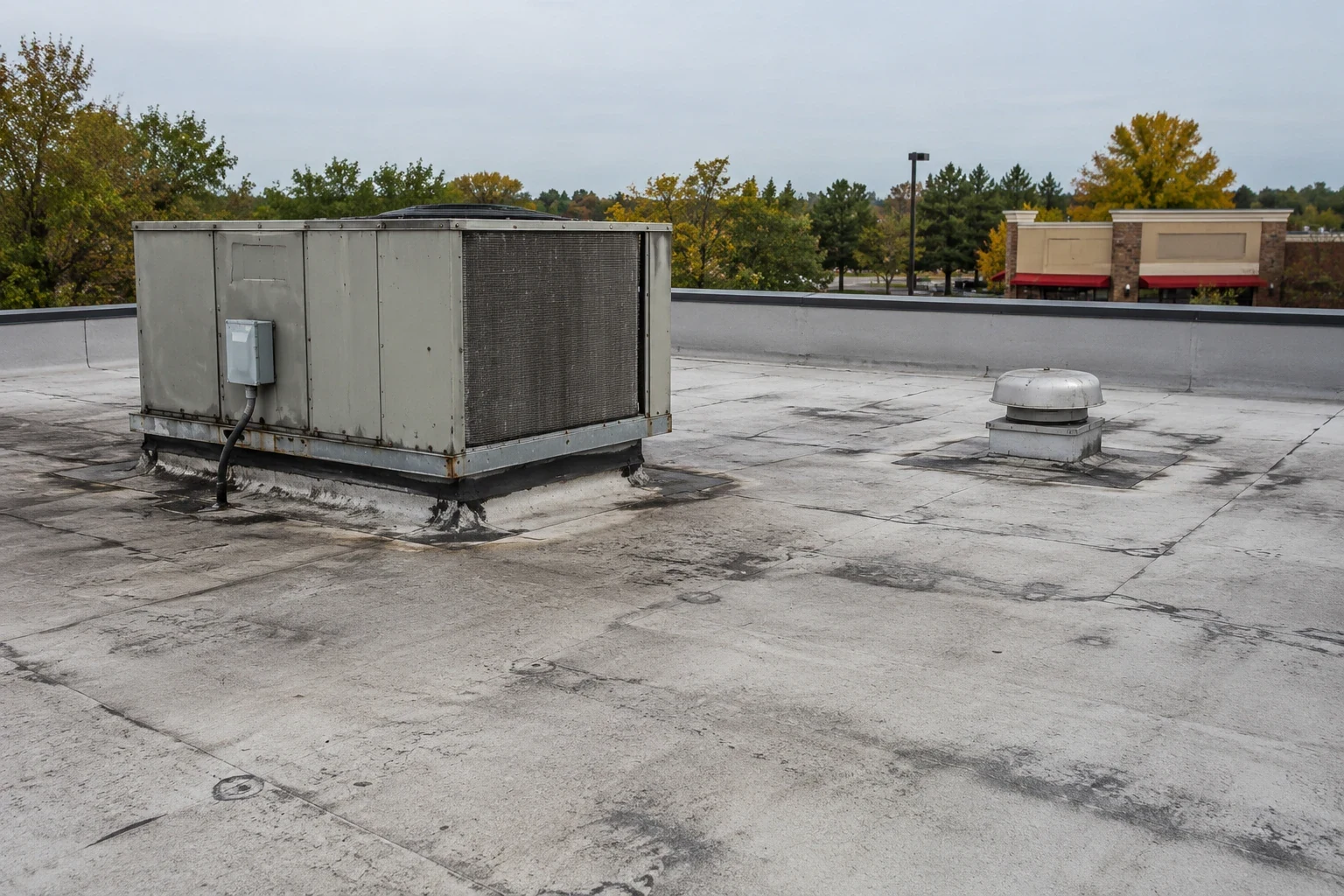
Kitchen exhaust, laboratory vents and process discharge deposit grease, solvents and condensate on a roof. PVC handles many of those exposures better than other single-ply sheets, which is why owners with kitchen or laboratory exhaust often specify it. A restaurant roof can still suffer when a grease trap overflows or an exhaust fan is poorly cleaned.
We trace deposit patterns around each fan, identify what is on the surface, and recommend cleaning, a protective pad or an exhaust modification. Where the membrane has been attacked, we cut out the damaged area and weld in a replacement. We note the exposure in the roof record so the same fan does not damage the same roof twice.
The city's 2022 health-care and social-assistance receipt figure was $1.759 billion. Roof work above a healthcare facility is governed by infection control, air-intake locations, noise limits near patient areas, and emergency access. For a hospital roof, we plan around intake vents, keep dust and fumes away from air handlers and agree on lift times that do not block ambulance routes.
Welded PVC suits that work because it needs no open flame and has low odor, though adhesives and cleaners still need planning. We coordinate with the facilities team on hot work permits, air handler shutdown if required, and a daily closeout covering every open tie-in. Before the walk, facilities staff identify patient-sensitive areas, air-intake locations, emergency routes, and access windows. We carry those boundaries into staging and daily closeout, and confirm any equipment shutdown with the facilities lead before work opens. The handoff names the next access window.
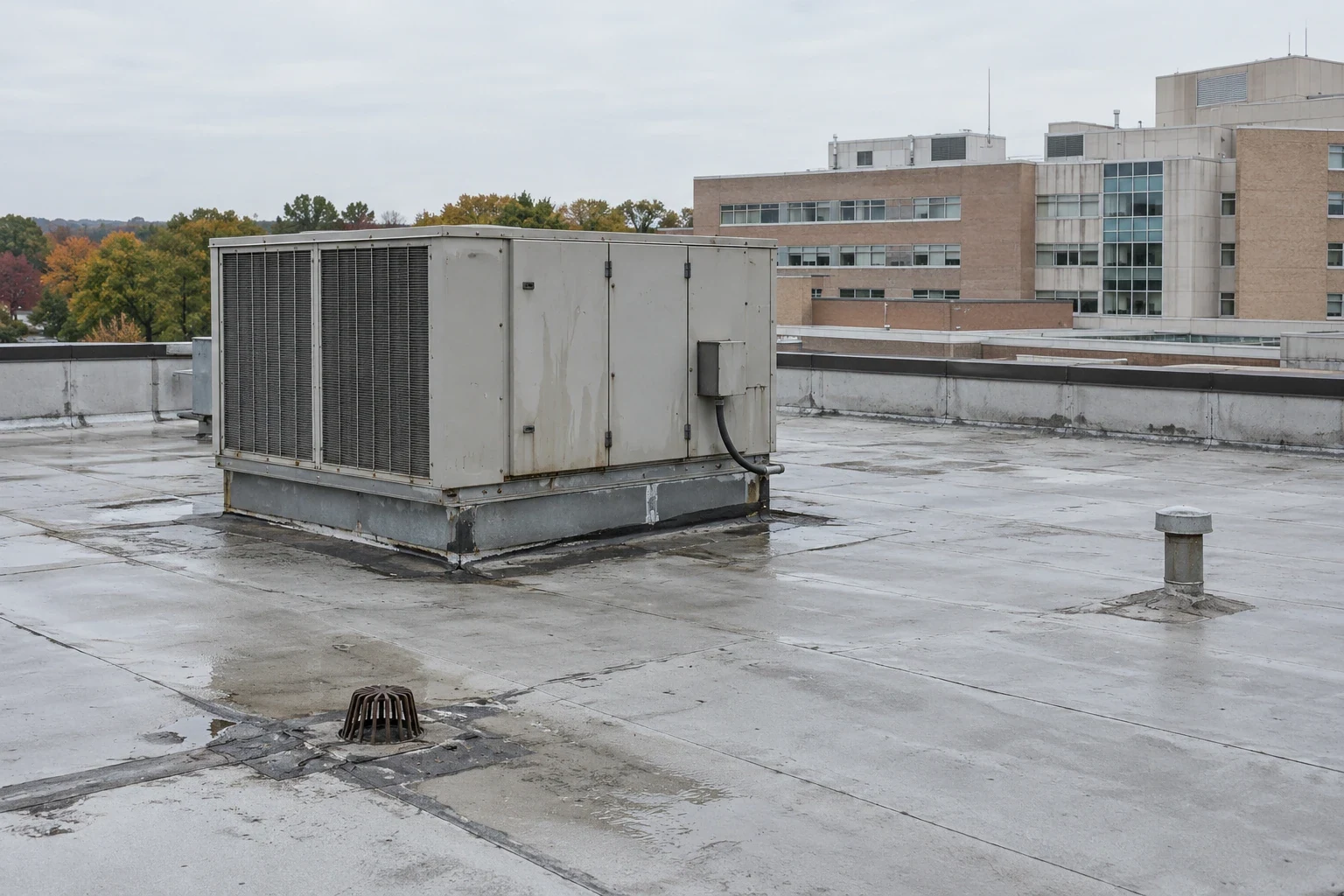
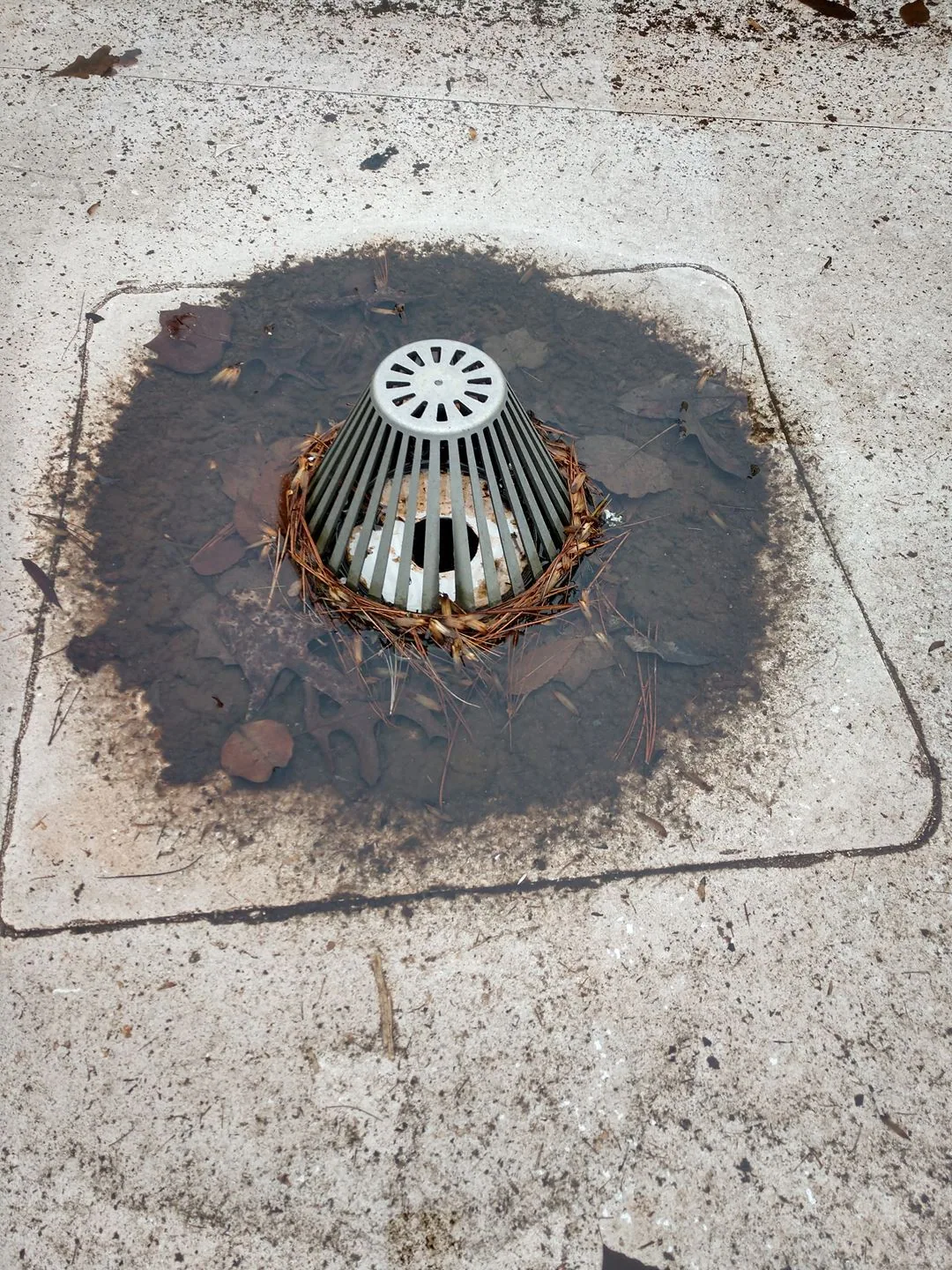
Jersey City's stormwater controls include an ordinance; localized flood exposure and runoff pressure on the combined sewer also shape water-management planning. A roof that sends water into that system needs outlets that work. PVC drain flashings are prefabricated or hand welded, and clamping rings must be set correctly to keep water on the membrane side of the joint.
In Jersey City, the Tonnele Avenue Light Industrial area, Chapel Avenue Industrial Park, and Greenville Industrial are named planning places. At each property, we trace the actual water path before pricing work and write the findings against the roof zone, so a later visit can compare the same spot.
We check each bowl, strainer and flashing, then look at sump shape and slope toward the outlet. When ponding appears, the cause may be deck movement, a high drain or sagging insulation. Fixes include tapered insulation, drain resetting or added outlets, and they are better made before the next storm than after it. After rain, we check the same bowls and laps again and compare the standing water with the earlier photographs, which shows whether a correction changed the water path.
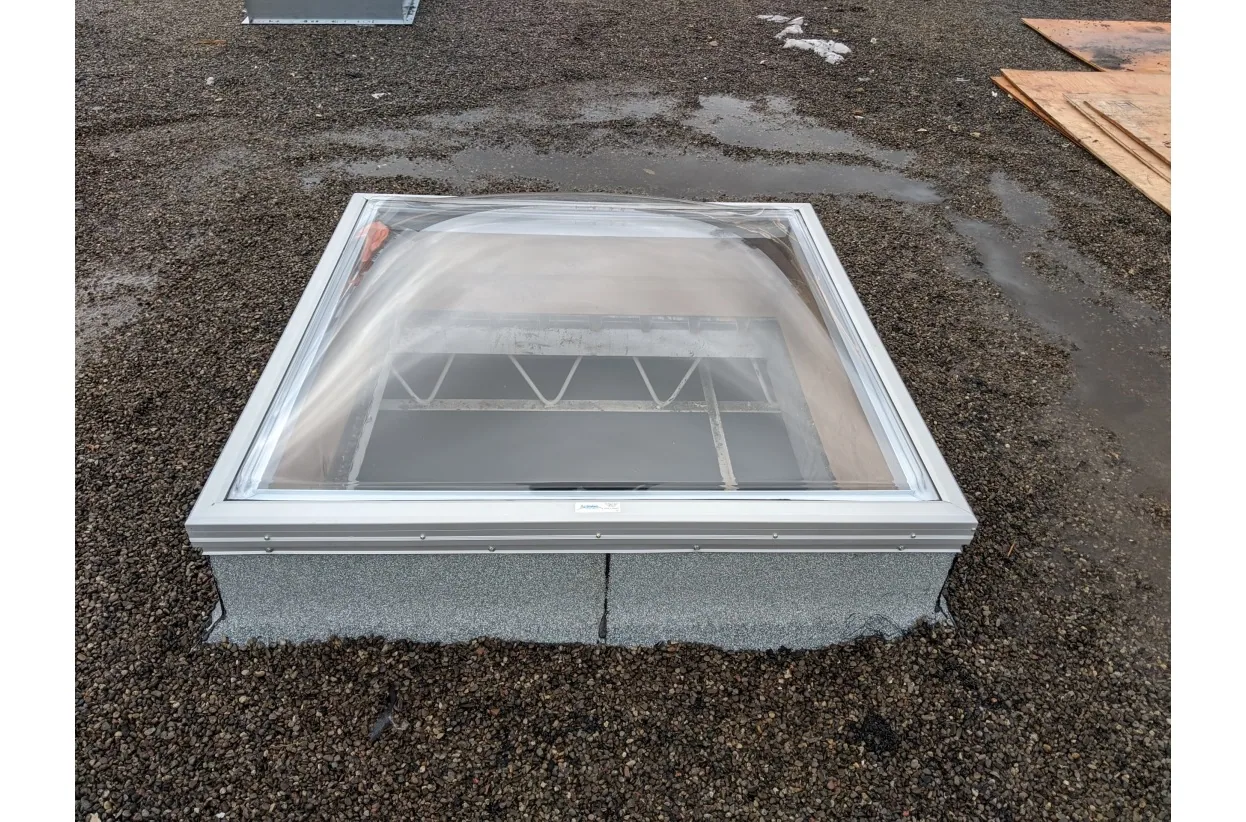
Roofs with many penetrations have many places to fail. Pipe boots, curbs, conduit supports and skylight kerbs each need a welded flashing or a sealed detail that fits the shape. Skylight and penetration flashing is among the most common service calls on single-ply roofs because geometry makes it hard to weld cleanly.
We inspect each flashing for gaps, open laps, cracked sealant and missing termination bars. Where a standard prefabricated boot will not fit, a field-fabricated flashing from membrane or a liquid-applied resin finishes the detail. We document the work with photographs so future inspections can compare condition at each penetration.
Equipment changes matter here. Each time a tenant or service company adds a unit, a conduit or an antenna mount, the membrane gets another opening. We ask for notice before rooftop work, flash every new penetration with a detail that suits PVC, and add it to the log, so the roof does not collect undocumented holes over the years.
Owners comparing Sarnafil with Soprema, the factory-fabricated PVC panels from Duro-Last or other lines should look at seam method, flashing approach, thickness and maintenance needs, not just the label. A welded PVC roof asks for periodic seam checks and cleaning, while a layered bitumen roof asks for surface and flashing care.
For an owner of a building in Newark or in Jersey City, we write the options as a table of conditions and costs: what the roof sees, what each system handles and what the maintenance burden is. The owner selects the system, and we install it and record the welds, the flashing details and the product used at each penetration, so the next inspection starts from a known baseline.