Versico Roofing in Jersey City, NJ
Installation, repair and maintenance of Versico TPO, EPDM and PVC roofs in Jersey City, with plans for tight sites, recover options and drain checks.
Installation, repair and maintenance of Versico TPO, EPDM and PVC roofs in Jersey City, with plans for tight sites, recover options and drain checks.
Small urban roofs make big demands on a membrane. Jersey City covers 14.74 square miles of land and had a 2020 population density of 19,835.1 people per square mile. On a compact commercial roof, access, shared walls, equipment clearances, and staging space need to be checked at the property. Versico sells single-ply TPO under the VersiWeld name, along with EPDM and PVC membranes, and the choice among them often turns on how the roof can be reached and worked, not on the sheet alone.
We install, repair and maintain Versico systems following the manufacturer's published details. For compact roofs, we start with access: where the lift stands, where rolls stage and how debris leaves the building.
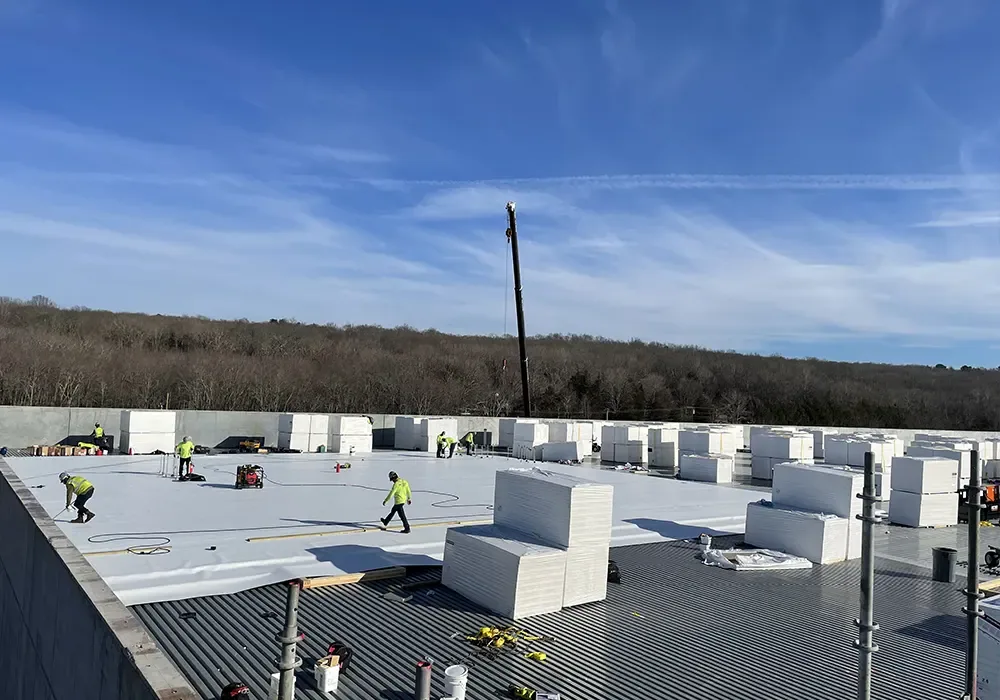
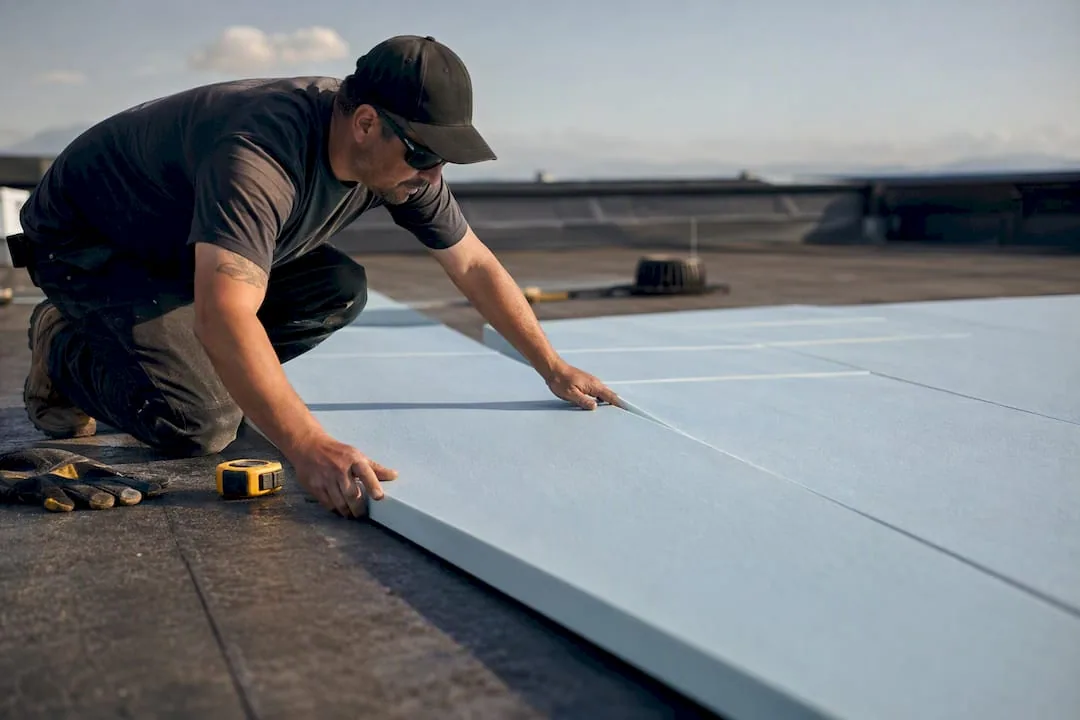
A dense block may have no yard. Materials arrive by street, rolls go up by crane, hoist or hand carry, and the staging area may be a single parking space or a lane closure that needs a permit. We plan the lift sequence first: insulation and cover board go up before membrane, tear-off debris comes down before new material arrives, and the crane reservation covers the whole delivery.
On roofs reached by stair or ladder, rolls are cut to carry sizes, and welders and adhesive are moved in small loads. This limits the speed of a job but not its quality. The work window is set against the neighbors' tolerance for noise and the street's tolerance for trucks. A residential or mixed-use building adds quiet hours and tenant notice to the schedule.
Downtown and Journal Square received investment early in Jersey City's post-2000 development. Before a roof project in either district, we verify the property's actual loading route and any required crane or street-use arrangements. We confirm those reservations before the membrane order is released, because a delivered pallet with nowhere to stand is a cost and a delay. If weather cancels a lift, the schedule has a fallback day, and tie-ins left open are sealed before the crew leaves.
Set a walk with us to map the lift route, staging area and roof zones. A written scope for repair, recover or replacement follows, with the work window spelled out.
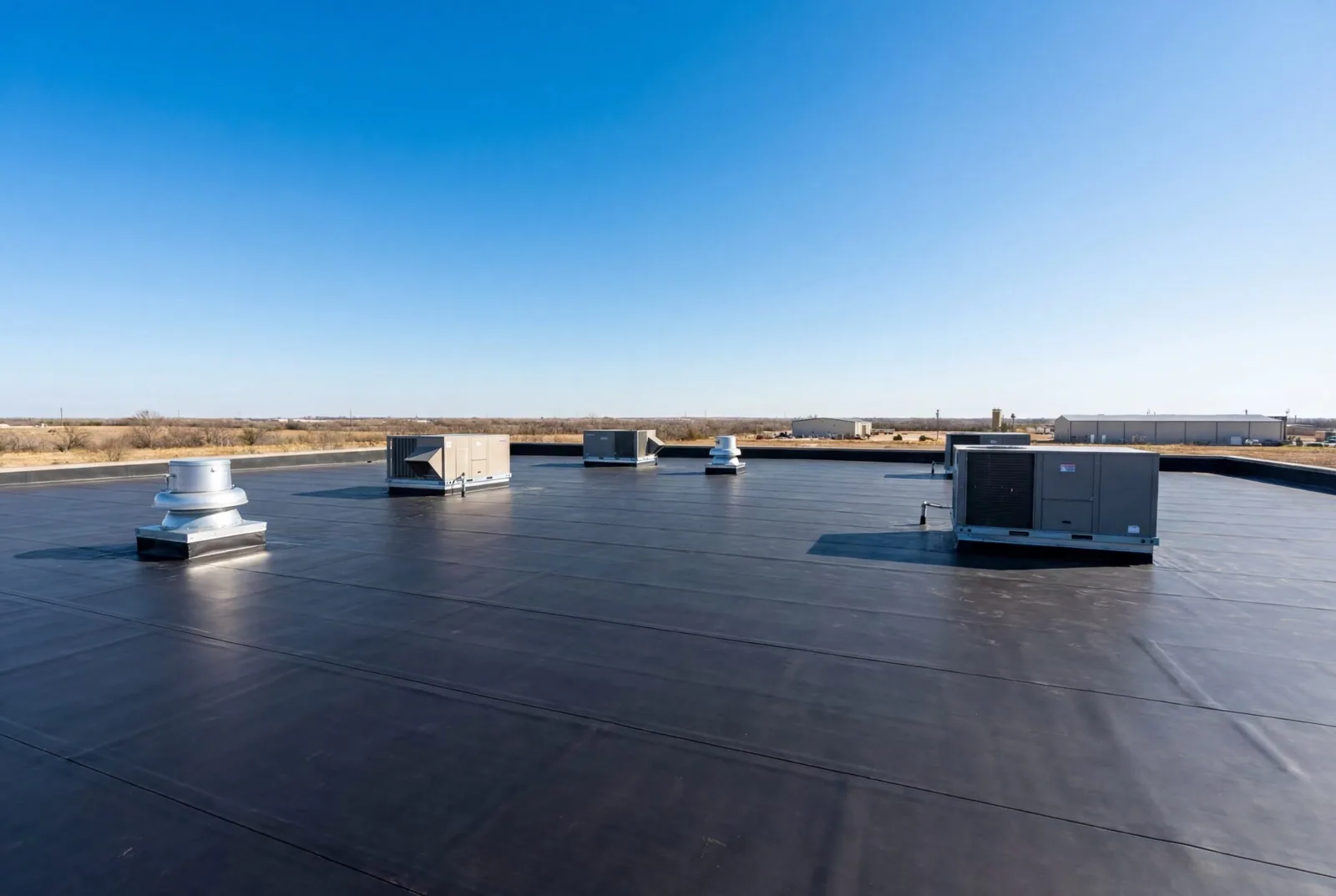
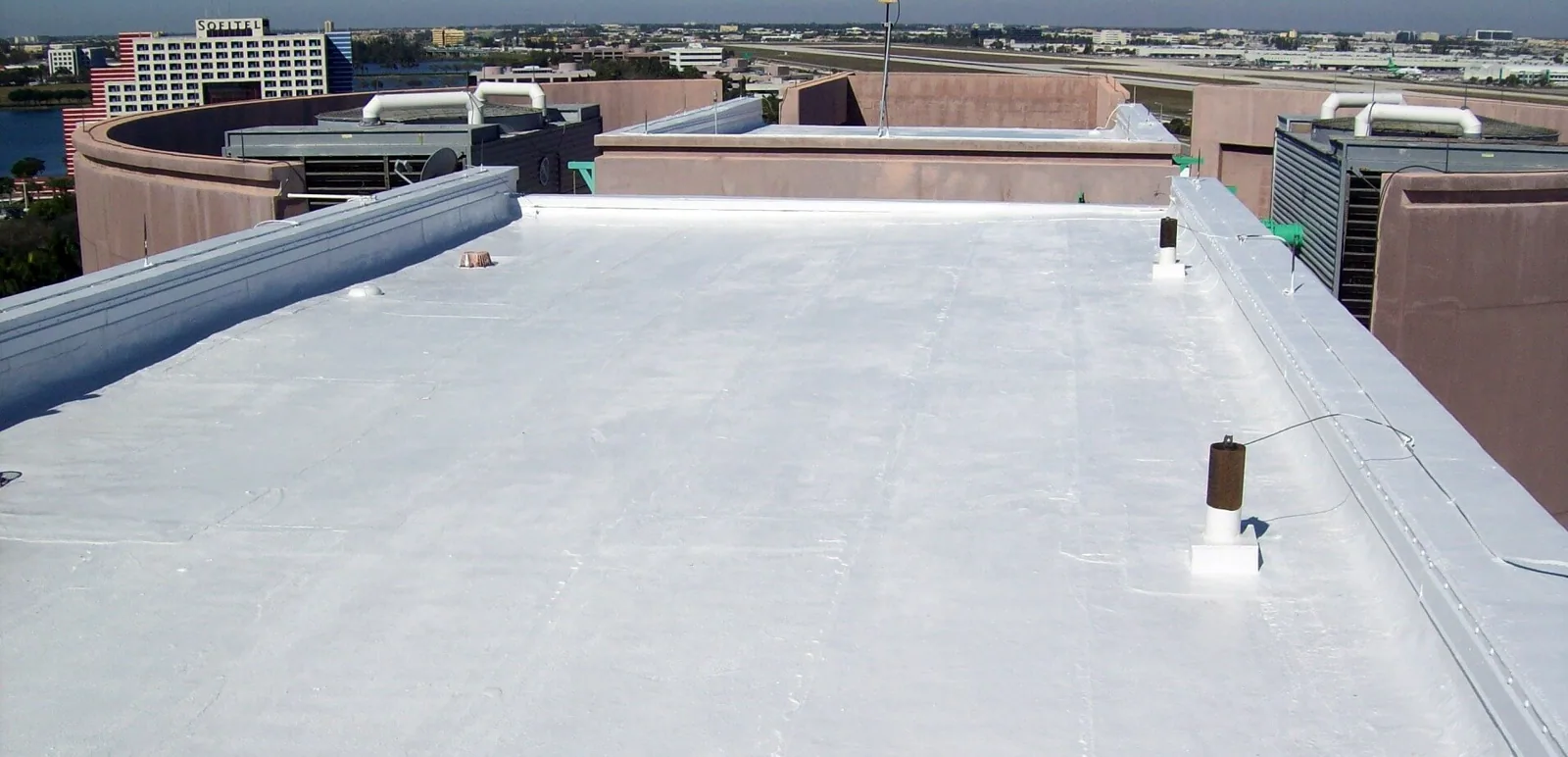
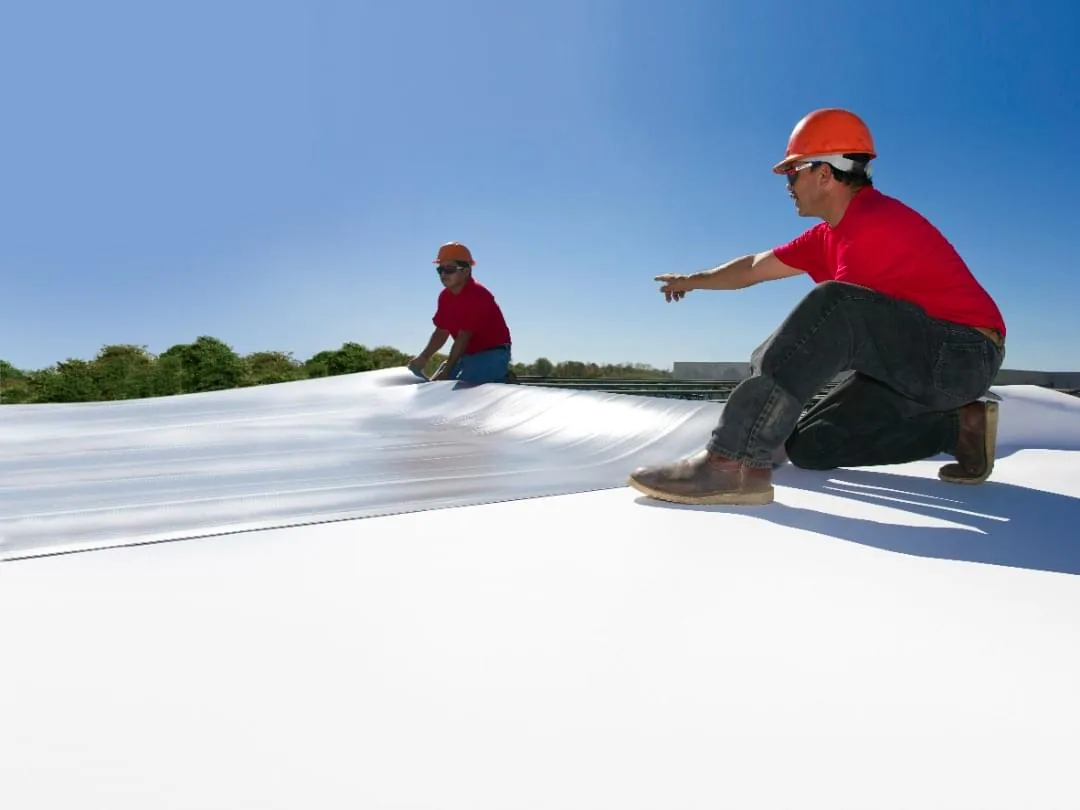
VersiWeld is a TPO membrane with hot-air welded seams, offered for mechanically attached, adhered and ballasted installations. Versico also sells EPDM and PVC. The TPO and EPDM choices carry different strengths: TPO reflects heat and welds into a monolithic sheet, while EPDM remains flexible in cold and handles movement at laps and corners.
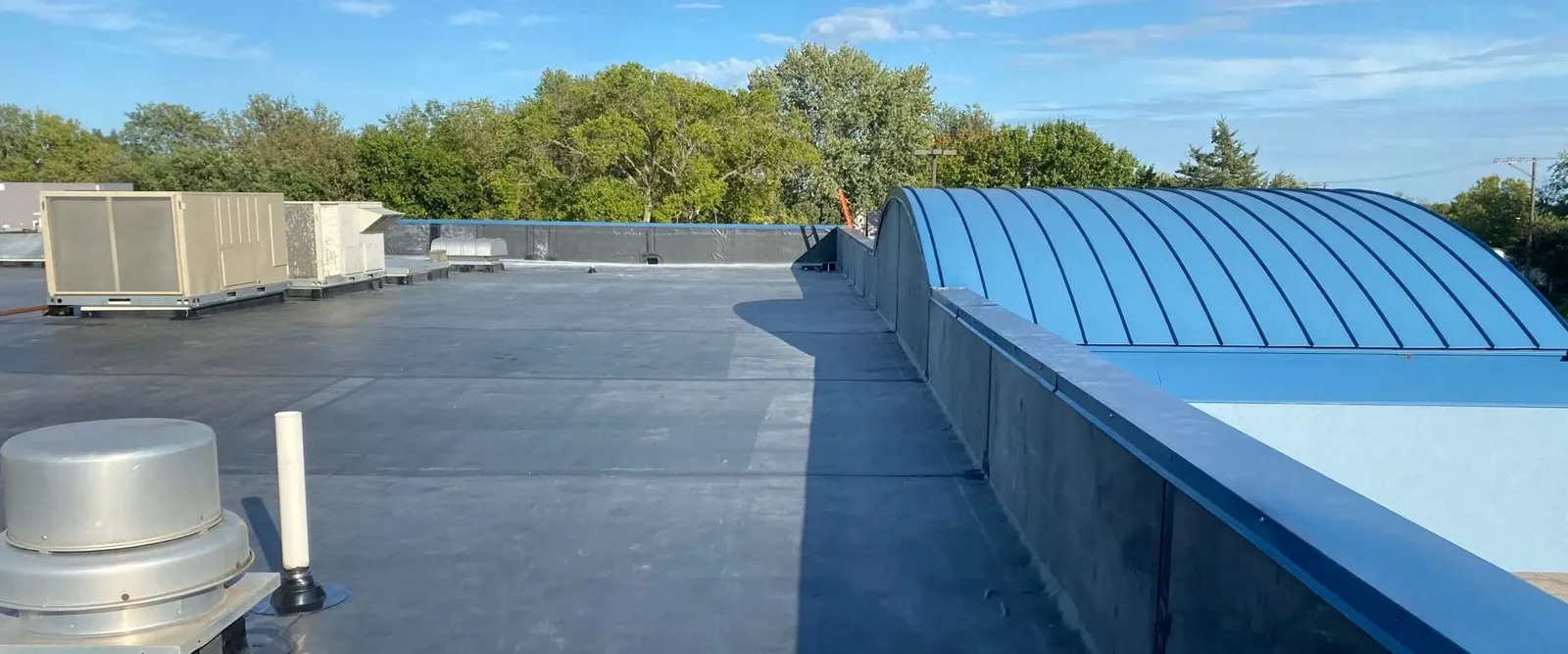
On small roofs with many details, flashing quality dominates the result. Corners, curbs and wall bases need pre-formed pieces or carefully hand-cut flashings, and seams at those points are most likely to leak. We size the sheet to minimize splices, weld flashing corners and probe each joint. Where a wall is shared with a neighbor, we confirm what can be attached to it and how the counterflashing will be reached for future inspection. A clean, well-formed detail matters more than a premium label on the roll.
Dense buildings often carry roofs with layers of history. A recover adds a new membrane over the old one after a cover board is placed, and it avoids tear-off debris and disposal on a site that has no room for dumpsters. It also shortens the time the building sits open to weather.
Recover is practical only when the existing insulation tests dry and the deck is sound. A moisture survey and cores decide. Where a core shows wet boards, they must come out. The cover board then protects the new membrane from punctures and gives a smooth surface for adhesive or fasteners. We also check the code limit on roof layers before recommending recover.
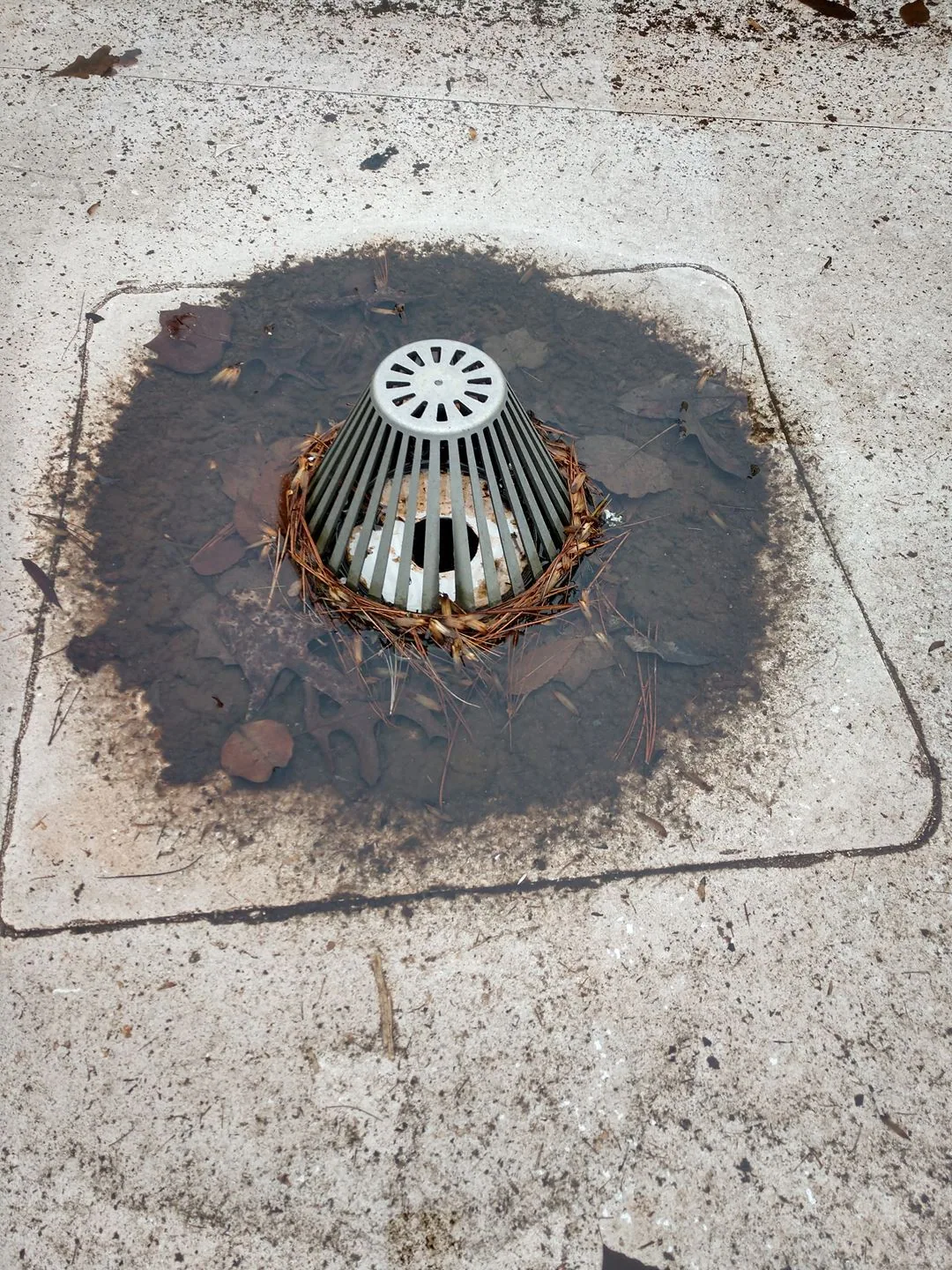
The city treats localized flooding and extra stormwater load on its combined sewers as infrastructure concerns. A compact roof may have a single drain or a pair of scuppers carrying all of its water. If one clogs, the roof ponds fast.
We clear and flash each outlet, check overflow scuppers and confirm that parapets do not trap water on the wrong side. For each property, we inspect the actual outlet, overflow route, and roof slope. Low spots are marked after rain and corrected with tapered insulation where the budget allows. Roof drains also need a clear path below them, and where an interior leader runs through a tenant space we coordinate access to check it, since a blocked leader can send water back onto the roof.
An inspection starts with the seams and flashings. On TPO, we probe welds, check for heat damage near exhaust and look for membrane shrinkage at corners. On EPDM, we look for lifting seams, fishmouths and loose flashing tape. Penetrations come next: pipes, vents, conduit and mounts, each with its own flashing.
We map findings by roof zone and photograph them. Wall bases and parapet tops get special attention on small urban roofs, since the wall is often the neighbor's as well as ours, and a leak at a shared wall is hard to trace once it reaches the interior. Counterflashing, termination bars and sealant joints are checked for gaps, and we note the wall material and height at each location. Moisture survey results go on the same plan. A roof with isolated seam failures is a repair job. A roof with failure scattered across seams, widespread moisture and shrinkage everywhere is nearing replacement, and the report says which pattern it shows.
An owner weighing Versico against Holcim Elevate or GAF is comparing seam methods, thickness, attachment and detailing more than brand names. We lay those out and install what the owner picks.
Every job leaves a file: photographs of each layer, product information, daily logs and flashing details. On a compact urban roof where equipment turns over often, that file is what lets the next contractor know what lies below the surface. Owners in Hoboken and Jersey City can use the same format across both, and a change of property manager does not break the record.