Holcim Elevate Roofing in Jersey City, NJ
Installation, repair and maintenance of Holcim Elevate and Firestone TPO and EPDM roofs in Jersey City, with perimeter wind checks and storm repair.
Installation, repair and maintenance of Holcim Elevate and Firestone TPO and EPDM roofs in Jersey City, with perimeter wind checks and storm repair.
Wind uplift is the first test for any single-ply roof on a coastal roof, and edge attachment is how it is passed or failed. Holcim Elevate, the company formerly known as Firestone Building Products, makes TPO under the UltraPly name and EPDM under RubberGard, and both systems rely on how the perimeter is fastened and finished. Irene and Sandy left Jersey City with power outages, severe flooding and property damage, so owners in Jersey City, NJ have reason to treat perimeter work as the center of the specification.
We install, repair, and maintain Holcim Elevate and legacy Firestone systems with seam and flashing details matched to the selected assembly. Many roofs in the field still carry the Firestone name on their paperwork, and we read both the same way: seams, edges, drains and the condition of what lies beneath.
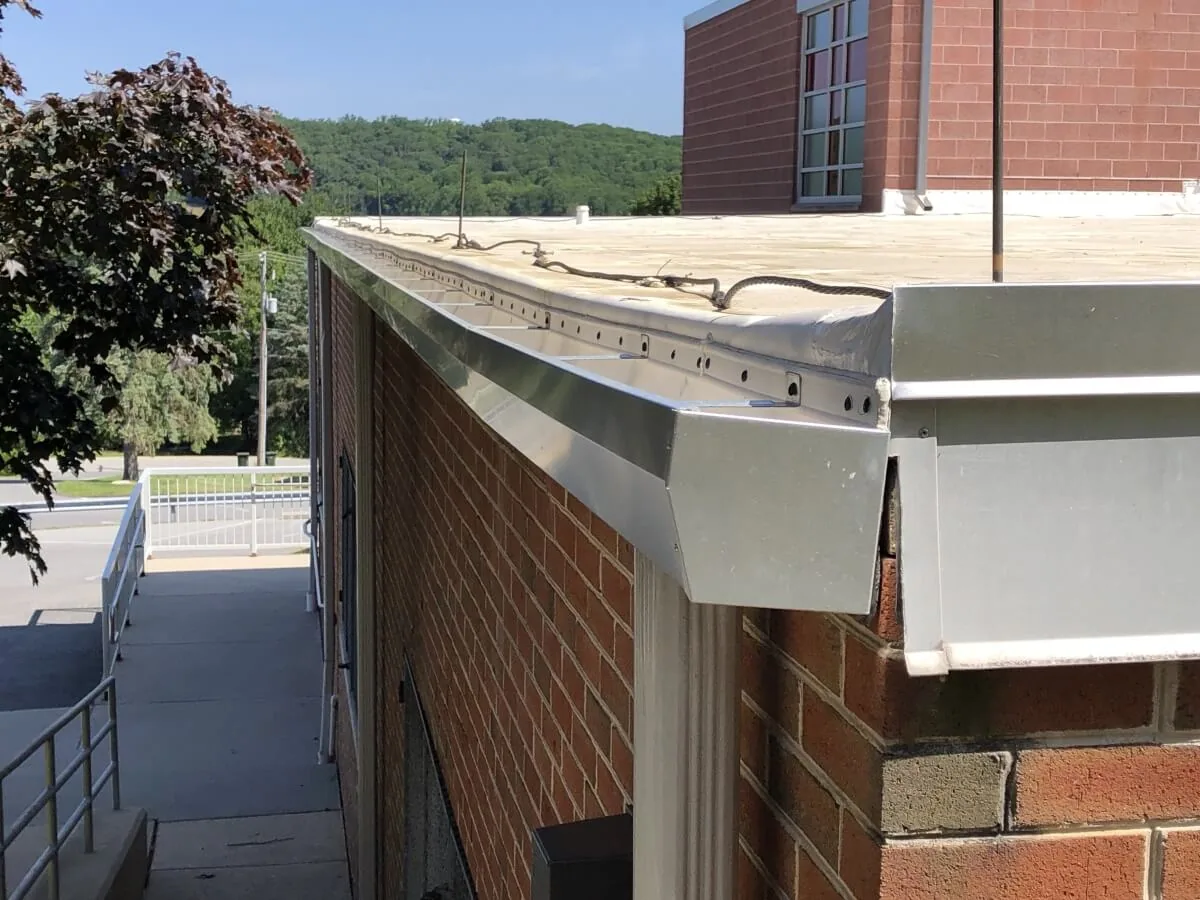
Storm wind finds the edge, gets under the membrane and lifts the field from the outside in. Defense begins with the perimeter: securement bars or fastener rows set closer together near edges and corners, edge metal that is fastened into the wall and not just the roof deck, and coping that is sealed at its joints. We inspect each of those against the manufacturer's details. At every transition, we record the fastener line, substrate, and termination before choosing a repair detail.
Loose or missing coping, open joints in edge metal and torn membrane at the termination are early signs of a vulnerable perimeter. We map each tie-in and identify which attachment detail needs review before repair. A coping and edge metal repair costs little against a lifted membrane, and it is the first item we propose on any roof with a visible edge failure. After a major wind event, perimeter inspection is the first step in wind damage repair.
Set a roof walk with us to inspect edges, seams and drains, and decide between repair, recover and replacement. A written scope follows with photographs and a work window.
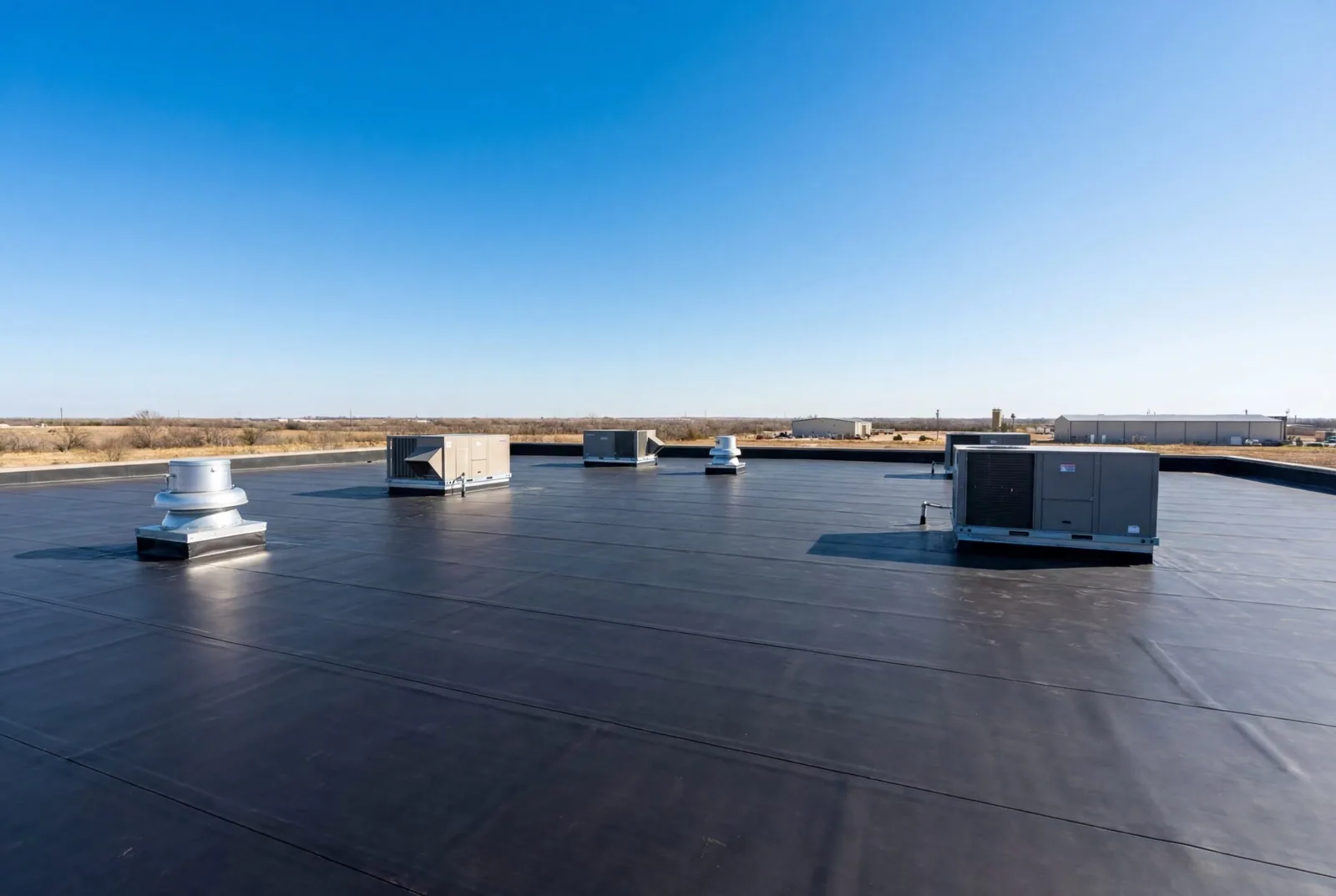
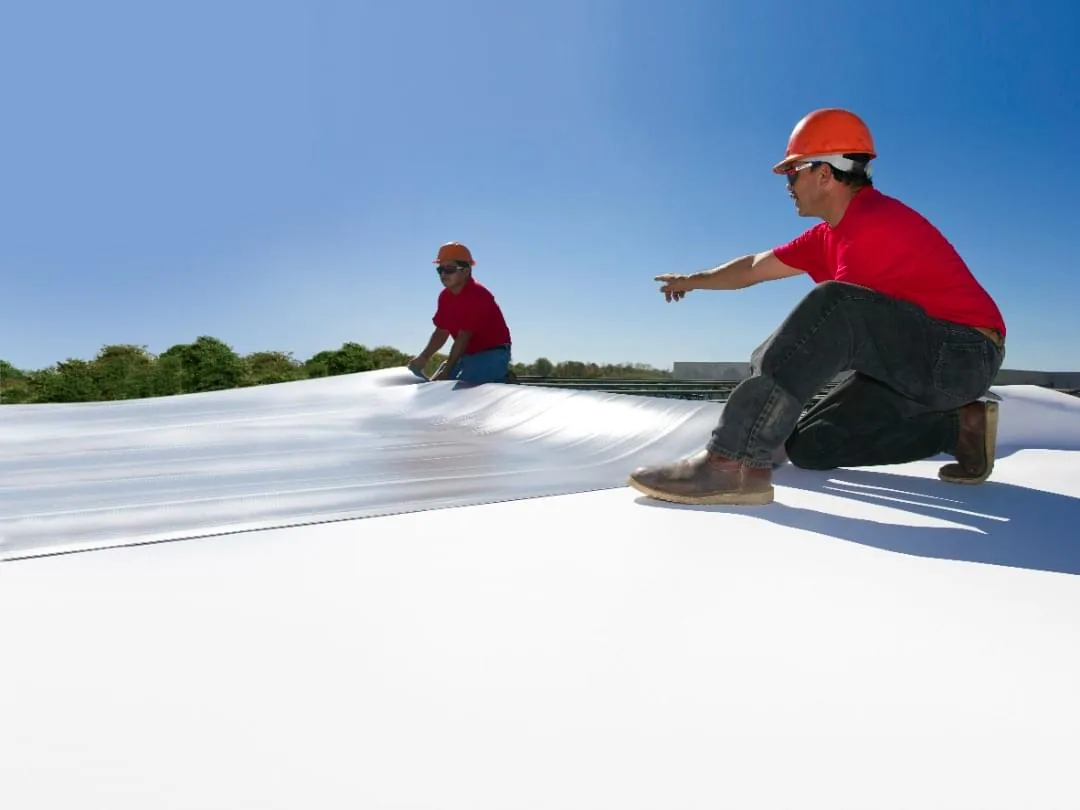
UltraPly is a TPO sheet with hot-air welded seams, available in mechanically attached, fully adhered and ballasted forms. RubberGard is EPDM rubber sheet, installed in wide rolls with adhesive or tape seams. Both can be installed over cover board and polyiso insulation, and both depend on correctly formed flashings at walls, curbs and drains.
Attachment method changes how a roof responds to wind. Fully adhered systems spread uplift load across the surface, while mechanically attached systems concentrate it at fastener rows. Ballasted EPDM relies on weight, which a rooftop with limited structural capacity may not allow. We confirm structure, deck type and design wind requirements with the owner's design professional where a replacement or recover is on the table, and explain how TPO and EPDM fit each case.
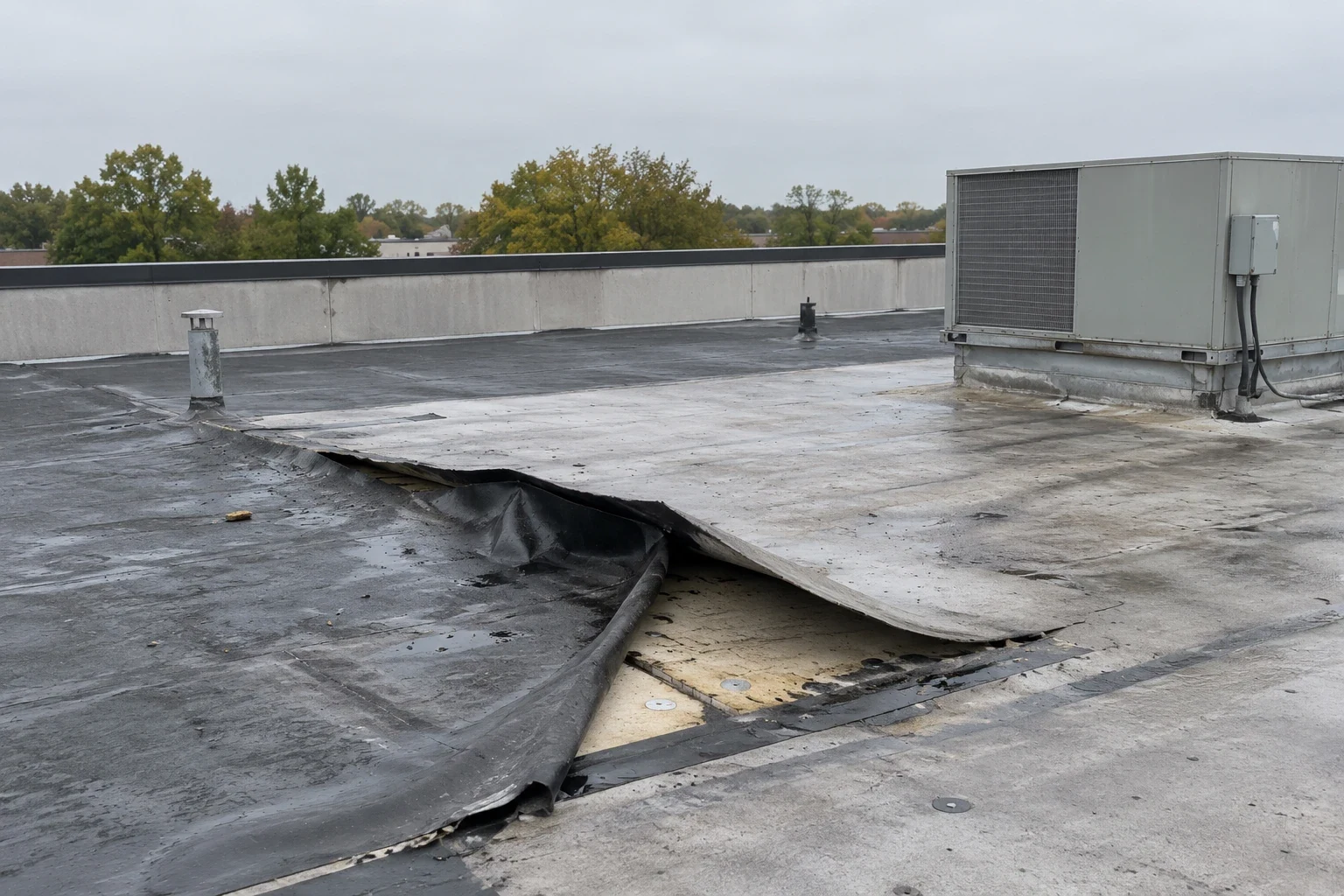
After a named storm, we walk the roof with the original record in hand if there is one. Wind damage often hides: a lifted seam that closed again, a pulled fastener plate that left a bubble, a torn flashing at a parapet corner. We look at the perimeter first, then drains, penetrations and the field. Photographs and moisture readings go into a report the owner can send to the insurer. Every item is logged by roof zone. Seams get probed along their full length, since a hairline opening may pass a visual check and still pull apart under the next gust.
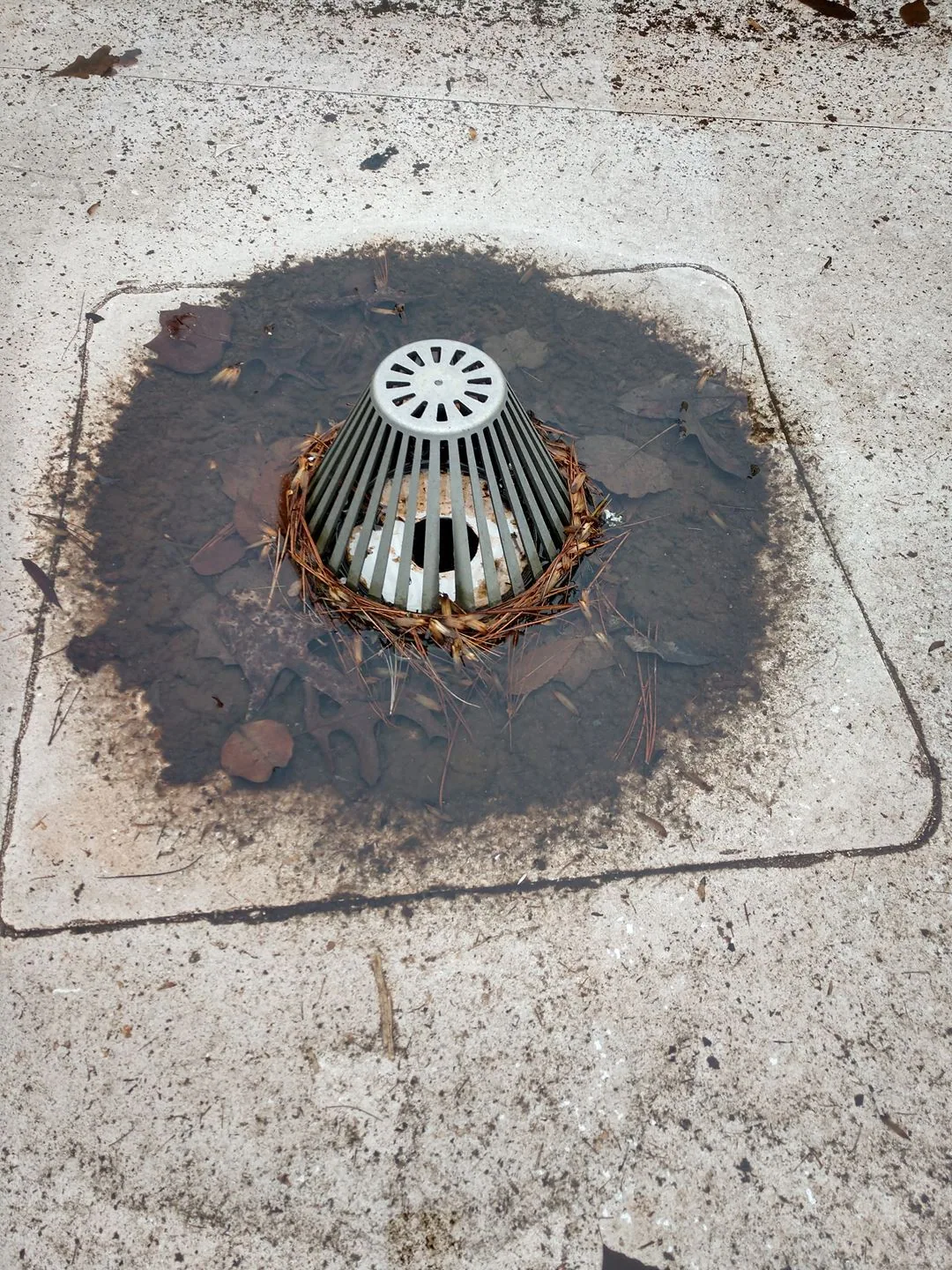
Drains get the same treatment. Storm debris and wind-driven grit lodge in outlets, and a blocked drain after a heavy rain leaves water standing on a membrane that was already stressed. We clear what we can on the first visit and record what needs a repair.
The scope of hurricane damage repair is set by what is found, not by assumption. A storm that left no visible damage still leaves a baseline, and that baseline helps if a later storm produces a claim. Our storm repair work places temporary seals first, then writes the permanent scope.
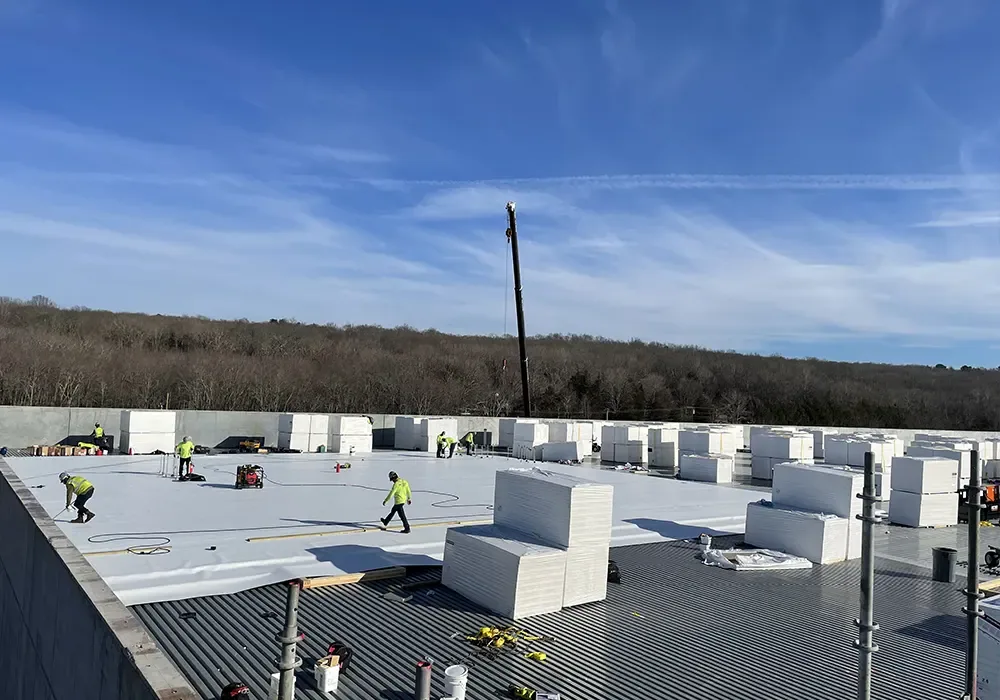
Weather drives sequencing on a coastal roof. Wind limits membrane handling, since a loose roll becomes a sail. Rain stops adhered work, and cold slows adhesive cure. We plan each day to finish what we start, close tie-ins with temporary seals and confirm the forecast before opening a roof zone.
Access depends on the building. A hospital, school or office tower has fixed rules on noise, lifts and staging. The Heights and Bergen-Lafayette have distinct architectural and urban forms. On either block, we settle the lift plan and staging area with the manager before the first delivery, checking the actual building route.
The decision on a Holcim Elevate or Firestone roof turns on moisture and seam condition. Dry insulation and a sound deck make repair or recover practical. Wet insulation or a membrane that has lost adhesion across large areas points toward replacement. We put each route in writing with scope, assumptions and the trigger that would change the recommendation. A roof that passes a moisture survey but shows aging seams may get a repair now and a replacement date set for later, with the interval stated in writing and tied to a follow-up inspection.
Owners comparing this line with Versico or Duro-Last often want to see attachment methods and edge details side by side. We write them up that way. For a building in Elizabeth, the same method applies, with the owner's wind exposure and drainage in view.
A roof installed under the Firestone name may have paperwork that refers to the older company. Owners should confirm with the manufacturer how that paperwork maps to the current brand before filing a claim. We keep installation photographs, product information and daily logs for every job, so the file supports whichever name the claim uses.
Warranty terms depend on the product and warranty type. We install to the manufacturer's product specifications and record dated photographs, work sequence, and the product used at each detail for the owner's roof file.