Aircraft Hangar Roofing in Jersey City, NJ
Plan Jersey City aviation-building roof repairs around clear-span bays, equipment access, drainage, and secure work windows. Set a roof walk.
Plan Jersey City aviation-building roof repairs around clear-span bays, equipment access, drainage, and secure work windows. Set a roof walk.
Wind-driven rain makes the roof edge and door interface part of an aviation building's access plan. In Jersey City, NJ, we inspect membrane or metal panels, drains, curbs, and transitions before proposing a repair or replacement. The facility contact identifies secure routes, lift limits, vehicle or aircraft movement, and any work window that cannot overlap operations. We map the roof zone and tie-in so the crew can close the area at day's end. A commercial roof inspection records observed conditions without assuming every bay shares the same assembly.
Regional transportation connections include tunnels, bridges, bus terminals, PATH rail, ports, and airports across northern New Jersey and New York City. For an aviation roof project, the operator sets authorized entry, escort requirements, and movement windows; we confirm those limits before selecting staging and lift routes.
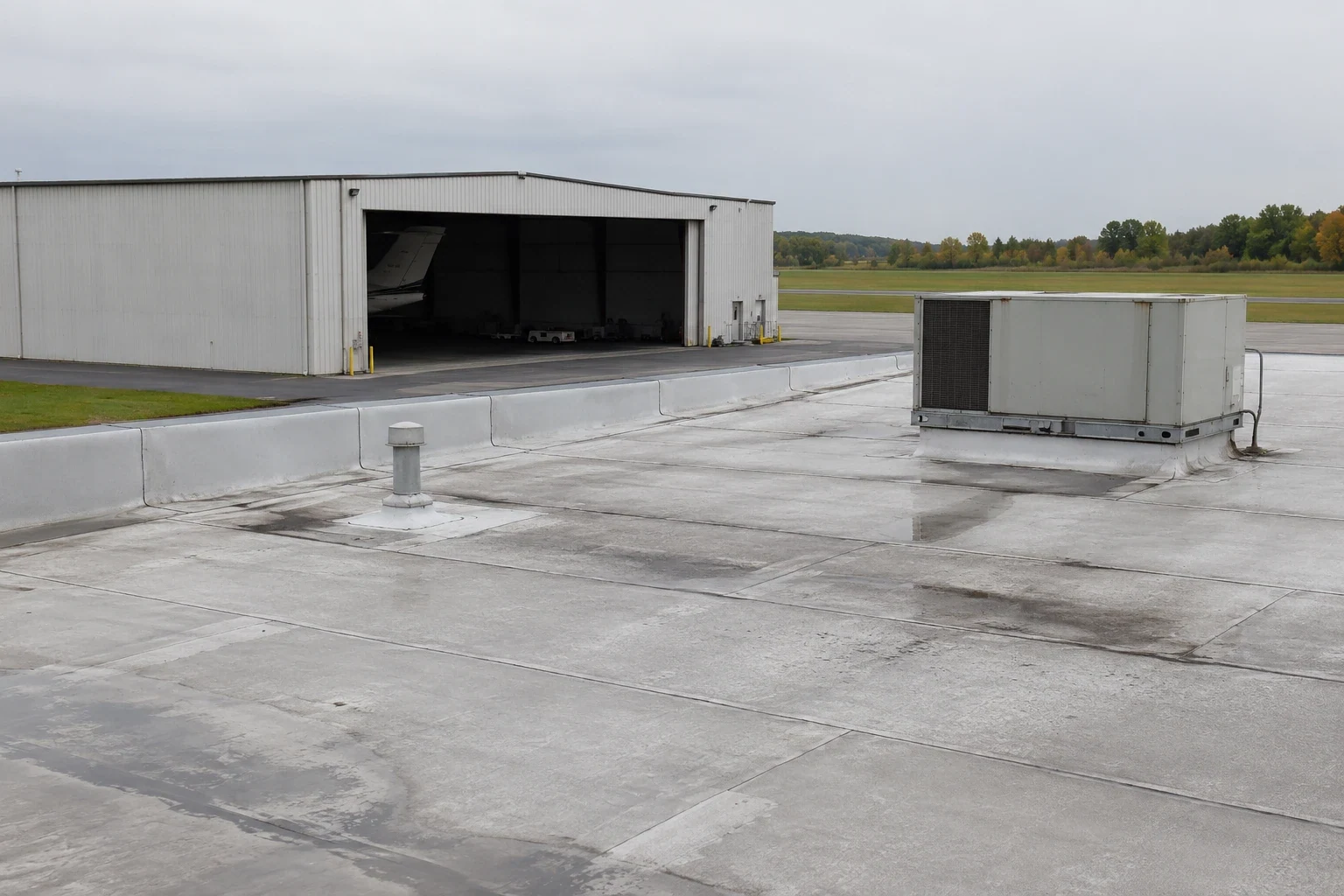
A hangar roof can require a long access route, a high lift, or staging near large doors. Before mobilization, we confirm the authorized entry, escort process if required by the facility, equipment clearance, and the path from staging to each roof zone. The owner identifies movement windows and areas that must remain free for operations. We record the planned route, boundary, and daily closeout in the work sequence so the control point is clear to both the facility and roofing crew.
Where a repair must happen over an active bay, we keep the opened area limited to what can be protected and closed within the approved window. The scope identifies temporary protection, material handling, and the tie-in location. An occupied-building reroof sequence can separate work from ongoing activity below. A roof visit in Newark starts with its own access and equipment plan, because one facility's permissions never transfer to another.
Three industrial planning areas appear in the city's records: Chapel Avenue Industrial Park, Greenville Industrial and the Tonnele Avenue Light Industrial area. These broad work districts can affect delivery routing; the facility contact sets building-specific access, clearance, and timing. If a lift must cross an operating surface, the facility determines its permitted path and timing before work is scheduled.
Identify the priority bay, access authority, and movement windows. We will map the assembly, water path, and repair boundaries for a written scope.
Wide roof spans can make a small opening difficult to locate from the floor. We mark the reported interior location, then inspect likely roof paths: panel laps, seams, ridges, valleys, drains, curbs, and edge transitions. The map identifies each bay and the details that connect to the report. A surface mark or stain does not alone establish where water entered. The inspection photographs visible conditions and separates the confirmed repair boundary from any area that needs testing.
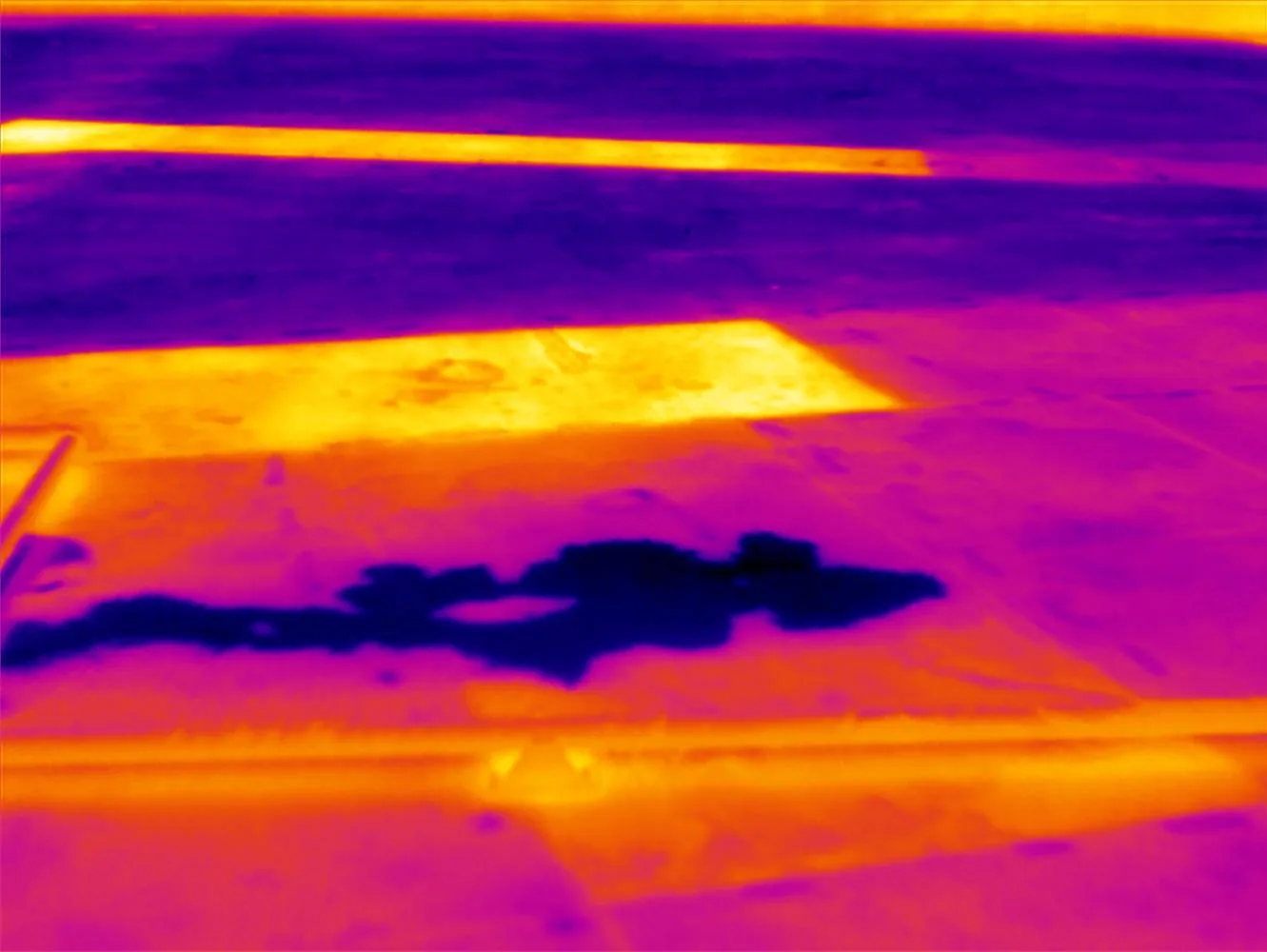
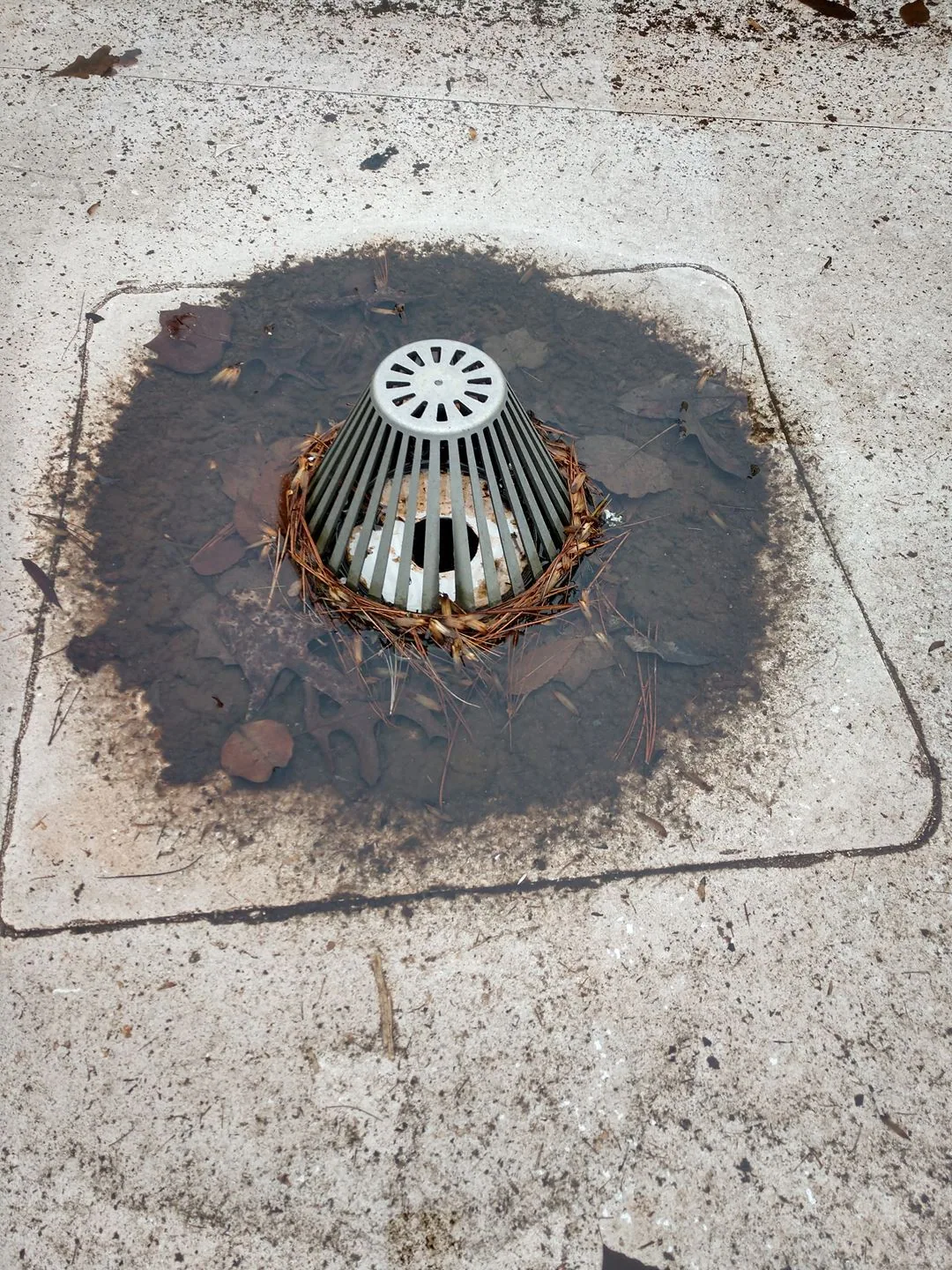
Irene and Sandy disrupted power and left severe flood and property damage in Jersey City. On a hangar roof, we inspect the building's own outlets, overflow path, edge metal, and penetrations before setting temporary protection. If moisture may extend below a membrane, an infrared moisture survey can help choose test locations, with any test opening recorded separately.
A large door, canopy, or later addition can create a transition with its own movement and flashing needs. We inspect the interface and note whether the roofing repair touches door hardware or structural components outside the roof scope. If another trade must secure a door or equipment, the handoff is listed before the crew begins.
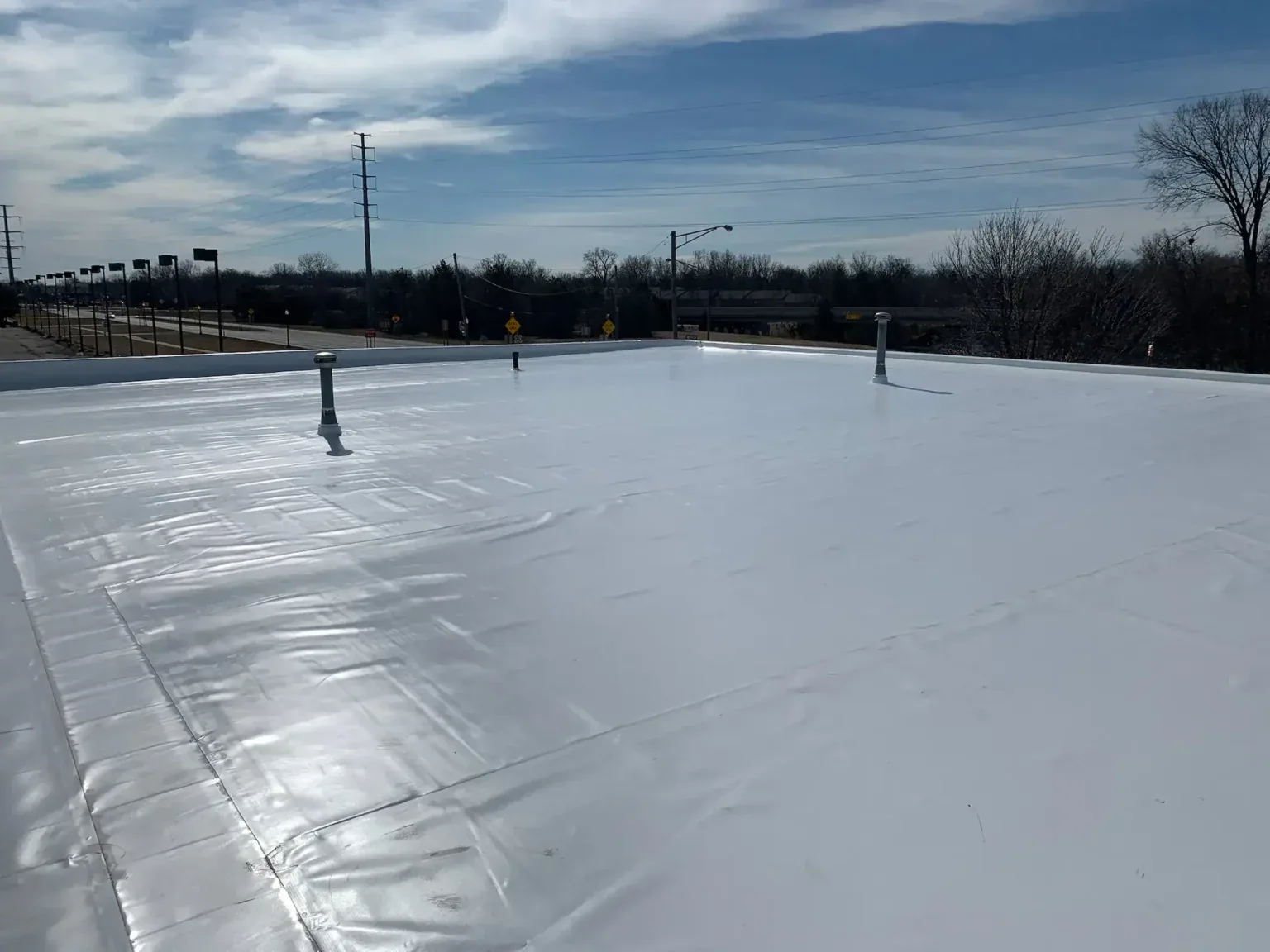
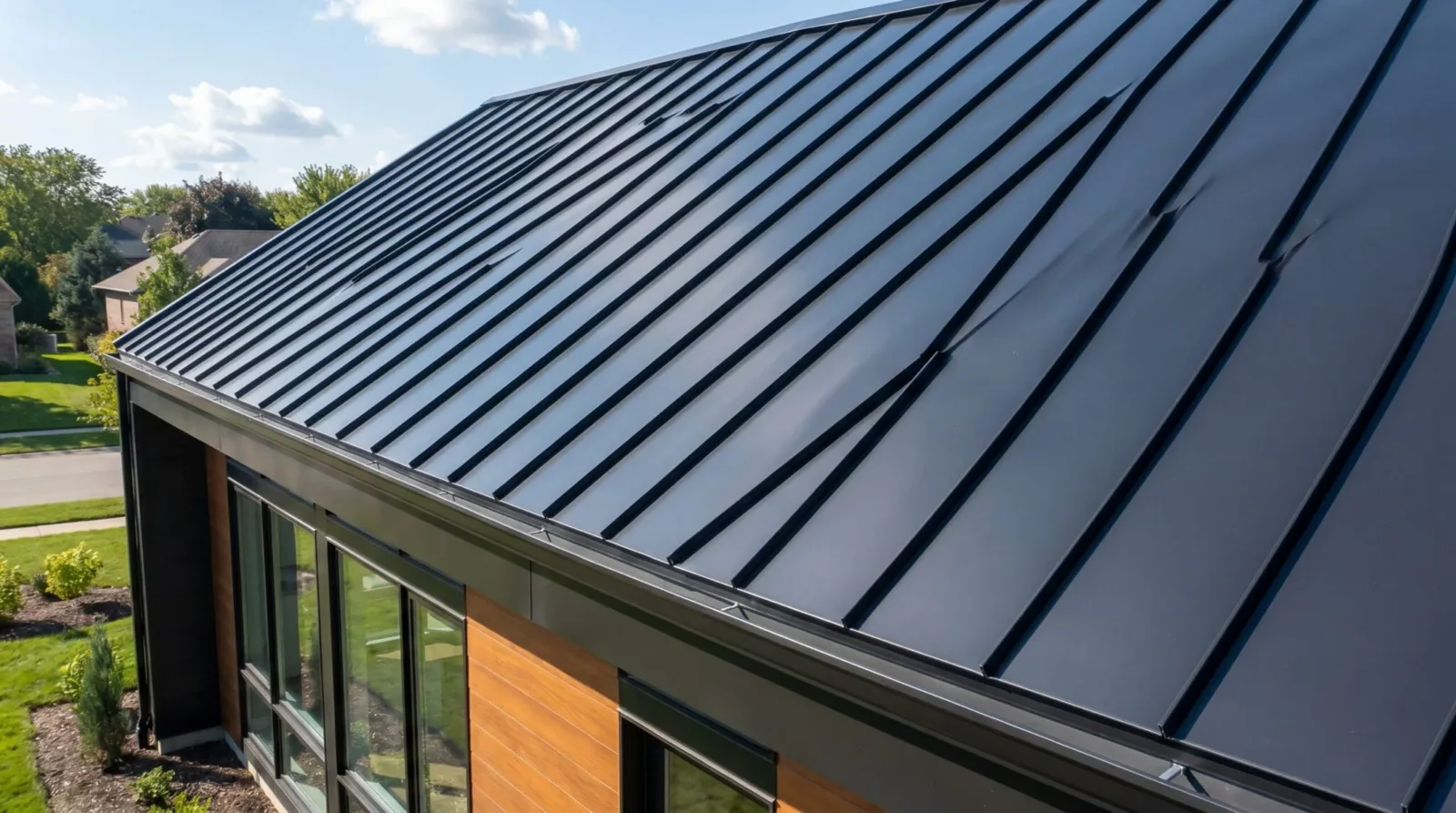
We identify the installed system before selecting repair materials. Standing-seam panels need attention to clips, fasteners, laps, and movement; low-slope membranes need compatible seams, flashing, and drain connections. A standing-seam metal repair uses a different tie-in from TPO, PVC, EPDM, or modified bitumen. We document visible layers, attachment clues, and any concealed condition that needs confirmation before a broad proposal.
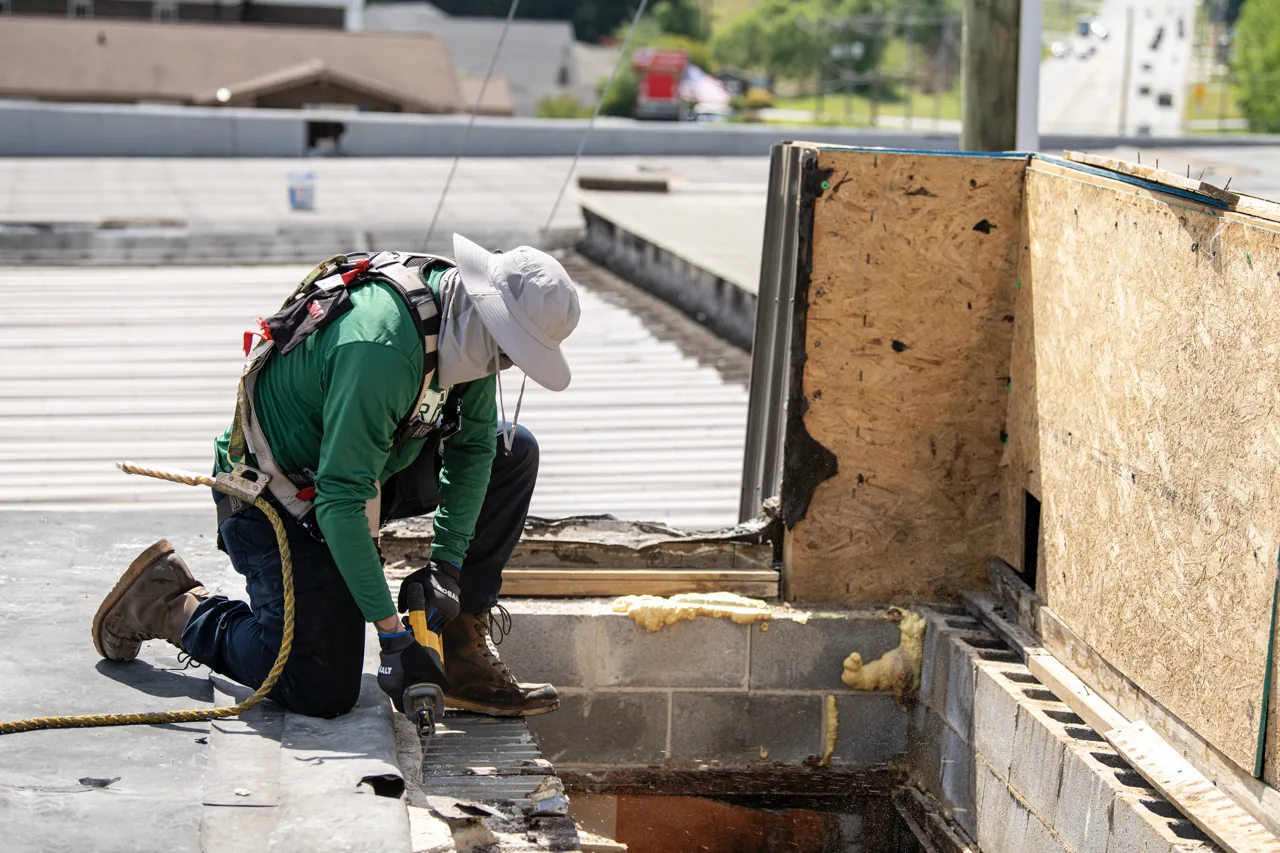
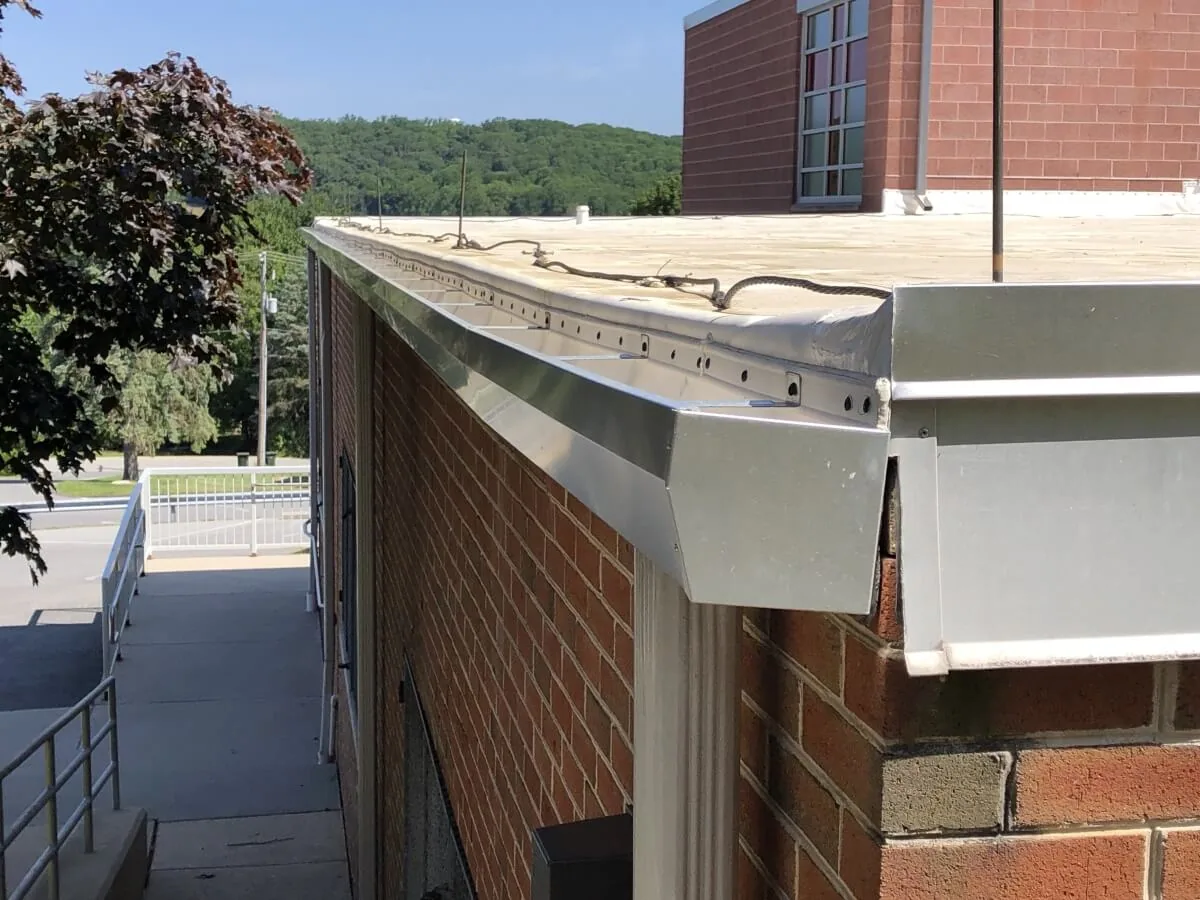
Skylights, vents, mechanical curbs, antenna supports, and conduit interrupt the roof field. We inspect each accessible flashing detail and look for movement, separated sealant, or loose termination. A roof edge metal repair may be separate from a panel or membrane correction. The condition map states where each scope starts and stops, helping the operator coordinate equipment and keep an access path clear.
Coating restoration can be reviewed on compatible surfaces after checking adhesion, seams, moisture, and drainage. It cannot replace correction of failed attachment or wet insulation. Where the assembly supports restoration, we define preparation and reinforcement; where it does not, removal or localized repair is compared.
A loose fastener, open panel seam, split flashing, or localized puncture may support a repair when surrounding material is sound. Repeated water entry, broad wet insulation, corrosion, or failed attachment may shift the decision toward replacement. A recover is considered only if the existing layers, load, drainage, and moisture conditions support it. We list findings by bay and roof zone, then compare immediate repair with a larger renewal boundary. The operator can see which work addresses the reported issue and which condition remains under review.
Cost and timing depend on roof height, lift type, security procedures, panel or membrane quantity, equipment moves, material handling, and the number of tie-ins. If the facility limits access to short windows, we plan a closeout that protects the opened area before the next operation begins. A hidden condition at a test opening is photographed and submitted before the crew expands the scope. The record gives the owner a clear approval point and separates completed work from any later phase.
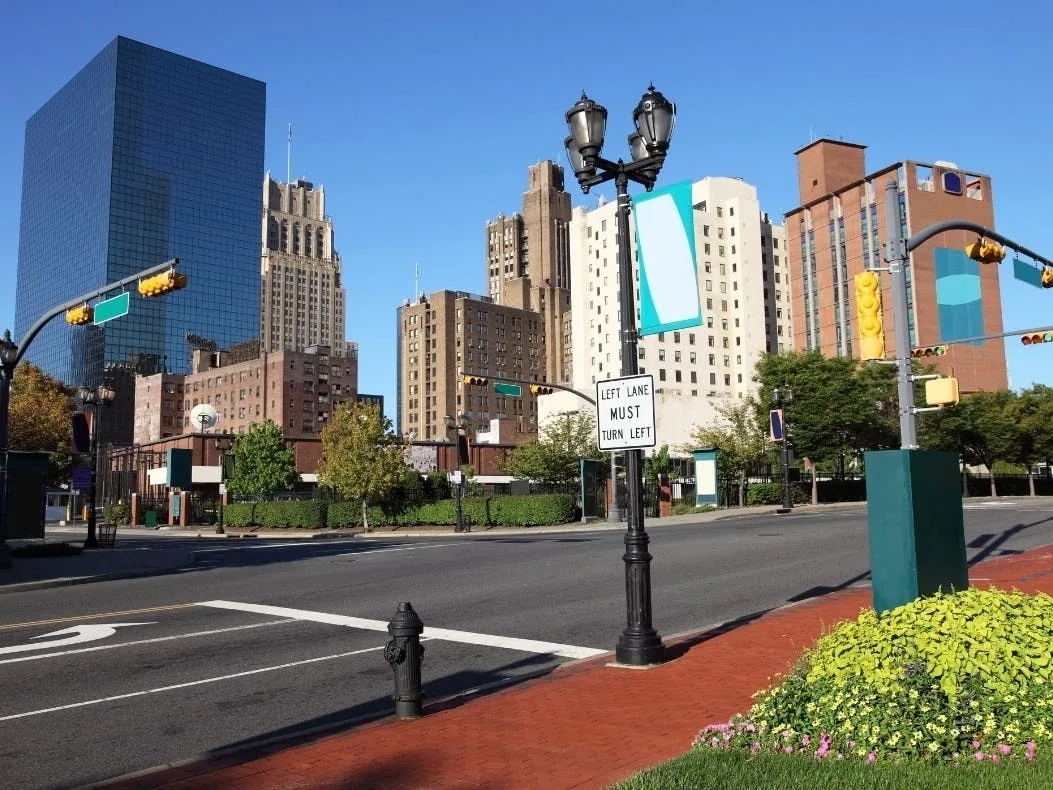
Commercial activity along Journal Square and West Side Avenue can shape delivery routing. The facility walk sets staging and security around the actual building. We coordinate the actual route with the operator and keep lift placement separate from any movement area. For a different large roof type, warehouse roofing may have other operating access needs; a flex-industrial roof plan may have different tenant routes.
The handoff includes bay labels, photographs, system identified, panel or membrane repairs, drains, edges, access limits, and outstanding items. It states which tie-ins were closed and which roof zones were not available. The facility can retain the map with its access record and use the same labels at a later inspection. Operational observations supplied by facility staff remain separate from the roofing findings.
Greenville Industrial and Tonnele Avenue Light Industrial are broad Jersey City work areas. Each property receives its own condition map and approval sequence. A roof condition report can preserve the observations for capital review, while a defined storm repair can address an opening after an event. Set the walk around the highest-priority bay, the authorized access route, and acceptable work windows; we will return a written scope.