Auto Dealership Roofing in Jersey City, NJ
Coordinate Jersey City dealership roof work around showroom hours, service bays, drainage, and vehicle access. Set a roof walk and scope.
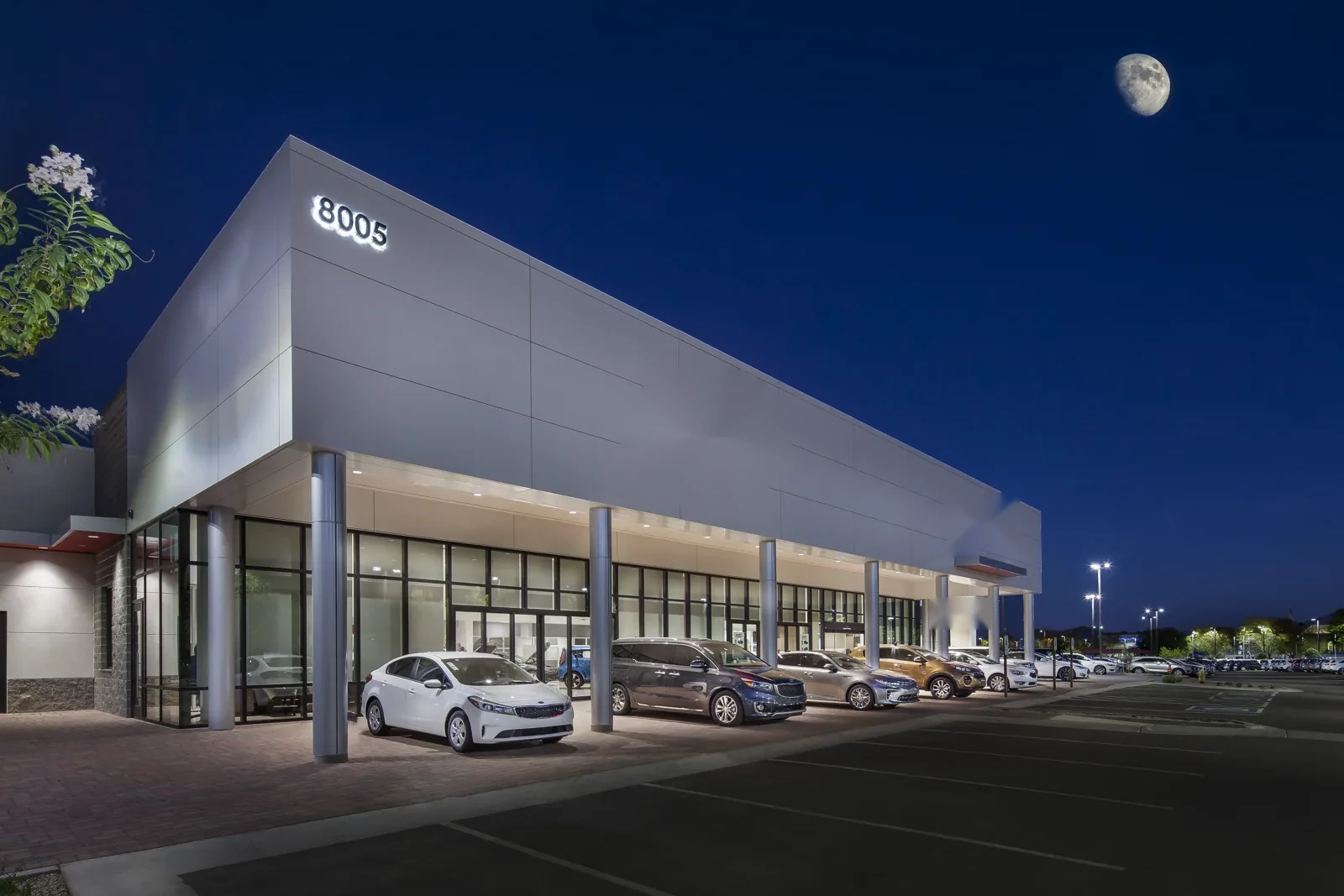
Coordinate Jersey City dealership roof work around showroom hours, service bays, drainage, and vehicle access. Set a roof walk and scope.
After a coastal downpour, a roof leak can interrupt a showroom, parts area, or service bay on a different schedule. In Jersey City, NJ, we inspect the membrane, drains, equipment curbs, edge metal, and prior patches, then mark the affected roof zone. The dealership contact identifies customer entrances, vehicle lanes, service hours, and areas that cannot be blocked. Our commercial roof inspection records conditions by zone and sorts a local repair from maintenance work and from a capital replacement.
Jersey City lost power and took flood damage in both Irene and Sandy. For a dealership, the roof walk traces the actual water path and records the assembly, outlet condition, and temporary protection needed. We trace the actual water path, inspect outlets and transitions, and set a work window that fits the property's operating hours.
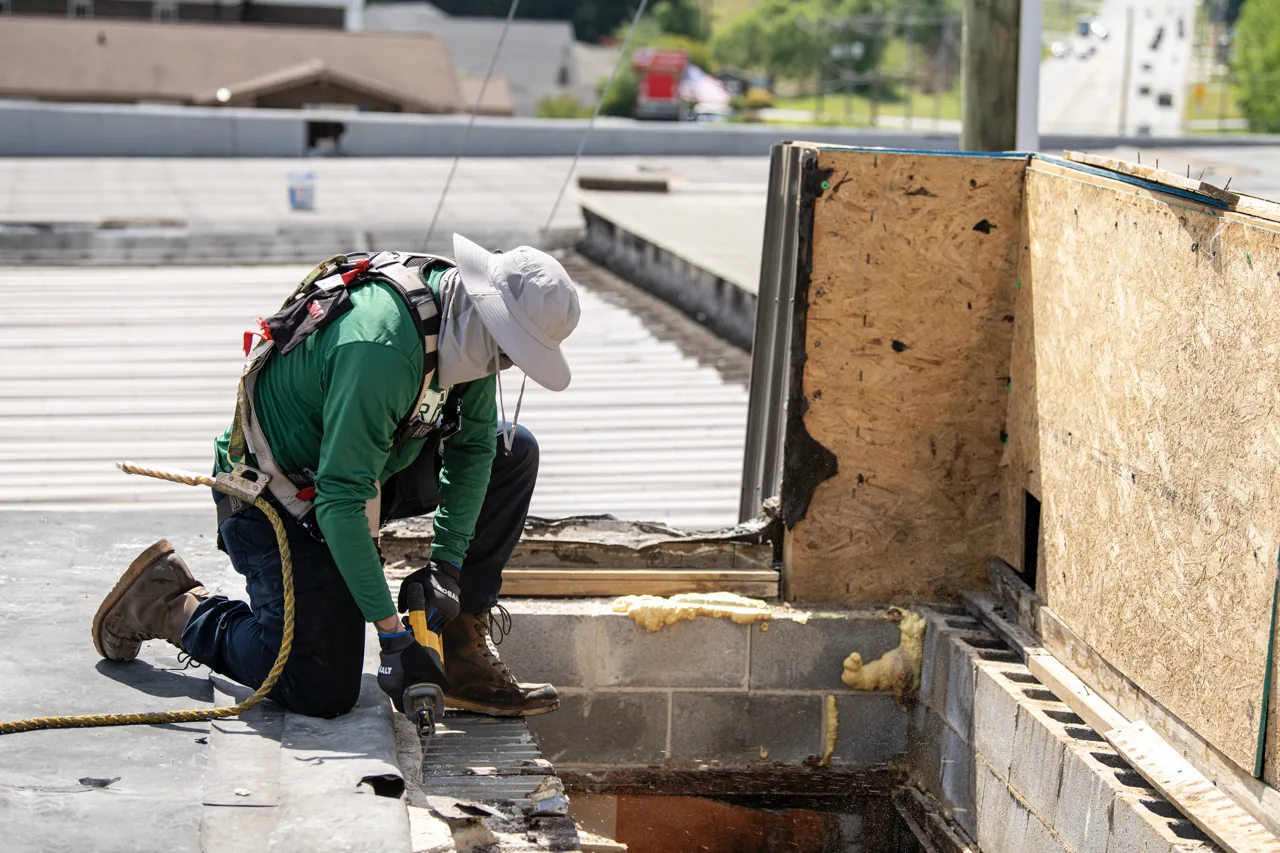
Roof access may compete with vehicle delivery, customer parking, parts handling, and service-bay use. We confirm the approved hatch or ladder, lift position, staging area, and route for materials before mobilization. The manager identifies customer paths and any service entrance that must stay clear. We place temporary boundaries around the active zone and state how long they remain. The work plan can reserve noisy steps for a lower-traffic window and keep tools away from vehicle lanes.
A phased sequence gives the dealership a defined roof area and daily closeout. We identify the tie-in and temporary cover before opening the membrane, then close the area at the agreed stop. An occupied-building reroof plan can coordinate work while sales and service continue. If a separate property in Union City shares ownership, its roof walk gets an independent access map and condition record.
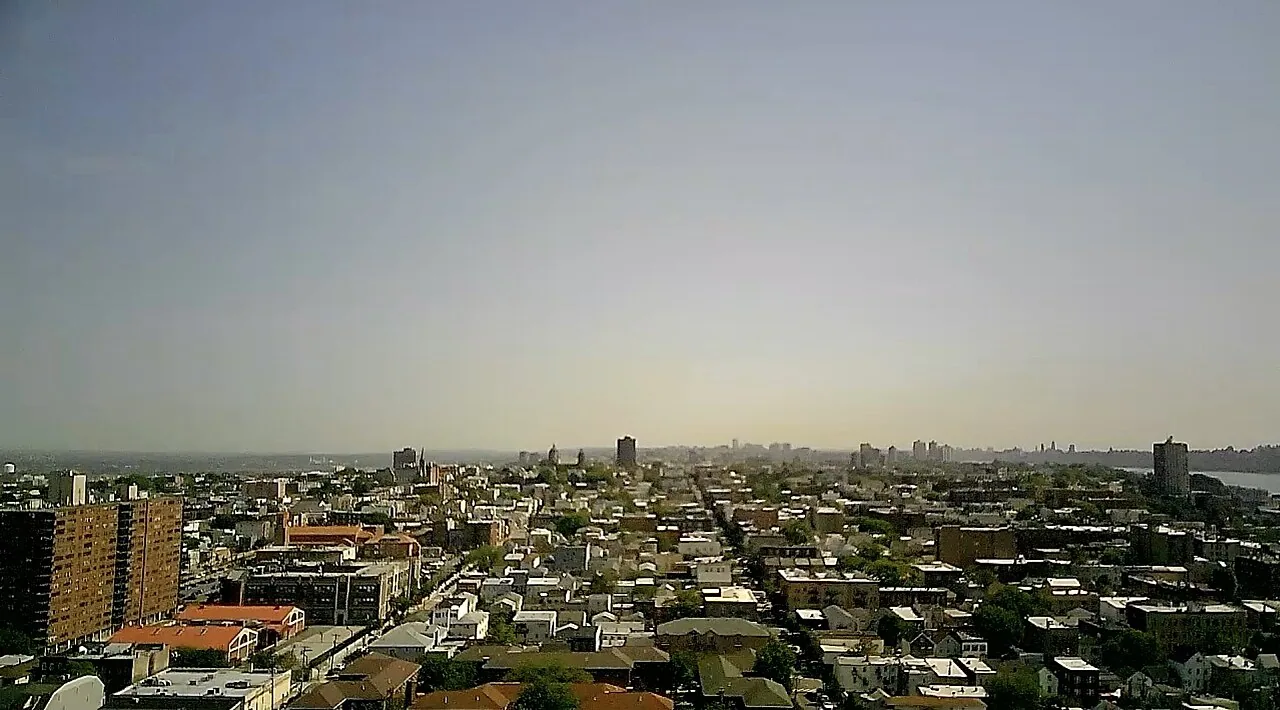
Journal Square and Central Avenue are Jersey City commercial centers. That context can help plan delivery questions, but the site walk determines the dealership's actual entrance, curb access, loading limits, and roof route. We record those constraints with the work window so the sales and service teams can see which areas remain available.
Identify the priority roof zone, service hours, and vehicle access limits. We will map the water path and return a written repair or renewal sequence.
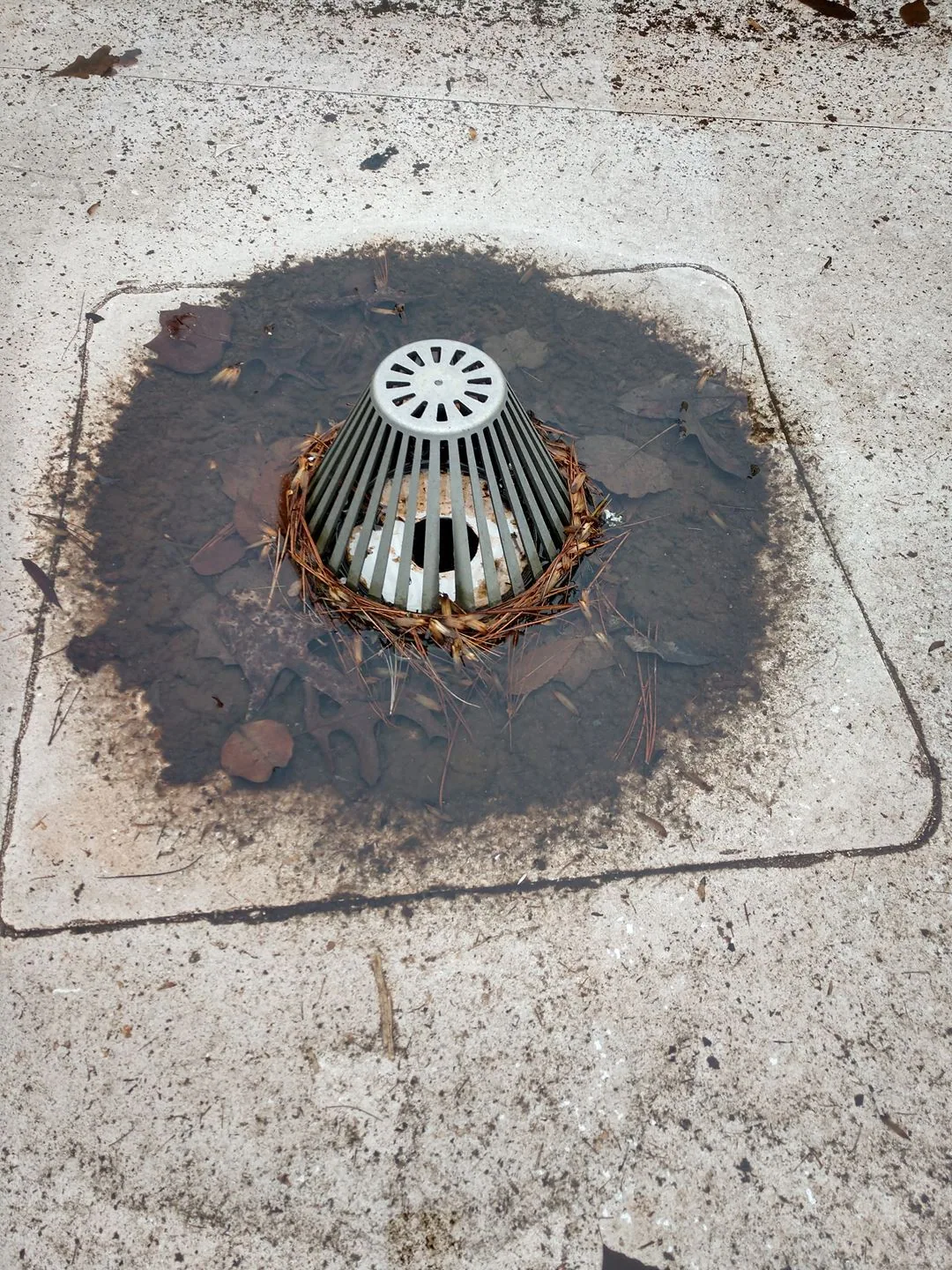
A ceiling mark above a showroom desk may trace back to a drain, parapet, curb, or seam elsewhere on the roof. We compare the report with likely water paths, photograph the roof details, and mark the suspected entry zone. At each drain, we inspect the bowl, strainer, flashing, overflow path, and nearby membrane. A maintenance blockage and an open roof connection need different scopes, so the report keeps those items separate.
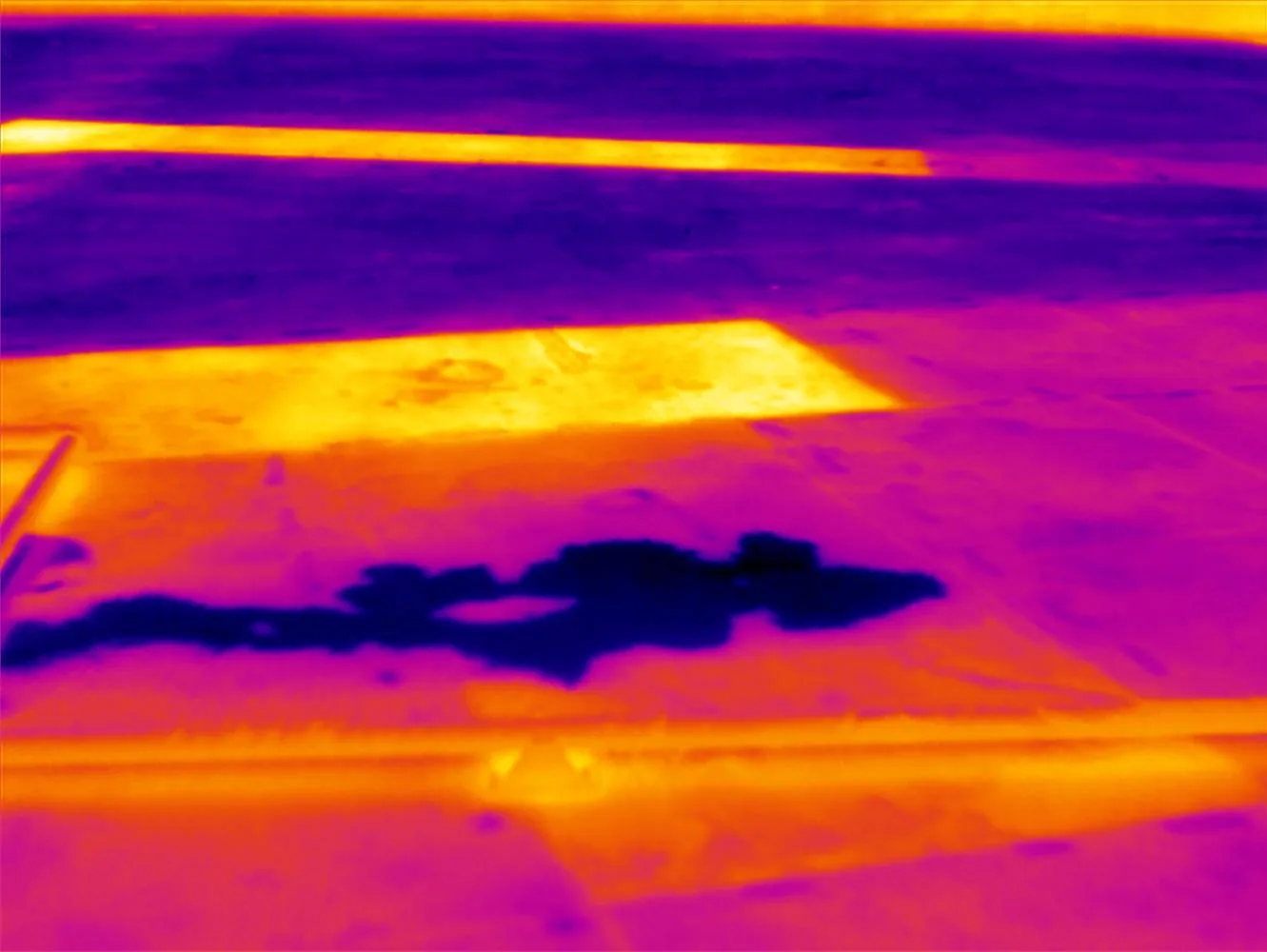
Jersey City has localized-flooding and stormwater-loading concerns for its combined sewer system. The walk checks outlet capacity, nearby roof details, and the water path on the actual roof zone. When moisture could extend below the surface, an infrared moisture survey may help select test locations. A test opening confirms the assembly at its location; we record what remains untested.
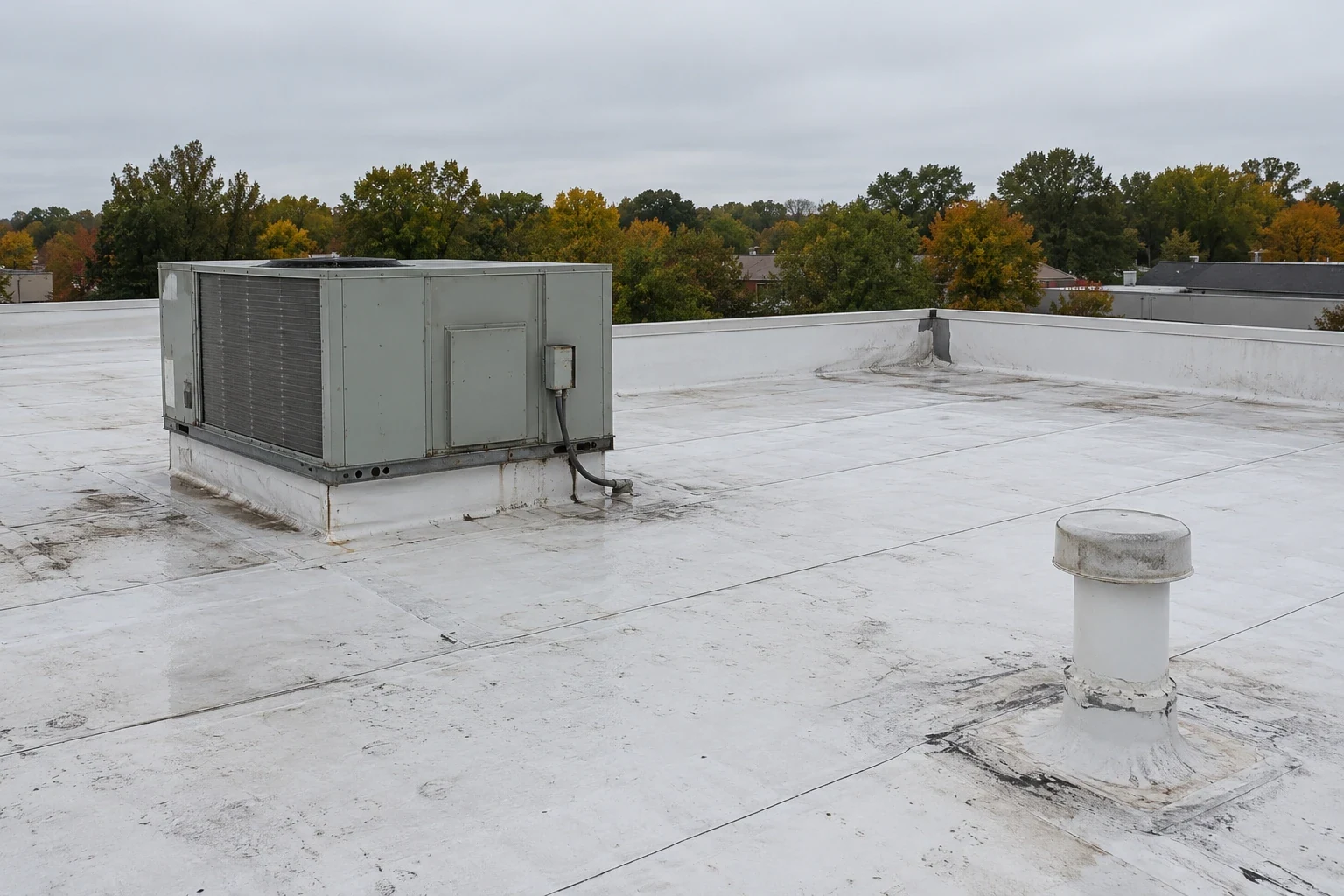
Rooftop exhaust, HVAC curbs, conduit, and signs may interrupt the membrane. We inspect flashing corners, loose terminations, supports, and past patches around each item. If equipment isolation or sign work belongs to another trade, that handoff is set before the roofing crew reaches the area. The written scope identifies the roof detail and the separate coordination step.
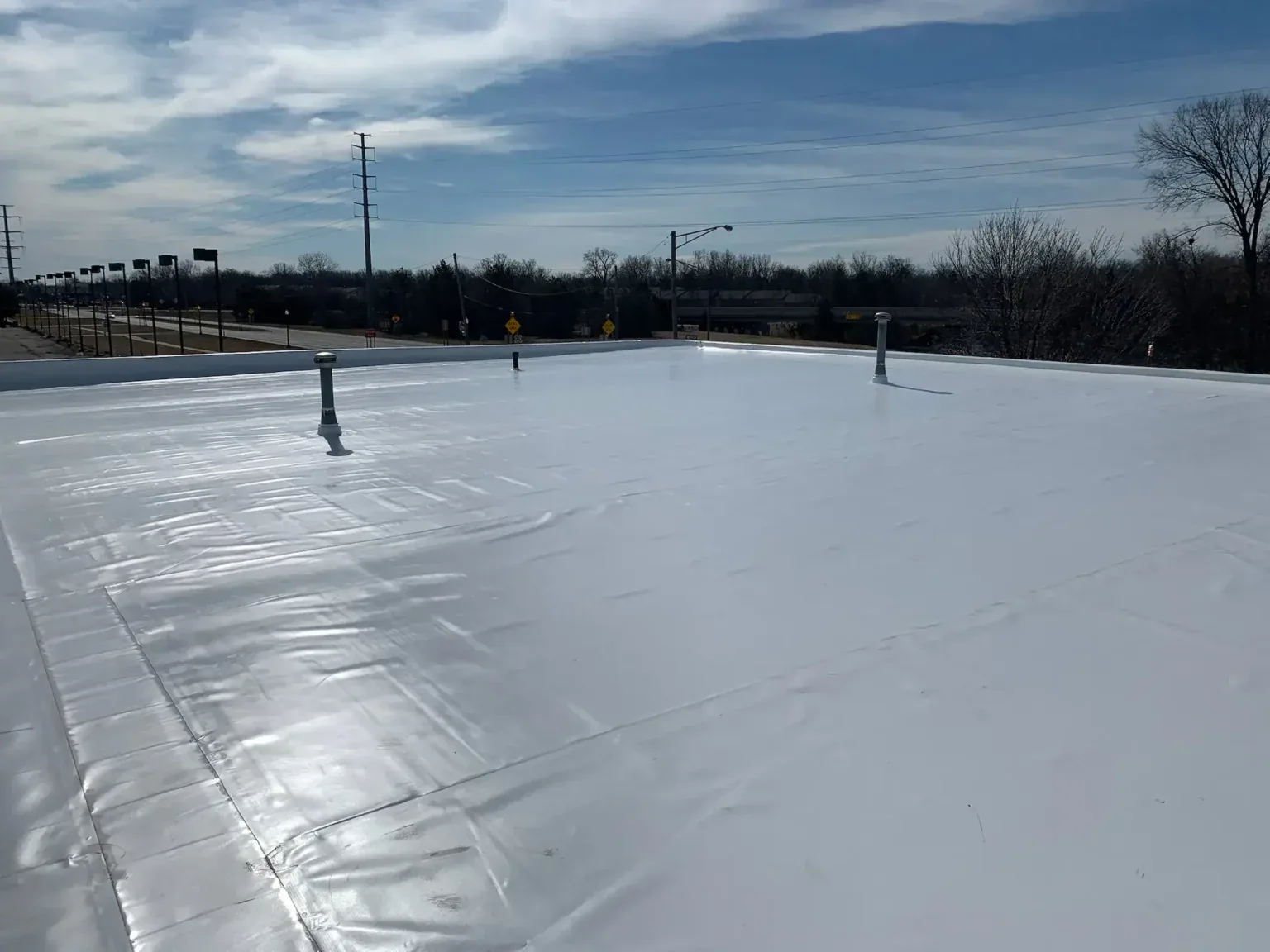
We identify the installed roof before proposing a patch. TPO, PVC, EPDM, modified bitumen, built-up, and metal systems use different seams and transition details. A PVC membrane repair must tie into compatible material and a suitable substrate. We document the system we identify, visible layers, and any uncertainty that needs a test opening before broader work is priced.
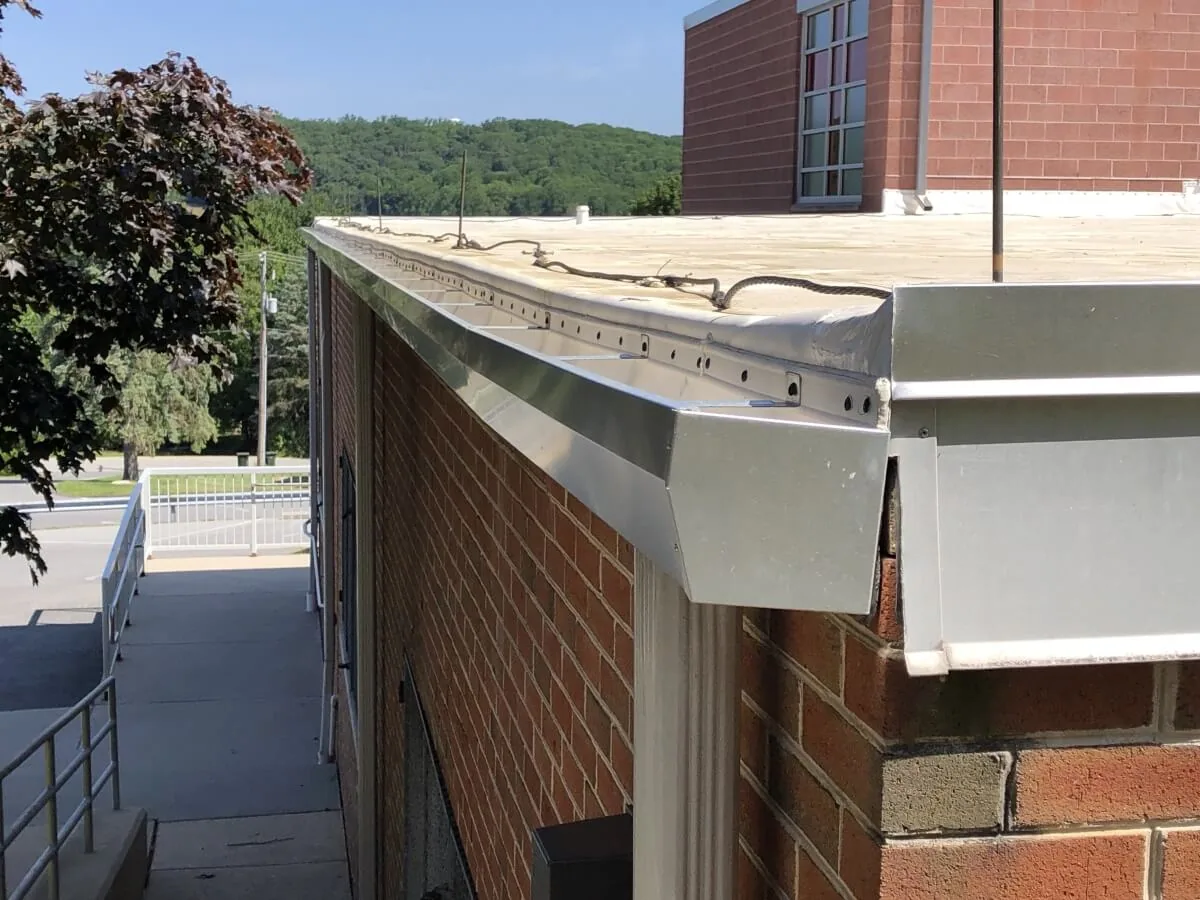
Showroom additions, service areas, and canopy connections may create different roof heights and tie-ins. We check the membrane where it meets a wall, curb, metal panel, or expansion joint. A edge metal and coping repair can be scoped alongside the adjacent membrane only when the inspection shows the connection needs it. The roof map shows the boundary so a repair does not leave an unreviewed transition immediately beside it.
Coating restoration may be considered when adhesion, seams, drainage, and moisture conditions support it. A coating cannot solve a failed drain or wet insulation on its own. We define preparation and reinforcement only after reviewing the existing surface, then compare restoration with repair and replacement. If a test or access restriction changes the evidence, the scope says what decision remains open.
A single split seam, puncture, or flashing opening may fit a local repair if nearby layers are stable. Repeated leaks, broad moisture, weak attachment, or widespread membrane damage can support removal and replacement. A recover is considered only after existing layers, drainage height, load, and moisture are reviewed. We mark findings by roof zone and distinguish immediate leak work from larger capital planning. The dealership can keep its service areas open while the owner compares defined options.
Access height, lift placement, vehicle movement, equipment coordination, material removal, disposal, and tie-in count shape price and timing. The schedule also accounts for customer arrivals and service-bay throughput. We keep the open roof area small enough to protect and close within the planned window. If a test opening reveals concealed damage, we photograph it and request approval before expanding the work boundary. Each shift ends with a recorded tie-in and handoff.
Before the lift arrives, we walk the entrance, loading boundary, and service lane with the dealership contact. The property walk sets the dealership's delivery plan, staging boundary, and roof work sequence. A shopping-center roof project may have different customer paths; a commercial office roof scope may have different access hours. For this property, the walk sets the route and sequence.
The closeout identifies repaired zones, materials, seam and curb photographs, drain condition, temporary protection, and any unresolved item. It notes the daily work limit and the route returned to service. The facility contact can keep the roof map with maintenance records and compare a later report against the completed repair boundary. If a roof area was unavailable, the record states the access limit instead of treating it as clear.
Jersey City's six districts include Downtown and Greenville. A district can organize a portfolio, while each dealership receives findings from its own roof. A repair can address a defined opening, and a maintenance visit can check drains and details later. Set the walk around the highest-priority leak, service hours, and vehicle routes. We will return a written scope with the next approval point.