Snow Load and Ice Damage Roof Repair in Jersey City, NJ
Repair snow load, ice dam and freeze-thaw damage on Jersey City commercial roofs: drains, edges, membrane splits and wet insulation found and fixed.
Repair snow load, ice dam and freeze-thaw damage on Jersey City commercial roofs: drains, edges, membrane splits and wet insulation found and fixed.
Snow on a flat commercial roof is weight first and water second. It sits on the deck as a load, and when it melts, it becomes a flood that has to find a drain. In Jersey City, NJ, the roof can see both phases in a short span when a snowfall is followed by a thaw. Snow followed by thaw puts a commercial roof through two demands in quick succession: deck load first, then drain capacity. The roof walk checks both before we choose the repair.
After a snow event, the first question is not about the membrane. It is about the drains, the low areas and any sign of deck deflection. If those are in order, the surface can be examined for the damage that freeze and thaw leave behind.
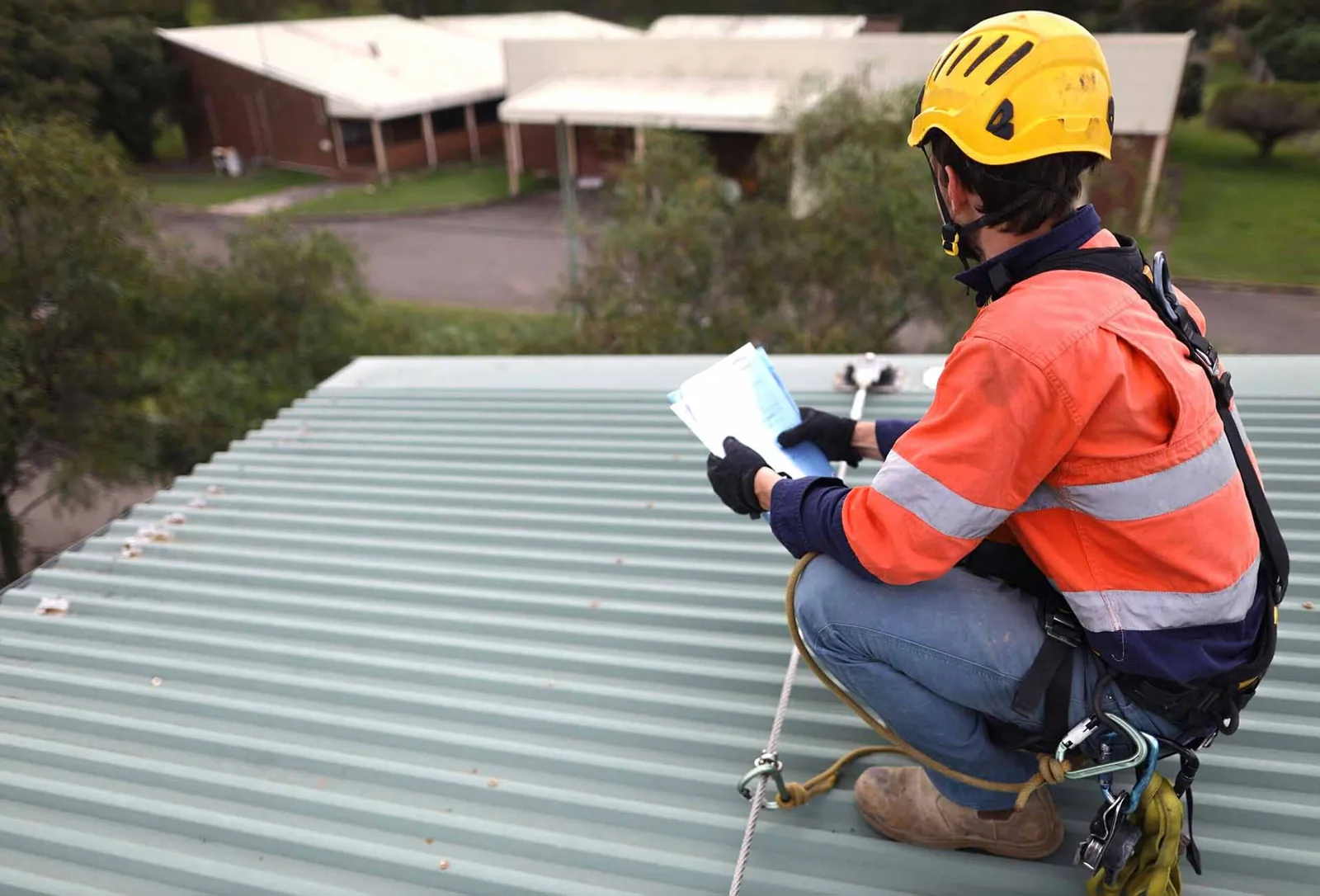
The post-storm walk starts with safety. Snow and ice hide hazards, and a roof edge can be invisible under drift. We wait for conditions that allow safe access, use fall protection and probe before stepping. Where the roof is unsafe, we inspect from a lift or by drone.
Deflection is the first structural check. A deck that sags under snow or ponding water shows it as visible bowing, doors that stick below, or ceiling cracks. We note any sign and recommend an engineer if the movement looks serious. We do not guess at capacity.
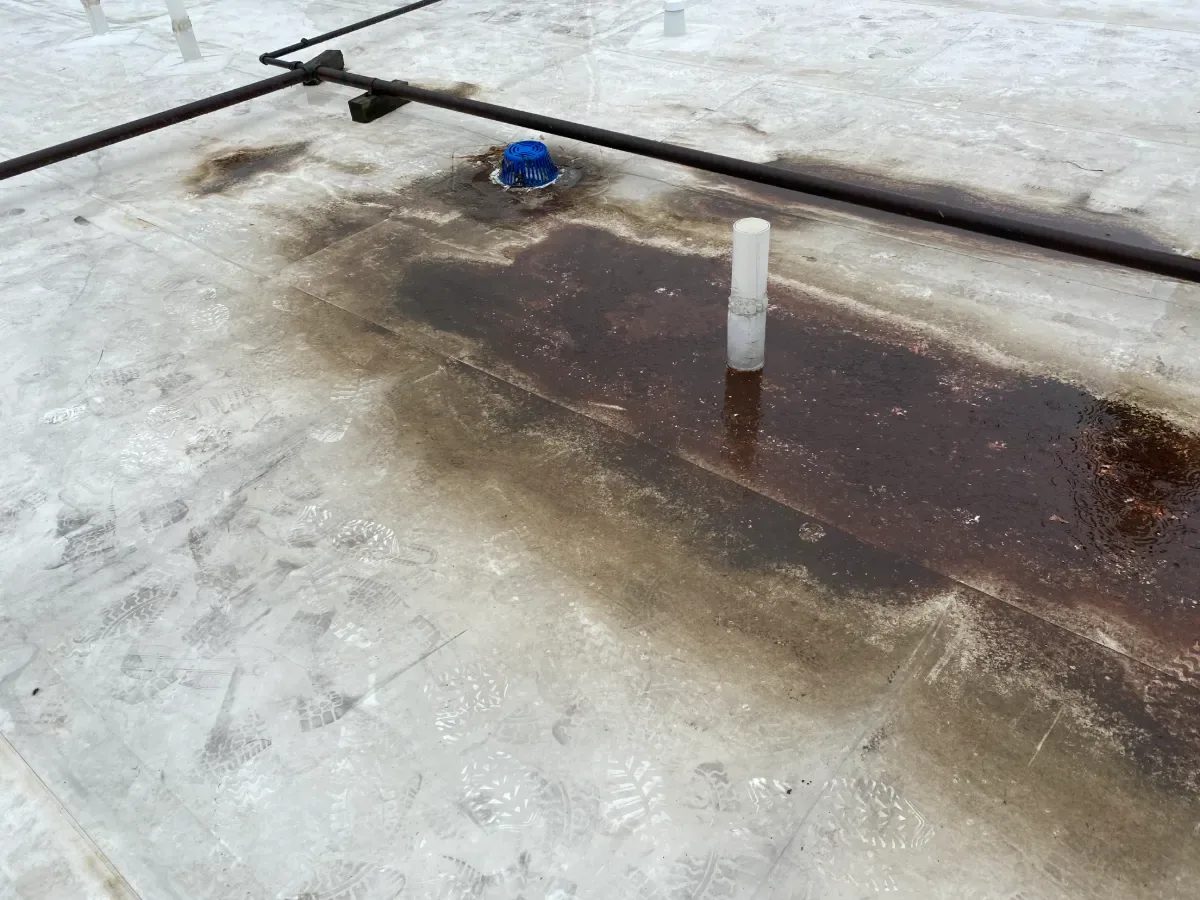
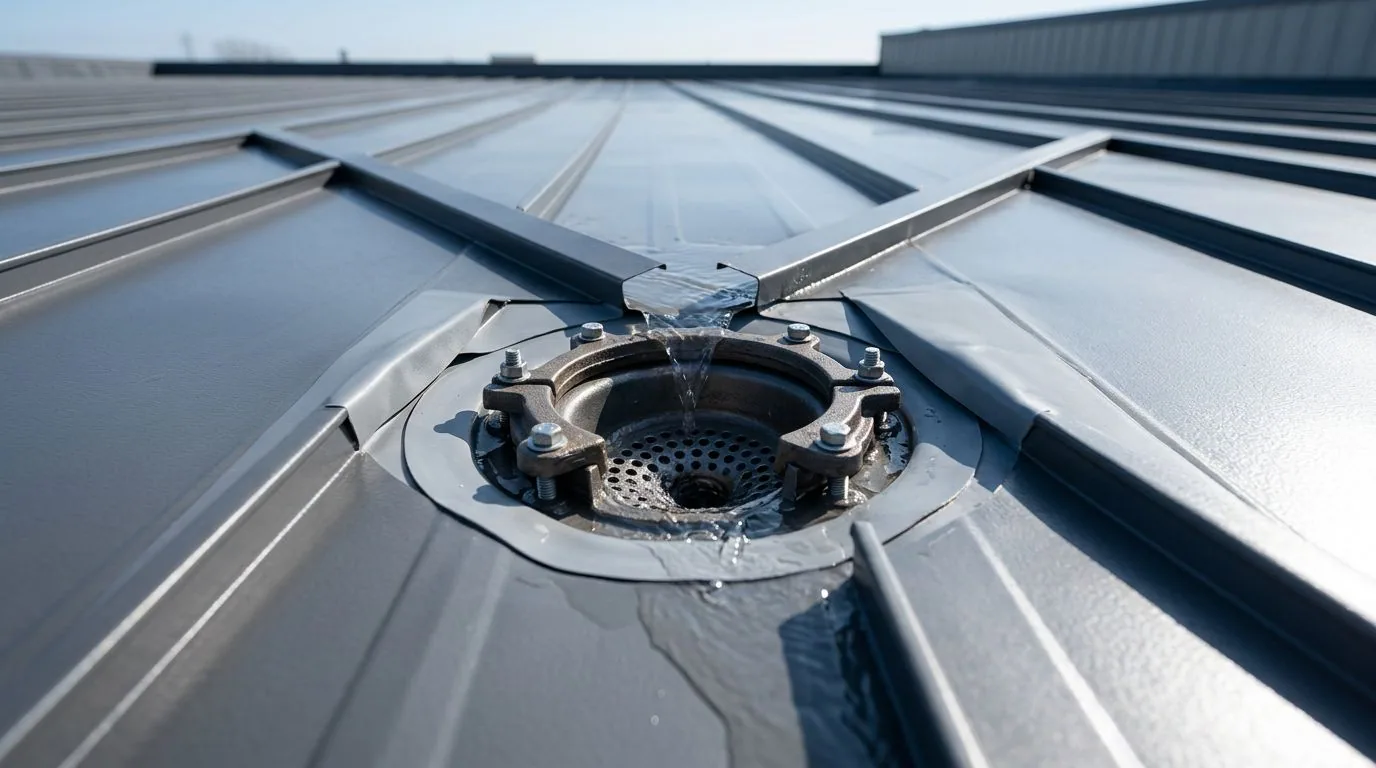
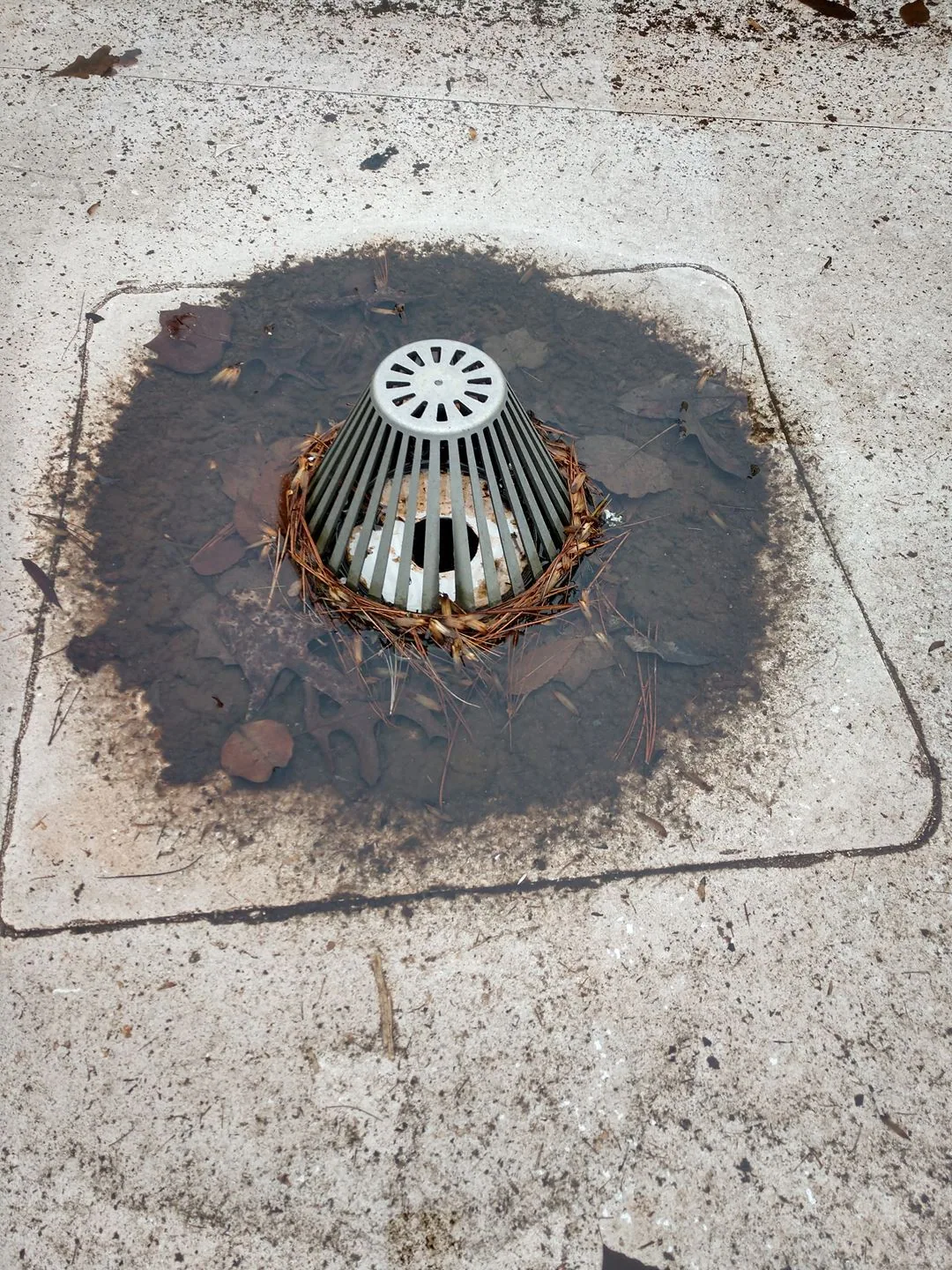
Drains come next. Frozen or clogged drains trap meltwater, and the water refreezes at night. We clear ice from bowls, thaw lines where needed, and check that strainers are intact. The edges are the third pass: gutters pulled loose by ice, scuppers blocked by ice dams, and coping displaced by expanding ice.
Interior signs add to the picture. A ceiling stain that appears days after a melt, or only during a thaw, points to meltwater finding a path through a seam or flashing.
Tell us the building address and roof access. We will clear drains, check edges and seams, and record the roof before the first freeze.
An ice dam forms where melting snow meets a cold edge and refreezes. Water stacks up behind the ice and looks for a way in. On low-slope roofs, the usual victims are scuppers, gutters, internal drains and the area behind a parapet. When the outlet freezes, the pond behind it grows.
The fix is partly maintenance and partly design. Clear drains and scuppers before winter. Keep heat tracing and drain heaters working where they exist. Add overflow scuppers at a height that lets water leave if the main drain freezes. A drain and scupper service in late autumn is among the best protections an owner can buy.
The City's green-infrastructure guidance names stormwater loading on the combined sewer system as a concern, and meltwater adds to that load. A roof that dumps its water at once into a saturated system is part of a bigger problem. Slower, controlled drainage helps the roof and the street.
Where meltwater has ponded and refrozen, the surface needs a close look. Repeated freezing and thawing can open seams and crack aged membrane, and a pond that sits there all winter, the kind found on a ponding roof, speeds the damage.
Water that enters a small opening and freezes expands, and the opening grows; a split seam often starts this way. This is how a hairline crack becomes a split. Membranes also become brittle in cold weather and shrink, pulling at seams, flashings and fasteners. Some systems tolerate cold better than others, and aged membranes are the most vulnerable.
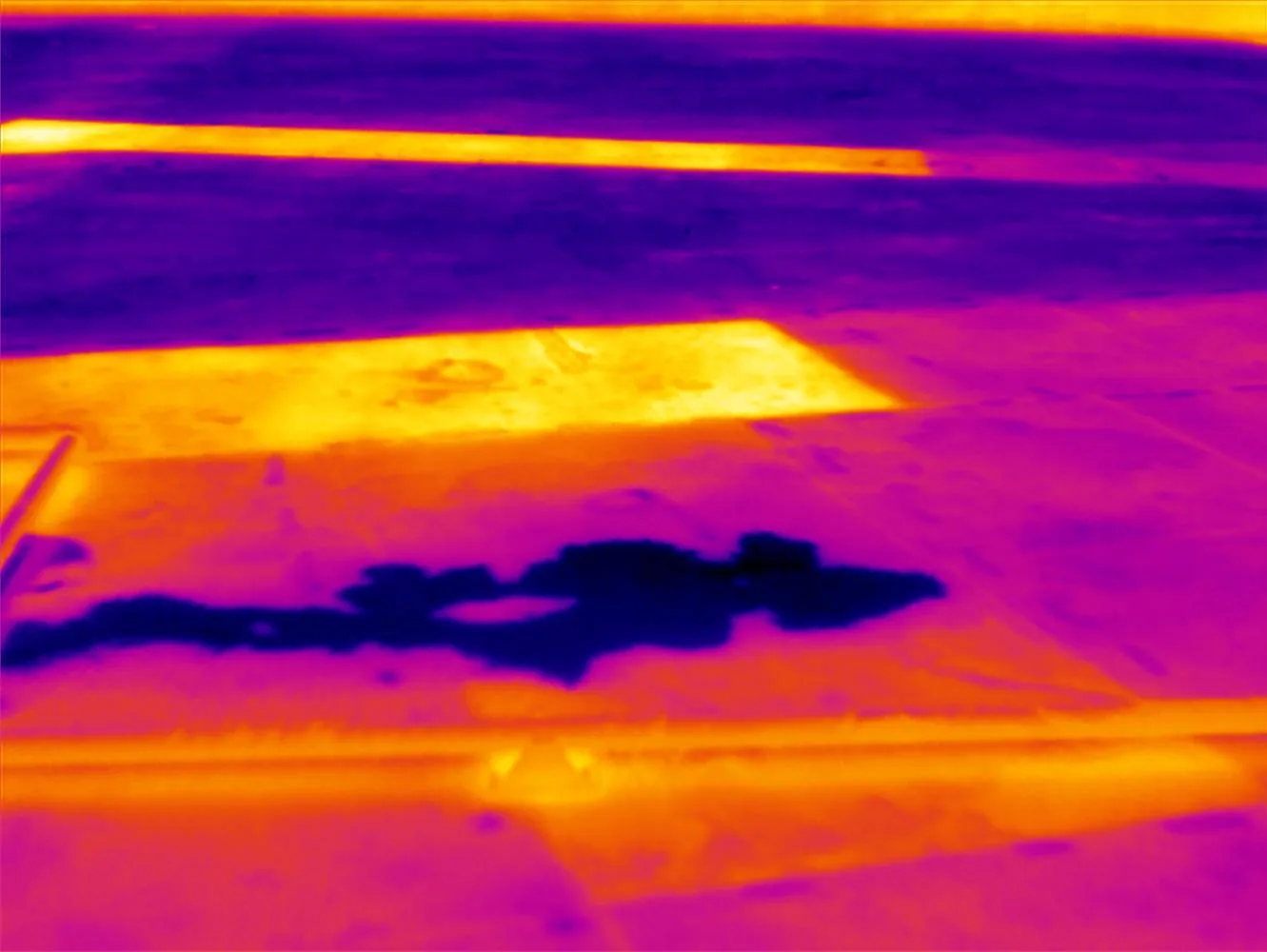
Insulation is another casualty. Wet insulation freezes, breaks down and loses its value. Boards can crush, and the membrane above may sag or blister. We use an infrared moisture survey when conditions allow, though cold surfaces limit what the scan shows, so we may core and test instead.
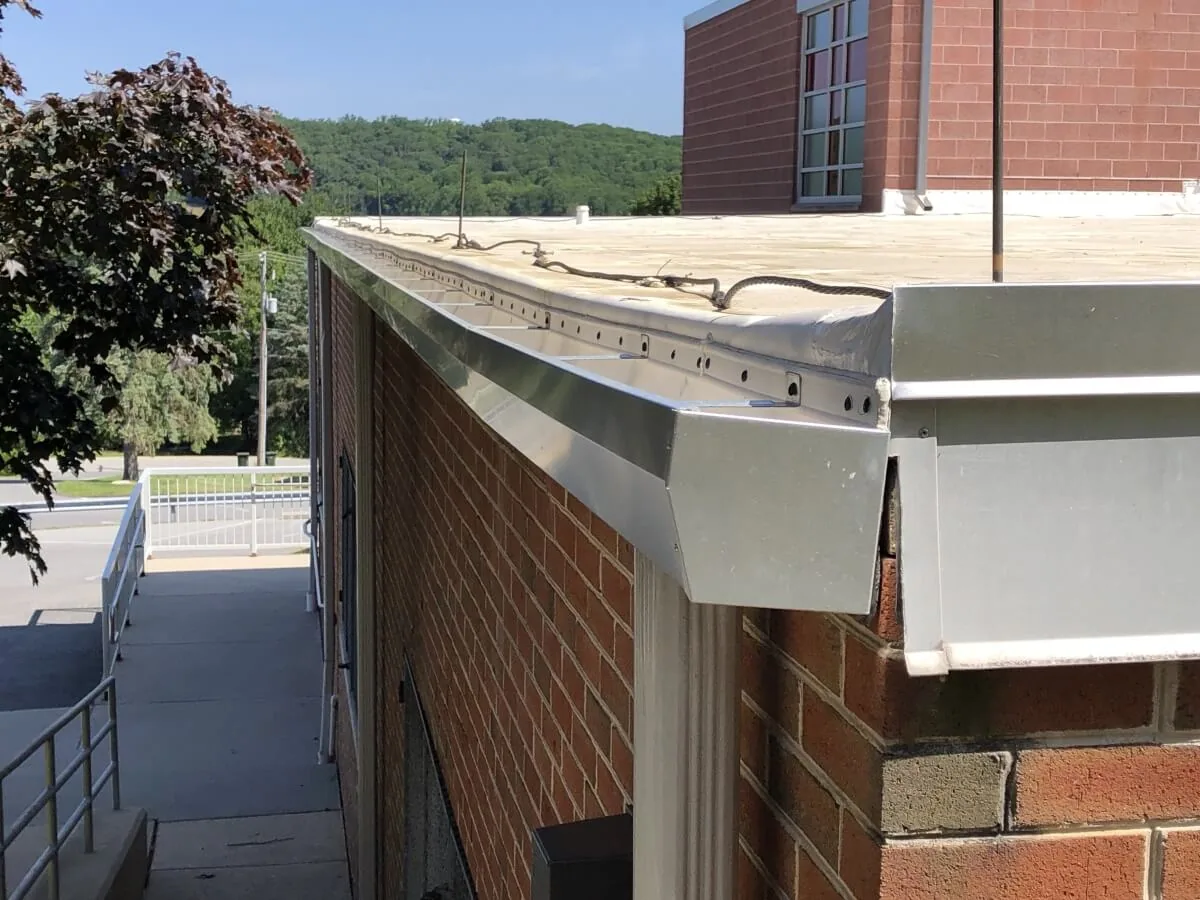
Edge metal and copings take a beating. Ice expands in joints, pushing metal out of alignment. Sealants crack in the cold. After a hard winter, we look for open joints, loose cleats and displaced fasteners. A coping and edge metal repair in spring prevents water entry during the next rain.
Cold limits what can be done. Adhesives and sealants have temperature minimums, and welded seams need clean, dry sheet. We choose temporary protection that works in the cold: tarps, sealed patches, tape-based systems and mechanical covers. These hold until the weather allows a permanent repair.
For active leaks, our emergency roof repair crews respond at any hour, holidays included. We find the entry point, dry in and protect the interior. In the cold, we focus on stopping the water, then schedule the permanent repair for a thaw.
Snow removal is a related decision. Owners sometimes ask whether to shovel a roof. Removal can relieve load, but it also risks cutting the membrane. If removal is necessary, we use plastic tools, leave a layer of snow on the surface and keep clear of drains, skylights and edges. A structural engineer should set the load limit for the building.
Once the weather turns, we complete the repairs that had to wait: cracked membrane, open seams, damaged flashing and wet insulation. We replace what freezing has ruined and restore the roof surface. Where damage is widespread, we compare repair with a replacement.
Jersey City saw destructive flooding and property damage along with power outages during Irene and Sandy. A winter readiness check still comes down to drains, edges, insulation, and a membrane that can take freeze-thaw movement.
A fall readiness visit puts the roof in shape: drains cleared, edges checked, seams probed, heaters tested and access routes marked. We record the results so the spring walk can compare conditions.
The winter record includes photographs of drains, edges and any damage, the dates of snow and thaw events, and the repairs made. A pattern may appear over several winters: the same corner freezing, the same drain failing, the same seam opening. That pattern guides capital planning.
A portfolio owner can put fall readiness for every building on one calendar through a multi-site program. Properties in Newark and Elizabeth can share the schedule, and buildings in Hoboken follow the same record format.