Commercial Roof Coating Restoration in Jersey City, NJ
Restore a Jersey City commercial roof with coating selection, substrate checks, seam repairs, drainage review, and a documented application sequence.
Restore a Jersey City commercial roof with coating selection, substrate checks, seam repairs, drainage review, and a documented application sequence.
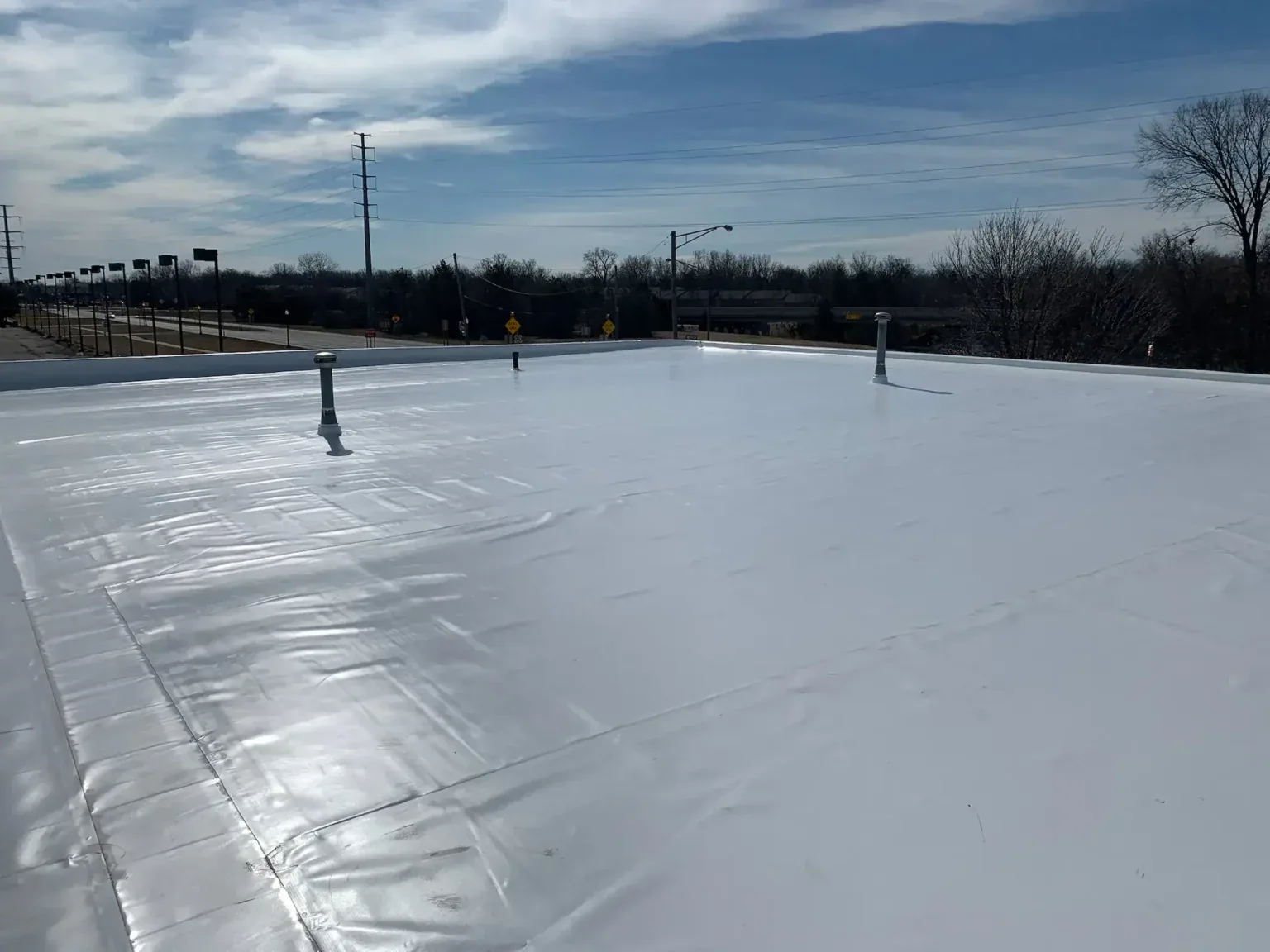
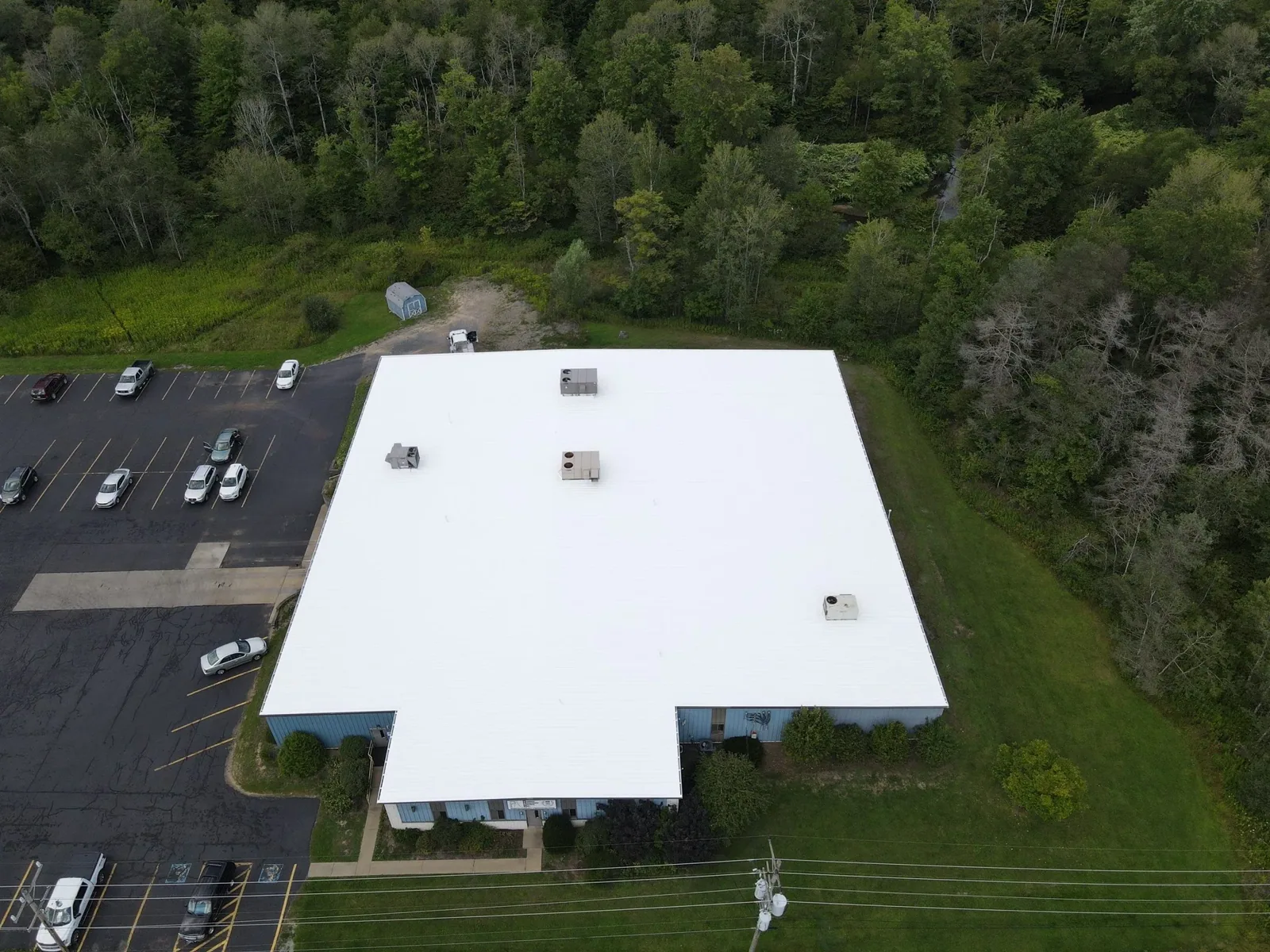
A roof coating restores a surface only when the existing assembly can hold the preparation and film. In Jersey City, we begin with adhesion, moisture, seams, drains, and edge details before presenting a restoration scope. The review separates a sound substrate from areas that need repair or removal. A roof inspection establishes those conditions before coating material is selected.
Coastal storms and flooding have affected Jersey City, and the city manages stormwater loading on its combined sewer system. A coating does not correct blocked drains or a failed wall transition. We map those conditions, test the surface where needed, and identify what must be repaired before the coating crew begins.
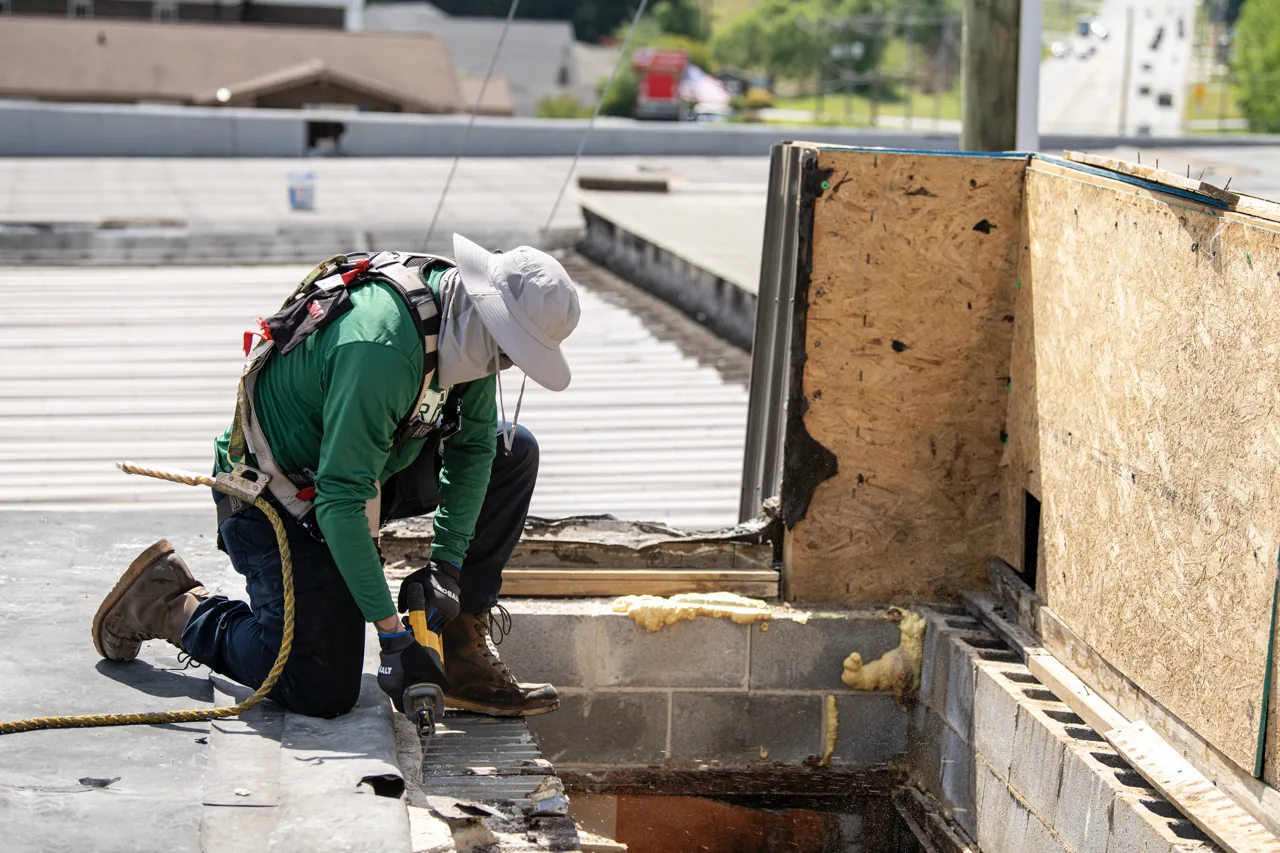
Preparation determines whether a liquid film can bond and remain continuous. We identify the membrane or roof surface, remove loose material within the agreed scope, and inspect seams, blisters, prior patches, and exposed reinforcement. A test area can confirm cleaning and adhesion requirements before the full roof is scheduled. If the existing surface is unstable, coating over it transfers that weakness into the restoration.
We look for moisture at laps, drains, curbs, and low points before covering the field. Wet insulation or trapped water needs a different correction. The report divides the roof into areas that can be coated, repaired first, or opened for confirmation. In a Jersey City building with several roof zones, each section receives its own preparation and closeout note rather than one broad statement about the entire roof.
Share roof type, recent leak history, and access conditions. We will inspect adhesion, moisture, drains, and transitions before recommending a restoration system.
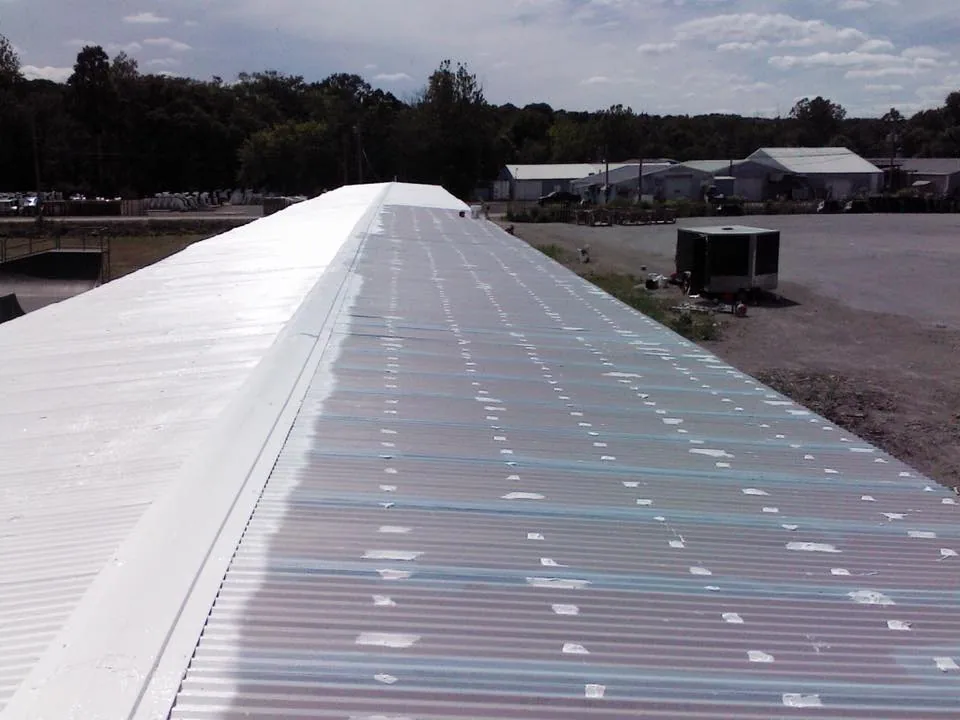
Silicone and acrylic coatings have different water exposure, surface, and application considerations. We match the selected product to the existing membrane, slope, drainage, temperature range, and project details. We confirm the manufacturer’s preparation and application requirements in the system submittal. The scope identifies fabric reinforcement, flashing work, and the number of roof zones so the owner can see what the coating includes.
Modified bitumen, metal, EPDM, and built-up surfaces require compatible primers or details. A coating cannot bridge every failed seam or corroded panel. We inspect the substrate and recommend a test where adhesion is uncertain. A silicone coating system may suit some assemblies; an acrylic system is evaluated against its own exposure and drainage needs.
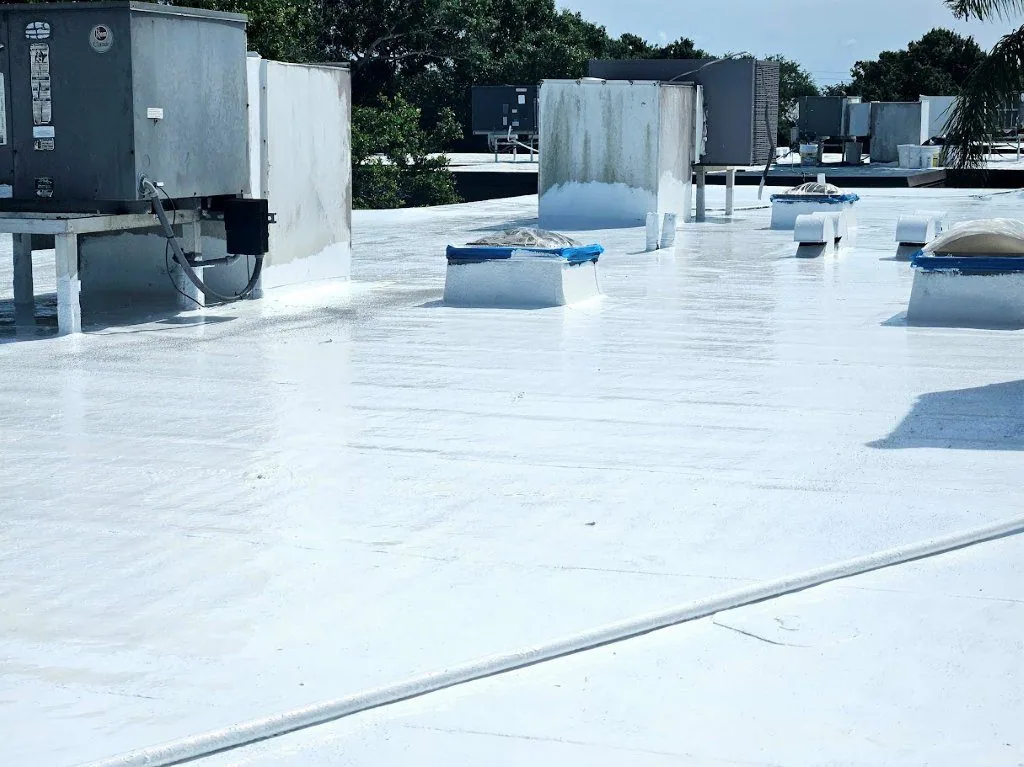
Open laps, loose edge metal, failed penetrations, punctures, and deteriorated flashing need repair before a coating is applied. We map each defect, photograph the transition, and show the proposed correction. A coating may protect a sound field, but it should not hide a water path at a curb or termination. The owner sees which work is included and which conditions need a separate approval.
Journal Square and Central Avenue are among Jersey City’s commercial centers, while Greenville and Tonnele Avenue have industrial areas. The roof assembly on each property still comes from inspection. We check rooftop equipment, foot traffic, and perimeter details as part of the restoration plan. If the field remains usable but seams need attention, a repair scope can precede the coating work rather than being buried inside it.
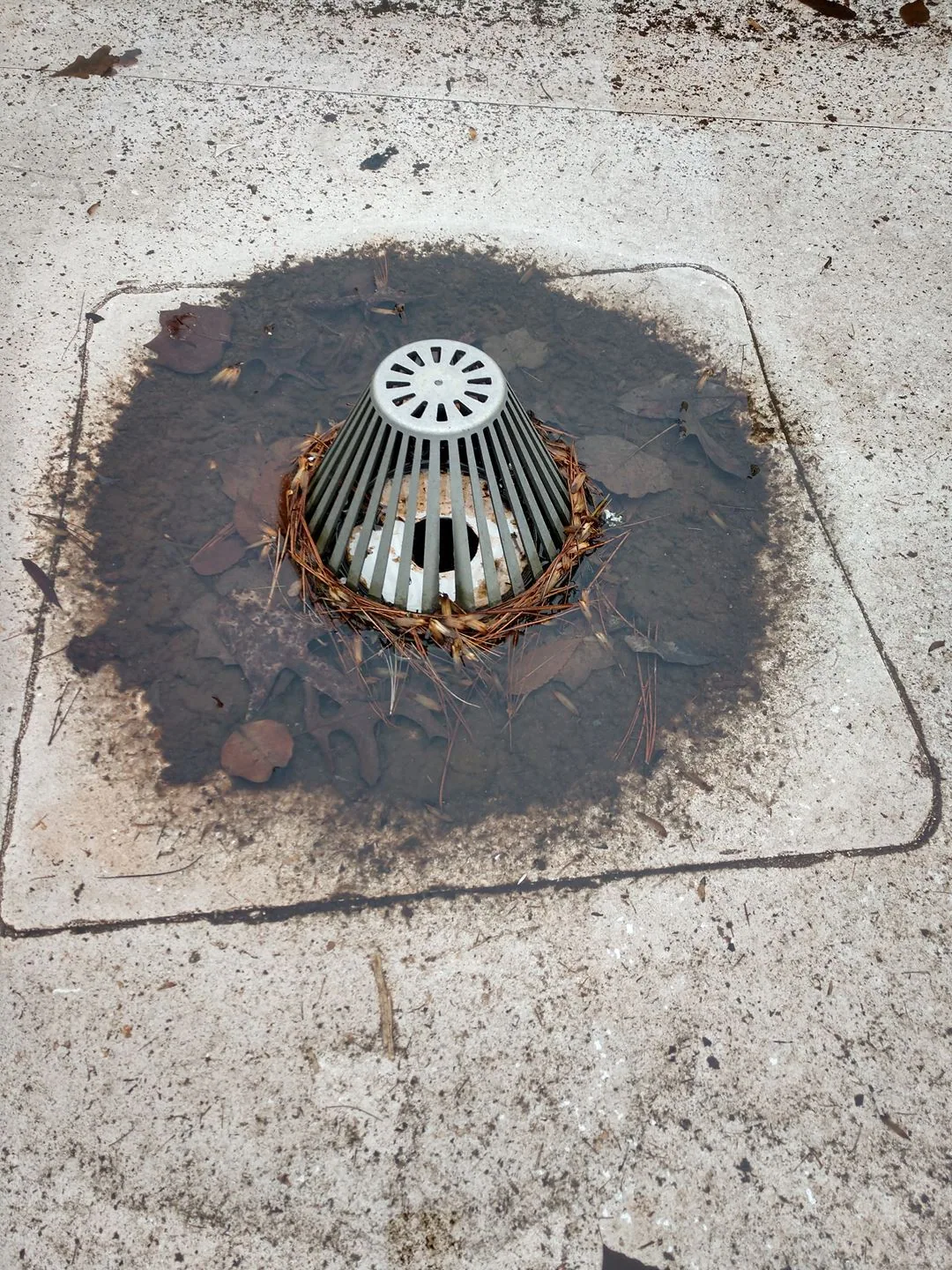
Coatings change the roof surface, not the drainage design. We inspect bowls, strainers, scuppers, overflows, and low areas to see whether water can reach the outlet. Ponding can affect coating selection and may call for a separate drainage correction. We record the conditions, measure where practical, and include any required slope or outlet work as a separate item in the proposal.
Jersey City’s stormwater load makes that distinction important during a restoration. A roof coating cannot compensate for an outlet that stays blocked or a drain flashing that has separated. We coordinate the field work with a drain and scupper review when the water path needs correction. The owner receives a roof map that distinguishes surface restoration from plumbing or site drainage work.
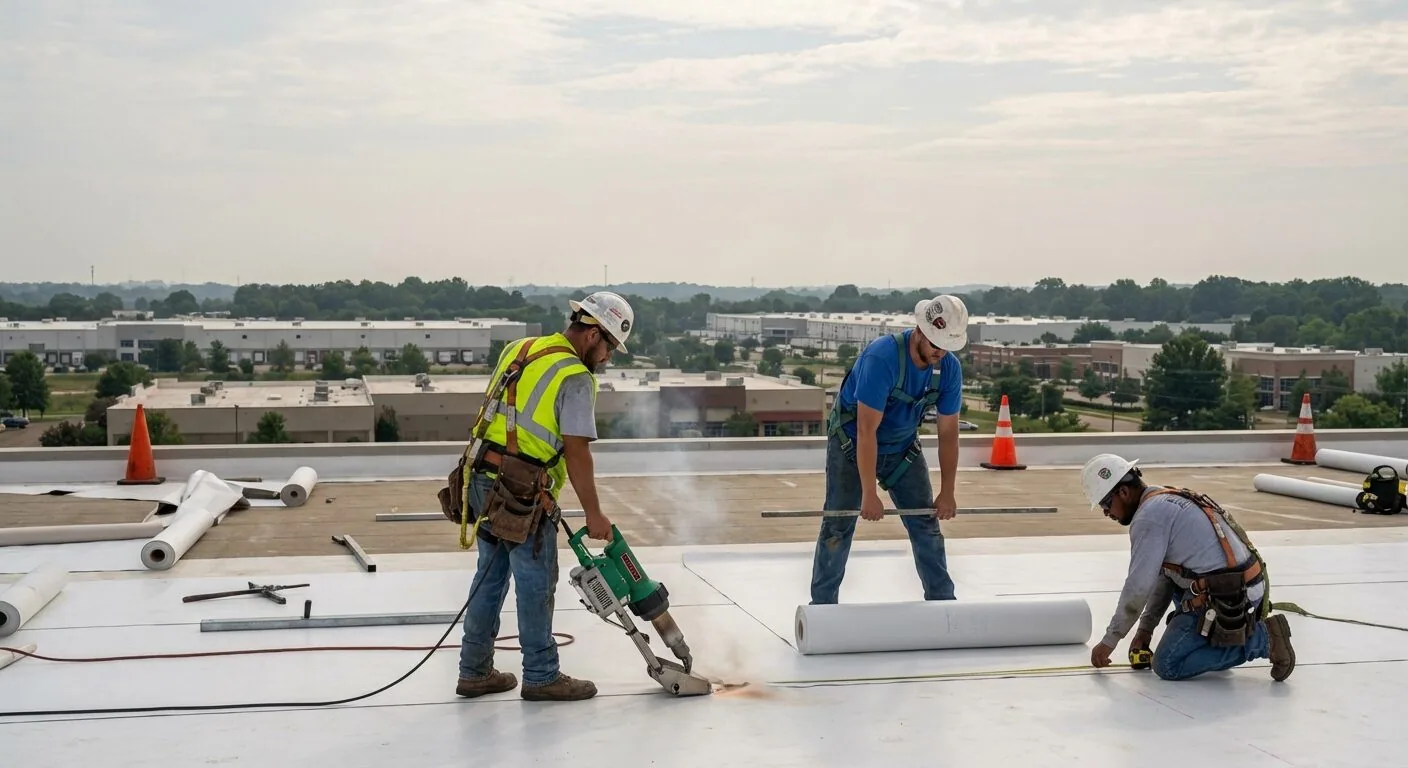
Coating depends on surface temperature, moisture, wind, and cure time. We choose a work window that allows preparation and application to proceed without exposing an unsealed section overnight. The sequence limits the open area to what the crew can complete and protects tenants, rooftop equipment, and adjacent surfaces. If rain is forecast or the substrate remains damp, we move the application rather than leave an incomplete film.
Staging, lifts, access, and exhaust or HVAC operations go into the pre-work plan. We confirm which equipment can remain active and what the building team must shut down. The daily record identifies the zones prepared, coated, and protected. On a multi-zone roof, the crew can prepare one area while another remains in service, but the sequence depends on safe access and cure conditions. We define where materials are stored, where a lift can stand, and how drains remain protected during washdown or surface preparation. The property contact approves those routes, including tenant access below. If adjacent elevations drain toward a lower roof, we inspect that interface before moving debris so preparation does not send material into an active outlet. Each transition is photographed before the next coat hides the detail. A phased occupied-building plan can stage the work around tenant routes and operating hours.
At closeout, the owner receives product and batch records, preparation notes, application dates, photographs, and the areas completed. We note any repair beneath the coating and any exclusion in the scope. The maintenance plan should watch seams, drains, curbs, and traffic paths where a later trade may disturb the film. A coating is a system that needs inspection, not a set-and-forget finish.
Jersey City’s larger districts include Greenville, Downtown, and Bergen-Lafayette. A portfolio report can group assets by roof condition but should retain each building’s coating history and access rules. We set a return inspection around the property use and system requirements. A warranty record can track required documents and approved follow-up, while a separate Hoboken restoration visit keeps that city’s roof facts distinct.