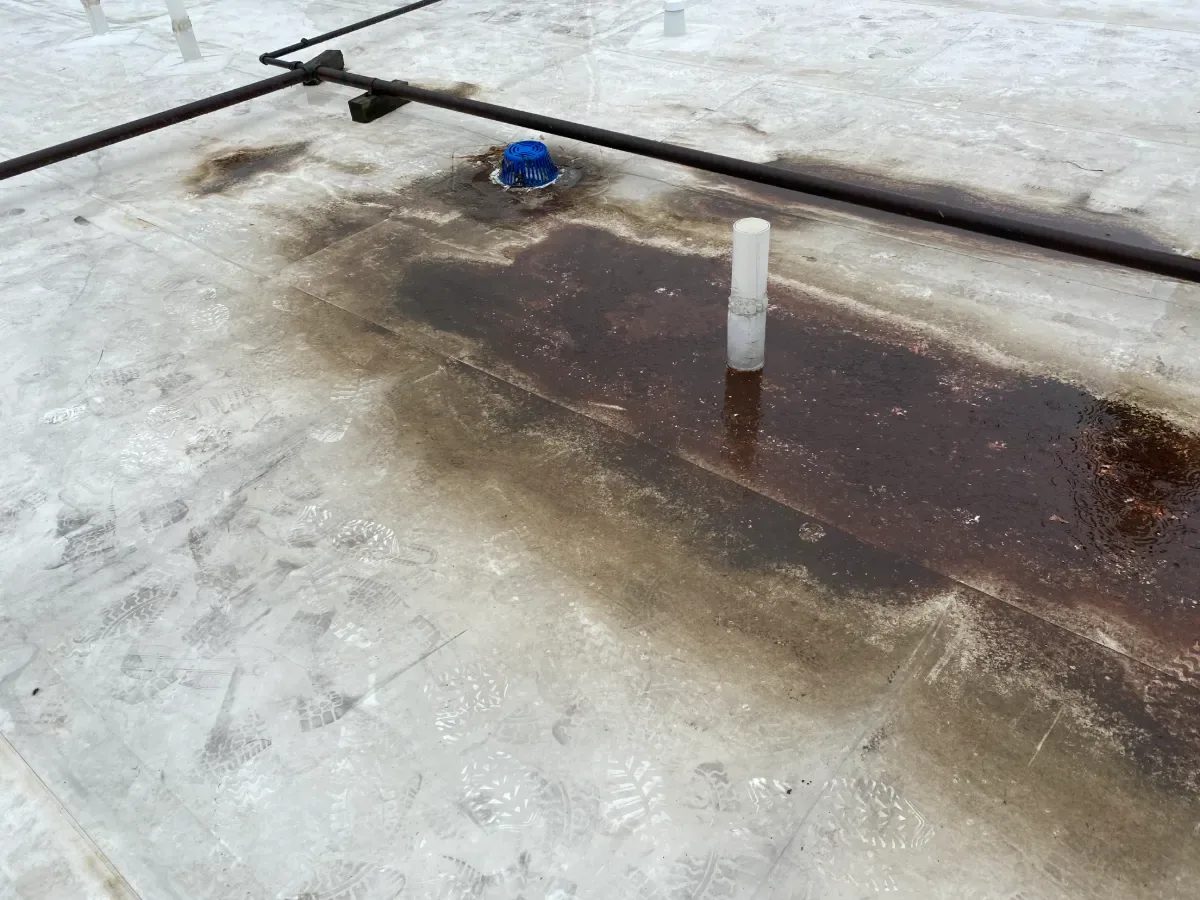
Heat and UV Roof Damage Repair in Jersey City, NJ
Repair heat and UV damage on Jersey City commercial roofs: chalking, crazing, shrinkage and blistering found early and fixed with coating or repair.
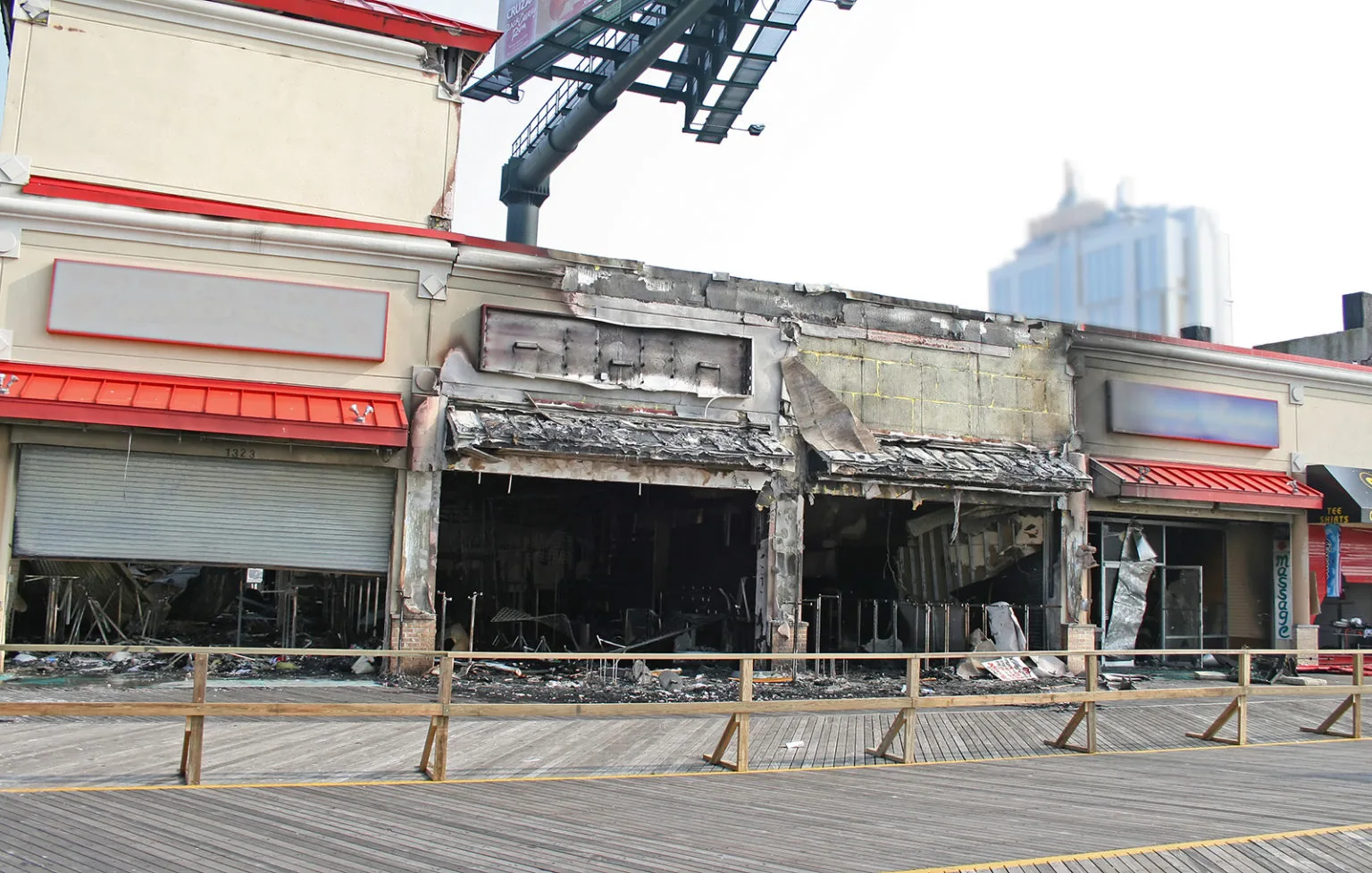
Repair heat and UV damage on Jersey City commercial roofs: chalking, crazing, shrinkage and blistering found early and fixed with coating or repair.
Sun does its damage slowly, and the evidence arrives as chalk on a boot, crazing on a surface, a shrunken membrane pulling away from a wall. By the time a stain shows inside, the roof has usually been losing ground for years. In Jersey City, NJ, the state's resilience strategy lists rising temperatures among the climate risks it addresses, so an owner planning a roof for the next decade should consider heat load as a design input. We start a heat and UV assessment on the surface, because the surface is where the damage can be seen and measured while it is still repairable.
The decision for the owner is whether the roof needs a protective restoration, a targeted repair, or planning toward replacement. The inspection sorts the roof into those groups.
Regional climate records help set expectations. Seasonal temperature swings put membranes through repeated expansion and contraction. We check the seams, flashings, and exposed terminations directly, because those details show whether movement has opened a path.
We begin with the open field and then check the details. On the field, we look for chalking, a powdery residue that shows the surface is breaking down. We look for crazing, a network of fine cracks, and for color change that reveals thinning. On membranes, we check for shrinkage, which pulls on seams, flashings and corners. On bituminous roofs, we look for granule loss, alligatoring and blistering.
Details tell the story first. Pipe boots, sealants and rubber components are the first to harden and crack in the sun. Flashings on the south and west sides see the most exposure. Roof edges, where the surface turns up a wall, take the stress of shrinkage. We photograph each condition and map it on a roof diagram.
Heat does not act alone. Thermal cycling, the daily rise and fall in temperature, makes materials expand and contract, loosening fasteners and opening laps. Dark surfaces get hot and reflective ones stay cooler. The survey records where cycling has done its work.
Rooftop color and finish matter too. White and light-gray membranes reflect more sunlight and stay cooler, while dark ones absorb heat. Where we find a dark surface with early cracking near a dark wall, we note the pairing, since heat reflected off the wall adds to the load on the corner.
Tell us the roof type and age and how to reach the roof. We will check the surface zone by zone and write a repair or restoration plan.
Each system ages in its own way. Thermoplastic membranes such as TPO can lose surface quality and become brittle as additives bleed out. Rubber membranes may chalk and shrink. Modified bitumen loses surface granules that shield the asphalt beneath. Built-up roofs with gravel or coating can dry out and crack. Metal roofs may lose finish and open sealants at fasteners and laps. Foam roofs depend on their protective coating to shield them from UV.
Knowing the system tells us what to test. We probe seams, check adhesion, measure coating thickness where possible and look at fastener heads. We also check whether past repairs used compatible materials, since a mismatched patch ages differently from the membrane around it and splits.
Age matters but does not decide. A ten-year-old roof in good care may outperform a younger one that has ponded. The test is performance, and our survey measures it zone by zone.
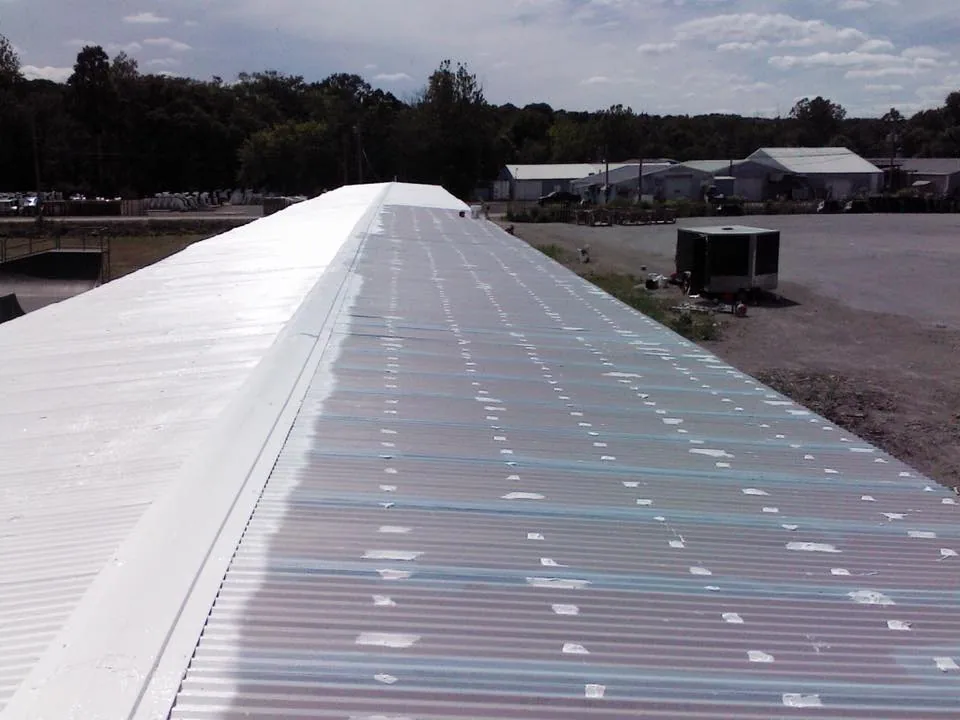
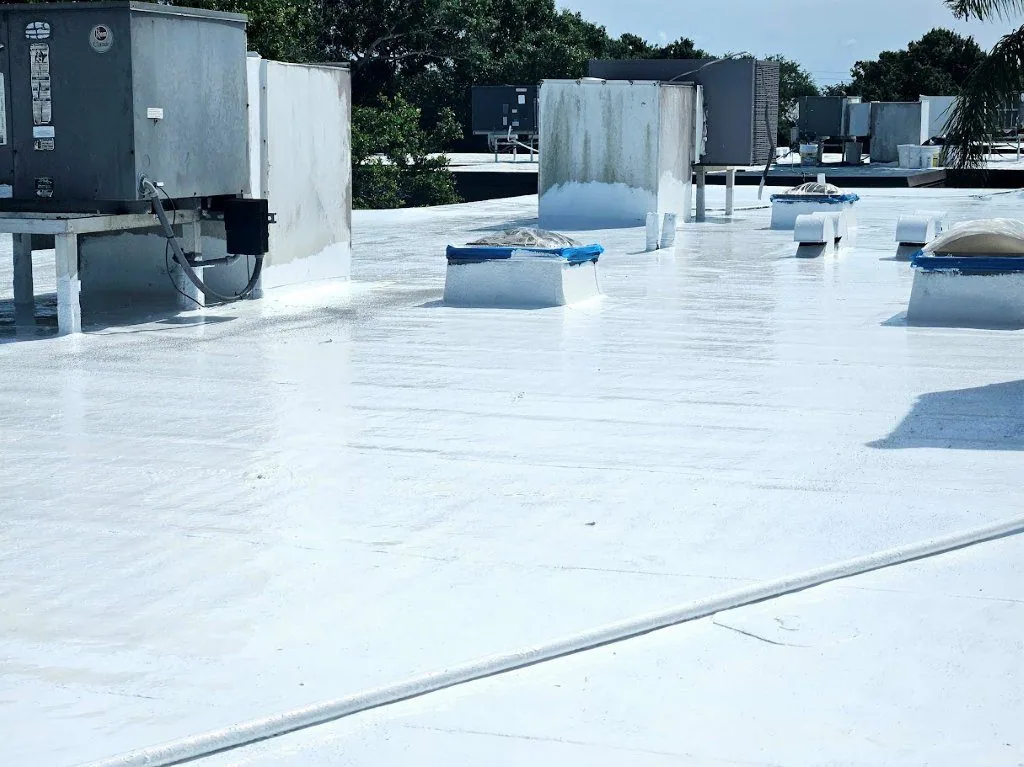
The choice depends on what lies beneath the surface. If the membrane is sound, the insulation is dry and the seams are intact, a restoration coating can renew the surface and extend service life. A reflective coating also lowers surface temperature, which reduces heat stress on the membrane.
If damage is local, repair is the better path. We replace cracked boots, rebuild shrunken flashings, reseal open laps and patch worn zones. Where the roof is brittle and failing, coating will not bond or last, and a replacement or recover is the sound path forward. We show the evidence for that conclusion in photographs and test results.
Silicone and acrylic coatings behave differently, and the choice depends on the roof. Silicone coatings handle ponding water well, while acrylics suit sloped surfaces that drain freely. We match the coating to the substrate and the drainage, and we run an adhesion test before committing to the full roof.
Coatings and adhesives have strict conditions. The surface must be clean and dry, and temperatures must fall within the manufacturer's range. A hot roof can flash-dry a coating before it levels, while a cool, damp morning can prevent cure. We watch the forecast, start after the dew burns off, and stop early enough for the coating to set before evening.
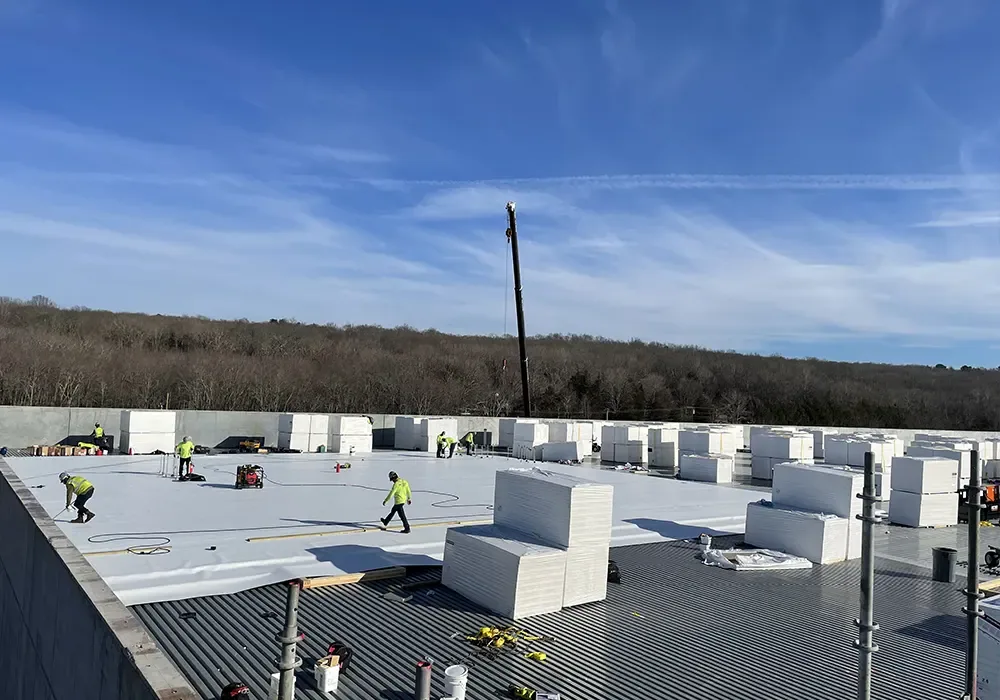
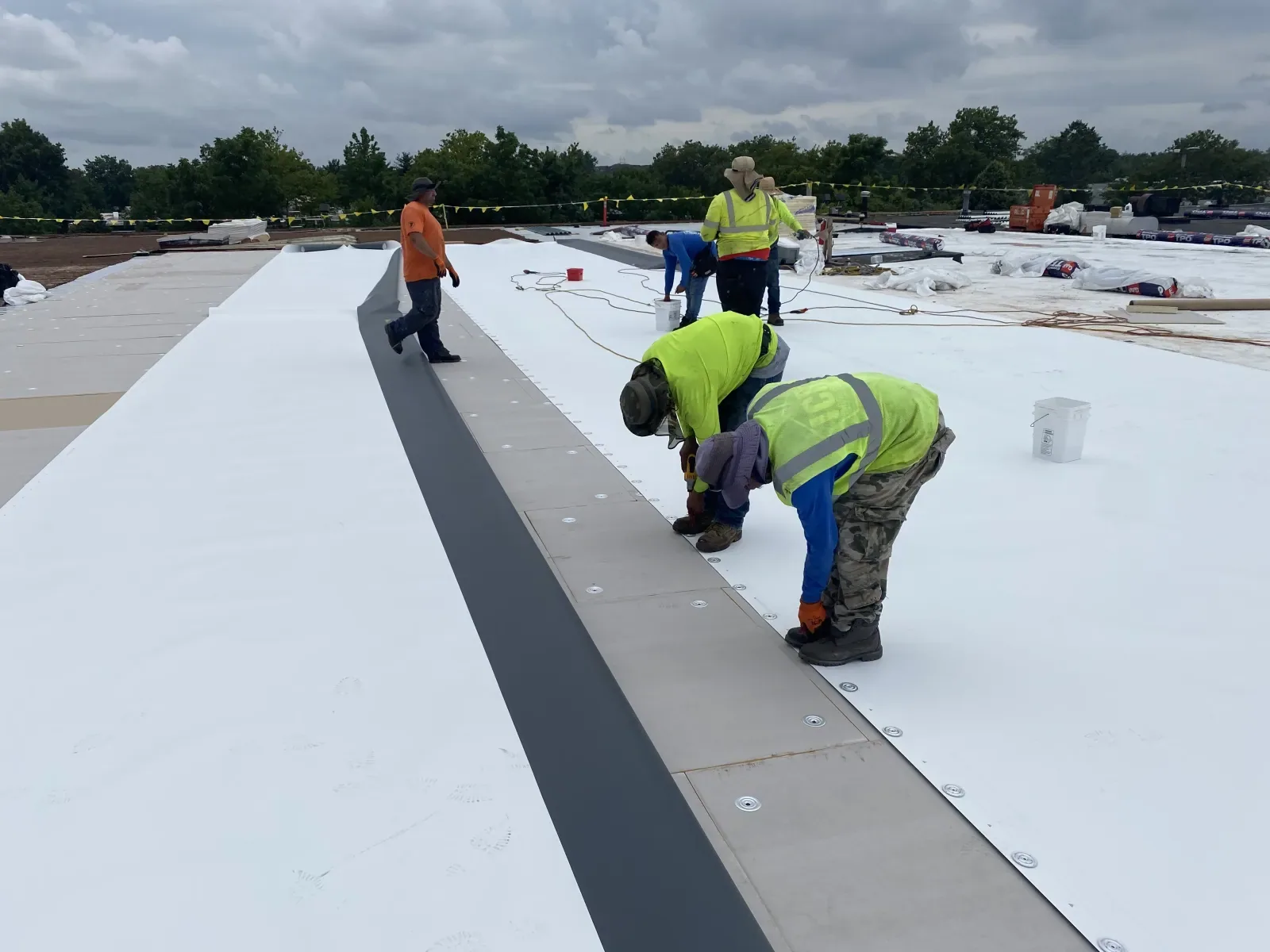
Preparation is the largest part of the job. We pressure wash, repair seams and flashings, clear drains, prime where needed and test adhesion. Skipping preparation is the main reason coatings fail. The work is done in zones so the building stays in use, and tenants receive notice of the schedule.
Rain in the forecast changes the plan. Coastal storms can arrive fast, so we keep a weather window in view and stage materials where a half-coated zone can be covered quickly. A zone that cannot be completed before rain is left safe and finished later.
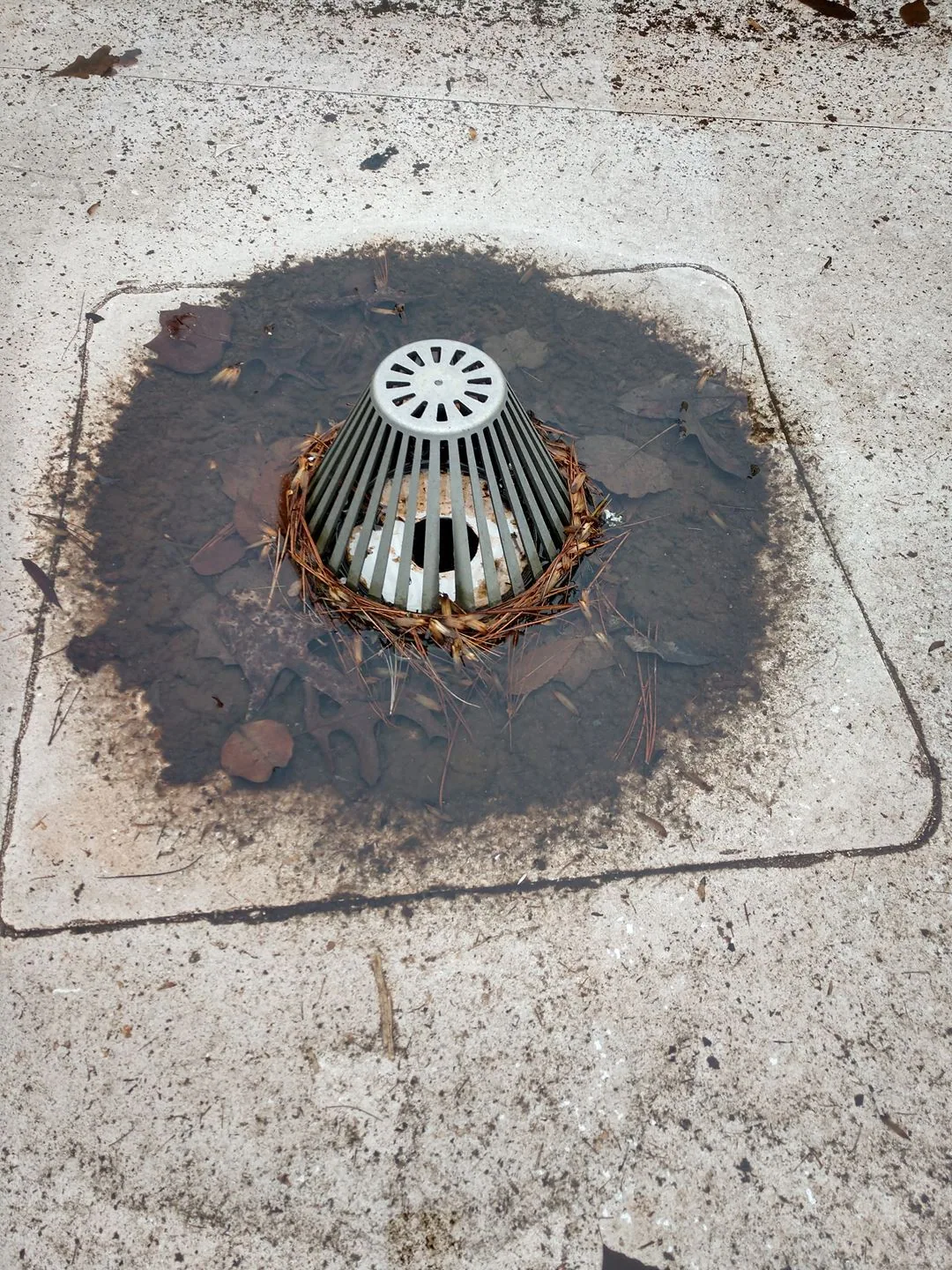
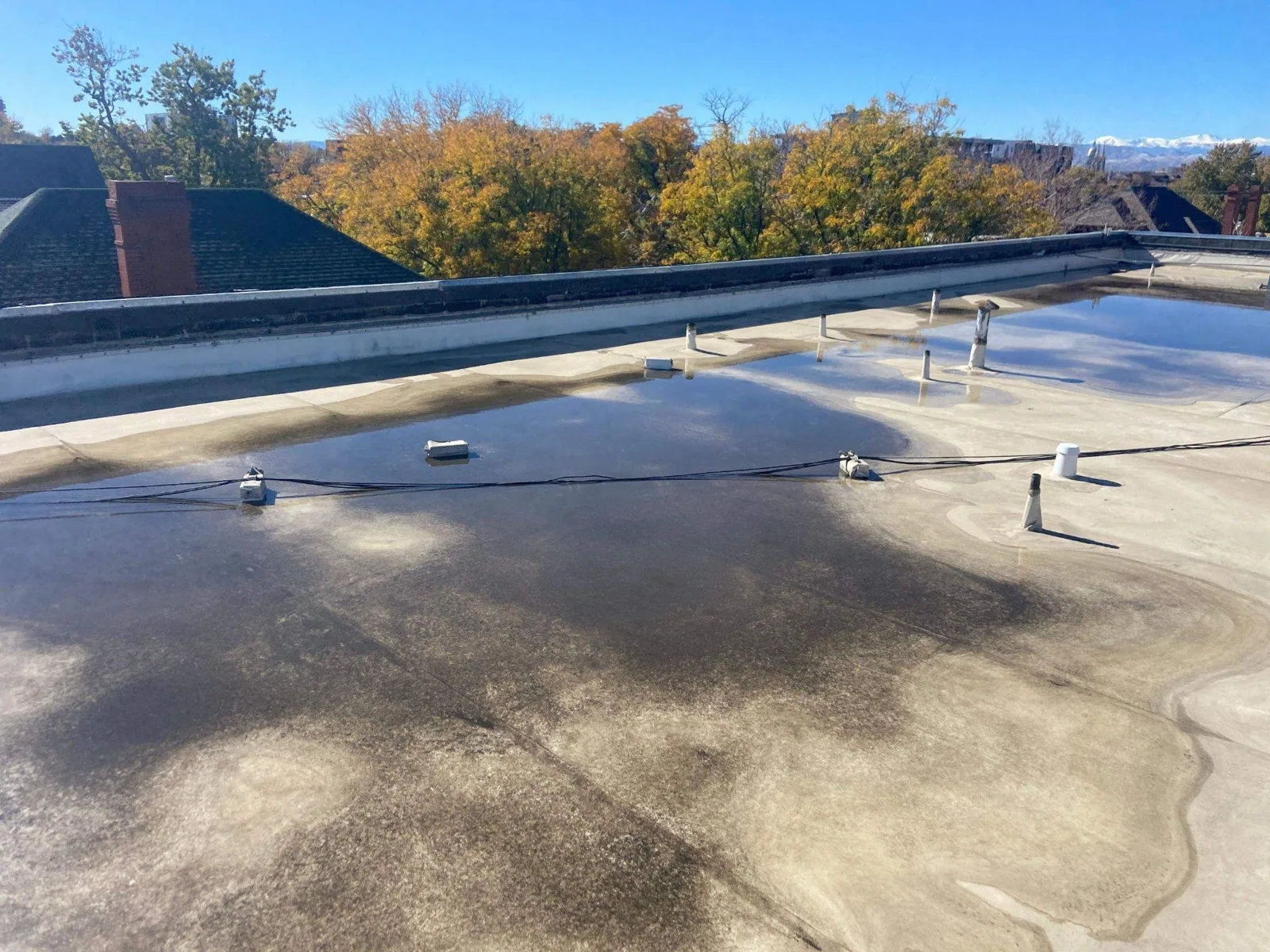
Heat and standing water are a poor combination. A pond on a hot roof becomes a warm bath that accelerates aging at the membrane surface, and algae growth stains and degrades it. Clearing drains and correcting low spots slows the damage. Our ponding repair work addresses the cause, and routine drain service keeps the outlets open.
Roof equipment adds heat. Exhaust fans and cooling units discharge warm air onto the surface nearby, and the membrane in that spot ages faster. We check these areas closely, add protective pads or reflective panels where useful and note them in the report.
We leave the owner a surface record: photographs of conditions by zone, the cause as best we can tell, the repair and the coating data. A reinspection after the first summer checks adhesion and appearance. Over the years, the record shows how the roof ages and when the next treatment is due.
Owners with several roofs can use a multi-site program to compare surface conditions across buildings. Properties in Hoboken or Kearny can be added. For roofs where the sun has also opened seams, seam repair finishes the work.