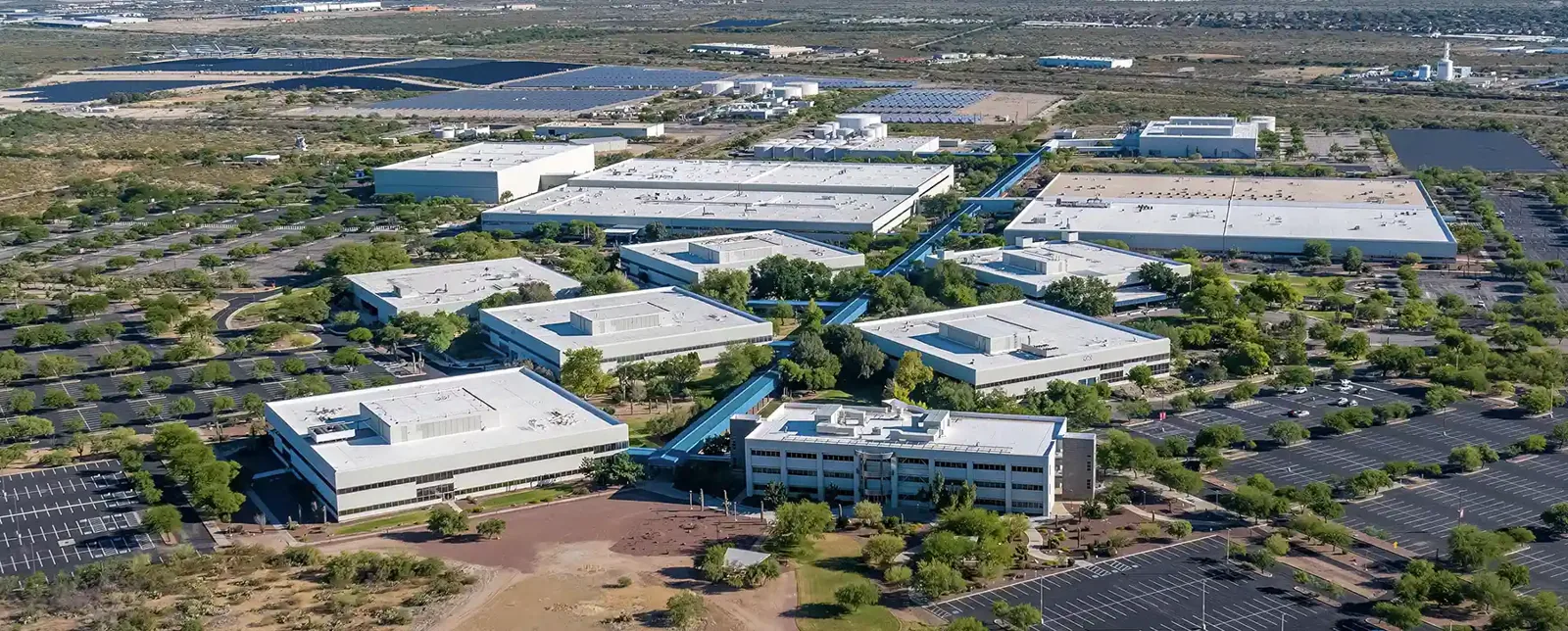
Roofing for Hotel Owners and Hospitality Groups in Jersey City, NJ
Roof repair, rooftop amenity protection and phased replacement for Jersey City hotel owners and hospitality groups, planned around guest rooms and noise limits.
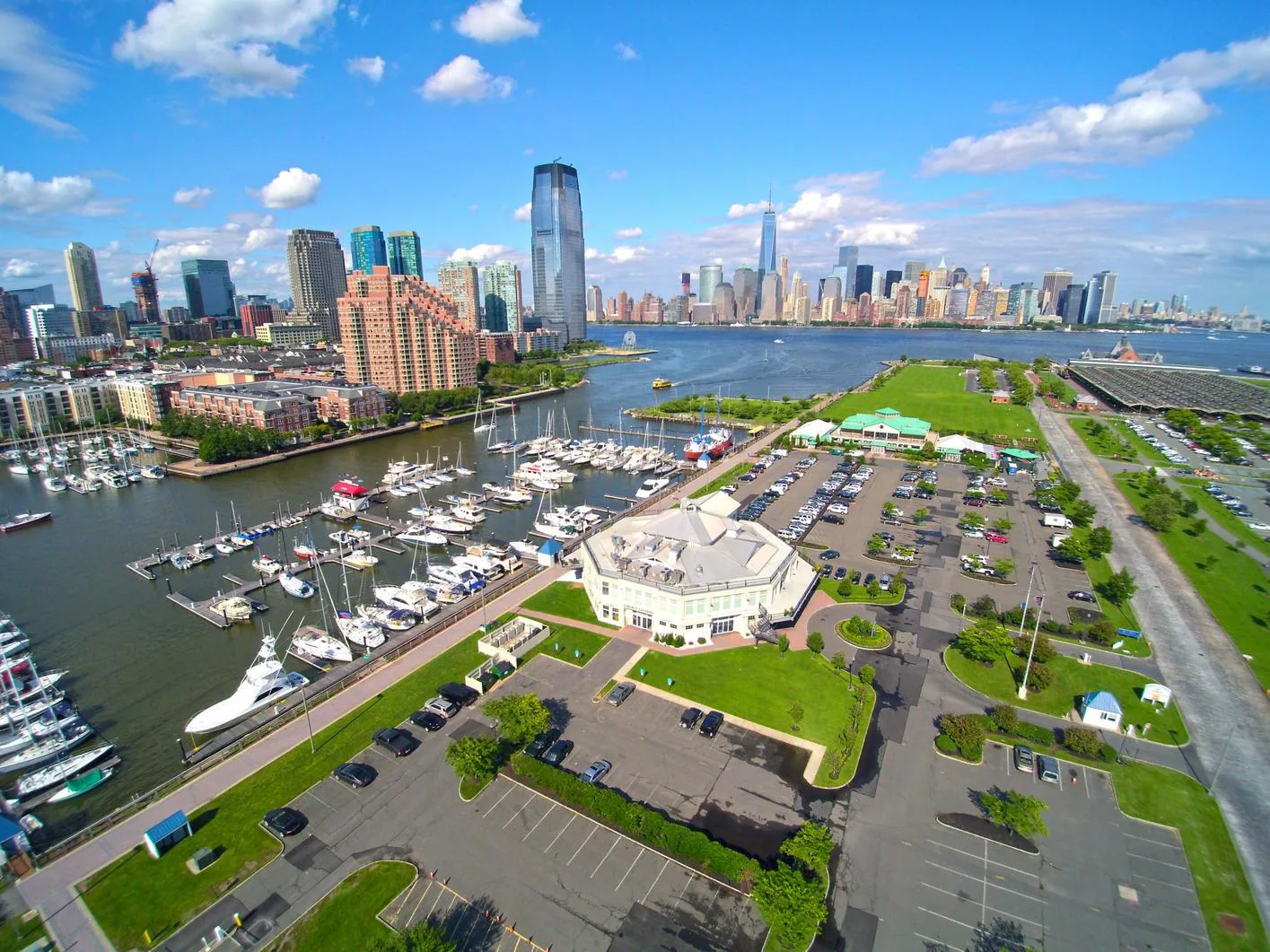
Roof repair, rooftop amenity protection and phased replacement for Jersey City hotel owners and hospitality groups, planned around guest rooms and noise limits.
Guest rooms sit directly under the roof on the top floor, and a leak there takes rooms out of inventory the same night. On a Jersey City hotel roof, the first decision is which occupied rooms and roof zones can enter the work sequence. We trace the reported leak, confirm approved noise hours, and set the work window with the hotel contact, isolating the rooms and roof zones that can be closed while service routes stay open.
A rooftop bar, pool deck, or mechanical penthouse changes the access and flashing checks. We inspect protection layers, equipment curbs, and penetrations at the actual building.
A report may begin with a stained ceiling tile, a damp carpet edge, or a smell in a stairwell. We trace each symptom to the roof zone and document what is wet before selecting the repair. We ask hotel engineers to send photographs and the room number, and we match them to the roof zone above before anyone goes up.
Roofing is loud: carts, foot traffic, hammers on edge metal, fans running on welders and hoists. Guests on the top floors hear all of it. We set noise limits and schedule loud tasks within the work window approved by the general manager and engineering contact. If a floor can be blocked off, we use that to isolate the worst noise.
The general manager and the director of engineering decide which floors and which dates. We provide a day-by-day plan so housekeeping and front desk can place guests away from the work. We give hotel staff the dates, hours, and work description for their guest notice.
Hotel staff and guests share the same lifts and corridors, so material moves through service routes or the exterior. We stage deliveries in off-peak hours and keep carts out of the lobby. We keep materials and access within the agreed work zone and close it at the end of each shift.

Send the room map, the amenity layout and your slow-season weeks. We will mark the roof zones, set quiet hours, and draft a phased plan.
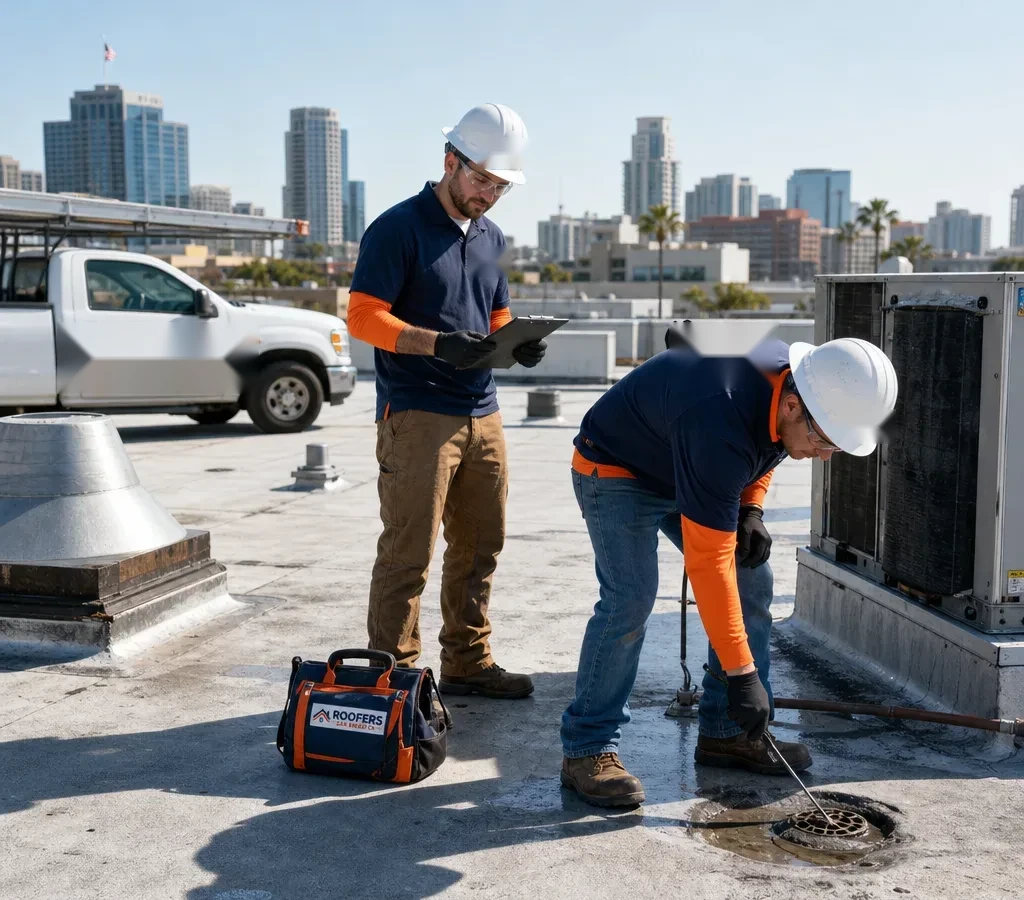
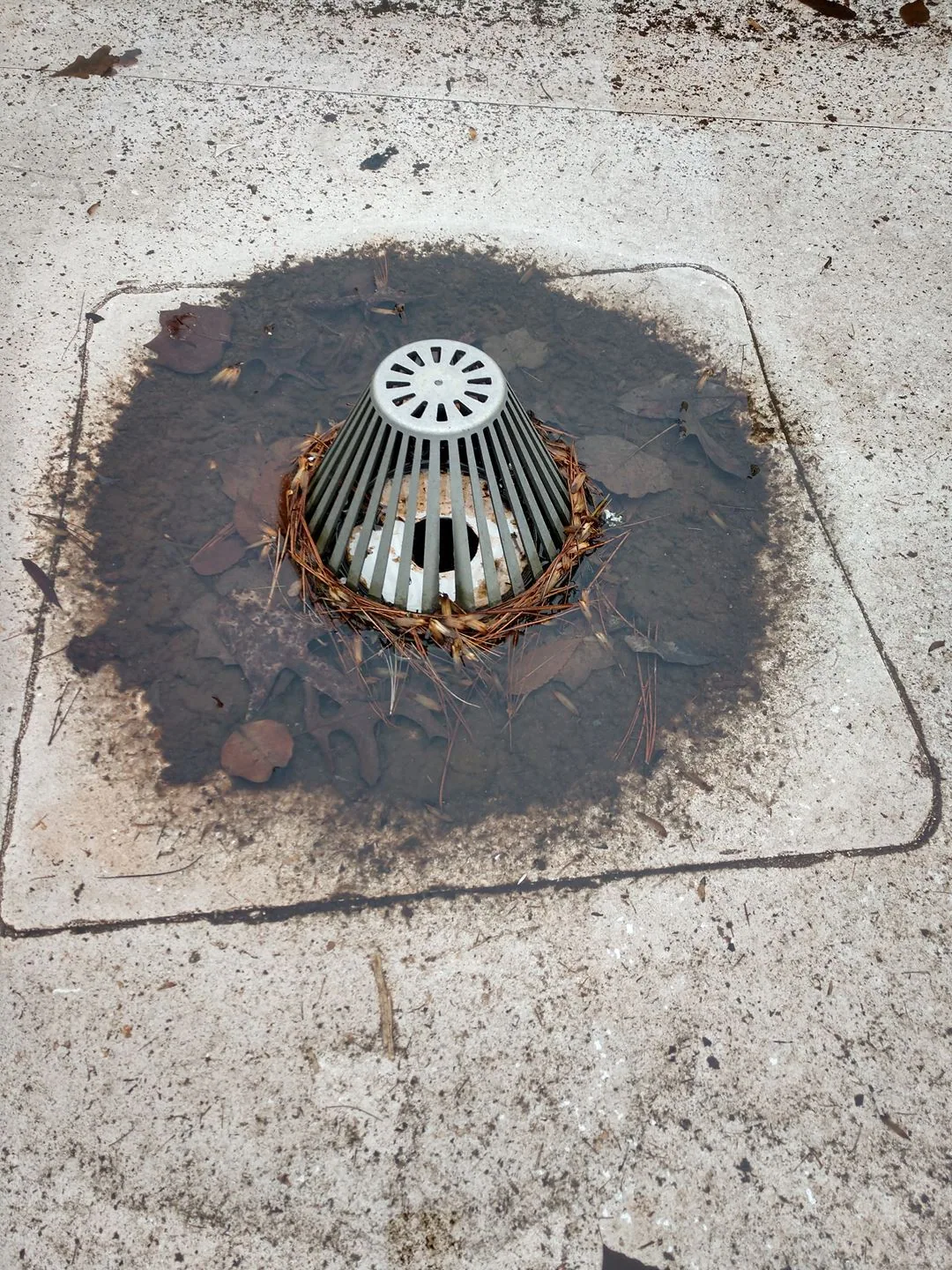
A rooftop bar or pool deck sits on top of a waterproofing system that must keep working under heavy use. Pavers, pedestals, planters and furniture all put weight and wear on the membrane. We inspect the protection layers, the drainage under the pavers and the flashing at every transition. A blocked drain below pavers can hold water against the waterproofing layer. We inspect the outlet and membrane transition before setting the repair boundary.
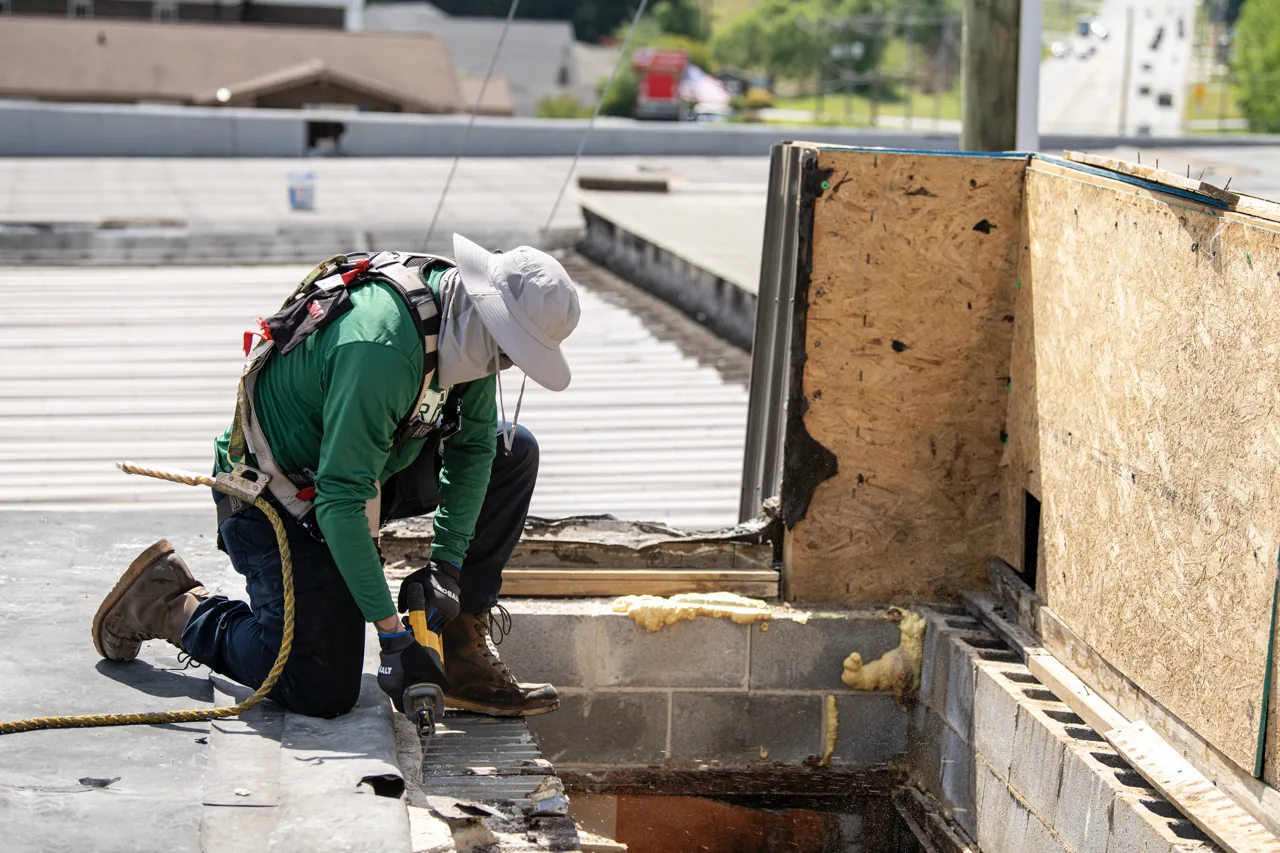
When repairs require lifting an amenity surface, we map the sequence and coordinate the access window with the property contact. We number pavers and record their positions, repair the membrane underneath, and set them back in the same pattern. The owner gets a repair map and photographs of the work before the cover goes back.
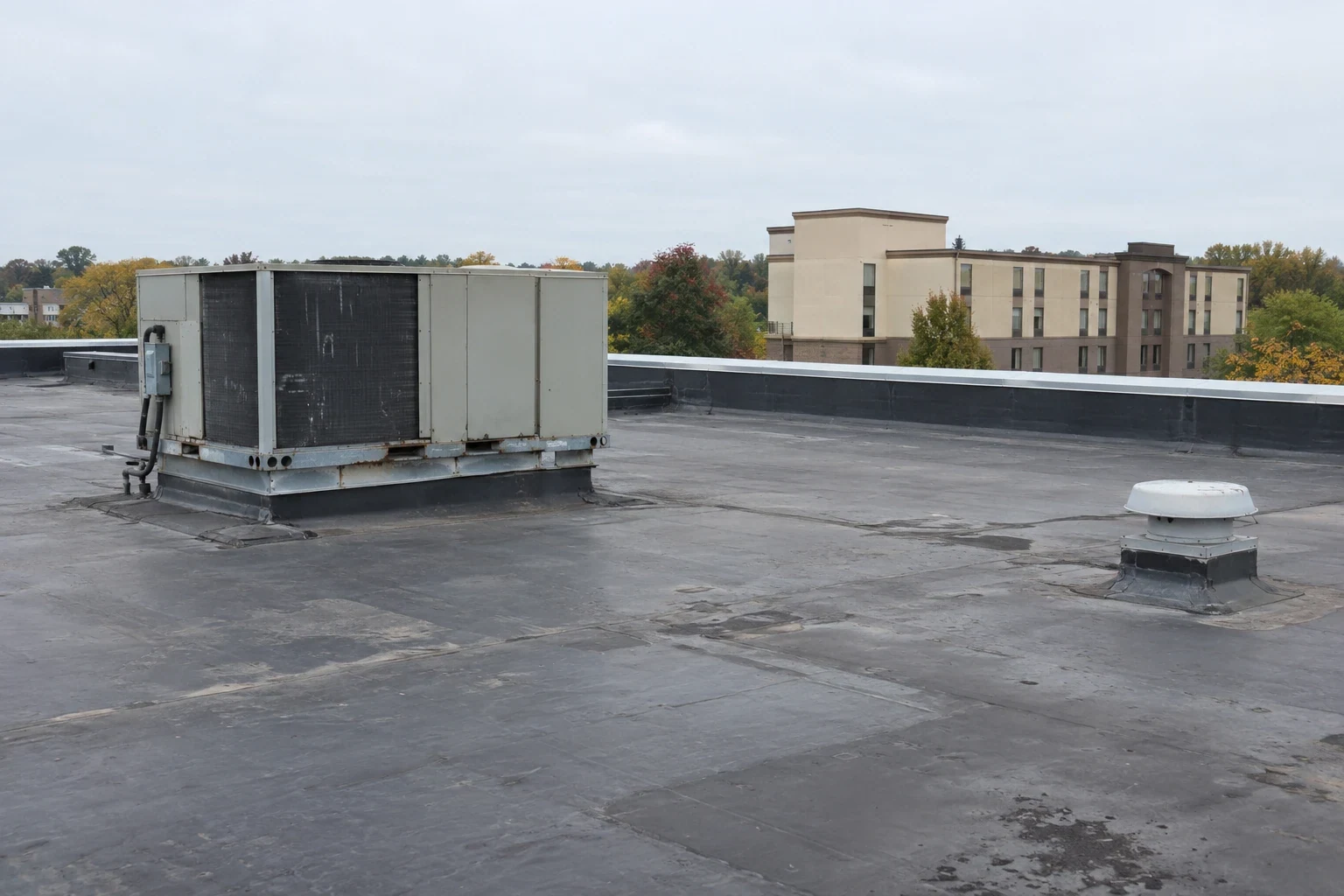
Mechanical penthouses and cooling equipment hold the hotel's comfort systems, and their curbs and pipe penetrations are repeat leak sources. A hotel roof is a mix of amenity, equipment and field areas, and each needs its own treatment.
In Jersey City, both Irene and Sandy were associated with power loss, destructive flooding, and property damage. New Jersey faces statewide resilience risks that include sea-level rise, persistent flooding, higher temperatures, and intense storm events. During active weather, we prioritize water entry, roof access, and outlet condition in the response sequence.
Before the wet season we clear drains, test overflow routes, and check rooftop equipment seals. During the storm, our emergency line runs around the clock. After a storm, we inspect the roof and give the property team a written report. A preventive maintenance visit can follow the same drain, overflow, and seal checks and be placed on the hotel's engineering calendar.
A phased replacement can keep selected building areas in use while work advances by roof zone. We divide the roof into zones that match wings or floors, finish each watertight, and move on. Rooms below the active zone can be closed or moved to the other side of the building. A reroof on an occupied building depends on this kind of phasing.
Timing is another lever. The hotel contact supplies occupancy forecasts and blackout dates. We plan the loudest work for the softest weeks and set the noise window and a weather buffer around them.
Brand standards often constrain the work. Flags may require approval of materials, finish colors and rooftop appearance, especially where guests look down from higher floors. We bring product data and color samples to the first meeting so required approvals are listed before material is ordered.
If a covered loss is involved, such as wind or storm damage, the same photographs support the claim. Insurance and restoration work goes faster when the condition is documented from the first visit, and the hotel's risk manager gets a clean file.
Owners, operators and lenders often sit in different offices. A roof file that includes photographs, drain logs, repair history and next steps keeps them aligned. We supply it after each visit and keep an updated copy for the engineering team.
When a property changes hands, the file moves with it. A buyer's due diligence survey reads best against a record of past care, and an owner can compare reported conditions with completed repairs and open items. Groups with several hotels can use a multi-site program and compare properties on the same grading. A hotel in Hoboken or Newark gets its own roof-zone and access record. For a hotel with restaurant space, we coordinate the work window with a restaurant-group roof schedule.
One more point for operators: top-floor suites and event spaces often sit below equipment that moves heat and moisture. Condensation on a ceiling can look like a roof leak, and treating it as one wastes a visit. We check ductwork insulation and vapor barriers along with the roof, before recommending a roof repair.